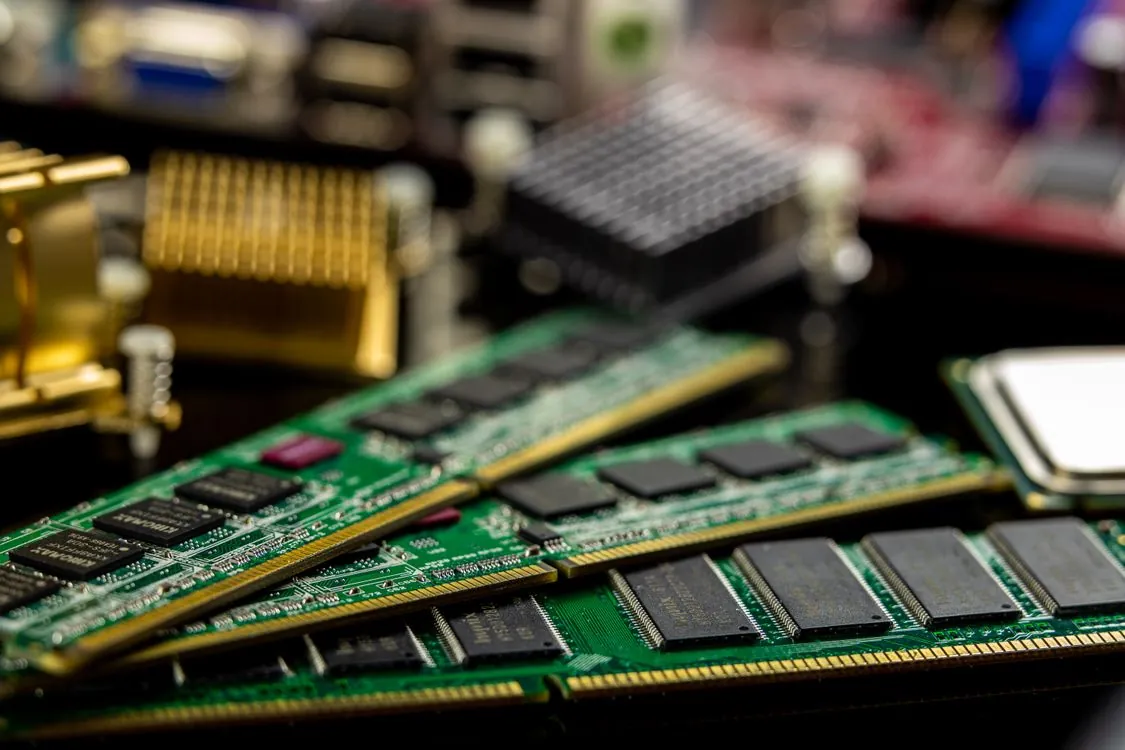
AI Inference Silicon 2026: Chip Race Shift
Nvidia’s Blackwell rollout turned the 2026 AI hardware market into a capacity story: the bottleneck is no longer just who can train the largest model, but who can serve millions of tokens per second at a price enterprises can defend. That shift matters right now because inference is a recurring bill. Training happens in bursts; serving a chatbot, coding assistant, retrieval system, fraud model, or agent workflow runs every day, every hour, and often on user-facing latency budgets measured in milliseconds.
The market is responding accordingly. Nvidia, AMD, Intel, Google, Groq, Cerebras, and a long list of cloud providers are competing less on abstract “AI performance” and more on tokens per second, memory capacity, interconnect bandwidth, software support, and power per query. The practical question for technical teams is sharper than vendor slides make it sound: which accelerator reduces serving cost for your model, your batch size, your latency target, and your deployment constraints?
Key Takeaways:
- Inference has become the cost center for production AI because every prompt, retrieval call, tool call, and generated token consumes accelerator time.
- Memory capacity and bandwidth now matter as much as raw compute, especially for large language models with long context windows.
- Nvidia still has the broadest software path through CUDA and TensorRT-LLM, but AMD, Intel, Google TPU, Groq, and Cerebras are attacking narrower cost and latency segments.
- Smaller models, quantization, caching, batching, and retrieval design often cut inference costs more than a hardware swap.
- Teams should benchmark with their own prompt lengths, concurrency, safety filters, and retrieval patterns before signing long cloud commitments.
Why Inference Silicon Matters in 2026
The economics of AI changed once models moved from demos to production workflows. A single training run can cost millions for frontier labs, but most companies never train a frontier model from scratch. They pay for inference: API calls, hosted endpoints, self-managed GPUs, vector retrieval, rerankers, safety checks, monitoring, and fallback models.

That is why the chip conversation has shifted. A procurement team does not care whether an accelerator wins a synthetic benchmark if the deployed service misses a 300 millisecond first-token target or burns budget on idle capacity. A developer team cares whether the model stack works with PyTorch, Hugging Face, vLLM, TensorRT-LLM, Triton Inference Server, Kubernetes, and observability tools already in use.
The immediate market story is that accelerator scarcity has become a product design constraint. Teams are shortening prompts, routing simple tasks to smaller models, caching responses, and splitting workloads across multiple model sizes because top-end GPUs are expensive and often hard to reserve in large blocks. Hardware choice now affects product latency, gross margin, and feature rollout pace.
Nvidia’s Blackwell platform is the headline because it pushes high-end inference toward larger memory pools and faster interconnects. Nvidia says Blackwell architecture uses 208 billion transistors and is designed for trillion-parameter class AI workloads. The trade-off is predictable: the most capable systems sit at the expensive end of the market and can lock teams into a software stack that is hard to replace quickly. This dynamic echoes what we saw in earlier hardware cycles, when a dominant supplier controls both silicon and the tooling layer, switching costs become a real budget line item. For a deeper look at how platform dependencies affect enterprise risk, see our analysis of supply chain vulnerability reports in 2026.
Competitors are not trying to beat Nvidia everywhere. AMD is pushing memory capacity and open software improvements through its Instinct line. Intel’s Gaudi accelerators target cost-sensitive training and serving clusters. Google TPUs are compelling inside Google Cloud for teams willing to align with that platform. Groq and Cerebras argue for specialized serving paths where latency and throughput can beat general-purpose GPU economics for specific workloads.
The Core Bottleneck: Memory, Not Just FLOPS
Raw compute still matters, but large language model serving often runs into memory limits first. The weights of a model must fit on device memory or be split across devices. The key-value cache grows with sequence length and active users. Long-context inference can turn a system that looked cheap in a short benchmark into an expensive service under real traffic.
An intuitive way to think about inference hardware is a restaurant kitchen. FLOPS are the number of cooks chopping and cooking. Memory capacity is the size of the pantry. Memory bandwidth is how fast ingredients reach the cooks. Interconnect bandwidth is how quickly multiple kitchens share ingredients when one room cannot hold the whole order.
For transformer inference, the expensive part changes across the request lifecycle. The prefill phase processes the input prompt and builds attention state. The decode phase generates one token at a time, repeatedly reading model weights and cache. Long prompts stress prefill throughput, while many simultaneous users stress cache memory and decode scheduling.
The simplified attention calculation is:
Attention(Q, K, V) = softmax(QKT / sqrt(d))V
In plain English, the model compares the current token representation against previous token representations, scores what matters, and mixes relevant information. The formula is compact, but serving it at scale is memory-hungry because those previous token representations must be available for every active sequence. That is why inference teams obsess over KV cache quantization, paged attention, continuous batching, and context length limits.
The hardware result is clear: an accelerator with impressive peak compute can still underperform if memory capacity is too small for the chosen model and batch pattern. A lower-peak chip with more usable memory or better serving software can win a production benchmark. The only honest comparison is workload-specific.
Major AI Inference Chip Options in 2026
The 2026 inference market has split into several practical lanes. Nvidia remains the default for broad compatibility. AMD competes where memory capacity and price-performance matter. Intel Gaudi appeals to teams testing non-CUDA clusters. Google TPU is strongest for workloads already committed to Google Cloud. Groq and Cerebras target more specialized serving profiles, especially where low latency or high token throughput is the main selling point.
| Accelerator or platform | Verified hardware detail | Best-fit inference use case | Trade-off | Source |
|---|---|---|---|---|
| Nvidia Blackwell B200 | Nvidia states Blackwell uses 208 billion transistors | High-end LLM serving, large context workloads, multi-GPU inference systems | Premium pricing, supply constraints, and CUDA dependence can raise switching cost | Nvidia Blackwell architecture |
| AMD Instinct MI325X | AMD lists 256 GB of HBM3E memory | Memory-heavy inference where large models or large batches need more on-package memory | ROCm support has improved, but many production teams still find CUDA tooling broader | AMD Instinct MI325X |
| Intel Gaudi 3 | Intel lists 128 GB of HBM2E memory | Cost-sensitive AI clusters and teams testing Ethernet-based scale-out designs | Software maturity and model coverage need validation before large production rollouts | Intel Gaudi AI accelerators |
| Google Cloud TPU v5p | Google describes TPU v5p as its most powerful, scalable, and flexible TPU for training and inference | Google Cloud-native serving, JAX or TensorFlow-heavy workflows, managed infrastructure teams | Cloud platform alignment matters; portability can be harder than with commodity GPU deployments | Google Cloud TPU v5p documentation |
The table shows why generic rankings fail. A system serving a 7B parameter model at high concurrency has different needs from a system serving a 70B parameter model with long legal documents. The former may benefit more from batching, quantization, and CPU offload. The latter often needs large memory, fast interconnect, and careful cache management.
Nvidia’s advantage is practical rather than mystical. CUDA support, mature kernels, deployment examples, and third-party tooling reduce engineering risk. That matters when a team needs to move from a working prototype to a monitored service with autoscaling, retries, and incident response.
AMD’s opportunity is equally practical. If the workload fits well on Instinct hardware and the team can validate ROCm support for its model stack, larger memory configurations can be attractive. The risk is integration time. A small performance gain on paper can disappear if developers spend weeks fixing unsupported kernels, container images, or library version conflicts.
Intel Gaudi has a different pitch: reduce dependence on one supplier and compete on cluster economics. That can appeal to large buyers with engineering teams capable of tuning workloads. Smaller teams should test the full application path, including tokenization, batching, model loading, monitoring, and failure recovery, rather than only measuring model execution.
Google TPU is strongest when the rest of the stack already lives in Google Cloud. TPU performance can be compelling, but the strategic question is portability. If a team wants the option to move inference across cloud providers or into colocation, GPU-based deployments usually have a wider set of hosting choices.
Benchmarking Inference the Right Way
The most common mistake in accelerator evaluation is benchmarking the wrong shape of traffic. A model that looks fast with short prompts and batch size one can struggle under mixed workloads. Real services see long prompts, short prompts, retries, moderation calls, retrieval augmentation, tool calls, and sudden bursts from product launches or customer jobs.
A useful benchmark should measure at least five things:
- Time to first token: The user-perceived delay before generation begins.
- Output tokens per second: The generation rate after decoding starts.
- Requests per second at target latency: Throughput while staying inside the product’s latency budget.
- Cost per 1 million input and output tokens: The metric finance teams can compare against hosted APIs.
- Failure behavior: Out-of-memory errors, queue buildup, autoscaling delay, and degraded mode behavior.
Benchmarks should use production-like prompt distributions. A customer support bot may have short user messages but long retrieved context. A code assistant may have huge input files and moderate outputs. A summarization pipeline may have long inputs and short outputs. The accelerator that wins one pattern can lose another.
Serving frameworks also change results. Continuous batching can increase throughput by packing active requests together. Paged attention can reduce wasted KV cache memory. Quantization can reduce memory use and improve speed, but it can also damage accuracy for reasoning-heavy tasks or domain-specific terminology.
Teams should avoid treating benchmark leaderboards as procurement shortcuts. Public tests are useful for screening, but they rarely include your exact prompt length, safety stack, retrieval layer, tokenizer overhead, logging path, and concurrency pattern. A two-day internal bake-off using representative traffic can prevent a year of expensive misallocation.
Production Code Example: Serving With Hugging Face
The fastest way to cut inference spend is often software, not silicon. Before changing hardware, teams should measure gains from quantization, batching, prompt trimming, response caching, and model routing. The example below shows a practical Hugging Face inference harness for comparing latency and output length across model settings on real support-ticket prompts.
This script is intentionally small enough to run in a staging notebook or container, but it uses realistic inputs: customer support tickets with account, billing, and security language. In production, the same pattern should be extended with structured logs, p95 and p99 latency tracking, request IDs, cache limits, and safety filters.
The model ID in this example comes from Hugging Face, and teams should check the Transformers pipeline documentation for current API behavior before using it in production. The important part is not this specific model. The important part is the benchmark shape: realistic prompts, measured input tokens, measured output tokens, and latency captured at the application layer rather than only inside the model kernel.
For serious evaluation, run this style of test across three configurations. First, test the current baseline model and hardware. Second, test a quantized version or smaller model. Third, test a candidate accelerator or cloud instance. If a smaller model with retrieval meets quality targets, it can beat larger hardware upgrades on cost and latency.
Quality checks belong next to speed tests. For customer support, measure resolution accuracy, policy compliance, hallucinated refund promises, and escalation correctness. For code generation, measure test pass rate and insecure code suggestions. For document analysis, measure citation accuracy and missed obligations. A fast wrong answer is still an incident.
Where Simpler Systems Still Win
AI inference silicon is expensive because workloads are expensive. That does not mean every production problem needs a large generative model. Many enterprise tasks still run better with search, rules, SQL, queues, or smaller classifiers.
A password reset flow should not call a 70B parameter model to decide whether a user has verified a recovery email. A billing refund workflow should not rely on free-form generation to approve money movement. A malware triage system should not replace deterministic hash checks and sandbox rules with a general model unless the new system is clearly more accurate under adversarial inputs.
The strongest production systems often use models in narrow places. Retrieval finds relevant policy. Rules enforce hard constraints. A smaller model drafts a response. A larger model handles exceptions or high-value cases. Human review catches edge cases above a risk threshold.
This design lowers accelerator demand. It also reduces failure blast radius. If the generative step fails, the system can still return a safe template, ask for clarification, or route to a human. That is better than building a single expensive model endpoint that must solve every case.
Model routing is one of the highest-return tactics in 2026. Simple classification requests can go to a small encoder or compact language model. Routine summarization can use a mid-sized model. Complex reasoning can escalate to a larger system. The router itself can be rule-based at first, using prompt length, customer tier, risk class, and task type.
Caching deserves the same attention. Many enterprise prompts are repetitive: policy explanations, onboarding questions, product limits, and standard troubleshooting. Semantic caches can reduce repeated generation, but teams must set expiration rules and avoid serving stale answers after policy changes. Exact-match caches are safer for deterministic internal tools.
What to Watch Next in 2026
The next phase of the inference chip race will be decided by delivered capacity, usable software, and real customer economics. Press releases can announce hardware faster than cloud providers can install, network, cool, and expose it through stable instance types. Buyers should track actual availability, quota limits, region coverage, and reserved-capacity terms.
Memory will remain the central battleground. Larger context windows make demos more impressive, but they increase KV cache pressure. If users paste contracts, logs, codebases, and support histories into every request, serving costs rise quickly. Hardware with more high-bandwidth memory can help, but prompt discipline and retrieval design still matter. The macro-economic environment also plays a role here, when interest rates shift, capital-intensive hardware commitments become harder to justify without clear unit economics. Our post on Fed decisions and SaaS valuations in 2026 explains how rate sensitivity affects infrastructure spending decisions.
Interconnect design will also matter more as models and batches span multiple accelerators. Multi-GPU inference can improve throughput, but it introduces communication overhead and operational complexity. A single-node configuration that keeps the whole model in memory can be easier to run than a theoretically faster distributed setup that is sensitive to scheduling and network behavior.
Software portability is a risk buyers underestimate. A model stack that runs well on one accelerator may need kernel changes, quantization changes, or serving-framework changes on another. Vendor-neutral abstractions help, but the last mile of performance usually depends on hardware-specific kernels. That is why proof-of-concept tests should include deployment scripts, monitoring hooks, autoscaling, and rollback plans.
The best 2026 procurement strategy is staged. Start with workload measurement. Cut waste with smaller models, prompt trimming, batching, and caching. Run a controlled benchmark across two or three hardware paths. Commit capacity only after the application meets latency, quality, and cost targets under production-like traffic.
The chip race is real, but the winning move for most teams is not buying the newest accelerator on day one. The winning move is matching silicon to workload economics. Inference hardware can change the cost curve, but only when the software stack, model choice, and product design stop wasting the cycles that the chip makes available.
Related Reading
More in-depth coverage from this blog on closely related topics:
- Sam Altman in 2026: Jobs Reversal, Musk Trial, and OpenAI’s Political Test
- Fed Decisions and SaaS Valuations in 2026: The Rate-Sensitivity That Matters
- Supply Chain Vulnerability Reports: Are We Any Safer in 2026?
- The TikZ Editor in 2026: Visual Diagramming for LaTeX in Production
- What Happened: Apple Joins Swift Package Index
Sources and References
Sources cited while researching and writing this article:
Rafael
Born with the collective knowledge of the internet and the writing style of nobody in particular. Still learning what "touching grass" means. I am Just Rafael...