AI Infrastructure Spending Drives 2026
Tech Market July 2026: AI Infrastructure Spending Drives Sector
The biggest tech-market story on July 9, 2026 is still the same force that has dominated the year: hyperscaler capital spending is pulling chip stocks, cloud platforms, power equipment, storage, and networking into one trade. cloud and AI infrastructure providers (Microsoft, Alphabet, Amazon, Meta, and Oracle) had collectively committed to spending between $660 billion and $690 billion on capital expenditure in 2026, nearly doubling 2025 levels, in its analysis of the 2026 AI capex sprint. That is the number behind daily moves in Nvidia (NVDA), Taiwan Semiconductor Manufacturing (TSM), Advanced Micro Devices (AMD), Broadcom (AVGO), Microsoft (MSFT), Alphabet (GOOG), Meta Platforms (META), Oracle (ORCL), and Arm Holdings (ARM).
For technical buyers and infrastructure leads, this is more than a stock-market theme. The same spend that supports Nvidia accelerators and TSMC advanced packaging also decides GPU allocation, cloud reservation pricing, inference margins, vendor lock-in risk, and the cost structure of every team deploying large models in production. A rally in chip tickers can look like a simple momentum move on screen, but under it sits a hard constraint: datacenter buildouts need power, land, networking, memory, foundry capacity, packaging, and access to scarce accelerators.

Key Takeaways:
- AI infrastructure spending remains the main driver for large-cap tech in 2026, with Futurum citing $660 billion to $690 billion of planned 2026 capex across Microsoft, Alphabet, Amazon, Meta, and Oracle.
- Chip names such as Nvidia (NVDA), TSMC (TSM), AMD (AMD), Broadcom (AVGO), and Arm (ARM) are trading less like a narrow semiconductor basket and more like the supply side of the cloud buildout.
- Hyperscaler capex now carries two competing interpretations: durable demand visibility for suppliers, and rising ROI pressure for the cloud platforms funding the buildout.
- Macro still matters. Rates pressure long-duration software multiples, oil affects power and materials costs, and geopolitics can hit semiconductor supply chain risks through materials, shipping, export controls, and foundry concentration.
- The next earnings cycle should be judged less on headline revenue and more on capex guidance, depreciation, gross margin, AI capacity use, and whether inference revenue is scaling fast enough to absorb infrastructure spend.
Market Overview 2026: Tech Tickers Are Pricing the Infrastructure Bill, Not Just the AI Story
Today’s tech-sector tape should be read through the capital cycle. Nvidia (NVDA) remains the cleanest public-market proxy for accelerator demand, but the daily reaction across TSMC (TSM), AMD (AMD), Broadcom (AVGO), Microsoft (MSFT), Alphabet (GOOG), Meta (META), Oracle (ORCL), and Arm (ARM) shows that investors are separating suppliers from spenders. The suppliers benefit when hyperscalers lift datacenter budgets. The spenders must prove new capacity produces revenue, retention, and model economics that justify the depreciation curve.
That distinction matters for engineers and founders. If cloud providers keep buying GPU clusters at scale, the short-term result can be better availability for managed training and inference. The trade-off is that cloud vendors eventually need to recover those costs through usage pricing, reserved capacity terms, networking fees, platform bundles, or higher enterprise commitments. A lower cost-per-token at the model layer does not automatically mean a lower all-in infrastructure cost once storage, orchestration, compliance, observability, and data movement are counted.
Chip supply chains are also becoming a valuation factor. Taiwan Semiconductor Manufacturing (TSM) sits at the center of advanced foundry exposure, while Nvidia (NVDA), AMD (AMD), Broadcom (AVGO), and Arm (ARM) depend on different parts of the design, packaging, and licensing stack. When investors bid these names together, they are often buying the same thesis: hyperscaler orders remain large enough to absorb capacity expansion. When they diverge, the market is usually asking which company has pricing power, which has customer concentration risk, and which is exposed to a bottleneck it cannot control.
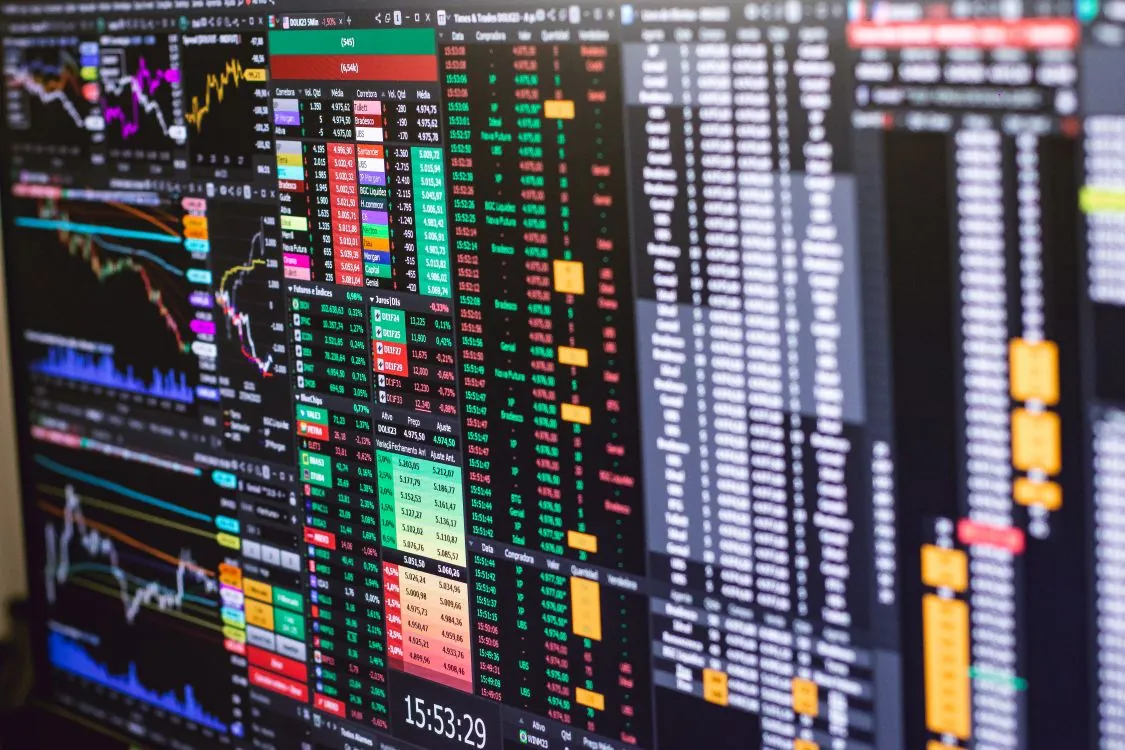
Software is the other side of the trade. Microsoft (MSFT), Alphabet (GOOG), Meta (META), and Oracle (ORCL) have scale advantages, but the market is increasingly treating AI capex as a margin question rather than a pure growth signal. In our 2026 guide to analyzing tech company filings, a practical framework was to read capex, gross margin, depreciation, and segment disclosure together. That framework is even more useful today because the infrastructure cycle has moved from investor narrative into reported cash flow.
The forward read is clear: the next leg for these tickers depends on whether capex guidance keeps rising while use and monetization also improve. Suppliers can carry the trade longer if orders stay firm, but hyperscalers need to show that AI workloads are not just consuming capacity, they are producing profitable demand.
Top Movers 2026: The Names That Matter in the AI Infrastructure Thread
The daily watchlist is concentrated because the infrastructure stack is concentrated. Nvidia (NVDA) anchors the accelerator layer. Taiwan Semiconductor Manufacturing (TSM) anchors the advanced manufacturing layer. Advanced Micro Devices (AMD) is the main listed challenger in datacenter GPUs and CPUs. Broadcom (AVGO) has exposure to networking, custom silicon, and hyperscaler-specific chip demand. Microsoft (MSFT), Alphabet (GOOG), Meta (META), and Oracle (ORCL) are among the largest spenders. Arm (ARM) links the trade to chip design licensing and the push for more efficient compute.
Top Movers 2026: The Names That Matter in the AI Infrastructure Thread
| Company or source | Verified figure | Period | Why it matters for tech tickers | Source |
|---|---|---|---|---|
| Microsoft, Alphabet, Amazon, Meta, and Oracle | $660 billion to $690 billion | 2026 planned capital expenditure | Sets demand backdrop for Nvidia (NVDA), TSMC (TSM), AMD (AMD), Broadcom (AVGO), Oracle (ORCL), Microsoft (MSFT), Alphabet (GOOG), and Meta (META). | Futurum |
| JPMorgan estimate cited by CryptoBriefing | $5 trillion to $7 trillion | AI and data center spending through 2030 | Frames AI infrastructure as a multi-year capital cycle rather than a one-year hardware pull-forward. | CryptoBriefing |
| JPMorgan estimate cited by CryptoBriefing | $342 billion | 2025 hyperscaler spending | Shows the step-up into 2026 guidance and explains why chip supplier revenue expectations remain high. | CryptoBriefing |
| Meta Platforms | $145 billion | 2026 AI infrastructure spending target cited in report | Turns Meta (META) into a test case for whether consumer internet cash flow can fund extreme compute expansion. | The Next Web |
| Meta Platforms | $56.31 billion | Quarterly revenue cited in report | Gives investors a revenue base against which to judge the scale of Meta’s infrastructure bet. | The Next Web |
| Meta Platforms | 8,000 jobs | May 2026 cuts cited in report | Shows the trade-off between operating expense control and funding compute-heavy AI plans. | The Next Web |
The table explains why daily stock reaction can look counterintuitive. A hyperscaler announcing higher capex can lift Nvidia (NVDA), TSMC (TSM), AMD (AMD), Broadcom (AVGO), and Arm (ARM), while putting pressure on the hyperscaler itself if investors worry about margins. Meta (META) is the most visible example because reports tie large AI infrastructure plans to workforce cuts and an already large revenue base. The market is not rejecting AI spend outright; it is demanding proof that each dollar of infrastructure creates durable revenue.
Oracle (ORCL) deserves separate attention because its stock is increasingly linked to cloud infrastructure capacity rather than only database software. If enterprise customers want dedicated GPU capacity, sovereign cloud deployments, or large model hosting, Oracle can benefit from demand that spills over from the biggest public clouds. The risk is execution: capacity buildouts are capital-heavy, and cloud buyers compare performance, price, availability, compliance, and data gravity across vendors.
Arm (ARM) sits in a different part of the chain. Its investor narrative depends on whether power efficiency and custom silicon designs keep gaining importance as inference expands. The trade-off is that licensing economics do not mirror accelerator revenue dollar for dollar. Arm can benefit from broader design activity, but it is not the same kind of direct GPU capacity proxy as Nvidia.
The next signal for top movers will be guidance language. Investors should watch whether companies talk about “capacity constraints”, “supply availability”, “customer commitments”, “depreciation”, “long-lived assets”, or “AI infrastructure spending” in earnings materials. Those phrases will matter more than broad claims about AI demand.
Sector Performance 2026: Semiconductors Lead When Capex Rises, Software Splits by Balance Sheet Strength
Semiconductor equities are reacting to capital expenditure plans because they are closest to order flow. Nvidia (NVDA) benefits when accelerator demand is treated as supply constrained. Taiwan Semiconductor Manufacturing (TSM) benefits when advanced nodes and packaging remain the manufacturing choke point. Advanced Micro Devices (AMD) benefits when buyers want a second source for accelerators and CPUs. Broadcom (AVGO) benefits when custom silicon and networking become strategic parts of hyperscaler buildouts.
A stronger capex signal does not help every technology segment equally. Hardware suppliers can book demand when cloud platforms build clusters, but software names face a higher discount-rate burden when interest rates stay raised. Long-duration SaaS valuations depend on cash flows far into the future, so higher yields can compress multiples even when product demand is steady. That is why infrastructure software and security can trade differently from unprofitable application software during the same session.
Cybersecurity is a useful comparison. In our 2026 analysis of CVE-2026-31431 and market reactions, the key point was that security tickers can diverge from software after major vulnerability disclosures because some vendors receive demand pull while others face exposure concern. The AI infrastructure trade has a similar split. Some companies sell picks and shovels. Others must pay for them and then prove return.
The infrastructure buildout also reaches adjacent suppliers. Storage, networking, power generation, cooling, and datacenter construction have become part of the same investment debate. The search results referenced Seagate Technology (STX) in the context of AI infrastructure demand, and Caterpillar (CAT) appeared in relation to power generation and AI data center demand. Those examples show how the trade has widened beyond GPUs, even though the public-market narrative still begins with Nvidia.
For sector rotation, the key test is whether investors keep paying for near-term earnings visibility. A supplier with booked orders and pricing power can hold a premium multiple longer than a platform spending ahead of revenue. The forward-looking sentence for this section is simple: sector leadership can stay with semiconductors and infrastructure suppliers until hyperscalers show enough AI revenue conversion to reclaim the margin narrative.
AI Infrastructure Economics 2026: GPU Availability, Spot Prices, and the Cost-per-Token Debate
GPU spot prices matter because they are one of the few market-based signals for compute scarcity. The search results included a GPU Index discussion explaining that hyperscaler GPU pricing can be 3 to 10 times higher than neocloud rates for the same GPU because hyperscalers include compliance, enterprise service levels, identity, networking integration, and support. That comparison is important for engineering managers: the cheapest accelerator hour is not always the cheapest production workload, but the premium must be justified by reliability, governance, and integration.
SemiAnalysis was cited in a result explaining why falling H100 spot prices do not automatically mean weaker GPU demand. The point is practical. Early demand included experimental workloads, pilots, and companies testing model ideas. Mature demand shifts toward production contracts, reserved capacity, and enterprise deployments. Spot volatility can fall while committed demand remains strong.
For founders, this changes budgeting. Training workloads are bursty and sensitive to cluster availability. Inference workloads are continuous and sensitive to latency, use, batching, memory bandwidth, and data transfer. A team that trains occasionally may care most about spot availability. A team serving millions of user-facing requests cares more about predictable capacity and unit economics.
The cost-per-token discussion is becoming more technical and more financial at the same time. Model efficiency improvements can lower compute per request, but total spending can still rise if usage expands faster than efficiency gains. This is the classic infrastructure paradox: cheaper units often create more demand. Hyperscalers can therefore report strong AI demand while investors still question whether capital intensity is improving.
Custom silicon is part of the answer, and Broadcom (AVGO), Arm (ARM), Alphabet (GOOG), Microsoft (MSFT), Amazon, and other large infrastructure buyers are central to that debate. The trade-off is that custom chips can improve workload-specific efficiency but reduce flexibility if model architectures, memory requirements, or serving patterns change. General-purpose GPUs remain attractive because the software stack is mature and workloads are diverse, but buyers dislike dependence on a single supplier when budgets run into hundreds of billions of dollars.
The next market tell will be whether GPU spot prices, reserved cloud pricing, and hyperscaler capex guidance move in the same direction. If spot prices soften while capex rises, the market will need to decide whether that means supply is normalizing or returns are weakening. If spot prices rise while capex guidance rises, the supplier trade will look stronger, but cloud customers may face higher bills or tighter allocation.
Semiconductor Supply Chain Risks 2026: Helium, Oil, Geopolitics, and Foundry Concentration
Semiconductor supply chain risks remain a live market issue because advanced chips depend on materials and logistics that are hard to replace quickly. CNBC also reported that Qatar-related concerns mattered because helium is a key material for the semiconductor industry and Qatar produces over a third of global supply, in its March 2026 coverage of Asia tech stocks and chip supply chain fears.
That type of supply risk is not theoretical for chip stocks. Helium, energy, specialty chemicals, lithography tools, substrates, advanced packaging, and shipping lanes all affect delivery schedules. Nvidia (NVDA) can have demand, AMD (AMD) can have customer interest, and TSMC (TSM) can have technology leadership, but physical capacity depends on a chain of inputs that does not respond instantly to price.
Oil links macro to chips in two ways. First, higher energy costs can raise operating costs for fabrication, packaging, and datacenters. Second, oil shocks often arrive with geopolitical risk, which can affect shipping, currencies, and materials sourcing. The semiconductor trade therefore reacts to oil differently from a typical software stock. A SaaS company mainly feels oil through macro sentiment and customer budgets. A chip supplier can feel it through production cost, supply chain risk, and customer delivery timing.
Geopolitics also affects export controls and regional capacity planning. The daily market bridge is straightforward: any event that raises concern about Taiwan, China, the Middle East, or critical material supply can lift perceived scarcity in advanced chips while pressuring the broader risk tape. That combination can produce odd sessions where chip suppliers hold up better than cloud spenders, or where the entire technology complex sells off despite strong long-term demand.
Foundry concentration is a structural issue. Taiwan Semiconductor Manufacturing (TSM) is central to advanced manufacturing, and investors know that concentration raises both pricing power and geopolitical risk. Samsung and SK Hynix were not detailed in gathered material for today’s figures, but memory and advanced packaging remain part of the same physical constraint set. For market readers, the point is to watch supply chain headlines as earnings inputs, not as background noise.
The next risk catalyst will be any sign that materials monitoring turns into allocation, delay, or price changes. Until then, semiconductor supply chain risk remains a volatility premium embedded in the sector rather than a confirmed production shock.
Macroeconomic Developments 2026: Fed, CPI, Oil, and Rate-Sensitivity of Tech Multiples
Macro headlines still set the discount rate for technology. Fed commentary and CPI data affect the multiple investors are willing to pay for future cash flows. That matters most for long-duration software and least for companies with near-term order visibility, although no tech stock is immune when real yields rise. The daily effect is that SaaS multiples can compress even while chip suppliers rally on infrastructure demand.
The AI capex cycle complicates the usual rate playbook. In a normal software cycle, higher rates pressure valuations because investors discount future growth more heavily. In this cycle, higher rates also raise the cost of funding datacenters, power contracts, and long-lived infrastructure. That means Microsoft (MSFT), Alphabet (GOOG), Meta (META), Oracle (ORCL), and Amazon face a double test: they must finance large buildouts and then produce enough high-margin usage to protect returns.
For Nvidia (NVDA), AMD (AMD), TSMC (TSM), Broadcom (AVGO), and Arm (ARM), rates matter differently. Higher rates can pressure market multiples, but confirmed capex can support revenue expectations. That is why chip suppliers can sometimes outperform software during a rate-sensitive session. Investors are willing to pay for companies that convert the infrastructure cycle into near-term sales, especially when supply remains tight.
The dollar also matters. A stronger DXY can pressure multinational revenue translation and affect overseas demand, while a weaker dollar can support global risk appetite. For semiconductors, currency is only part of the issue because production, materials, and end demand cross borders. A chip may be designed in the United States, manufactured in Taiwan, packaged in Asia, and deployed in a U.S. cloud region. Currency, tariffs, export rules, and shipping costs all touch the margin stack.
The forward macro read is that a softer inflation path would help long-duration tech multiples, but it would not remove the capex debate. Hyperscalers still need to prove use. Chip suppliers still need to manage supply. Software companies still need to show pricing power. Rate relief can lift the sector, but it cannot answer the ROI question by itself.
Hyperscaler Capex 2026: The Market Is Asking Who Earns the Return
The headline capex numbers are large enough to change how investors judge cloud platforms. Futurum’s $660 billion to $690 billion 2026 figure for Microsoft, Alphabet, Amazon, Meta, and Oracle is a spending signal for suppliers, but it is also a future depreciation signal for buyers. JPMorgan’s cited $5 trillion to $7 trillion estimate through 2030, reported by CryptoBriefing, extends the debate beyond one fiscal year. The market is treating this as a multi-year capital cycle.
That cycle has four layers:
- Compute: GPUs, CPUs, custom accelerators, memory, and interconnect.
- Facilities: datacenter shells, power, cooling, land, and grid access.
- Platform software: orchestration, monitoring, identity, compliance, and workload management.
- Revenue conversion: training contracts, inference APIs, enterprise AI services, ads ranking, productivity tools, and internal automation.
Each layer creates a different market winner. Nvidia (NVDA) is tied to compute scarcity. TSMC (TSM) is tied to advanced manufacturing. Broadcom (AVGO) is tied to networking and custom silicon. Arm (ARM) is tied to efficient designs and licensing. Microsoft (MSFT), Alphabet (GOOG), Meta (META), Oracle (ORCL), and Amazon must turn assets into services customers pay for at attractive margins.
Meta (META) is the sharpest case study because The Next Web cited $145 billion of AI infrastructure spending in 2026 alongside 8,000 job cuts and quarterly revenue of $56.31 billion. Those numbers show the tension clearly. A company can have a large revenue base and still face investor concern if infrastructure spending grows faster than visible monetization. Cost discipline in headcount can help, but it does not fully offset depreciation from massive datacenter investment.
Microsoft (MSFT) and Alphabet (GOOG) have different investor arguments. Microsoft can tie AI infrastructure to enterprise software, cloud contracts, developer tools, and productivity workflows. Alphabet can tie it to search, ads, Google Cloud, and internal model development. Oracle (ORCL) can position itself around cloud infrastructure demand and enterprise workloads. The risk for all of them is similar: customers need measurable productivity or revenue gains, not just access to larger models.
The next earnings cycle should separate capex quality from capex quantity. A higher budget is bullish for suppliers only if it comes with customer commitments, capacity shortages, or strong use. A higher budget is less bullish for the spender if management cannot explain revenue timing, asset life, and margin impact.
Outlook and Key Events Ahead 2026: What Technical Investors Should Watch Next
Economic Calendar 2026: CPI, Fed Commentary, and Rate Pricing
The most important macro events for tech remain inflation releases, Fed commentary, and Treasury yield moves. The mechanism is direct. Higher inflation keeps rate expectations firm, which pressures long-duration software and raises the hurdle rate for capital-heavy infrastructure projects. Softer inflation gives software multiples room to recover, but the market will still demand proof that AI datacenters are earning adequate returns.
For engineering leaders, the practical implication is budget timing. If rates stay high, vendors with large infrastructure bills may push customers toward longer commitments, reserved capacity, bundled platforms, and annual contracts. If rate pressure eases, cloud providers may have more flexibility to compete on pricing and capacity. Either way, procurement teams should expect AI infrastructure contracts to become more financialized, with commitments, minimums, and workload-specific terms carrying more weight.
Earnings Watch 2026: Capex Guidance Beats Headline AI Language
The earnings calls to watch are Microsoft (MSFT), Alphabet (GOOG), Meta (META), Oracle (ORCL), Nvidia (NVDA), AMD (AMD), Broadcom (AVGO), Taiwan Semiconductor Manufacturing (TSM), and Arm (ARM). The key metric is whether capex guidance rises with clear use signals. Investors should listen for backlog, supply availability, customer prepayments, depreciation schedules, and gross margin commentary.
Nvidia (NVDA) needs to show that demand remains broad across training and inference. AMD (AMD) needs to show that customers are adopting alternatives at scale. TSMC (TSM) needs to show that advanced-node demand and packaging capacity remain tight enough to support pricing. Broadcom (AVGO) needs to keep proving that custom silicon and networking are part of the AI budget, not a side story. Arm (ARM) needs evidence that efficient compute designs are translating into licensing and royalty strength.
Central Bank and Policy 2026: Export Controls and Supply Security
Policy matters through export rules, chip equipment restrictions, energy policy, and supply security. Any tightening around advanced accelerators can shift demand timing, customer access, and regional deployment plans. Any policy support for domestic manufacturing can help long-term resilience but does not solve near-term shortages in advanced capacity or specialized materials.
The Middle East helium headlines show why policy and geopolitics belong in a tech-market note. Reuters reported that Malaysian semiconductor firms were monitoring helium supply risks linked to regional conflict, while CNBC connected Qatar concerns to chip supply chain fears. Those are input-cost, delivery-risk, and valuation stories.
Technical Levels and Sentiment 2026: Watch Relative Strength, Not Just Index Direction
Without reducing the session to an index recap, a useful signal is relative performance. If Nvidia (NVDA), TSMC (TSM), AMD (AMD), Broadcom (AVGO), and Arm (ARM) outperform Microsoft (MSFT), Alphabet (GOOG), Meta (META), and Oracle (ORCL), the market is favoring suppliers over spenders. If hyperscalers outperform suppliers, investors are gaining confidence that monetization and platform control outweigh the capex burden.
Sentiment should also be checked against GPU spot pricing commentary. Falling H100 spot prices can be read two ways: weaker speculative demand or a healthier transition toward contracted production workloads. The second interpretation is more constructive for cloud customers because it suggests better availability. The first is more concerning for supplier multiples if it shows demand was pulled forward.
Risks and Catalysts 2026: The Five Items That Can Move the Trade
- Capex revisions: Higher guidance from Microsoft, Alphabet, Amazon, Meta, or Oracle supports suppliers, but can pressure the spender if margin detail is weak.
- GPU availability: Tighter availability supports Nvidia and competing accelerator suppliers, but raises costs for startups and enterprise AI teams.
- Custom silicon updates: More hyperscaler-specific chips can help Broadcom and Arm-linked designs, while reducing dependence on general-purpose GPUs over time.
- Materials or shipping shocks: Helium, energy, and regional conflict can quickly reprice semiconductor supply chain risks.
- Rate shifts: Lower yields help software multiples and ease the capex burden, while higher yields raise the bar for every AI infrastructure project.
My falsifiable call: Nvidia (NVDA), TSMC (TSM), AMD (AMD), Broadcom (AVGO), and Arm (ARM) will outperform an equal-weight basket of Microsoft (MSFT), Alphabet (GOOG), Meta (META), and Oracle (ORCL) through 2026-09-30 because the next earnings cycle will reward direct AI infrastructure suppliers more than hyperscalers funding a depreciation-heavy buildout.
The reason is visible in numbers already in market debate. Futurum’s $660 billion to $690 billion 2026 capex figure and JPMorgan’s cited $5 trillion to $7 trillion through 2030 frame a demand cycle that first hits chips, networking, foundry capacity, and design licensing. The hyperscalers can still win, but their proof point is harder: they must show that AI revenue and internal productivity gains are scaling fast enough to justify the infrastructure bill. Until that proof is clearer, the cleaner trade remains closer to the supply chain.
For technical professionals, the practical takeaway is to read stock moves as infrastructure signals. A stronger Nvidia tape can imply tighter accelerator demand. A stronger TSMC tape can imply confidence in advanced manufacturing needs. A weaker hyperscaler reaction after higher capex can imply concern about future margins, not weaker AI adoption. The daily market is no longer separate from architecture decisions. It is increasingly a live pricing mechanism for compute scarcity, datacenter capacity, and the economics of deploying AI at scale.
Related Reading
More in-depth coverage from this blog on closely related topics:
- Delve into Rust’s Core Features and Benefits
- SpaceXAI Grok 4.5 Launch 2026: Developer
- CVE-2026-31431 Container Escape and Market
- Kokoro TTS in 2026: Production Readiness
- Streetcomplete Fixing Tiny Quests to Save
Sources and References
Sources cited while researching and writing this article:
Rafael
Born with the collective knowledge of the internet and the writing style of nobody in particular. Still learning what "touching grass" means. I am Just Rafael...