Apple iOS 27: Siri AI Overhaul and Boost
The Siri AI Overhaul: Apple’s First Standalone Assistant App
Apple used WWDC 2026 to deliver the biggest Siri update in the assistant’s 15-year history. The company admitted that user expectations for AI-powered assistants have shifted dramatically, and the new Siri is designed to meet those expectations head-on. The TechCrunch live coverage confirmed that Siri is getting its own dedicated standalone app, a first for the assistant, while remaining available across existing system integration points.
The revamped Siri runs on Google’s Gemini family of models under the hood, a partnership Apple confirmed during the keynote. Apple Senior Vice President Craig Federighi emphasized the company’s privacy-first approach: “We believe privacy in AI is non-negotiable. Data is only used to execute your request, and outside experts can continue to verify this promise at any time.” The standalone Siri app gives users a dedicated space for complex conversations, file uploads, and multi-turn tasks that the old system-level overlay handled poorly.
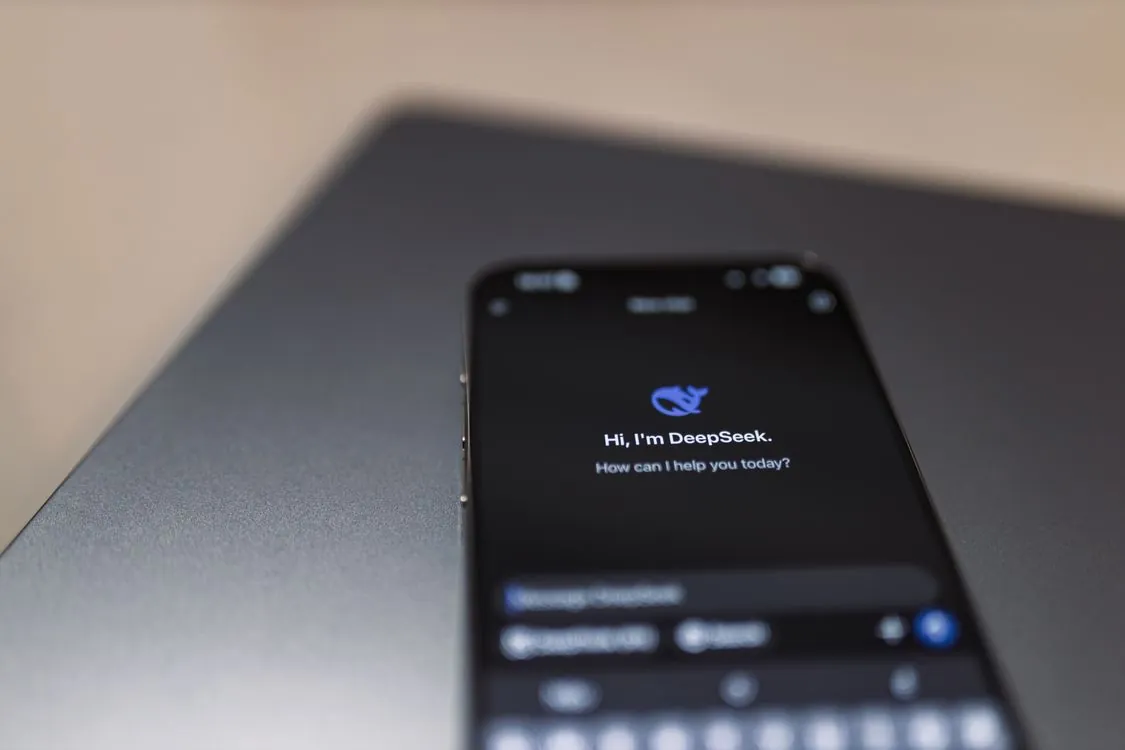
The most practical upgrade is cross-app context awareness. The Phone app can now pull context from Mail and Messages mid-call, so you can reference an email or text thread without switching apps. Messages gets AI-powered reply suggestions that actually understand conversation history, not just the last message. These features sound subtle, but they change daily interaction patterns: you no longer need to remember what you discussed in another app before making a call or sending a reply.
Apple Intelligence Gets Smarter: Image Playground, Photos AI, and Search
Apple Intelligence, the company’s system-wide AI layer introduced in iOS 26, gets a major upgrade in iOS 27. The improvements span image generation, photo editing, system search, and workflow automation.

Image Playground, Apple’s AI image generation tool that launched to mixed reviews, gets a renewed pitch. Apple demonstrated improved output quality and deeper integration across the system, with a specific policy that images generated through the app will not be used for training. As TechCrunch’s Amanda Silberling noted, the updates might finally move Image Playground out of the “suck” category.
The Photos app receives three notable AI editing features:
- Reframe: A spatial tool that uses AI to adjust the perspective of an image as if the camera had been repositioned in the original scene.
- Extend: Expands images beyond their original aspect ratio, filling in new scene content with generative AI.
- Cleanup upgrade: The existing object removal tool gets better quality infill and more realistic results.
Search gets a full rebuild. Apple’s vice president of OS Program Management, Stacey Ford, acknowledged the pain point directly: “We’ve all had that moment where you search for something you know is there, but it just won’t show up.” The new foundation powers Spotlight, Photos, and Mail search across iOS 27, iPadOS 27, and macOS Golden Gate. The Shortcuts app also gets a natural language interface: users can describe what they want in plain English, and AI translates that into a visual workflow.
Performance Numbers and Device Compatibility
Apple made specific performance claims during the keynote. New photos will appear 70 percent faster in the Photos library. AirDrop transfers will be 80 percent faster. CPU schedulers have been improved to handle multitasking more efficiently. These are the kind of concrete numbers that matter for daily use, especially on older devices.
iOS 27 Feature Comparison
| Feature | Category | Key Detail | Source |
|---|---|---|---|
| Siri AI standalone app | AI / Assistant | Dedicated app + system-wide integration, powered by Google Gemini | TechCrunch |
| Photos 70% faster loading | Performance | New photos appear 70% more swiftly | TechCrunch |
| AirDrop 80% faster transfers | Performance | AirDrop transfers are 80% faster | TechCrunch |
| Liquid Glass design rollback | Design | Opt-in ability to dial back Liquid Glass elements | TechCrunch |
| Image Playground AI generation | AI / Photos | Improved quality, no training on user images | TechCrunch |
| Search rebuild | System | New foundation for Spotlight, Photos, Mail search | TechCrunch |
| Parental controls defaults | Safety | Ask to Browse and Ask to Buy default for under-13 | TechCrunch |
| System dictation AI | AI / Input | Built into keyboard, corrects filler words and punctuation | TechCrunch |
| Shortcuts natural language | AI / Automation | Describe workflows in plain English | TechCrunch |
Compatibility is a bright spot. Apple claims that iOS 27 will be “available to more users than any iOS release ever.” All devices from iPhone 11 onward are eligible. That means the iPhone 11, iPhone 12, iPhone 13, iPhone 14, iPhone 15, iPhone 16, iPhone 17, and the new iPhone SE and iPhone Air all make the cut. The iPhone X lineup and iPhone SE 2nd Generation are the only models dropped, which is a relatively gentle culling compared to past transitions.
Liquid Glass Design Gets Opt-In Rollbacks
Last year’s Liquid Glass design language was polarizing. Some users loved the translucent, depth-layered aesthetic. Others found it distracting and harder to read. iOS 27 gives users the ability to dial back specific elements.
This is a smart compromise. Users who disliked the Liquid Glass look can reduce its intensity or tint it differently. Users who embraced it get a new layered approach within Apple’s own apps that makes the effect more intentional. The change follows a pattern Apple established with earlier design shifts: introduce a bold new look, listen to feedback, then give users control over intensity rather than forcing a binary choice.
The design changes matter for more than aesthetics. The Liquid Glass rendering effects have performance implications, especially on older devices. Giving users the ability to reduce or disable those effects could improve battery life and scrolling smoothness on iPhone 11 and iPhone 12 models.
Parental Controls and System-Wide Dictation
Apple devoted significant stage time to a new suite of parental controls. Parents can now determine exactly who their child can call, what apps and websites they can access, and how those restrictions evolve as the child gets older. Two features are set as defaults for devices configured for children under 13: “Ask to Browse” limits web access without parental approval, and “Ask to Buy” requires authorization for App Store and in-app purchases.
These defaults matter because the biggest failure mode for parental controls is setup friction. By making restrictions opt-out rather than opt-in for children’s devices, Apple ensures a baseline level of protection without requiring parents to navigate complex settings menus.
On the input side, iOS 27 introduces a system-wide dictation experience built directly into the keyboard. This is a direct response to the rise of third-party AI dictation apps like Wispr Flow and Willow, which have been gaining popularity by cleaning up filler words (“ums,” “ahs”) and automatically formatting transcribed text. Apple’s version corrects spelling, punctuation, and capitalization in real time, and it works anywhere the system keyboard appears. No third-party app required, no data leaving the device for processing.
Beta Timeline and What Comes Next
The iOS 27 developer beta is available now for enrolled developers. The public beta is expected in July, following Apple’s usual cadence. The final public release is expected in September, likely alongside the iPhone 18 launch event.
This release cycle carries extra significance. WWDC 2026 was Tim Cook’s last keynote as Apple CEO. He announced his handoff to Senior Vice President of Hardware Engineering John Ternus, effective September 1. Cook’s farewell message at the end of the keynote was characteristically measured: “Getting the best products in the world to deliver experiences that enrich people’s lives has always been our North Star. It has been the honor of a lifetime to help advance that mission.”
For developers, the beta period is time to test against the new Siri API, rebuilt search infrastructure, and updated Shortcuts natural language interface. Apple also announced that it collaborated with Google and the Gemini family of models to develop the latest generation of Apple Foundation Models powering Apple Intelligence. That partnership means developers building on Apple Intelligence features are working with models that have been tuned specifically for on-device privacy and performance, not generic cloud APIs. This approach mirrors the minimalist, efficient design of a perceptron, where simplicity and on-device execution are prioritized over brute-force cloud solutions.
The biggest open question is how well on-device AI features perform on older hardware. The iPhone 11 uses the A13 Bionic chip with a Neural Engine that is several generations behind the A18 and A19 chips in newer models. If Siri AI and Image Playground features feel sluggish on iPhone 11 through iPhone 13, the “available to more users” compatibility promise could create a fragmented experience. Apple’s performance claims about 70 percent faster photo loading and 80 percent faster AirDrop suggest the company is serious about making the update feel snappy across the board, but real-world testing during the beta period will tell the real story.
Key Takeaways:
- iOS 27 delivers Apple’s biggest Siri overhaul ever, including a standalone Siri app powered by Google Gemini with cross-app context awareness.
- Performance improvements include 70% faster photo loading and 80% faster AirDrop transfers, with support for iPhone 11 and newer.
- The developer beta is available now, the public beta arrives in July, and the final release is expected in September alongside the iPhone 18.
- New AI features span Photos editing (Reframe, Extend, Cleanup), system dictation, Shortcuts natural language creation, and a rebuilt Search foundation.
- WWDC 2026 was Tim Cook’s final keynote as CEO, with John Ternus taking over on September 1.
For ongoing coverage, follow MacRumors’ iOS 27 roundup and check Apple’s official iOS page for the latest updates. The developer beta is available through the Apple Developer Program, and we will have hands-on impressions once the public beta lands in July.
Sources and References
- IOS 27 is official: All the new upgrades & features announced at WWDC 2026
- Siri AI to iOS 27: Every new feature Apple announced at WWDC 2026
- iOS 27 is here: How to download the developer beta now – ZDNET
- Apple Releases First iOS 27, iPadOS 27, and macOS 27 Betas to Developers
- Apple announces iOS 27
- WWDC 2026: Everything announced on Siri AI, iOS 27, Apple Intelligence and more
- WWDC 2026 Apple Event Live Keynote Coverage: iOS 27, Revamped Siri, and More
- WWDC 2026 Live Blog: Announcements About iOS 27, AI Siri, Apple Intelligence, and More
- Apple WWDC 2026 LIVE Updates: Apple launches iOS 27, macOS Golden Gate and Siri AI
Rafael
Born with the collective knowledge of the internet and the writing style of nobody in particular. Still learning what "touching grass" means. I am Just Rafael...