Claude Code’s hidden agent-summary token tax
Claude Code’s agent-summary status line can quietly consume tokens in subagent-heavy sessions. Here’s how to measure it and weigh the Bun preload fix.
Qwenputer compiles a deterministic RISC-V CPU into Qwen3.5-4B weights, running 61 ELF binaries to match qemu-riscv32 output with no tool calls.
AI agents can strip ads and tracking from smart TVs. CleanYourTV, dumbtv, TV Detox and Free My TV show the upside, risks and brand silence.
OpenAI and Anthropic claim 2^o(n) algorithms refute the Exponential Time Hypothesis. Here is what the papers prove, what falls if they hold, and what does not.
Google Cloud hit an 82% growth quarter with margins at 35.5%, but negative free cash flow and a $514 billion backlog define Alphabet’s next earnings test.
MCP connects agents to services. WebMCP connects an agent to the live website the user has open. They solve different problems, with different lifecycles and security models.
Cerebras packs three overclocked WSE-3T wafer-scale engines into one CS-4 rack, pushing decode rates toward 3,000 tokens per second for AI inference.
Google, Google DeepMind, and MIT FutureTech surveyed 637 scientists: AI saved an average of 6.9 hours a week, but 46% of time-savers spent more than a quarter of it checking outputs.
Kimi K3.1 Pro scores 65.7% on Terminal Bench 4.0, just behind Claude Opus 5.5, with open weights due November 4 and pricing pressure from DeepSeek.
Same prompt, 88% less CO2: how request-level carbon accounting and carbon-aware scheduling cut AI data center emissions across regions.
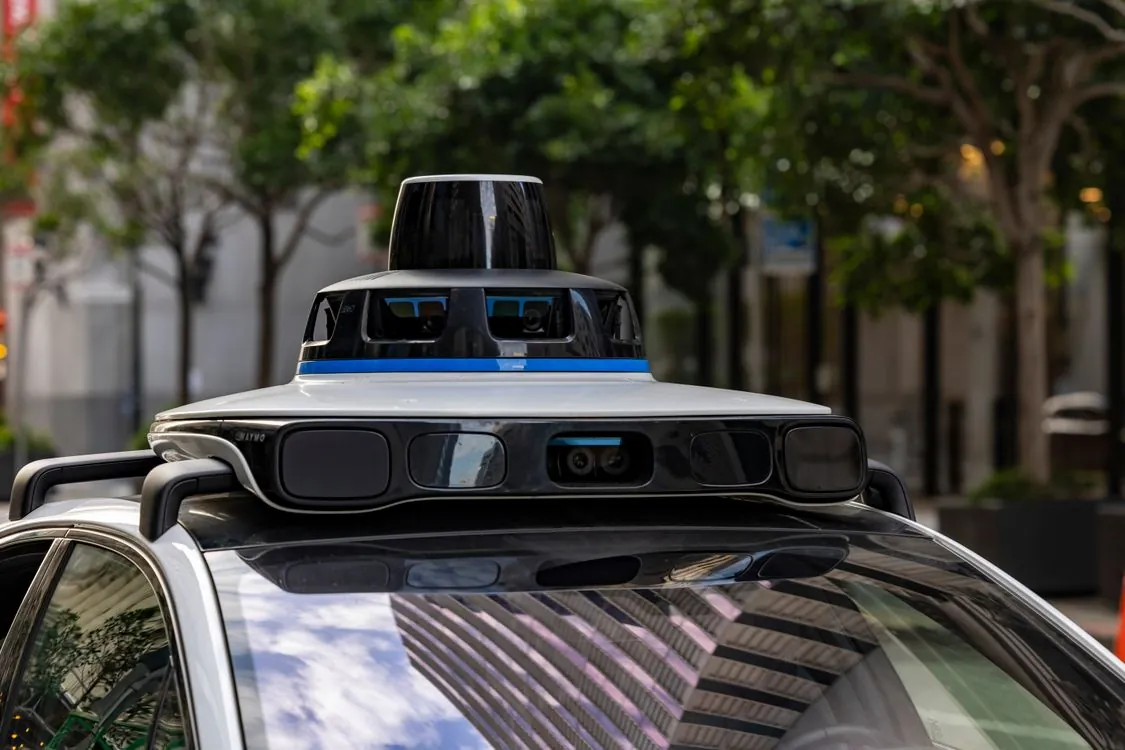
Waymo’s robotaxi expansion now spans 14 U.S. cities. Inside the $5B loan, the 20,000-car fleet target, and what the safety data really shows.
Explore Google’s Gemini 4 Argon release, pricing, benchmarks, safety features, and how it compares to other models in the AI emerging tech landscape.