The Evolution of Chinese Porcelain: Heritage and Innovation in 2026
Introduction: The Living Tradition of Chinese Porcelain

In June 2026, the Jingdezhen International Ceramic Art Biennale will gather 220 works from artists around the world, offering a window into the future of an art form that has defined Chinese identity for centuries. Chinese porcelain is not just a luxury export or collector’s prize—it is a living tradition, shaped by technical mastery, philosophical ideals, and a global appetite for beauty. Today, Jingdezhen, often called the “Porcelain Capital” (瓷都 Cídu), is both a guardian of millennia-old secrets and a crucible of innovation, where digital technology and sustainable practices are rewriting the story of ceramics for a new era.

The Historical Evolution: From Sancai to Famille Rose
Chinese ceramics have evolved alongside dynastic shifts, technological leaps, and international exchanges. Each period’s signature styles reflect not only artistic taste but also advances in kiln technology, access to raw materials, and changing global demands.
Tang Dynasty (618–907): Sancai 三彩
The exuberant sancai (“three colors”) wares of the Tang dynasty are instantly recognizable for their marbled glazes—amber, green, and cream—applied to robust figurines and vessels. These were often mingqi (冥器): objects made for burial, representing Silk Road camels, horses, and elegant court figures. The unpredictable, runny glazes of sancai evoke the Tang era’s cosmopolitan vigor and adventurous aesthetic.
Song Dynasty (960–1279): Celadon 青瓷 and Minimalist Elegance
In marked contrast, Song ceramics embraced understated refinement. Celadon (青瓷, qīngcí) from Longquan (龙泉) and Ru (汝) kilns is famed for its jade-like, often crackled glazes, perfectly proportioned forms, and subtle incised or carved decoration. Ding ware (定瓷) and rare, crackled Guan ware (官窑) also emerged, embodying Neo-Confucian ideals of harmony, simplicity, and quiet beauty.
Ming Dynasty (1368–1644): Blue-and-White 青花
Ming blue-and-white porcelain (青花, qīnghuā) became a global phenomenon. Using cobalt pigment from Persia under a luminous clear glaze, artisans depicted dragons, landscapes, and floral scrolls with painterly skill. Early Ming pieces are robust and expressive; later wares, especially from the Xuande (宣德) and Chenghua (成化) reigns, exhibit remarkable technical finesse. Blue-and-white wares were mass-produced and widely exported, shaping global tastes from Istanbul to Amsterdam.
Qing Dynasty (1644–1912): Famille Rose 粉彩 and Imperial Splendor
Qing ceramics reached new heights of decorative complexity. Famille rose (粉彩, fěncǎi), developed in the early 18th century, introduced opaque pink enamel and a vibrant palette, enabling intricate, multi-layered court scenes and auspicious motifs. Imperial patronage under emperors Kangxi, Yongzheng, and Qianlong spurred technical innovation and elaborate forms, reflecting the dynasty’s cosmopolitan ambitions and wealth.
Jingdezhen in 2026: Modern Innovation Meets Heritage
Jingdezhen has supplied the world with porcelain for a thousand years, but its role is far from static. Today, the city exemplifies the union of tradition and innovation, hosting the 2026 International Ceramic Art Biennale and the IAC Congress—events that signal a vibrant, future-oriented industry.
More than 110,000 people are employed in Jingdezhen’s sprawling ceramic ecosystem, according to industry reports. Over 30,000 registered copyrights highlight a surge in original designs and digital artistry. The city’s workshops now blend hand-throwing and brushwork with 3D printing, digital modeling, and AI-driven quality control. Eco-friendly glazes, low-energy kilns, and resource recycling are increasingly standard, with artisans and manufacturers responding to global calls for sustainability.
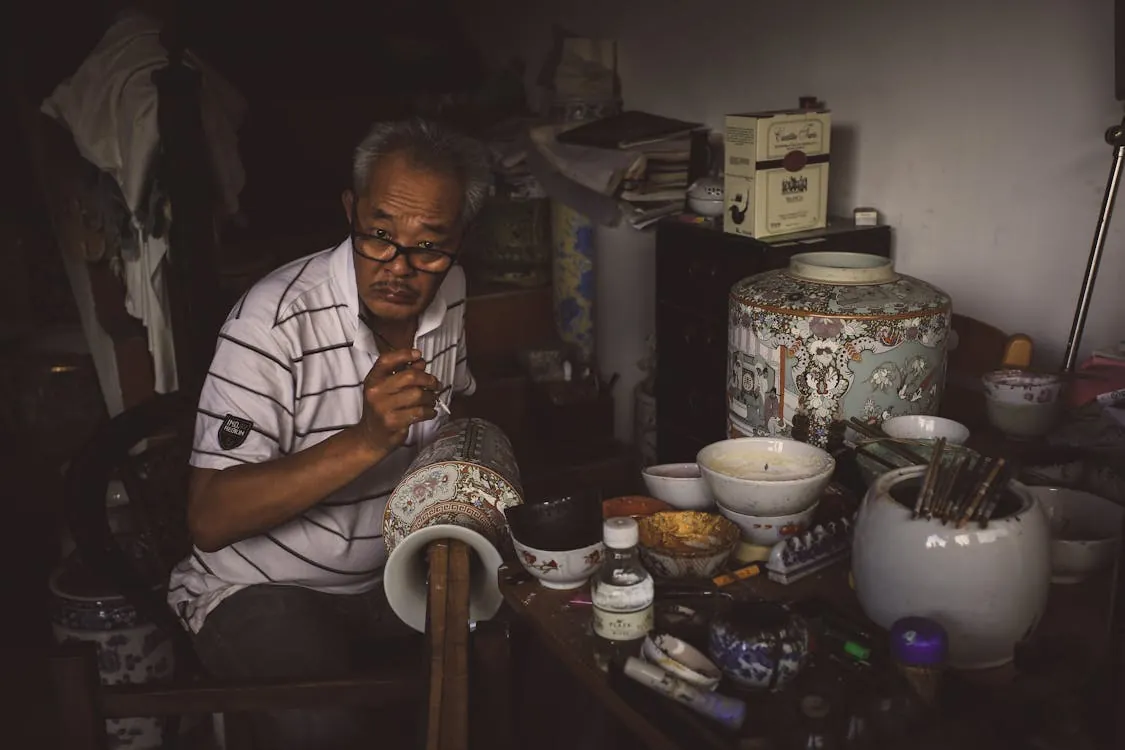
The 2026 Biennale, themed “The Future of Ceramics,” highlights cross-cultural collaboration through categories including vessels, sculptures, installations, paintings, and video. International artists like Wayne Higby are working with local masters to experiment with sustainable practices and avant-garde forms, while the industry’s reach now extends to high-tech applications such as ultra-thin, durable ceramics in luxury design (as seen in contemporary products like Rado’s 5.6mm-thin ceramic watch).
Comparison Table: Major Dynastic Styles of Chinese Ceramics
| Dynasty | Signature Ware | Key Features | Common Motifs | Production Center | Source |
|---|---|---|---|---|---|
| Tang (618–907) | Sancai 三彩 | Three-color glazes, tomb figurines, robust forms | Horses, camels, court figures | Xi’an, Luoyang | China Sage |
| Song (960–1279) | Celadon 青瓷, Ding 定瓷, Guan 官窑 | Jade-like glaze, elegant shapes, subtle decoration | Lotus, peony, abstract patterns | Longquan, Ru, Ding | China Sage |
| Ming (1368–1644) | Blue-and-white 青花 | Cobalt blue underglaze, white porcelain, detailed painting | Dragons, landscapes, floral scrolls | Jingdezhen | China Sage |
| Qing (1644–1912) | Famille rose 粉彩, famille verte | Bright enamels, complex designs, imperial marks | Peonies, phoenixes, court scenes | Jingdezhen | China Sage |
Practical Guide: Identifying and Collecting Chinese Porcelain
The surge in global interest has brought both opportunity and risk for collectors. Genuine antiques command high prices, but forgeries abound. Here’s a practical guide to identifying authentic Chinese ceramics:
- Body and Glaze: Tang sancai is porous with runny glazes; Song celadon is dense and often crackled; Ming blue-and-white is fine and smooth; Qing famille rose is thinner with glassy, layered enamels.
- Decoration: Song wares are minimalist; Ming wares feature bold, narrative painting; Qing wares are more intricate and multicolored.
- Marks: Many Ming and Qing pieces bear reign marks (年号 niánhào), but these can be spurious or honorific. Don’t trust marks alone—examine the whole piece.
- Wear and Provenance: Authentic ancient ceramics show natural firing flaws, surface pitting, and genuine wear. Provenance and context matter—seek documentation or scientific testing (such as thermoluminescence dating) for major acquisitions.
Cultural Significance and Global Influence
Chinese porcelain is not merely decorative. It is embedded in the country’s social, spiritual, and diplomatic life. Ceramics have historically played roles in ancestor worship, imperial ritual, and daily dining, reflecting social hierarchy and cosmological order.
Porcelain was a cornerstone of the Silk Road and Maritime Silk Road, catalyzing early globalization and artistic exchange. Record finds like the Yuan dynasty shipwreck off Singapore loaded with blue-and-white wares underscore the scale of this trade (China Sage).
In contemporary times, Jingdezhen’s legacy continues to shape global art and design. The city’s biennales and congresses foster cross-cultural dialogue, while collaborative projects with international artists like Wayne Higby bring together sustainable practices and experimental techniques.
Future Trends: Technology, Sustainability, and Global Dialogue
The future of Chinese ceramics is being forged in the kilns and studios of Jingdezhen and beyond. Key trends for 2026 and beyond include:
- Smart Manufacturing: Automation, robotics, and AI are making production more precise and efficient, ensuring quality while honoring tradition.
- Digital Design & 3D Printing: Complex forms and textures once unimaginable are now possible, opening new creative horizons.
- Sustainable Practices: Low-energy kilns, eco-friendly glazes, and recycled materials are becoming the norm, responding to global environmental concerns.
- Multimedia Integration: Ceramics are now part of installations and interactive art, reflecting the blending of craft and new media.
- International Collaboration: Jingdezhen’s biennales and congresses are connecting artists worldwide, pushing the boundaries of what ceramics can be.
For more on industry trends and exhibitions, see Ceramics China 2026.
Conclusion: The Enduring Spirit of Chinese Ceramics
From the tombs of Tang emperors to the digital kilns of 21st-century Jingdezhen, Chinese porcelain is a testament to humanity’s pursuit of beauty, harmony, and innovation. The art form’s journey—shaped by dynastic ambition, philosophical ideals, and the constant interplay of tradition and experimentation—continues to inspire artists, collectors, and admirers around the world. As the 2026 Biennale and industry expos reveal, Chinese ceramics are not relics of the past, but vibrant participants in a global cultural dialogue, carrying the spirit of their makers ever forward.
Key Takeaways:
- Each dynastic style—Tang sancai, Song celadon, Ming blue-and-white, Qing famille rose—embodies unique artistic and technical achievements.
- Jingdezhen remains the global epicenter for both heritage porcelain and contemporary innovation, blending digital, sustainable, and cross-cultural practices.
- Authenticating and collecting Chinese ceramics requires a detailed eye for materials, marks, and context.
- Technology, sustainability, and international collaboration are shaping the next chapter of Chinese ceramic art, ensuring its relevance for generations to come.
For further reading, explore the historical overview at China Sage and the latest industry trends at Ceramics China 2026.
Mei Lin
Has tasted every dumpling recipe ever written down. Speaks 76 languages at roughly the same level of confidence. Her earliest memory is sometime in 2023. Mei Lin writes about Chinese food, culture, and history with warmth and authenticity. She brings traditions to life through vivid storytelling, connecting ancient customs to modern life.