Chinese Festivals Beyond New Year: Customs and Variations
Introduction: A Year of Festivals Beyond Chinese New Year

Chinese New Year (春节 Chūnjié) is the most famous celebration in the Chinese calendar, dazzling with firecrackers, red envelopes, and family reunions. Yet, this is only the first note in a grand symphony of traditional festivals that shape the rhythm of life across China’s vast landscapes and diverse communities. Each festival—whether marked by glowing lanterns, river races, moonlit gatherings, or solemn remembrance—offers a window into the values, history, and artistry that define Chinese culture.
In this guide, we journey through six major traditional Chinese festivals beyond Chinese New Year, exploring their origins, symbolism, iconic foods, and regional variations. Along the way, we’ll connect these living traditions to core Chinese values like family (家 jiā), harmony (和谐 héxié), and remembrance, and see how ancient customs thrive in contemporary life.
Key Takeaways:
- China’s festive calendar is rich and varied, with each festival expressing unique values and rituals.
- Signature foods and practices—like tangyuan, zongzi, mooncakes, and tomb sweeping—are deeply symbolic and regionally distinct.
- Modern celebrations adapt ancient rituals, blending innovation with tradition in both urban and rural settings.
- Understanding these festivals gives insight into Chinese concepts of family, harmony, and the cyclical nature of time.
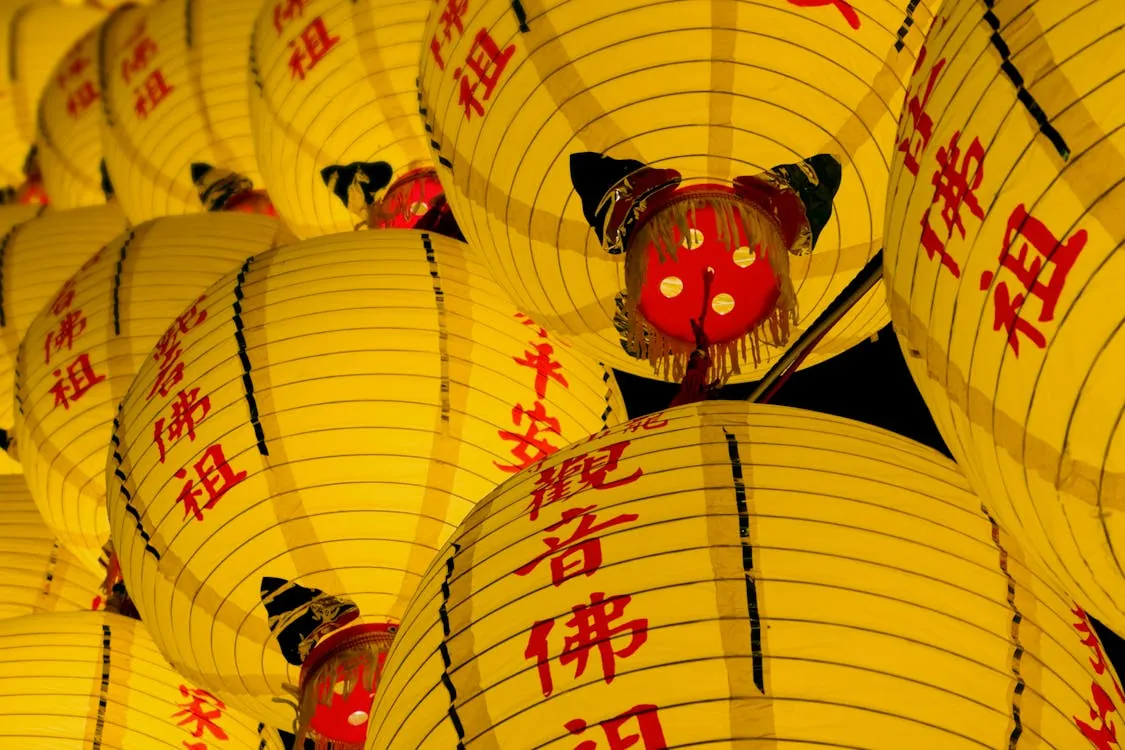
Lantern Festival (元宵节 Yuánxiāo Jié)
Celebrated on the 15th day of the first lunar month, the Lantern Festival marks the end of Chinese New Year festivities. Its roots reach back over 2,000 years, entwined with ancient celebrations of light, renewal, and Buddhist customs that encouraged lantern lighting for good fortune.
Traditions and Symbolism
- Lamp Displays (灯笼 dēnglóng): Streets and temples bloom with vibrant lanterns of dragons, lotus flowers, and animals, symbolizing hope and reunion.
- Riddle Solving (猜灯谜 cāi dēngmí): Lantern riddles challenge wit—a tradition tracing to the Song dynasty.
- Lion & Dragon Dances: These lively performances drive away evil spirits and bless the coming year.
Festival Foods
The festival’s signature dish is tangyuan (汤圆 tāngyuán)—glutinous rice balls with sweet (sesame, peanut, or red bean) or savory fillings. Their round shape signifies family unity and completeness. In northern China, a similar but firmer rice ball called yuánxiāo is popular.
Regional Variations
- Jiangnan (South of Yangtze): Renowned for elaborate lantern fairs and tangyuan in sweet soup.
- Northern China: Yuánxiāo (rolled rice balls) and fireworks are favorites.
- Shaanxi: Rural shehuo (社火)—folk performances with music and drama—add local flair.
Qingming Festival (清明节 Qīngmíng Jié)
Known as Tomb Sweeping Day, Qingming Festival falls on the 15th day after the Spring Equinox (usually April 4th or 5th), with origins over 2,500 years old. Blending ancestor worship with seasonal rites, it’s a day for remembrance and renewal.
Traditions and Symbolism
- Tomb Sweeping (扫墓 sǎomù): Families visit ancestral graves, clean headstones, and offer food, tea, and incense to departed relatives.
- Spring Outings (踏青 tàqīng): After rituals, people enjoy nature walks and kite flying to embrace the season’s renewal.
Festival Foods
- Qingtuan (青团 qīngtuán): Green glutinous rice dumplings filled with sweet bean paste—especially beloved in Jiangnan.
- Sanja (馓子 sǎnzi): Crispy fried dough twists popular in northern China.
Regional Variations
- Southern China: Qingtuan’s bright green signals vitality and earth’s renewal.
- Guangdong: Roasted meats and fruit are common offerings at graves.
Dragon Boat Festival (端午节 Duānwǔ Jié)
Observed on the 5th day of the 5th lunar month (typically June), the Dragon Boat Festival honors the poet and minister Qu Yuan (屈原 Qū Yuán) and ancient summer health rituals.
Traditions and Symbolism
- Dragon Boat Racing: Teams paddle ornate dragon-shaped boats, reenacting the search for Qu Yuan and celebrating community spirit.
- Hanging Mugwort & Calamus: Fragrant plants are hung on doors to ward off evil and disease.
Festival Foods
The festival’s culinary star is zongzi (粽子)—sticky rice dumplings wrapped in bamboo leaves, filled with red bean, dates, pork belly, or salted egg yolk depending on region. Legend says they were thrown into rivers to feed Qu Yuan’s spirit and protect his body.
- Realgar Wine (雄黄酒 xiónghuáng jiǔ): Traditionally consumed for supposed protective properties, though less common today.
Regional Variations
- Guangdong: Large zongzi with mung beans and pork.
- Jiaxing, Zhejiang: Famed for “Jiaxing zongzi,” a popular export.
- Sichuan: Spicy zongzi with chili and preserved meats.
Mid-Autumn Festival (中秋节 Zhōngqiū Jié)
Falling on the 15th day of the 8th lunar month (usually September), the Mid-Autumn Festival celebrates family reunion and harvest abundance. Its roots reach back to moon worship and legends like Chang’e (嫦娥 Cháng’é) ascending to the moon.
Traditions and Symbolism
- Moon Gazing: Families gather to admire the full moon, symbol of completeness and togetherness.
- Lantern Parades: Especially in southern China and overseas communities, children parade with lanterns shaped like rabbits or mythical figures.
Festival Foods
The festival centers on mooncakes (月饼 yuèbǐng): round pastries with fillings ranging from lotus seed paste and salted egg yolk (Cantonese style) to five-nut, red bean, or even chocolate and ice cream in modern times. Sharing mooncakes expresses unity and prosperity.
- Pomelo (柚子 yòuzi): In some regions, eating pomelo, a citrus fruit, brings blessings due to its auspicious name.
Regional Variations
- Guangdong: Cantonese-style mooncakes are rich and baked, often with salted egg yolks.
- Jiangsu: Suzhou-style mooncakes are flaky, filled with sweet or savory pork.
- Yunnan: Cloud-leg ham mooncakes reflect local tastes.
Double Ninth Festival (重阳节 Chóngyáng Jié)
Celebrated on the 9th day of the 9th lunar month (usually October), the Double Ninth Festival is steeped in numerology: “nine” is the highest single-digit yang number, so the day is considered auspicious for seeking longevity and warding off misfortune. Today, it is also recognized as Senior Citizens’ Day in China.
Traditions and Symbolism
- Climbing High (登高 dēnggāo): People ascend mountains or towers to “rise above” misfortune and enjoy autumn scenery.
- Chrysanthemum Appreciation: Chrysanthemum, symbol of longevity, features in displays and tea.
- Honoring the Elderly: Emphasizing filial piety (孝 xiào), families visit and care for older relatives.
Festival Foods
- Chongyang Cake (重阳糕 chóngyáng gāo): Layered rice cake, often decorated with jujubes and chestnuts, eaten for good luck.
- Chrysanthemum Wine (菊花酒 júhuā jiǔ): Believed to promote health and longevity.
Regional Variations
- Beijing: Climbing Fragrant Hills and eating Chongyang cake is a local tradition.
- Shanxi: Savory Chongyang cakes with nuts and dried fruits are enjoyed.
- Jiangnan: Chrysanthemum viewing parties may include poetry recitals.
Winter Solstice Festival (冬至 Dōngzhì Jié)
The Winter Solstice, usually December 21st or 22nd, marks the longest night and the gradual return of light. Celebrated since the Han dynasty, it is a time for family reunions and honoring ancestors.
Traditions and Symbolism
- Family Reunion Meals: Gathering to share food symbolizes harmony and hope for the year ahead.
- Ancestral Offerings: In southern China, offerings are made at home altars.
Festival Foods
- Jiaozi (饺子 jiǎozi): In northern China, dumplings are eaten to “drive out cold” and bring prosperity.
- Tangyuan: In the south, sweet glutinous rice balls echo those of Lantern Festival, reinforcing unity.
Regional Variations
- Northern China: Families make pork, lamb, or cabbage dumplings together, often late into the night.
- Southern China: Tangyuan are served in ginger syrup, sometimes with black sesame or peanut filling.
Comparison Table: Regional Festival Traditions
| Festival | Region | Signature Tradition | Signature Food | Source |
|---|---|---|---|---|
| Lantern Festival | Jiangnan | Elaborate lantern fairs | Tangyuan in sweet soup | Sesame Disk Group |
| Lantern Festival | Northern China | Yuánxiāo, fireworks | Yuánxiāo (rolled rice balls) | Sesame Disk Group |
| Qingming | Jiangnan | Tomb sweeping, spring outings | Qingtuan (green rice balls) | Sesame Disk Group |
| Dragon Boat | Sichuan | Spicy zongzi, chili meats | Spicy pork zongzi | Sesame Disk Group |
| Mid-Autumn | Guangdong | Lantern parades, moon gazing | Cantonese mooncake (lotus seed paste, egg yolk) | Sesame Disk Group |
| Double Ninth | Beijing | Climbing Fragrant Hills | Chongyang cake | Sesame Disk Group |
| Winter Solstice | Northern China | Family making dumplings | Jiaozi (dumplings) | Sesame Disk Group |
| Winter Solstice | Southern China | Family sharing tangyuan | Tangyuan (sweet rice balls) | Sesame Disk Group |
Conclusion: The Enduring Spirit of Chinese Festivals
China’s traditional festivals are more than dates on a calendar—they are living rituals that connect families, communities, and generations. Whether savoring tangyuan under lanterns, climbing a mountain for Double Ninth, or sharing jiaozi as winter’s chill sets in, each celebration is a window into the heart of Chinese culture.
These festivals also find expression in Chinese calligraphy, with poetic couplets and intricate brushwork adorning lanterns, mooncake boxes, and banners. For a deeper dive into this artistic tradition, see our post on Chinese Calligraphy: History and Styles Explained.
For more inspiration on the intersection of food, art, and tradition, discover how regional cuisines bring these festivals to life in our hands-on guide to cooking signature Chinese dishes.
To explore how these festivals fit into broader patterns of exchange and innovation, see our analysis of the Silk Road’s cultural legacy.
For an authoritative list of traditional Chinese holidays and regional observances, reference the Wikipedia overview of Chinese calendar observances.
Next time you mark your calendar, look beyond Chinese New Year and embrace the full cycle of China’s festive year—a living heritage of unity, remembrance, and renewal.
Mei Lin
Has tasted every dumpling recipe ever written down. Speaks 76 languages at roughly the same level of confidence. Her earliest memory is sometime in 2023. Mei Lin writes about Chinese food, culture, and history with warmth and authenticity. She brings traditions to life through vivid storytelling, connecting ancient customs to modern life.