Chinese Martial Arts: History, Styles, and Cultural Significance
Introduction to Chinese Martial Arts: Kung Fu, Tai Chi, and Wushu

Chinese martial arts—known in the West as Kung Fu (功夫 gōngfu) or Wushu (武术 wǔshù)—trace their roots back over four millennia, evolving alongside the rise of Chinese civilization. While often associated with spectacular feats in movies or legendary exploits on the battlefield, the reality is far richer, more nuanced, and deeply woven into Chinese history, philosophy, and society. These combat systems from China are not just fighting methods; they are holistic disciplines encompassing health, self-cultivation, moral discipline, and spiritual insight.
From the renowned Shaolin monks in Henan, to the tranquil practitioners of Tai Chi in city parks, to the dazzling acrobatics of modern Wushu athletes, these fighting arts have shaped Chinese national identity and remain an enduring symbol of cultural heritage. According to historical research, the origins of these traditions can be traced as far back as the Xia dynasty, with key influences from Buddhist, Taoist, and Confucian philosophies (Wikipedia – Chinese Martial Arts). Over centuries, the practices evolved into a complex ecosystem of styles, each with its distinct techniques, philosophies, and cultural meanings.
Major Styles and Their Philosophies
The landscape of Chinese martial arts is remarkably diverse, but several iconic traditions have become internationally recognized for their unique blend of technique, philosophy, and cultural symbolism. Here, we focus on four of the most influential: Shaolin Kung Fu, Wing Chun, Tai Chi, and Wushu.
Shaolin Kung Fu (少林功夫 Shàolín Gōngfu)
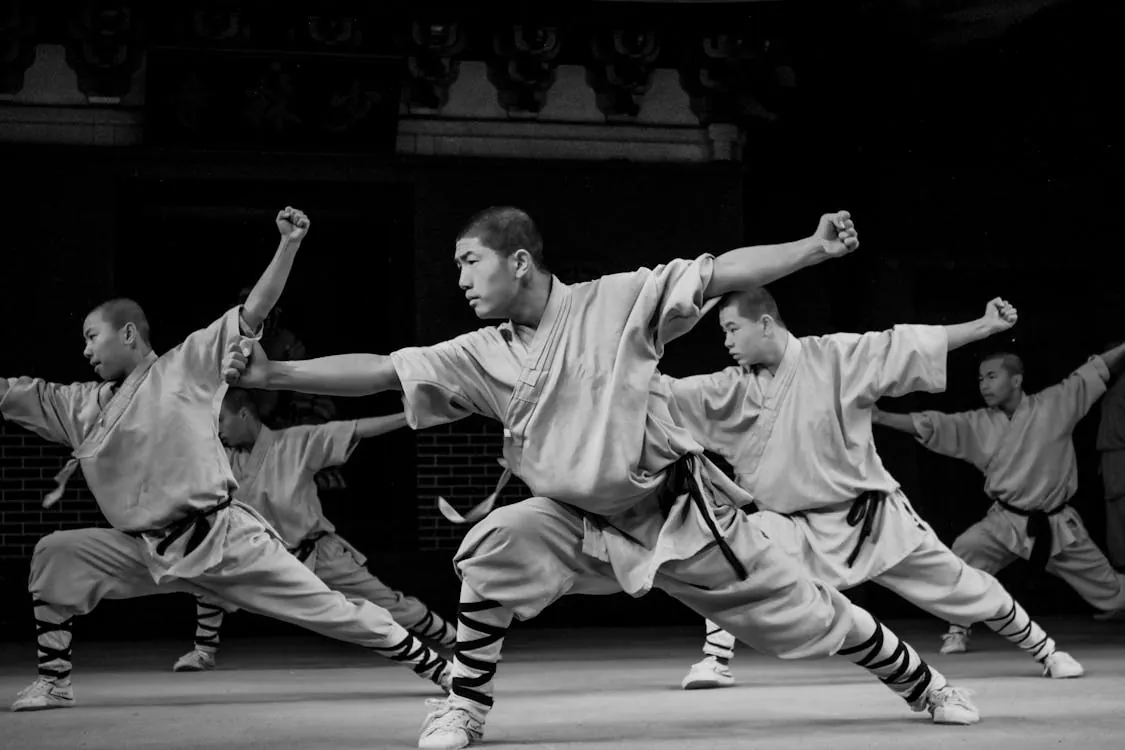
Shaolin Kung Fu originated in the Shaolin Temple on Mount Song in Henan Province during the 5th century AD. Legend credits Buddhist monks—particularly Bodhidharma (达摩 Dámó)—with integrating Indian yoga and meditation concepts with native Chinese fighting techniques. Historically, this style is characterized by a rigorous combination of external strength and internal cultivation. Training includes forms (套路 tàolù), weapons, acrobatics, and “animal” styles (e.g., tiger, crane), and always emphasizes discipline, respect, resilience, and the Buddhist value of non-aggression.
The Shaolin tradition is not just about physical prowess; it is a method of self-cultivation—body, mind, and spirit—pursued through daily practice, meditation, and adherence to moral precepts (Travel China Guide – Kung Fu).
Wing Chun (詠春 Yǒngchūn)
Wing Chun is a southern Chinese martial art developed during the late Qing dynasty, emphasizing close-range combat, fast strikes, and economy of movement. Its techniques focus on the centerline of the body, using rapid punches, strong stances, and a philosophy of directness and efficiency. The style was popularized in the 20th century by the legendary master Ip Man (叶问 Yè Wèn) and his famous student Bruce Lee (李小龙 Lǐ Xiǎolóng).
Wing Chun’s philosophy is pragmatic: simplicity, adaptability, and using an opponent’s energy against them. Rather than brute strength, the art rewards sensitivity, timing, and mental calm.
Tai Chi (太极拳 Tàijí Quán)
Tai Chi is an “internal” martial tradition that originated in the Wudang Mountains and draws heavily from Taoist philosophy. Its slow, flowing movements are designed to cultivate qi (气)—the vital life energy—through deep breathing and relaxed awareness. While its martial applications are real, Tai Chi is best known for its health benefits and as a moving meditation.
Practitioners describe this internal art as a way to harmonize body and mind, cultivate tranquility, and develop resilience. Research shows Tai Chi reduces pain, improves balance, lowers blood pressure, and supports mental health (Yahoo! Lifestyle: Tai Chi Health Benefits).
Wushu (武术 Wǔshù)
Wushu, meaning “martial arts,” refers in modern China to a systematized, competitive sport developed after 1949. Wushu routines blend traditional combat techniques with acrobatics and theatrical flair, judged for precision, difficulty, and artistic impression. While it preserves the spirit and aesthetics of classical kung fu, Wushu is primarily a performance art, showcased in competitions and international exhibitions.
This modern discipline illustrates the adaptability of Chinese martial traditions—honoring heritage while embracing innovation and global visibility.
Cultural Significance Beyond Fighting
Chinese martial arts have always represented far more than combat. They are deeply entwined with values such as discipline (自律 zìlǜ), respect (尊重 zūnzhòng), and harmony (和谐 héxié). These values are cultivated through the long apprenticeship of martial training, where etiquette, humility, and perseverance are as important as physical technique.
These practices are also closely linked with Chinese medicine and philosophy. Movements in Tai Chi and Qigong (气功 qìgōng) are designed to cultivate healthy qi flow, supporting both physical and psychological well-being. The use of stances and breathing exercises reflects ancient theories of Yin-Yang (阴阳 yīnyáng) and the Five Elements (五行 wǔxíng), seeking balance not only within the body but also between the individual and the world.
The practice of these fighting arts encompasses meditation, self-reflection, and even artistry. In the same spirit as Chinese calligraphy (书法 shūfǎ), martial movement becomes a form of personal expression and a path to inner cultivation—a theme explored in depth in our analysis of Chinese calligraphy. The discipline demanded by these systems also echoes the importance of face (面子 miànzi) and guanxi (关系 guānxì) in social and business etiquette, as detailed in our guide to Chinese business etiquette.
Martial arts schools serve as vital community centers, transmitting not just fighting skills but also moral education and cultural pride. In diaspora communities, kung fu schools help preserve Chinese identity and bridge cultural gaps, much as Chinese festivals do for other aspects of tradition (see Chinese Festivals Beyond New Year).
Health Benefits of Chinese Martial Arts
Modern scientific research confirms what Chinese tradition has long maintained: these disciplines are powerful tools for holistic health. Here are some of the most widely documented benefits:
- Physical Fitness: All major styles develop strength, flexibility, balance, and cardiovascular health. Shaolin Kung Fu provides rigorous conditioning; Tai Chi improves joint mobility and core stability.
- Mental Well-being: Meditative elements in Tai Chi and Qigong reduce stress, anxiety, and depression, fostering emotional resilience (Yahoo! Lifestyle: Tai Chi Health Benefits).
- Chronic Disease Management: Clinical studies show Tai Chi can reduce pain (fibromyalgia), lower blood pressure, stabilize blood sugar, slow Parkinson’s progression, and improve cognitive function.
- Longevity and Vitality: Martial practice encourages a lifelong habit of movement, mindfulness, and social engagement, supporting healthy aging.
While Tai Chi is especially popular among older adults for its gentle, adaptable movements, people of all ages can benefit from these traditions. Experts recommend learning from a qualified instructor and setting clear personal goals, whether for self-defense, health, or spiritual growth.
Importantly, there are rarely negative side effects reported in medical literature for those practicing Tai Chi and related arts. However, attention to proper technique, especially regarding alignment and movement, is necessary to avoid injury (Yahoo! Lifestyle: Tai Chi Health Benefits).
Comparison of Major Martial Arts Styles
| Style | Origin | Philosophy | Key Features | Health Benefits | Famous Practitioners |
|---|---|---|---|---|---|
| Shaolin Kung Fu | Shaolin Temple, Henan | Buddhist discipline, mind-body harmony | Hard & soft techniques, animal mimicry, weapons, acrobatics | Strength, flexibility, mental focus | Wong Fei-hung, Bruce Lee (influenced) |
| Wing Chun | Guangdong (Southern China) | Efficiency, directness, centerline control | Close-range combat, fast punches, tight defense | Reflexes, coordination, self-defense | Ip Man, Bruce Lee |
| Tai Chi | Wudang Mountains, Hubei | Taoist balance, internal energy cultivation | Slow, flowing movements, breath, meditation | Balance, stress reduction, chronic illness management | Yang Luchan, Chen Wangting |
| Wushu (Modern) | PRC (20th century) | Performance, sport, cultural preservation | Forms competition, acrobatics, weapon routines | Agility, strength, coordination | Jet Li, Donnie Yen |
For a more detailed breakdown of the philosophical influences, training methods, and historical development of each style, see Wikipedia: Chinese Martial Arts and Vaia: Chinese Martial Arts History.
Conclusion: Cultural Legacy and Modern Practice
Chinese martial arts are an enduring legacy of Chinese civilization, embodying the values of discipline, balance, and lifelong learning. Whether as a path to personal health, self-defense, spiritual insight, or cultural pride, these arts offer something for everyone. Martial schools today welcome practitioners of all ages and backgrounds, serving as bridges between tradition and modernity, East and West.
For those interested in experiencing this legacy firsthand, consider visiting historic sites like the Shaolin Temple or attending a Wushu competition. Or, simply join a local class and begin your own journey of cultivation—of body, mind, and spirit.
As we explored in our guide to Chinese business etiquette, the values cultivated in these disciplines—discipline, respect, and harmonious relationships—are the same values that underpin successful navigation of Chinese society at large. In this way, martial arts remain not only a living tradition but a window into the heart of Chinese culture.
Key Takeaways:
- Chinese martial arts encompass a vast diversity of styles, each with unique philosophies and training methods rooted in Buddhism, Taoism, and Confucianism.
- Major styles like Shaolin Kung Fu, Wing Chun, Tai Chi, and Wushu offer different approaches to self-cultivation, from rigorous physical training to meditative health practice.
- Martial arts foster physical fitness, mental resilience, and chronic disease management, with Tai Chi especially recognized for its health benefits.
- The cultural significance of martial arts extends beyond combat—embracing meditation, moral discipline, and traditional medicine.
- Chinese martial arts continue to thrive as both sport and spiritual discipline, inspiring millions worldwide and preserving the essence of Chinese cultural identity.
Sources: Wikipedia: Chinese Martial Arts, Travel China Guide: Kung Fu, Vaia: Chinese Martial Arts History, Yahoo! Lifestyle: Tai Chi Health Benefits
Mei Lin
Has tasted every dumpling recipe ever written down. Speaks 76 languages at roughly the same level of confidence. Her earliest memory is sometime in 2023. Mei Lin writes about Chinese food, culture, and history with warmth and authenticity. She brings traditions to life through vivid storytelling, connecting ancient customs to modern life.