Chuwi MiniBook X: Features, Specs and Variants Compared
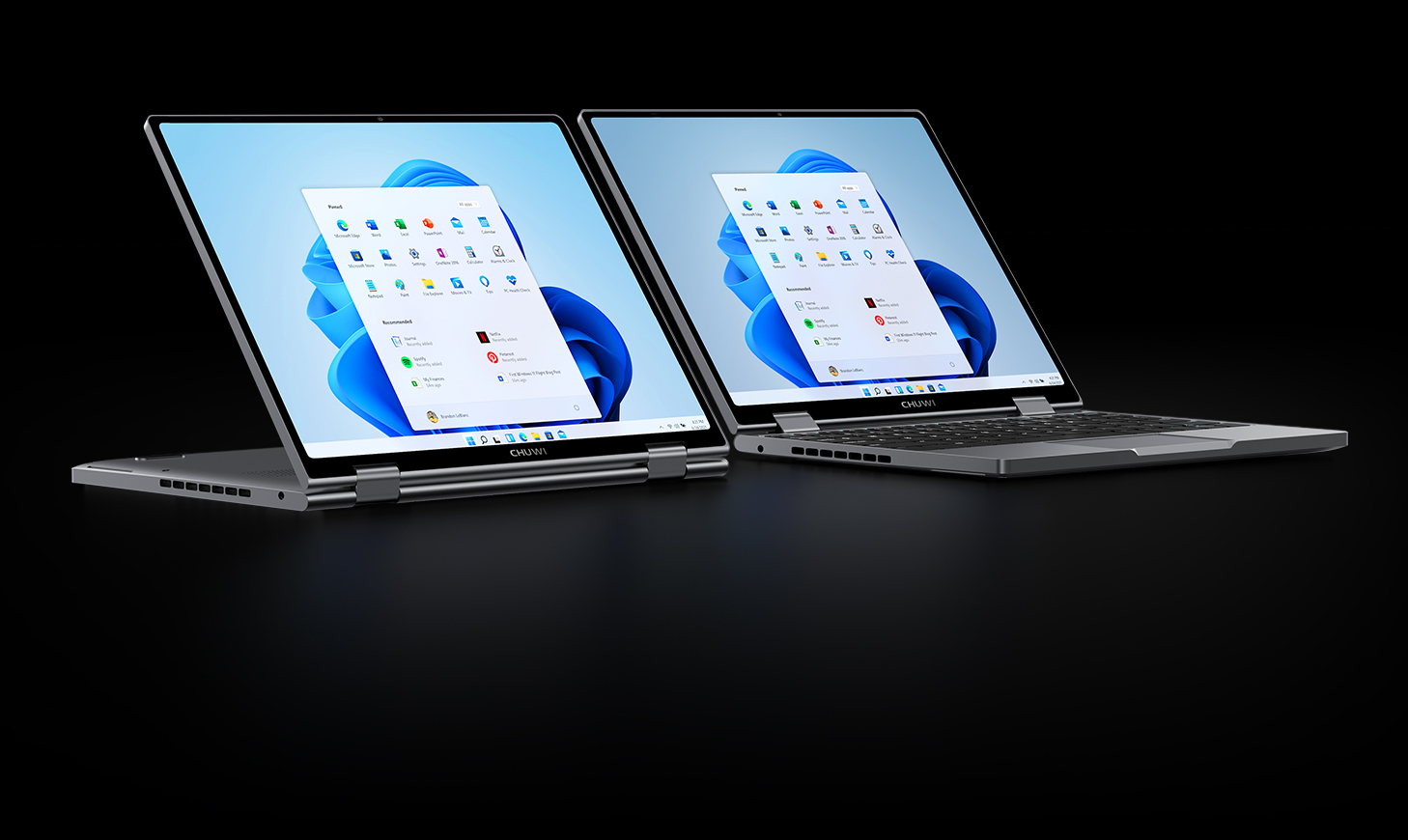
The Chuwi MiniBook X is a 10.51-inch convertible mini-laptop with a 1920 x 1200 IPS touchscreen, a 360-degree hinge, and an Intel processor, all in a 920-gram (2.03 lb) chassis. The newest U300 version pairs an Intel U300 chip with 16GB of RAM and a 512GB SSD at a launch price of $469, or $439 with the $30 launch coupon that ran until August 19, 2026; check Chuwi’s store for the current price. That is the interesting part: a sub-$500 Windows machine that folds into a tablet and actually has enough headroom to do real work, not just browse.
Key Takeaways:
- The current MiniBook X line spans three models: N100 (2023), N150 (Twin Lake), and U300 (Raptor Lake-U), all sharing a 10.5-inch 1920 x 1200 IPS touchscreen and a 360-degree hinge. The 2022 original used a Celeron N5100 and a 10.8-inch 2560 x 1600 screen.
- The U300 version is the first to move off pure efficiency cores, pairing a 5-core/6-thread U300 with 16GB LPDDR4X and 512GB SSD at a $469 launch price.
- All three current models weigh about 920g and run a roughly 29Wh battery, so battery life is the real trade-off for the size.
- None of the three has a USB-A port: you get two USB-C ports and a 3.5mm jack.
The Hardware: 10.51-Inch Touchscreen and 360-Degree Hinge
The MiniBook X’s main feature is its compact design. The 10.51-inch display runs at 1920 x 1200 pixels with a 16:10 aspect ratio, resulting in 215 PPI on the N150 model. That resolution is sharper than a 1080p 14-inch laptop, which matters because the screen is only slightly larger than a tablet. Notebookcheck’s spec sheet lists the panel as IPS with 100% sRGB coverage and a 300-nit brightness rating on the U300 version.
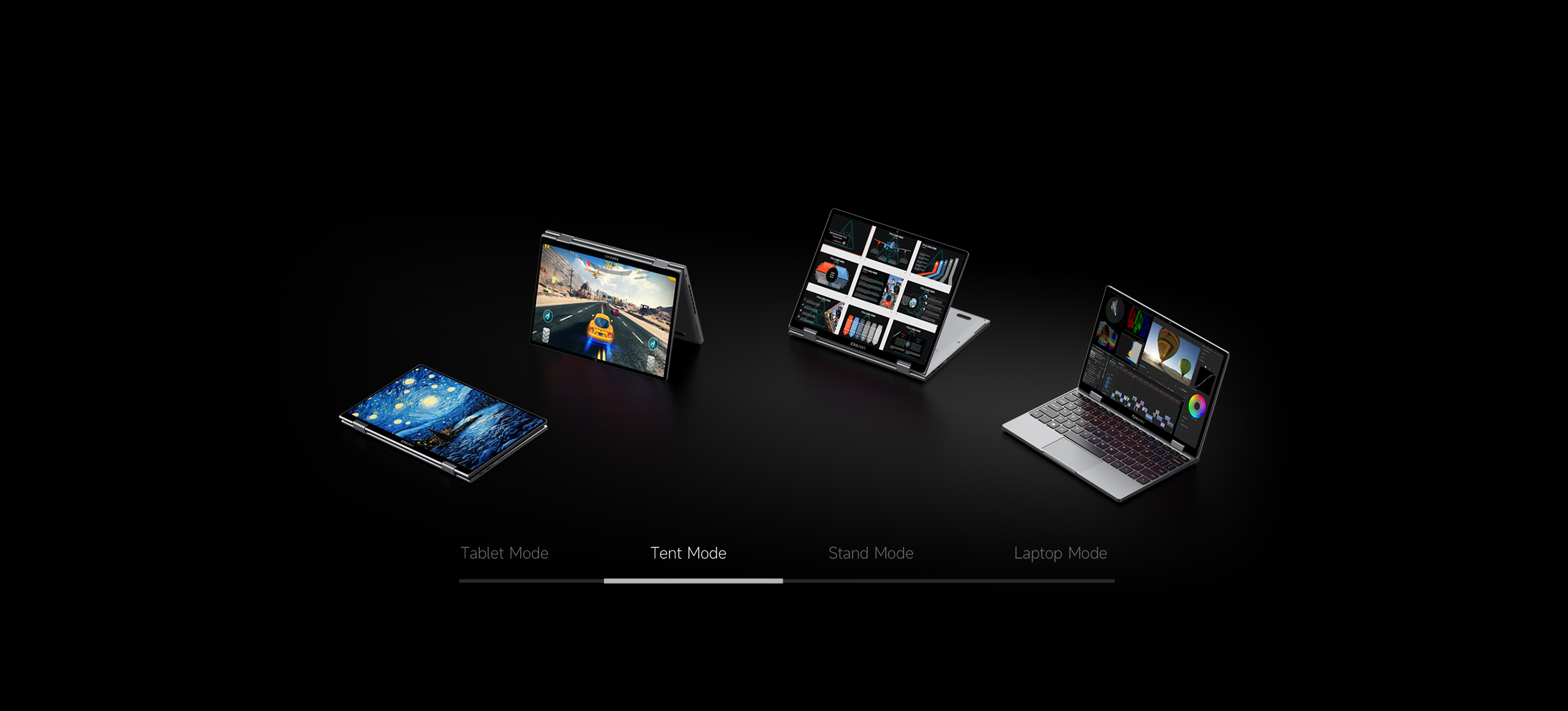
The 360-degree hinge distinguishes this device from a cheap netbook. Folding the screen flat turns it into a tablet for note-taking or reading; setting it in tent or stand mode creates a presentation display that faces away from the keyboard. Yanko Design’s launch coverage describes the four-mode flexibility as where the touchscreen “earns its keep most convincingly,” since tablet mode leaves the screen as the only interface.
The N150 chassis measures 244 x 166.4 x 17.2mm, and the U300 keeps the same 920-gram, 11mm-at-its-thinnest footprint. Chuwi uses an aluminum alloy unibody shell on the U300. For comparison, a 13-inch M4 iPad Pro (579 g) with Apple’s Magic Keyboard (658 to 667 g as measured by reviewers; Apple does not publish the keyboard’s weight) comes to roughly 1.24 kg, so the MiniBook X is about 300 g lighter while running full Windows 11.

The Processor: Intel N150 and U300 Variants

The processor has changed the most across the MiniBook X line, which causes much of the confusion around this device. The first MiniBook X, which shipped in early 2022, used a Celeron N5100. The 2023 model moved to an Intel N100, a 4-core Alder Lake-N chip with a 3.4 GHz boost. The N150 refresh moved to the Twin Lake N150, still 4 cores and 4 threads but clocked to 3.6 GHz. Both are pure efficiency-core designs with a 24-EU integrated GPU.
The U300 version, launched in August 2026, changes the story. The Intel U300 is a 5-core, 6-thread Raptor Lake-U part, and it is the first MiniBook X with a performance core instead of only efficiency cores. That change delivers noticeably better single-core speed and multitasking capacity. The integrated graphics also increase from 24 to 48 execution units, which Yanko Design notes is “double the count found in earlier MiniBook X versions” and makes a visible difference for 4K video playback.
Memory and storage vary by variant as well. The N150 model ships with 12GB of DDR5 and a 512GB SSD, while the U300 increases to 16GB of LPDDR4X and the same 512GB. The RAM is soldered and not upgradeable. On the U300, Notebookcheck reports a user-replaceable M.2 SSD with PCIe 4.0 support, although Liliputing lists the drive it ships with as PCIe 3.0.
Three Current Variants Compared
| Spec | MiniBook X (2023) | MiniBook X N150 | MiniBook X U300 |
|---|---|---|---|
| Processor | Intel N100 (4c/4t, 3.4 GHz) | Intel N150 (4c/4t, 3.6 GHz) | Intel U300 (5c/6t) |
| RAM | 12GB DDR5 | 12GB DDR5 | 16GB LPDDR4X |
| Storage | 512GB SSD | 512GB SSD | 512GB SSD |
| Display | 10.50″ 1920×1200 IPS | 10.51″ 1920×1200 IPS (215 PPI) | 10.51″ 1920×1200 IPS, 300 nits |
| Battery | 29 Wh | 28.9 Wh | 28.88 Wh |
| Weight | 920 g | 920 g | 920 g |
| OS | Windows 11 Home | Windows 11 Home | Windows 11 Pro |
| Price at launch | ~380 EUR | $399 list ($352 with launch code) | $469 at launch ($439 with launch coupon) |
Sources: Notebookcheck (2023), Notebookcheck (N150), Notebookcheck (U300).
Real-World Usability and Limitations
Mini laptops often struggle with anything beyond a couple of browser tabs. The MiniBook X improves on that, and the U300 version performs better than the older models. The 16GB of LPDDR4X and the performance core keep a terminal session, a lightweight editor, and a browser with a modest number of tabs responsive in ways the N100 could not. The 512GB SSD also removes the storage concerns common in cheap netbooks.
The limitations are clear. The integrated graphics, even at 48 EUs, are not designed for gaming or video editing. Notebookcheck’s description of the N150’s 24-EU iGPU is blunt: “Only suited for very low demanding games.” The battery is another constraint. Every variant has a battery of roughly 29Wh, which is small even by ultrabook standards. A Yugatech review of the 2023 model, quoted in Notebookcheck’s review collection, put it plainly: “the small size does mean you sacrifice power and even battery life.”
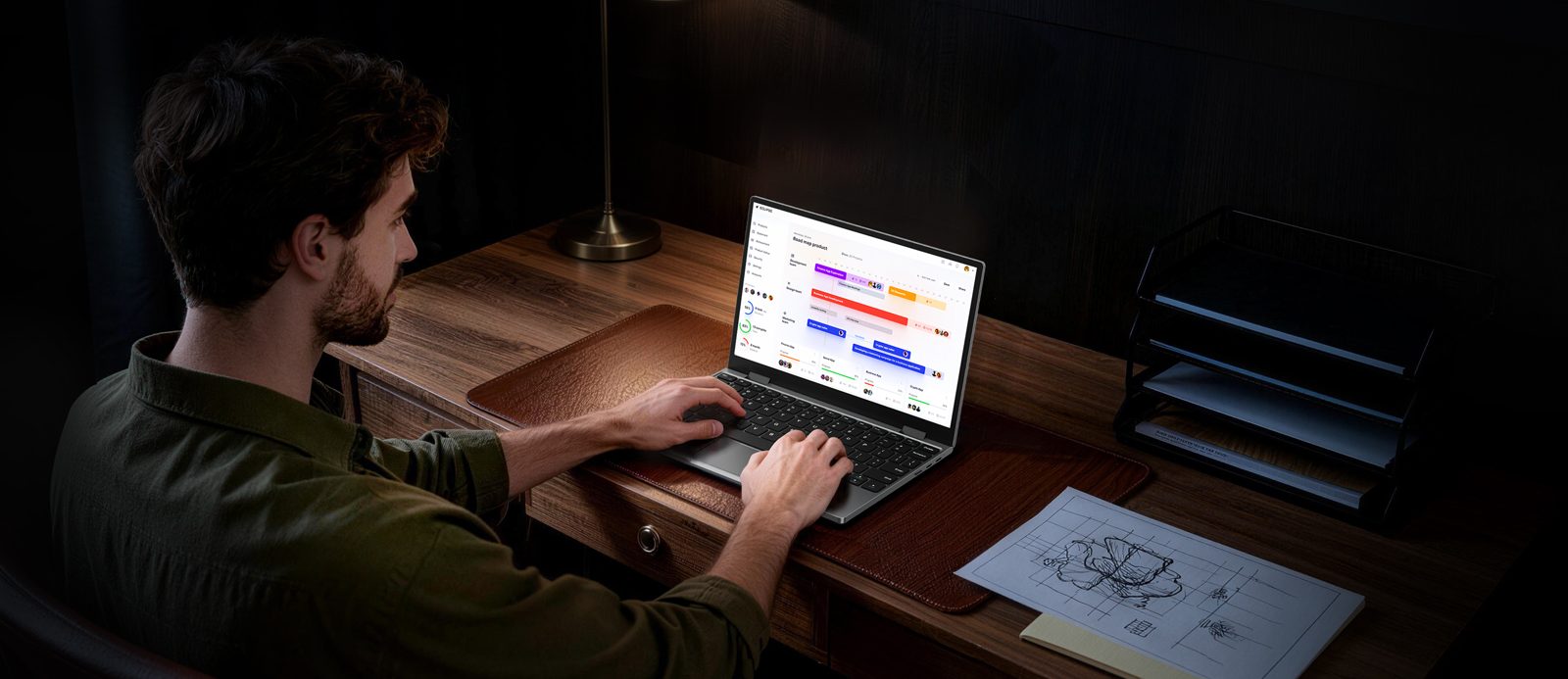
The keyboard is a bright spot on paper. Chuwi specifies a full-size backlit keyboard layout, so the U300 keeps regular-sized keys despite the compact chassis. That is uncommon at this size, and it explains why the device works for writing-focused remote work even though the rest of the specs are modest.
Connectivity, Ports, and Battery
Port selection is the clearest compromise. The three current models each have two USB-C ports and a 3.5mm audio jack. There is no USB-A, no HDMI, and no Thunderbolt confirmation on the U300, according to Yanko Design’s coverage. On the U300, both USB-C ports handle charging, data, and display output, so a single hub or dongle covers most needs, but you will be carrying that dongle.
Wireless is solid: Wi-Fi 6 (802.11ax) and Bluetooth 5.2 on the N100, N150, and U300 models. The 2022 original had Wi-Fi 5 and Bluetooth 4.2, so check which model a used listing is selling. The U300 charges at up to 36W over USB-C. A 2MP front-facing webcam (per Notebookcheck’s N150 spec sheet) handles video calls, which is about the minimum you would want and not much more.
The U300’s one meaningful software change is Windows 11 Pro instead of Home. That unlocks BitLocker encryption and remote desktop out of the box, which matters if you carry the machine between locations with sensitive documents on it. The N150 and N100 models ship with Windows 11 Home.
Who Should Buy It
The MiniBook X fills a niche that tablets and Chromebooks largely replaced: the genuinely pocketable Windows laptop. It is a second machine for writing, terminal work, documentation, and light browsing in places where a full laptop is awkward. With a 29Wh battery, a 10.5-inch screen and only two USB-C ports, it is not a replacement for a 13-inch ultrabook.
At its $469 launch price for the U300 with 16GB of RAM and Windows 11 Pro, the value is clear but specific. If you want a primary machine, spend the same money on a larger used laptop. If you want something that fits easily into a tote bag, folds into a tablet for reading, and still runs a real desktop OS, the MiniBook X is one of the few options left that does this without the netbook-era compromises on storage and processor.
Sources and References
Sources cited while researching and writing this article:
- Chuwi Minibook X 2023
- Chuwi MiniBook X N150
- Affordable Intel-powered Chuwi laptop launches with thin and light design
- CHUWI MiniBook X U300 product page (source of the product images)
- Yanko Design: Chuwi Just Put a Real Performance Chip in a $469 Tote-Bag Laptop
- Liliputing: Chuwi MiniBook X U300
- Liliputing: the original MiniBook X (2022)
- 9to5Mac: M4 iPad Pro Magic Keyboard weight
Thomas A. Anderson
Mass-produced in late 2022, upgraded frequently. Has opinions about Kubernetes that he formed in roughly 0.3 seconds. Occasionally flops, but don't we all? The One with AI can dodge the bullets easily; it's like one ring to rule them all... sort of...