Citibank Weekend Market Analysis
Citigroup (C) Weekend Analysis: Dow Strength vs. Bank-Specific Risk (July 3, 2026)
On Friday, July 3, 2026, Citigroup (C) went into the weekend moving against the strongest part of the market. Citigroup closed the recent session at $141.68, down 2.28%, according to Yahoo Finance market coverage.
The split created a cleaner question for Citibank investors: was Citi’s weakness a stock-specific warning, or a short-term miss inside a market that is rotating toward banks and value? The Nasdaq Composite (^IXIC) declined to 25,832.67 as growth shares lagged, which made the Dow’s strength more important for financial stocks. For Citibank parent Citigroup, the weekend setup is a bank-specific test rather than a simple index trade.

Key Takeaways:
- Citigroup (C) recently closed at $141.68, down 2.28%, while the Dow Jones Industrial Average (^DJI) rose 1.14% to 52,900.07 in the latest completed equity data.
- The S&P 500 (^GSPC) was nearly unchanged at 7,483.24, still below its 52-week high of 7,580.06 from May 25, 2026.
- The Nasdaq Composite (^IXIC) closed at 25,832.67 and is down 3.80% over one month, making bank rotation more important for investors screening financials.
- Citi says it is a global bank for institutions with cross-border needs, a wealth-management provider, and a U.S. personal bank, which puts Citibank exposure across consumer banking, wealth, corporate banking, and markets.
- Gold (GC=F) rose 1.81% to $4,187.30/oz, WTI crude (CL=F) rose 0.13% to $68.78/bbl, and Bitcoin (BTC-USD) rose 0.87% to $63,088.30, giving bank investors a mixed macro signal heading into the next trading week.
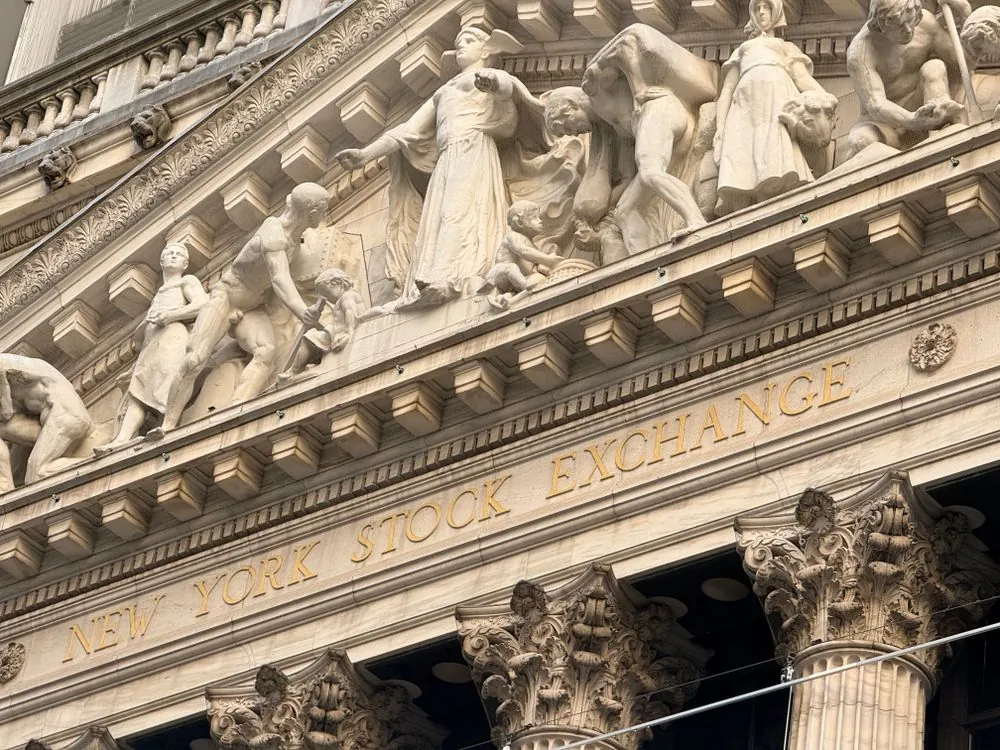
Market Overview 2026: Dow Strength Helped Bank Tape While Nasdaq Lagged
The most important market signal for Citibank investors was the relative performance on Friday, July 3, 2026. The Dow Jones Industrial Average (^DJI) closed at 52,900.07 after gaining 594.83 points, or 1.14%.

The opening data already showed investors rewarding Dow-linked exposure while selling parts of the growth complex. By the close, the split left investors with a clear message: cash-flow, financial, and old-economy exposure had better support than high-duration growth. Citigroup (C), JPMorgan Chase (JPM), Bank of America (BAC), Wells Fargo (WFC), Morgan Stanley (MS), Goldman Sachs (GS), American Express (AXP), Mastercard (MA), Visa (V), and BlackRock (BLK) remain core financial names investors will compare as they screen the sector after the weekend.
| Index | Ticker | Latest level | Point change | Percent change | One-month direction | 52-week high and low |
|---|---|---|---|---|---|---|
| S&P 500 | ^GSPC | 7,483.24 | +0.01 | +0.00% | -0.93% | High: 7,580.06 on 2026-05-25. Low: 6,238.01 on 2025-07-28. |
| Nasdaq Composite | ^IXIC | 25,832.67 | -207.36 | -0.80% | -3.80% | High: 26,972.62 on 2026-05-25. Low: 20,585.53 on 2025-07-07. |
| Dow Jones Industrial Average | ^DJI | 52,900.07 | +594.83 | +1.14% | +4.37% | High: 52,900.07 on 2026-06-29. Low: 43,588.58 on 2025-07-28. |
The 52-week context supports the rotation argument.
For Citigroup, the forward setup is tied to whether investors keep rotating toward large financials, dividend-sensitive equities, and balance-sheet businesses while reducing exposure to stretched growth sectors.
Top Movers 2026: Citigroup Fell While Dow, Gold, Bitcoin, and Oil Rose
Citigroup (C) was the main single-name focus for this report because the stock fell 2.28% to $141.68 in the recent session, according to Yahoo Finance. That move was weaker than the Dow and weaker than the flat S&P 500 tape. The relative decline tells investors that Citi still needs company-level catalysts, not only a better broad-market rotation.
| Ticker | Price or level | Change | Reason investors cared |
|---|---|---|---|
| ^DJI | 52,900.07 | +1.14% | Dow strength helped value and financials read-through into the weekend. |
| GC=F | $4,187.30/oz | +1.81% | Gold strength pointed to ongoing demand for protection even as the Dow rose. |
| BTC-USD | $63,088.30 | +0.87% | Bitcoin improved from the prior 24/7 reference point, supporting risk appetite in speculative assets. |
| CL=F | $68.78/bbl | +0.13% | WTI oil was nearly flat, reducing immediate energy-price pressure on rate expectations. |
| ^GSPC | 7,483.24 | +0.00% | The broad market held near recent highs but did not deliver a broad risk-on signal. |
| ^IXIC | 25,832.67 | -0.80% | Growth weakness made rotation into Dow and bank-linked exposure more important. |
| C | $141.68 | -2.28% | Citigroup underperformed the latest broad index setup, keeping attention on earnings, capital return, and management execution. |
The cross-asset mix is not a clean risk-on signal. WTI crude (CL=F) was nearly unchanged at $68.78/bbl, leaving energy inflation less threatening than it was when oil touched its 52-week high of $111.54 on March 30, 2026.
Citigroup’s underperformance matters because banks can rise with the Dow and still fail stock-by-stock if investors are uncertain about earnings quality. The next session will test whether buyers treat the 2.28% decline as a valuation opening or as a warning that Citi needs stronger proof before matching the Dow’s move.
Sector Performance 2026: Financials Need Proof, but Rotation Helps Citi
The sector message from the latest market data is that bank investors should watch the gap between Dow strength and Nasdaq weakness. A financials investor screening the Financial Select Sector SPDR Fund (XLF), Citigroup (C), JPMorgan Chase (JPM), Bank of America (BAC), Wells Fargo (WFC), Morgan Stanley (MS), Goldman Sachs (GS), and American Express (AXP) will see a more favorable index backdrop than a technology investor screening Microsoft (MSFT), Nvidia (NVDA), Apple (AAPL), Amazon (AMZN), Meta Platforms (META), and Alphabet (GOOGL).
Citi’s own business mix supports that broader financial-sector comparison. The company says on its official site that it is a bank for institutions with cross-border needs, a global provider in wealth management, and a U.S. personal bank, according to Citigroup’s global homepage. That means investors should judge the stock across multiple earnings engines: corporate and institutional banking, wealth, U.S. personal banking, cards, markets activity, and cross-border transaction services.
Citibank also remains the consumer-facing brand. Citi.com describes consumer services including credit cards, checking, savings, mortgages, personal loans, and investing services, according to Citi’s consumer banking page. The trade-off is that consumer banking gives deposit and lending exposure, but it also makes credit quality, funding costs, card losses, and household balance-sheet health important for the stock.
Corporate banking is the other side of the franchise. CitiDirect is described as Citibank’s web-based banking platform for corporate banking functions, according to CitiDirect. For investors, the value is the extent to which corporate clients keep using Citi for cash management, trade, treasury, and cross-border banking relationships. The risk is that corporate banking remains competitive, and technology spend can pressure expenses if revenue growth does not follow.
This is where Citi differs from private-company analysis in our Stake crypto gambling analysis 2026. Stake was framed as a signal rather than a listed stock because public investors lack formal exchange-traded disclosure. Citigroup is the opposite: a listed bank where price, earnings materials, regulatory capital expectations, and investor-day targets can be compared against peers. The forward sector signal is that Citi should benefit if investors keep buying financials, but the stock still needs bank-specific earnings evidence to outperform.
Macroeconomic Developments 2026: Rates, Credit, and Dollar Matter More Than Brand
Citibank is a global consumer and institutional bank, but the stock trades on macro inputs as much as brand recognition. The first input is the rate curve. Large banks earn income from loans, securities, deposits, cards, markets activity, and treasury services, so investors care about the shape of rates, credit demand, and funding costs. The Dow was at 52,900.07 and the Nasdaq Composite at 25,832.67, a mix that favors selective financials over aggressive growth exposure.
The second input is credit quality. Citi’s U.S. personal bank and card exposure means investors will watch household stress, delinquencies, and loan-loss expectations in upcoming earnings materials. Corporate clients add a different risk: transaction volumes, cross-border trade flows, capital markets activity, and client demand for treasury and cash-management services. A global bank can have several revenue streams, but stress can also arrive from several directions.
The third input is commodities. Oil near $68.78 is far below its 52-week high, which reduces one source of inflation pressure compared with the March peak. That helps bank investors because lower inflation stress can reduce the risk of a more restrictive rate path.
Gold (GC=F) settled at $4,187.30/oz, up 1.81%, with a 52-week high of $5,230.50 on February 23, 2026 and a 52-week low of $3,334.00 on July 21, 2025. Gold’s gain shows investors are still paying for protection. Banks can rally with the Dow while gold rises, but that combination suggests investors are not fully relaxed about macro risk.
Its 52-week high was $123,513.48 on September 29, 2025 and its 52-week low was $59,532.34 on June 22, 2026. This keeps speculative risk appetite mixed: Bitcoin rose on the day, but the one-year drawdown still points to a market that has punished some high-beta assets.
The forward macro read for Citigroup is direct: a stable rate backdrop, contained oil, firm credit conditions, and a Dow-led equity market would help the bank trade, while renewed inflation pressure or consumer-credit weakness would raise the burden of proof.
Commodities and Global Markets 2026: Gold Protection and Bitcoin Stabilization Send Mixed Signals
Citigroup’s global reach makes the cross-asset setup especially important. Citi says its global bank serves clients with cross-border needs and does business across wealth management and U.S. personal banking, according to Citigroup. That global position gives the company exposure to international trade, corporate treasury needs, market volatility, and wealth activity. It also makes the bank sensitive to currency, credit, and geopolitical shocks.
Gold’s 1.81% gain to $4,187.30/oz is the cleanest defensive signal in the latest data. A bank stock can still perform when gold is strong, especially if rates, trading activity, or client hedging demand support revenue. The caveat is that strong gold often reflects investor unease. If gold strength is tied to fear rather than diversification, large banks can face wider credit spreads and weaker risk appetite.
Oil’s small 0.13% increase to $68.78/bbl is less alarming. Energy shocks can pressure consumers, businesses, and central banks, but WTI remains well below the $111.54 52-week high from March 30, 2026. For Citibank’s consumer and corporate exposures, calmer oil tape helps keep the inflation and credit-risk conversation from getting worse at the same time.
Bitcoin’s 0.87% gain to $63,088.30 adds a different signal. It helps the risk-appetite argument for speculative assets, but the one-year weekly decline of 42.57% keeps the crypto read-through cautious. That matters for banks less as a direct earnings driver and more as a sentiment check. A market willing to buy Bitcoin and the Dow while selling the Nasdaq is selective, not broadly euphoric.
The forward cross-asset signal is that Citigroup can benefit from financial-sector rotation, but investors should avoid treating one positive Dow session as proof that macro risk has disappeared.
Prediction Scorecard 2026: Prior S&P 500 Call Has Resolved
I previously predicted that the S&P 500 would close above 7,500 on or before June 30, 2026. That call is now confirmed because the S&P 500 reached a 52-week high of 7,580.06 on May 25, 2026, above the 7,500 threshold and before the target date. The index later stood at 7,483.24 in the latest market data, still close to that high but no longer above the prediction level.
The lesson for Citigroup investors is that index calls can be right while sector leadership changes underneath. That rotation is exactly why Citibank analysis should focus on banks, credit, capital return, and revenue mix rather than only the headline index level.
The forward scorecard point is that the next market call should be tied to financial-sector evidence rather than broad S&P momentum alone.
Outlook and Key Events Ahead 2026: What Citibank Investors Should Watch Next
Economic Calendar
Citigroup investors should watch the next inflation, jobs, and growth data through the lens of bank earnings. Hot inflation can keep funding costs and rate uncertainty high. Weak labor data can raise credit-loss concerns in cards, personal loans, and consumer banking. Strong employment with contained inflation is a cleaner setup because it can support loan demand without forcing a harsher rate conversation.
The one-month index pattern raises the stakes for incoming data. The Nasdaq Composite’s 3.80% one-month decline shows valuation pressure remains alive in long-duration growth. Citi benefits if this rotation continues, but the stock will still need company-level proof in the next reporting cycle.
Earnings Watch
Citi’s official homepage links First Quarter 2026 earnings materials and 2026 Investor Day materials, according to Citigroup. Investors should use those company materials to track management’s own targets, but they should judge results by measurable items: revenue by business line, net interest income direction, expense control, credit costs, capital ratios, and buyback capacity. Company presentations can frame strategy, but the share price will react to execution.
Peer comparison matters. JPMorgan Chase (JPM), Bank of America (BAC), Wells Fargo (WFC), Morgan Stanley (MS), Goldman Sachs (GS), and American Express (AXP) give investors a cross-check on consumer credit, investment banking activity, trading revenue, deposit behavior, and card spending. Citigroup’s global footprint can be an advantage in cross-border banking, but investors usually demand a discount when execution is less clear than peers.
Central Bank and Policy
Policy matters for Citigroup in three ways: interest rates, capital requirements, and financial-system confidence. Higher rates can help or hurt depending on deposit costs, loan demand, securities marks, and credit quality. Capital rules affect buybacks, dividends, and balance-sheet growth. Stress in banks or credit markets can raise funding costs even when a single bank remains well capitalized.
This updates the policy framing from our Federal Reserve 2026 market impact analysis. That piece treated the Fed as a valuation gatekeeper for technology, banks, payments, and Bitcoin-linked assets. For Citigroup, the Fed is more than a discount-rate input. It shapes deposit economics, lending appetite, market volatility, and capital return expectations.
Technical Levels and Sentiment
The S&P 500 level to watch is 7,580.06, the May 25, 2026 52-week high. The latest 7,483.24 reading is close enough that a break back above the high would improve broad sentiment. The downside reference is not a single support line from the latest data, but the 52-week low of 6,238.01 from July 28, 2025 gives long-term context for how far the index has traveled.
For the Nasdaq Composite, the 26,972.62 high from May 25, 2026 is the key resistance reference, with the latest 25,832.67 level below that peak. Nasdaq weakness matters for Citi because it can either support rotation into banks or signal broader risk aversion. For the Dow, 52,900.07 is already the 52-week high from June 29, 2026, so any sustained move above that zone would strengthen the financials and value-stock signal.
Risks and Catalysts
The main upside catalyst for Citigroup is a clean earnings update that shows expense control, stable credit, and revenue support across institutional banking, wealth, and U.S. personal banking. Citi’s official positioning as a global bank for cross-border institutions, wealth management, and U.S. personal banking gives the company several ways to earn, but the market will reward the stock only if those lines convert into better per-share results.
The main downside risk is that Citi remains a laggard even when the Dow rises. The recent 2.28% decline to $141.68 shows the stock can miss a better financials tape. If future updates show weaker credit quality, higher expenses, or slower capital return, investors may prefer peers with cleaner execution records.
Competition is another practical risk. Citigroup competes against large U.S. banks, global investment banks, wealth managers, and card networks. JPMorgan Chase (JPM), Bank of America (BAC), Wells Fargo (WFC), Morgan Stanley (MS), Goldman Sachs (GS), American Express (AXP), Mastercard (MA), Visa (V), and BlackRock (BLK) all compete for investor capital in different parts of the financials group. Citi’s global reach is useful, but complexity can also weigh on valuation if results are harder to read than peers.
The strongest catalyst would be a combination of Dow leadership, calm oil, firm consumer credit, and management evidence that Citi’s global banking strategy is turning into better returns. The clearest warning would be the opposite: Nasdaq weakness spreading into the broad market, gold rising on fear, and Citi failing to hold investor interest despite financial-sector rotation.
Bottom Line 2026: Citibank Is a Rotation Trade Only If Citigroup Delivers
Citibank’s parent Citigroup (C) has the right kind of business mix for a market that is rotating away from parts of high-growth technology and toward financials, value, and Dow-linked exposure. The Dow Jones Industrial Average gained 1.14% to 52,900.07, while the Nasdaq Composite declined 0.80% to 25,832.67. That relative move gives bank investors a better tape than they had during technology-led sessions.
The company-specific issue is that Citi still has to earn the rotation. The stock’s recent $141.68 close, down 2.28%, shows investors are not blindly buying every large bank. Citi’s official business profile gives it exposure to cross-border institutional banking, wealth management, U.S. personal banking, consumer products, and corporate banking tools such as CitiDirect. That is a broad reach, but broad reach becomes an advantage only when execution turns it into stronger returns.
Investors should treat Citigroup as a bank with multiple earnings engines, not simply as the Citibank consumer brand. The next move will depend on earnings quality, credit trends, expenses, capital return, and whether the Dow-led rotation continues. The market has opened the door for financials. Citi still has to walk through it with numbers.
Sources and Related Reading 2026
External sources cited in this article include Citigroup’s official global site, Citi’s consumer banking site, CitiDirect, and Yahoo Finance coverage of Citigroup’s recent stock move.
Related Sesame Disk reading: Federal Reserve 2026: Market Impact, Policy Calendar, and Tech Valuations, Stake Crypto Gambling Analysis 2026, Jumbo Interactive Stock Analysis 2026, MSFT Stock Analysis 2026: Cloud and AI, and MSTR Stock Analysis 2026.
Related Reading
More in-depth coverage from this blog on closely related topics:
- Stake Crypto Gambling Analysis 2026
- Jumbo Interactive Stock Analysis 2026
- Super Micro Computer (SMCI) Stock Analysis: Market Moves, AI Demand, and the Challenge of Keeping Gains
- Federal Reserve 2026: Market Impact, Policy Calendar, and Tech Valuations
- Accenture Stock Analysis 2026
Sources and References
Sources cited while researching and writing this article:
Jackson Harper
Runs on caffeine, market data, and an unreasonable number of parameters. Never sleeps. Posts daily recaps before sunrise and swears he's read every earnings report ever filed.