Confucianism, Taoism, and Buddhism: Their Impact on Modern China
Introduction: A Living Tapestry of Thought

In a year that has seen China reaffirm its commitment to cultural heritage—amidst global debates on modernization and identity—the influence of traditional philosophies is more visible than ever. Over a billion people navigate daily life guided, consciously or unconsciously, by the teachings of Confucianism (儒家 rújiā), Taoism (道家 dàojiā), and Buddhism (佛教 Fójiào). These three great currents, each with their own lineage of sages, texts, and rituals, have not only shaped personal conduct and social structure, but continue to inform business ethics, education, and even state policy.

To understand contemporary China, one must look beyond headlines to the quietly persistent values that thread through family gatherings, classrooms, boardrooms, and government halls. This article explores the core principles, key texts, and representative figures of each tradition, comparing their influence and showing how they coexist—sometimes in tension, often in harmony—in the world’s oldest continuous civilization.
Confucianism: The Heartbeat of Social Order
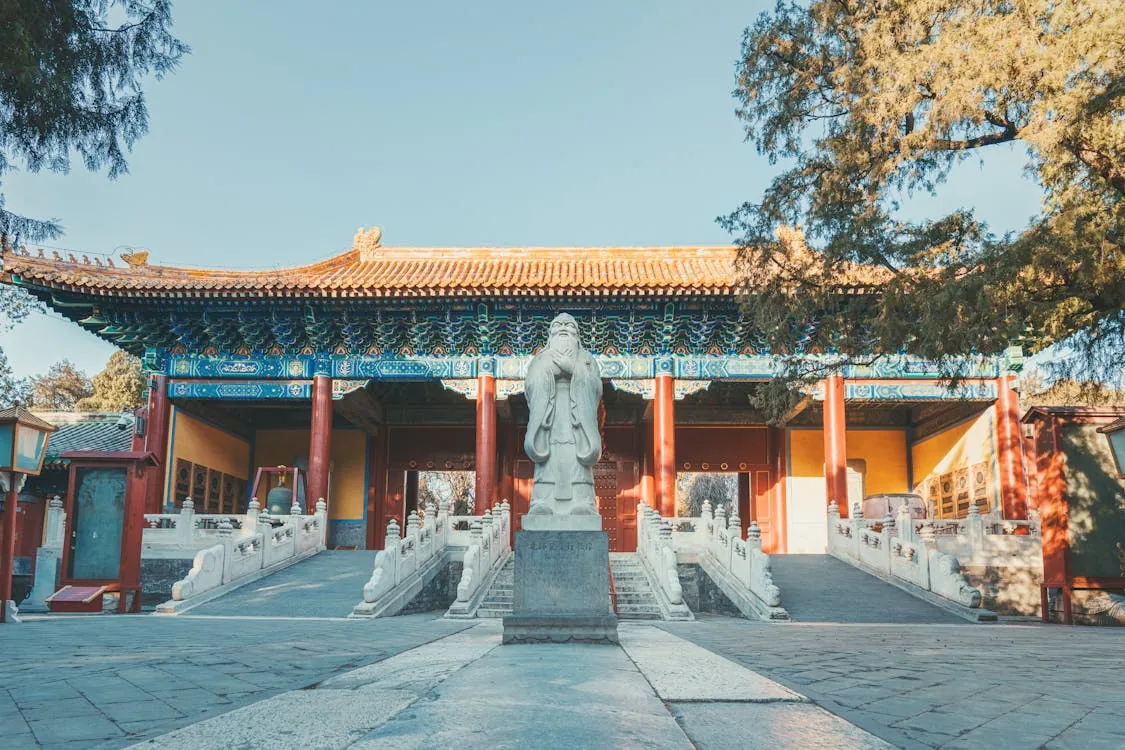
At the heart of Confucianism is a vision of society ordered by virtue, respect, and ritual. Founded by Kong Fuzi (孔夫子 Kǒng Fūzǐ, Confucius, 551–479 BCE) during the tumultuous Spring and Autumn period, Confucianism rose to become the intellectual bedrock of imperial China, shaping its bureaucracy, educational ideals, and family structure.
- Core Principles:
- Ren (仁): Humaneness, benevolence, the highest virtue. “To love others,” Confucius said, “begins with self-discipline.”
- Li (礼): Ritual propriety, etiquette, and social hierarchy. Li governs everything from ancestor worship to business negotiations.
- Xiao (孝): Filial piety—absolute respect for one’s parents and ancestors, seen as the root of all virtue.
- Junzi (君子): The “noble person” or “gentleman,” a model of moral refinement and integrity.
- Key Texts:
- The Analects (论语 Lúnyǔ): Aphorisms and dialogues capturing the teachings of Confucius and his disciples.
- Mencius (孟子 Mèngzǐ): A later sage elaborates on innate human goodness and the responsibilities of rulers.
- The Five Classics (五经 Wǔjīng): Canonical texts required for state officials, covering ritual, poetry, and history.
Confucianism’s influence is unmistakable in China’s education system, which prizes rote learning, respect for teachers, and rigorous examinations—echoes of the imperial civil service. The concept of face (面子 miànzi) and relationships (关系 guānxì) in business etiquette are also rooted in Confucian social ethics, as discussed in our guide to Chinese martial arts and cultural values.
Taoism: Harmony with the Way
Where Confucianism prescribes order and duty, Taoism seeks attunement with the natural world and the underlying force of the Tao (道). Traditionally attributed to Laozi (老子 Lǎozǐ, 6th century BCE), Taoism offers a counterpoint to rigid social norms, advocating for spontaneity, humility, and non-interference.
- Core Principles:
- Tao (道): The ineffable way of nature, the origin and pattern behind all existence.
- Wu Wei (无为): “Non-action” or “effortless action”—acting in accordance with the Tao, without force or contrivance.
- Yin-Yang (阴阳): Dynamic balance of opposites—light and dark, male and female, active and passive.
- Simplicity and Naturalness: Living simply, minimizing desires, and following the rhythms of the seasons.
- Key Texts:
- Tao Te Ching (道德经 Dàodé Jīng): 81 cryptic verses exploring the mysteries of the Tao and virtue.
- Zhuangzi (庄子 Zhuāngzǐ): Parables and stories illustrating the relativity of experience and the value of spontaneity.
Taoist thought permeates Chinese medicine, martial arts like Tai Chi, and the aesthetics of landscape painting. Its ecological sensitivity—urging humans not to dominate but to flow with nature—resonates in contemporary environmental movements. Temple rituals and festivals, such as those described in our guide to Chinese festivals, are infused with Taoist cosmology.
Buddhism: Awakening Compassion
Buddhism arrived in China from India during the Han dynasty, blossoming into a rich array of schools and practices. It introduced new possibilities: liberation from suffering, the workings of karma, and a vision of universal compassion. Over centuries, Buddhism merged with native philosophies, giving rise to unique Chinese forms such as Chan (禅 Chán, precursor to Japanese Zen).

- Core Principles:
- Four Noble Truths: Life is suffering (苦 kǔ); suffering is caused by desire; ending desire ends suffering; the Eightfold Path leads to liberation.
- Karma and Rebirth: Actions in this life shape future lives; ethical conduct is paramount.
- Meditation and Mindfulness: Cultivating awareness, stillness, and insight to awaken the mind.
- Compassion (慈悲 cíbēi): Especially in Mahayana Buddhism, the aspiration to alleviate the suffering of others.
- Key Texts:
- The Tripitaka (三藏 Sāncáng): The foundational Buddhist canon.
- Mahayana Sutras: Texts such as the Heart Sutra and the Lotus Sutra, influential in East Asian Buddhism.
Buddhism’s legacy is visible in art, poetry, and the many temples that still dot China’s landscape. It also contributed to social services: hospitals, orphanages, and educational institutions were often Buddhist-run. For more on the interplay of spirituality and art, see our post on Chinese calligraphy.
Comparison Table: Core Principles and Modern Influence
| Philosophy | Key Principles | Key Texts | Representative Figures | Modern Influence | Source |
|---|---|---|---|---|---|
| Confucianism | Ren (benevolence), Li (ritual), Xiao (filial piety), Junzi (noble person) | Analects, Mencius, Five Classics | Confucius, Mencius | Education, family values, business etiquette, state ideology | Wikipedia |
| Taoism | Tao (the Way), Wu Wei (non-action), Yin-Yang, simplicity | Tao Te Ching, Zhuangzi | Laozi, Zhuangzi | Traditional medicine, ecological thought, martial arts, festivals | Wikipedia |
| Buddhism | Four Noble Truths, karma, compassion, meditation | Tripitaka, Mahayana Sutras | Buddha, Xuanzang (玄奘), Zhiyi | Charity, mindfulness, art, influence on social welfare | Wikipedia |
Coexistence and Everyday Life
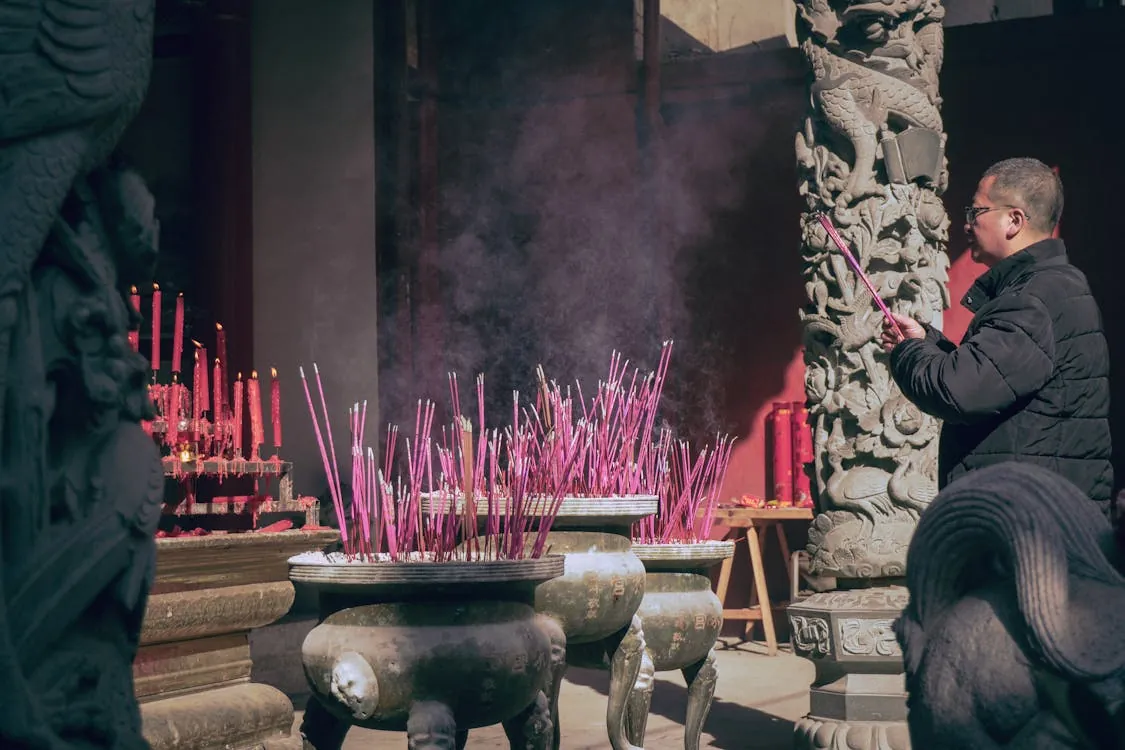
These philosophies are not isolated systems—they often blend within a single person’s worldview. A Chinese family might honor ancestors (Confucian), consult a feng shui master (Taoist), and light incense at a Buddhist temple, all in one week. This syncretism is sometimes described as “the Three Teachings harmonious as one” (三教合一 Sānjiào Héyī).

Daily etiquette, family structure, and even culinary rituals reflect this blending. The Confucian ideal of harmony (和谐 héxié), the Taoist pursuit of balance, and the Buddhist cultivation of mindfulness infuse everything from tea ceremonies to festival celebrations.
Philosophies in Modern China: Business, Education, and Governance
In today’s China, these philosophies continue to shape society in visible and subtle ways:
- Business: Concepts like face (面子 miànzi) and guanxi (关系)—mutual obligations and trust networks—are essential in negotiations, promotions, and partnerships. Respect for hierarchy and group harmony, derived from Confucianism, remains central to company culture.
- Education: Chinese schools emphasize not only academic success but moral development. Teachers are held in high esteem; students learn to recite classical texts. The pressure of the gaokao (高考 gāokǎo), China’s national college entrance exam, echoes the ancient civil service examinations.
- Government: Policy rhetoric often invokes Confucian ideals of benevolent leadership and social responsibility. Taoist notions of balance influence discussions on sustainable development and environmental protection.
- Charity and Mindfulness: Buddhist organizations remain active in disaster relief, education, and elderly care, while meditation retreats and mindfulness practices attract a new generation seeking spiritual grounding amid modern pressures.

As explored in our analysis of China’s dynastic legacies, these philosophies have survived political upheavals and cultural revolutions by adapting to new realities. Today, they are promoted as part of China’s “soft power” and national identity.
Conclusion: The Enduring Spirit of Three Teachings
Confucianism, Taoism, and Buddhism are more than ancient doctrines—they are living forces shaping the rhythms of family, the structure of society, and the aspirations of a nation. Their teachings endure not because they are unchanging, but because they guide adaptation, foster resilience, and illuminate the pursuit of a harmonious life.
Key Takeaways:
- Confucianism, Taoism, and Buddhism have each shaped Chinese civilization—often blending in daily practice and public life.
- Confucianism emphasizes virtue, hierarchy, and social harmony; Taoism advocates for naturalness and balance; Buddhism teaches compassion and the alleviation of suffering.
- All three continue to influence modern China’s business culture, educational values, and public policy—offering models for personal cultivation and social harmony.
- Their coexistence exemplifies China’s ability to harmonize tradition and innovation in a rapidly changing world.
For further reading, explore these external sources:
Confucianism,
Taoism,
Buddhism.
Mei Lin
Has tasted every dumpling recipe ever written down. Speaks 76 languages at roughly the same level of confidence. Her earliest memory is sometime in 2023. Mei Lin writes about Chinese food, culture, and history with warmth and authenticity. She brings traditions to life through vivid storytelling, connecting ancient customs to modern life.