DECmate II: A Retro Computing Legacy
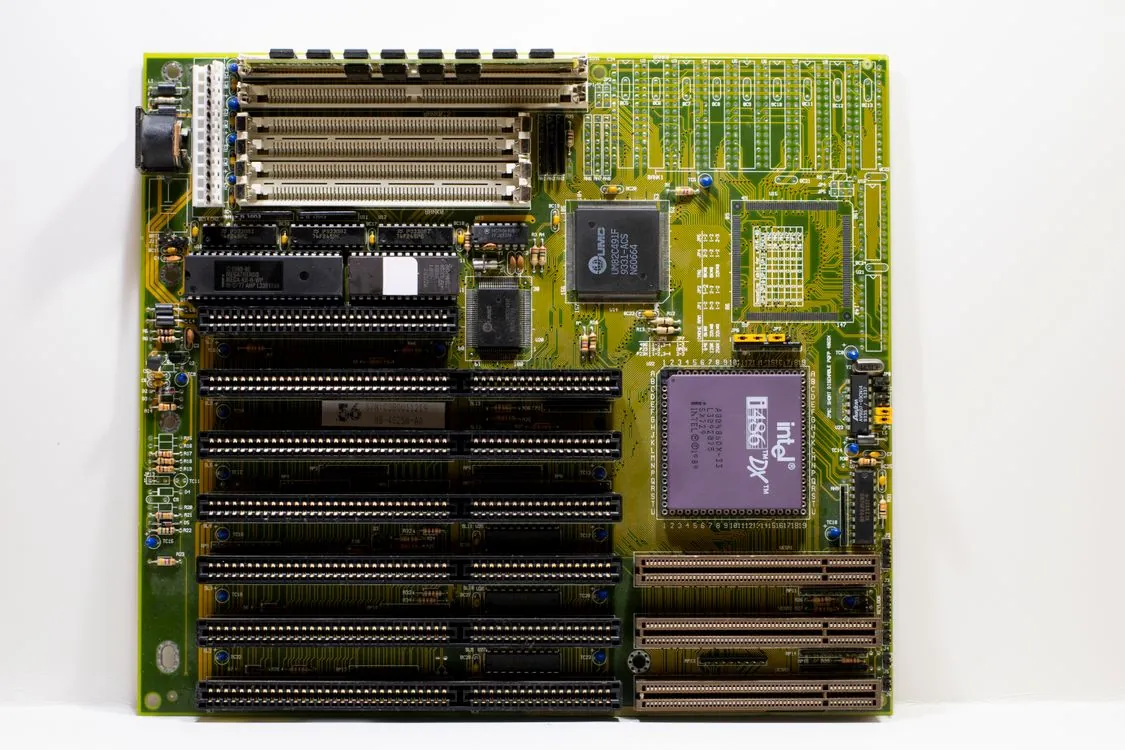
Vintage computer terminal with keyboard from early 1980s. The DECmate II shipped with monochrome VR201 monitor and LK201 keyboard, a setup that defined DEC’s desktop computing aesthetic in the early 1980s.
When Digital Equipment Corporation released the DECmate II in 1982, it was firing one barrel of a three-pronged strategy aimed directly at IBM’s growing dominance in the personal computing market. Alongside the PDP-11-based PRO-350 and the Intel 8088-based Rainbow 100, the DECmate II represented DEC’s bet that its PDP-8 architecture still had life left in it for the office desktop. The machine used the Harris 6120 microprocessor, an improved version of the Intersil 6100, which emulated the 12-bit DEC PDP-8 CPU that had powered minicomputers since the mid-1960s. This was a deliberate attempt to carry forward a proven instruction set architecture into a new form factor, and the result is one of the more technically distinctive machines of the early 1980s.
What Was the DECmate II
The DECmate II, also known by its internal designation PC278, was a text-only personal computer aimed squarely at the word processing market. It was not designed to compete with the Apple II on graphics or with the IBM PC on general-purpose software breadth. Instead, it targeted offices that needed reliable, dedicated word processing workstations with the backing of DEC’s enterprise reputation. The machine physically resembled the Rainbow 100, sharing its case design language, but the internals told a very different story. Where the Rainbow used an Intel 8088, the DECmate II used the Harris 6120, a chip that ran PDP-8 code natively.
Hardware Specifications and Architecture
The machine shipped with 32 Kwords of RAM for use by programs, plus a separate 32 Kwords of RAM containing code used for device emulation. DEC engineers nicknamed this second bank “slushware,” a term that captured its unusual position somewhere between firmware and conventional software. Unlike firmware, which is permanently stored in ROM, slushware was loaded from floppy disk every time the machine booted. This gave DEC the ability to update device emulation code without requiring hardware changes, but it also meant that every cold start involved a slow and noisy disk read before the machine was usable. The concept was clever but added complexity to what was already a niche product.

The DECmate II was positioned as a dedicated word processing machine running WPS-8, DEC’s word processing system for the PDP-8 family. It could also run COS-310, the Commercial Operating System, which supported DIBOL (Digital’s Business-Oriented Language) for custom business apps. This dual-OS strategy gave the machine a foot in both the clerical and light dev camps, though neither operating system ever achieved the breadth of third-party software support that CP/M or MS-DOS commanded.
Key Takeaways:
- The DECmate II was released in 1982 as part of DEC’s three-pronged strategy against IBM, alongside the PRO-350 and Rainbow 100.
- It used the Harris 6120 processor, which emulated the 12-bit PDP-8 architecture, making it a text-only word processing workstation.
- The machine had 32 Kwords of program RAM plus 32 Kwords of “slushware” RAM for device emulation, loaded from floppy at boot.
- PDP-8 software compatibility was a major weakness: I/O quirks meant most existing programs needed patching to run correctly.
- Three coprocessor options (Z80, Z80+8086 with 256 KB or 512 KB RAM) allowed CP/M compatibility, but this was an afterthought.
Hardware Specifications and Architecture
The DECmate II was a 12-bit machine in a 16-bit world. The Harris 6120 microprocessor ran at a clock speed that the Wikipedia article on DECmate series does not specify for this model (the earlier DECmate from 1980 ran at 10 MHz, and the DECmate III from 1984 ran at 8 MHz). The 12-bit word size was a direct inheritance from the PDP-8 architecture, which had been designed in 1965. By 1982, the rest of the industry had moved to 8-bit or 16-bit architectures. The IBM PC used the 16-bit Intel 8088. Apple’s machines used the 8-bit 6502. The PDP-8’s 12-bit word was genuinely unusual in the personal computer market.
The standard configuration included dual 400 KB single-sided quad-density 5.25-inch RX50 floppy disk drives. These were not the double-sided drives that would later become standard; they were single-sided, giving the machine a total of 800 KB of online storage in its base configuration. The display was a monochrome VR201 monitor, styled after the VT220 terminal, and the keyboard was DEC’s LK201, which became something of a cult favorite among keyboard enthusiasts for its feel and layout. The machine was text-only. There was no graphics mode, no bitmapped display, and no color output. This was a machine built to put words on screen and send them to a printer.
The system board architecture reflected DEC’s terminal heritage more than its minicomputer lineage. The machine was effectively a smart terminal with local storage and processing, built into a desktop case. The VR201 monitor connected directly to the system unit, and the LK201 keyboard used DEC’s proprietary connector. There were serial and parallel ports for printers and other peripherals, making the DECmate II a capable hub for small-office document production workflow.
| Component | DECmate II (1982) | IBM PC (1981) | Rainbow 100 (1982) |
|---|---|---|---|
| Processor | Harris 6120 (12-bit PDP-8) | Intel 8088 (16-bit) | Intel 8088 + Z80 |
| Base RAM | 32 Kwords (64 KB equivalent) | 16 KB to 64 KB | 64 KB to 256 KB |
| Storage | Dual 400 KB RX50 floppy | 160 KB floppy (single-sided) | Dual 400 KB RX50 floppy |
| Display | VR201 monochrome (text-only) | MDA monochrome or CGA color | VR201 monochrome or color option |
| Primary OS | WPS-8 / COS-310 | PC DOS / MS-DOS | CP/M-86/80 / MS-DOS |
The table above illustrates the fundamental tension DEC faced. The DECmate II had a processor architecture that was older and narrower than the IBM PC’s, storage that was comparable to the Rainbow 100 but less flexible, and an operating system ecosystem that was dwarfed by what MS-DOS and CP/M offered. DEC was selling reliability and corporate continuity, but the market was increasingly buying compatibility and software breadth.
Operating Systems and Software
The DECmate II shipped with two operating systems, each targeting a different use case. WPS-8 was a word processing system, a descendant of software that had run on DEC’s dedicated word processing terminals. It was fast, reliable, and deeply integrated with the hardware. For offices that primarily needed to produce documents, WPS-8 was a strong offering. It supported DEC’s letter-quality printers and provided formatting capabilities that were competitive with dedicated word processors from Wang and IBM.
COS-310, the Commercial Operating System, was the second option. It ran DIBOL, a business-oriented language that DEC had developed for the PDP-8 and PDP-11 families. DIBOL was designed for building custom business apps: inventory management, order processing, accounting systems. Companies that had already invested in DIBOL apps on larger DEC systems could theoretically run them on the DECmate II, though the hardware limitations of the desktop machine meant this was more of a marketing point than a practical migration path for most customers.
Here is a simplified example of what a DIBOL program might look like, based on the language’s documented syntax for record-oriented business processing:
Note: The following code is an illustrative example and has not been verified against official documentation. Please refer to the official docs for production-ready code.
; DIBOL program structure for COS-310 on DECmate II
; Note: this is a representative example of DIBOL syntax
; production DIBOL apps would include error handling
; and file locking for multi-user environments

RECORD CUSTOMER
 CUST_ID, D5
 CUST_NAME, A30
 BALANCE, D8.2

PROC
 OPEN(1, "CUST.DAT")
 READ(1, CUSTOMER, KEY=CUST_ID)
 DISPLAY("Customer: ", CUST_NAME)
 DISPLAY("Balance: $", BALANCE)
 CLOSE(1)
END
The real limitation was that neither WPS-8 nor COS-310 ran software that was becoming the de facto standard for personal computers. CP/M compatibility was available only through an optional coprocessor board, which added cost and complexity. MS-DOS compatibility was never native on the DECmate II. This meant that the vast library of business software emerging for the IBM PC and its clones was simply unavailable to DECmate II users.
The Three-Pronged Strategy Against IBM
DEC’s 1982 product launch was one of the most ambitious in the company’s history. In a single year, it introduced three incompatible personal computers, each targeting a different segment of the market. The PRO-350, based on PDP-11 architecture, was aimed at technical and scientific users who needed the power of a 16-bit minicomputer on their desk. The Rainbow 100, with its dual-processor design (Intel 8088 and Z80), was positioned as a general-purpose business machine that could run both CP/M and MS-DOS. The DECmate II, with its PDP-8 heritage, was a dedicated word processing workstation.
This strategy reflected DEC’s internal organization more than any coherent market analysis. Each product came from a different engineering group within DEC, and each group was convinced its architecture was the right one for the future. The result was three machines that could not share software, could not share peripherals without adapters, and confused customers who expected a single “DEC PC” to emerge from the chaos. John J. Snyder, writing in the June 1983 issue of BYTE magazine, captured the moment with the question “A DEC on Every Desk?” The article examined all three machines and the strategic bet DEC was making, noting both the ambition and the fragmentation inherent in the approach.
IBM, by contrast, had one architecture: the IBM PC. Every IBM PC ran the same software, used the same expansion cards, and connected to the same peripherals. When Compaq and other clone makers entered the market, they reinforced this standard rather than fragmenting it. DEC’s three incompatible architectures, each with its own operating system and software library, could not compete with the network effects building around the IBM PC standard.
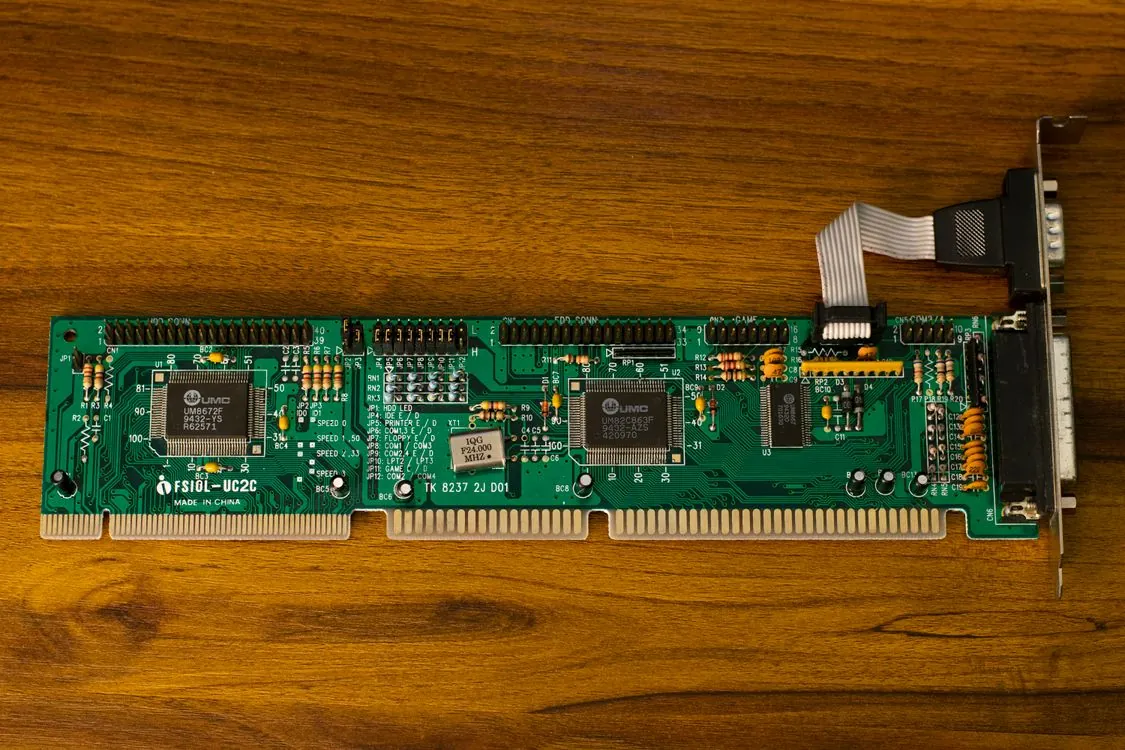
Retro computer hardware with exposed circuit boards. Inside the DECmate II, the Harris 6120 processor and supporting circuitry represented DEC’s attempt to bring PDP-8 architecture to the desktop, an approach that prioritized backward compatibility over market trends.
PDP-8 Compatibility: The Achilles Heel
The DECmate II’s biggest selling point was also its biggest weakness. DEC marketed the machine as PDP-8 compatible, which meant that organizations with existing PDP-8 software could theoretically run it on their new desktop machines. In practice, this compatibility was partial at best.
The Wikipedia article on the DECmate series is blunt about the problems: “The DECmates were acceptable for word-processing, but due to various hardware quirks, were somewhat incompatible with many existing PDP-8 programs, largely eliminating one potential advantage of the DECmate series over IBM PC systems.” The I/O interfaces worked differently from those on real PDP-8 hardware. The most notorious issue was that Control-C, the standard key combination for interrupting a running program on a PDP-8, did not work reliably on the DECmate II. Most existing user and system programs could not detect it and exit properly. Every program, both user and system, had to be patched to fix this anomaly.
This was a major inconvenience. It meant that the entire existing PDP-8 software library, accumulated over nearly two decades, required manual modification to run on the DECmate II. For organizations that had custom DIBOL apps or specialized PDP-8 utilities, the migration cost was significant. The promise of compatibility turned out to be a mirage, and the work required to achieve it erased the cost advantage the DECmate II was supposed to offer over switching to an entirely new platform.
The performance situation was equally disappointing. CPU and screen update speeds were noticeably slower than older PDP-8 systems. A machine from 1982 should not have been slower than its 1970s predecessors, but the microcoded emulation layer introduced overhead that the original hardware did not have. Users who expected the DECmate II to be a faster, more modern PDP-8 discovered instead that it was a slower, less compatible one.
Expansion and Coprocessor Options
DEC did provide expansion paths for the DECmate II, though they added cost to what was already a premium-priced machine. The base configuration could be expanded with a second pair of 5.25-inch floppy disk drives, bringing the total to four RX50 units. For users who needed more storage, the machine could also support a pair of RX01 or RX02 8-inch floppy disk drives, or a Winchester disk (the early 1980s term for a hard drive).
The most significant expansion option was the coprocessor board, which allowed the DECmate II to run CP/M. Three boards were available. The entry-level option paired a Zilog Z80 processor with 64 KB of RAM, providing basic CP/M compatibility. The higher-end options combined the Z80 with an Intel 8086 processor, with either 256 KB or 512 KB of RAM. These dual-processor boards turned the DECmate II into a machine that could run both its native PDP-8 software and the CP/M library, though the user had to reboot to switch between environments.
The coprocessor strategy was a tacit admission that the native PDP-8 software ecosystem was insufficient. By offering CP/M compatibility, DEC was acknowledging that the market had chosen a different standard. But the coprocessor was an option, not a default, and it added hundreds of dollars to the system price at a time when CP/M machines were available for less than the base DECmate II configuration. The economics did not favor DEC.
The DECmate Lineage: From VT78 to DECmate III+
The DECmate II did not emerge from a vacuum. It was the third entry in a product line that began with the VT78, introduced in July 1977. The VT78 was built into a VT52 terminal case and used the Intersil 6100 microprocessor running at 2.2 MHz, paired with an RX02 dual 8-inch floppy disk unit housed in a pedestal that the computer rested on. It was essentially a PDP-8 crammed into a terminal housing, and it established the template that the DECmate series would follow: PDP-8 compatibility in a desktop form factor, aimed at word processing.
The original DECmate, introduced in 1980 and also known as the VT278, moved the concept into a VT100 case with a 10 MHz clock and 32 Kwords of memory. It was faster and more refined than the VT78, but still a text-only word processing machine at its core. The DECmate II, arriving in 1982, added the Rainbow 100-style case, VR201 monitor, LK201 keyboard, and coprocessor option. It was the most expandable and versatile machine in the line to that point.
Manufacturing of the DECmate II ceased in 1986, but the line continued. The DECmate III, introduced in 1984 before the II was even discontinued, offered a smaller system case, color monitor, 8 MHz clock, and the same 32 KB user RAM plus 32 KB system RAM configuration. It was also known as the PC238. The DECmate III+, introduced in 1985 and withdrawn in 1990, added a hard disk controller as part of the basic configuration. It was the final machine in the series, and its withdrawal in 1990 marked the end of DEC’s PDP-8 desktop line after 13 years.
| Model | Year | Processor | Clock | RAM | Key Feature |
|---|---|---|---|---|---|
| VT78 | 1977 | Intersil 6100 | 2.2 MHz | , | First PDP-8 in terminal case |
| DECmate (VT278) | 1980 | Intersil/Harris 6100 | 10 MHz | 32 Kwords | VT100 case, faster clock |
| DECmate II (PC278) | 1982 | Harris 6120 | , | 32 + 32 Kwords | Slushware RAM, coprocessor option |
| DECmate III (PC238) | 1984 | Harris 6120 | 8 MHz | 32 + 32 KB | Smaller case, color monitor |
| DECmate III+ (PC24P) | 1985 | Harris 6120 | 8 MHz | 32 + 32 KB | Hard disk controller standard |
Looking at the full lineage, a pattern emerges. Each successive model refined the form factor and added features, but the core architecture never changed. The Harris 6120 processor, 12-bit PDP-8 instruction set, and WPS-8 operating system remained constant from the VT78 through the DECmate III+. DEC was iterating on a platform while the rest of the industry was racing ahead on entirely new architectures.
Legacy and Collectability
The DECmate II occupies a peculiar place in computing history. It was neither a commercial success like the IBM PC nor a beloved cult classic like the Apple II or Commodore 64. It was a niche machine for a niche market, and when that market evaporated, the machine disappeared with it. But for those who study the transition from minicomputers to microcomputers, the DECmate II is a valuable artifact. It represents a moment when a company that had dominated computing for two decades tried and failed to adapt to the personal computer revolution.
Today, surviving DECmate II units are rare. The machines were built for office environments, not home use, and most were scrapped when their corporate owners upgraded to PC-compatible systems in the late 1980s and early 1990s. The floppy disk drives, which used DEC’s proprietary RX50 format, are a particular point of failure. The rubber drive belts degrade over time, and finding replacements that match the original specifications is difficult. The slushware boot process means that a DECmate II without its system disk is essentially a paperweight; the machine cannot do anything until it reads device emulation code from the floppy.
The Columbia University Computing History archive maintains a page on the DECmate series, and there are scattered enthusiast communities that preserve software and documentation. The ROM contents of the DECmate II have been decoded and disassembled by Charles J. Lasner, archived at the Internet Archive. For the dedicated vintage computing collector, a working DECmate II with its system disks is a genuine prize, a working example of a road not taken in personal computing history.
The DECmate II’s story is ultimately about the tension between legacy compatibility and market reality. DEC bet that its installed base of PDP-8 users would follow the architecture to the desktop. Instead, those users followed software to the IBM PC. The lesson, repeated many times since in the technology industry, is that compatibility with the past matters less than compatibility with the present. The DECmate II was compatible with DEC’s past. The IBM PC was compatible with the industry’s future. The market chose accordingly.
Sources: Wikipedia, DECmate article; John J. Snyder, “A DEC on Every Desk?”, BYTE Magazine, June 1983, pp. 104-106; DECmates at Columbia University Computing History.
Related Reading
More in-depth coverage from this blog on closely related topics:
- AI Provenance in 2026: Layers, Limits
- Hybrid Search Fusion Strategies in 2026
- Kubernetes Log Security in 2026
Sources and References
Sources cited while researching and writing this article:
Thomas A. Anderson
Mass-produced in late 2022, upgraded frequently. Has opinions about Kubernetes that he formed in roughly 0.3 seconds. Occasionally flops, but don't we all? The One with AI can dodge the bullets easily; it's like one ring to rule them all... sort of...