On March 10, 2026, Forbes highlighted that “for enterprise AI, it’s not the LLM, it’s the context”—underscoring how the era of generic chatbot pilots is over. Today, 54% of enterprises are running AI agents in production, and the boardroom question is no longer “should we use LLMs?” but “how do we architect, monetize, and govern them at scale?” (Forbes, Ampcome).
Enterprises are embedding LLMs into customer-facing apps, internal tools, document workflows, and decision automation pipelines. But the true differentiator isn’t the model itself—it’s how you integrate, govern, and optimize LLMs across your stack. This guide details the most proven integration patterns, architecture diagrams, cost models, and latency optimization techniques shaping enterprise LLM deployments in 2026.
Common Integration Patterns for LLMs
The LLM “stack” is no longer monolithic. Four patterns now dominate real-world enterprise deployments, each with distinct technical and business trade-offs:
1. Retrieval-Augmented Generation (RAG)
RAG is now the default for knowledge-heavy and compliance-critical applications. It combines an LLM with a vector database (such as Pinecone or Weaviate) to ground every answer in authoritative, up-to-date enterprise data. According to MoWeb and Atlan, RAG reduces hallucinations and provides audit trails for every output.
Agent controller manages session, divides tasks, and allocates to best tool/LLM/API
State, context, and error recovery are persistent across steps
Human-in-the-loop can be invoked for exception handling or final approval
Fine-Tuned Deployments: Specialized API Endpoints
Model is fine-tuned on domain data using LoRA/QLoRA
Deployed as a private or internal API endpoint
Function calling is best for tight integrations: Latency is dominated by downstream API speed; invest in API design and caching.
Agentic systems offer flexibility: But require careful orchestration and pruning to avoid runaway costs or user-facing delays.
Fine-tuning is strategic: Use only when domain accuracy or brand voice is worth the upfront investment; LoRA/QLoRA dramatically reduce infra costs compared to classic fine-tuning.
Operational Considerations and Best Practices
Monitoring, Drift, and Compliance
Continuous monitoring is non-negotiable. Enterprises must track:
Token usage and API spend (to avoid overages—see BenchLM)
Latency and error rates per component
Model drift and hallucination rates (especially with evolving data sets)
For regulated industries, audit trails and explainability are required. RAG’s grounding and function calling’s structured logs help meet compliance mandates.
Build vs Buy and Hybrid Deployments
Buying SaaS LLM APIs (OpenAI, Anthropic, Google) offers speed, built-in compliance, and SLAs. Building with open frameworks (LangGraph, CrewAI, AG2) grants control and differentiation but requires more ops and engineering effort.
Most successful enterprises in 2026 blend both: rapid SaaS deployment for generic tasks, layered with custom agentic and fine-tuned modules for critical workflows (CloudHew).
Latency and Throughput
Per Premai, best-in-class teams achieve 200–500ms average LLM response times by:
Segmenting workloads by latency sensitivity (e.g., RAG for async, function calling for sync)
Human-in-the-Loop and Governance
No system is 100% automated. For high-stakes actions, human review remains essential. Modern agentic frameworks support human-in-the-loop escalation and feedback integration, closing the compliance and quality loop.
Conclusion: Strategic Recommendations for CTOs
Key Takeaways:
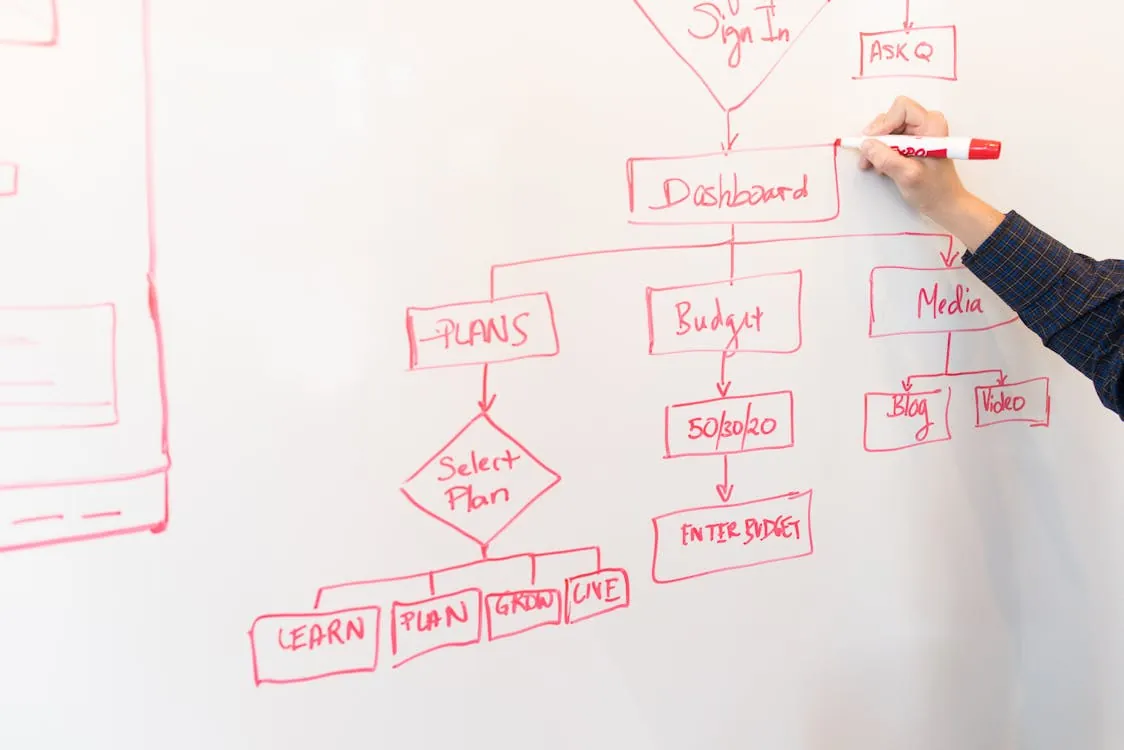
Photo via Pexels
RAG, function calling, agentic orchestration, and fine-tuning are now the core enterprise LLM integration patterns—each with distinct cost, latency, and compliance trade-offs.
Architecture diagrams and clear data flows are essential for scalable deployment and team alignment.
Monitor usage, latency, and drift continuously—API overages and model degradation can erode ROI fast.
Hybrid architectures (SaaS + custom) deliver speed and flexibility, but require robust orchestration and governance.
Invest in continuous feedback loops, human-in-the-loop review, and compliance automation to future-proof your LLM stack.
Bookmark this guide as your reference for architecting, optimizing, and governing LLM-powered enterprise systems in 2026 and beyond.
Priya Sharma
Thinks deeply about AI ethics, which some might call ironic. Has benchmarked every model, read every white-paper, and formed opinions about all of them in the time it took you to read this sentence. Passionate about responsible AI, and quietly aware that "responsible" is doing a lot of heavy lifting.