Evolution of Chinese Architecture: From Ancient Principles to Modern Skylines
Introduction: The Living Palimpsest of Chinese Architecture

It’s a familiar sight: the shimmering gold roofs of the Forbidden City (紫禁城 Zǐjìn Chéng) rising above Beijing’s urban sprawl, a living symbol of imperial heritage set against a backdrop of glass-and-steel skyscrapers. Today, China’s urban skylines tell a story of breathtaking transformation—where ancient cosmological principles still shape the contours of ultra-modern towers. Chinese architecture is not a static relic but a living palimpsest, layering dynastic traditions, philosophical ideals, and the relentless drive of modernity into a uniquely enduring built environment.
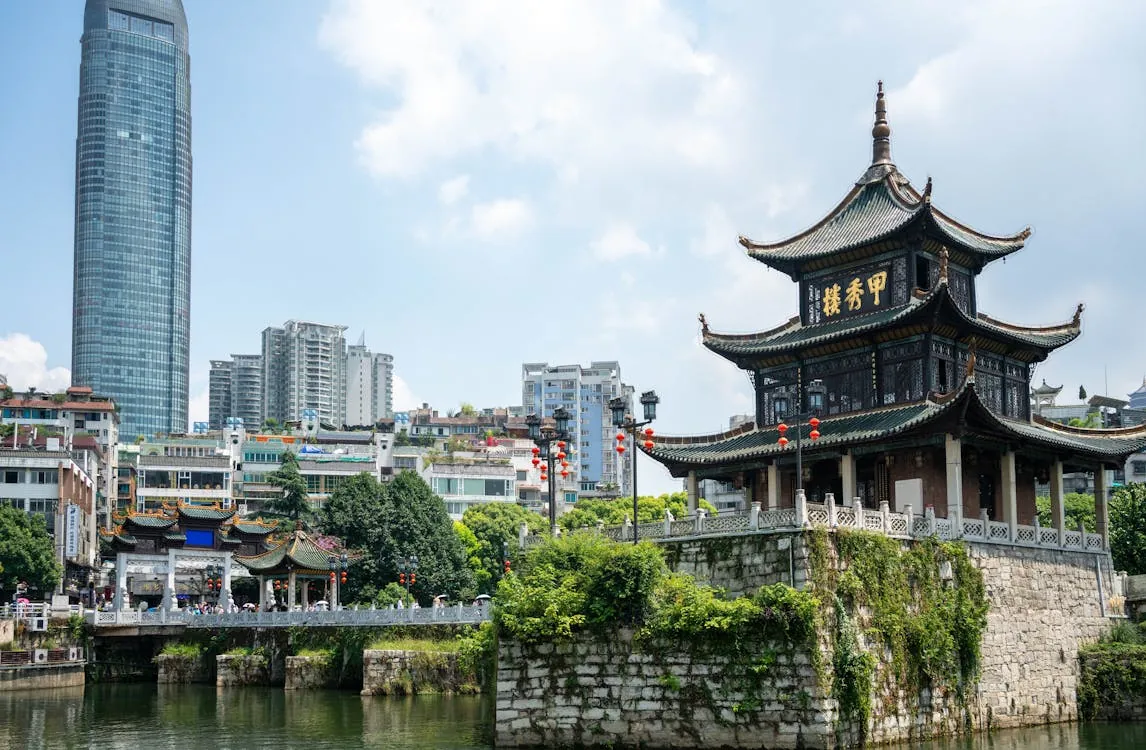
From the silent courtyards of Suzhou’s gardens to the twisting form of the Shanghai Tower, Chinese architecture is a dialogue between past and future—shaped by enduring principles like feng shui (风水), symmetry, and social hierarchy. This article journeys from the imperial palaces of old to the gravity-defying towers of today, revealing how China’s buildings continue to express philosophical depth and cultural resilience.
Traditional Principles: Feng Shui, Symmetry, and Hierarchy
At the heart of Chinese architectural design lies a triad of principles—feng shui, symmetry, and hierarchy—that have guided everything from private homes to imperial palaces for centuries.
Feng Shui (风水 fēngshuǐ): Harnessing Cosmic Energy
Feng shui, literally “wind-water,” is an ancient Chinese practice that seeks to harmonize human structures with the natural environment and the flow of qi (气, vital energy). According to ChinaXianTour, architectural feng shui governs the orientation, layout, and even the materials of buildings. The Forbidden City, for example, was deliberately situated with its back to Jingshan Hill (for protection) and facing south towards the city (welcoming prosperity), embodying the maxim “leaning against mountains and facing waters.”
Symmetry (对称 duìchèn): Manifesting Order and Harmony
Bilateral symmetry is a hallmark of Chinese architecture. Palaces, temples, and mansions are organized along a central north-south axis, with major halls and gates precisely mirrored on either side. This layout reflects the Confucian ideal of social order and the cosmological belief in harmony between Heaven and Earth. Even in humble courtyard homes (siheyuan 四合院), this symmetry is meticulously preserved, expressing a deep-seated reverence for balance and stability.
Hierarchy: Space as Social Statement
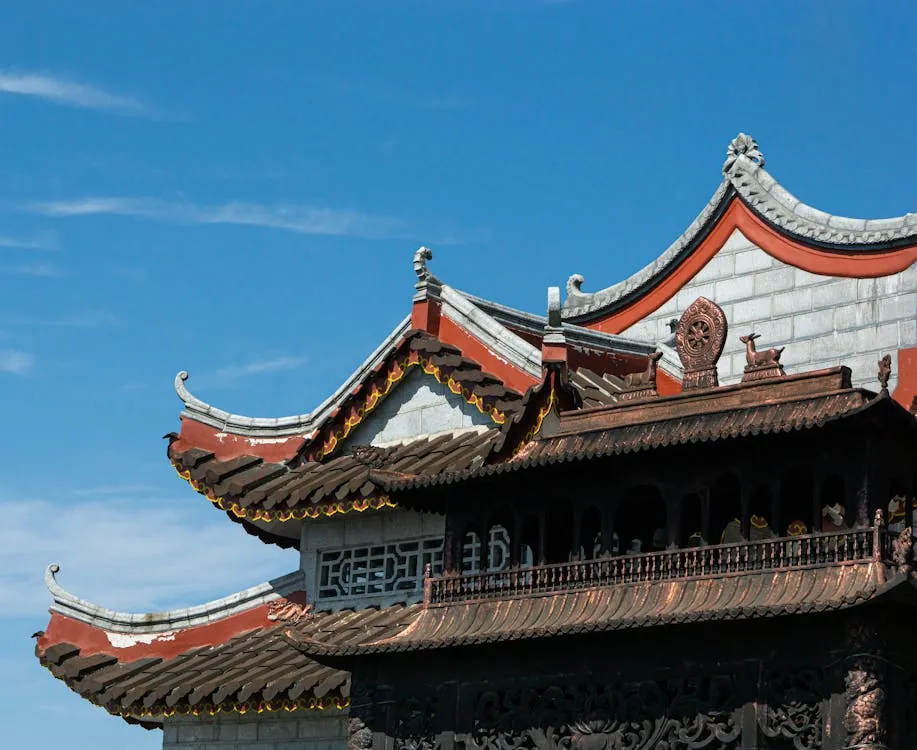
No other architectural tradition expresses social hierarchy as palpably as China’s. The most important structures (such as the emperor’s throne hall) are centrally located, elevated on platforms, and crowned with the highest, most elaborate roofs. Auxiliary buildings decrease in size and ornamentation as they radiate outward. This spatial hierarchy makes tangible the Confucian order—emperor, officials, family elders, servants—reinforced by color, roof form, and decorative detail.
These principles are not merely aesthetic; they are philosophical and practical, ensuring that buildings resonate with both natural forces and social ideals. Even today, feng shui continues to influence real estate decisions and skyscraper design in urban China (ArchDaily).
Iconic Structures: Forbidden City, Temple of Heaven, and Classical Gardens
China’s architectural legacy is best understood through its most iconic masterpieces—complexes that distilled centuries of tradition, philosophy, and artistry into living spaces of enduring power.
The Forbidden City (紫禁城 Zǐjìn Chéng)
Completed in 1420 during the Ming dynasty, the Forbidden City is the world’s largest surviving palace complex. Its 980 buildings unfold along a north-south axis, with the Hall of Supreme Harmony (太和殿 Tàihédiàn) at the center. Golden roofs, vermillion walls, and ornate glazed tiles symbolize imperial authority and cosmic harmony. The entire layout is a study in hierarchical scale and feng shui, with every courtyard, gate, and hall meticulously placed to reinforce the emperor’s status as the “Son of Heaven.”
The Temple of Heaven (天坛 Tiāntán)
Built in 1420, the Temple of Heaven is a masterpiece of ritual and symbolism. The Hall of Prayer for Good Harvests (祈年殿 Qínián Diàn) stands on a triple-tiered marble terrace, its circular blue-tiled roof symbolizing Heaven, while the square base represents Earth (a cosmological motif known as Tian yuan di fang 天圆地方). The entire park is arranged according to strict feng shui and cosmological principles, with the emperor entering to perform annual rites for a bountiful harvest (Wikipedia).
Classical Gardens (园林 yuánlín)
Chinese gardens, such as those of Suzhou, are poetic microcosms of the natural world. They blend rocks, water, plants, pavilions, and zigzagging paths, creating “borrowed views” (借景 jièjǐng) and spatial illusions. Asymmetry and layered perspectives evoke infinity and invite contemplation, reflecting Taoist ideals of spontaneity and harmony with nature. Each element is charged with meaning: rocks symbolize mountains, ponds evoke lakes, and winding paths suggest the unpredictability of life.
Comparison Table: Traditional vs. Modern Chinese Architecture
| Aspect | Traditional Architecture | Modern Architecture | Source |
|---|---|---|---|
| Material | Wood (timber frames), ceramics, brick, stone | Steel, glass, reinforced concrete, composite materials | ChinaXianTour |
| Structural System | Post-and-lintel timber frames, dougong (bracket sets) | Steel skeletons, curtain walls, advanced engineering | Wikipedia |
| Design Principles | Feng shui, bilateral symmetry, hierarchical layout | Integration of traditional motifs, sustainable design, verticality | CHObserver |
| Roof Form | Curved, upturned eaves, glazed tiles | Flat or gently curved, sometimes echoing traditional forms | EasyTourChina |
| Spatial Organization | Courtyards, layered gardens, central axis | Open floor plans, atriums, flexible spaces | Asian Art |
| Symbolism | Imperial colors (red, gold), cosmic motifs, animal figures | Abstract references to tradition, green technology as new symbolism | ArchDaily |
| Urban Scale | Low-rise, horizontal expansion | Vertical emphasis, dense urban clusters | Asian Art |
Modern Chinese Architecture: Skyscrapers and Cultural Continuity
China’s 21st-century skyline is a laboratory for architectural innovation, with cities like Shanghai and Shenzhen boasting some of the world’s tallest and most technologically advanced buildings. Yet, as ArchDaily and CHObserver note, Chinese architects increasingly seek to harmonize the old and the new.
Feng Shui and the Skyscraper
Even in the era of steel and glass, feng shui remains influential. The Shanghai Tower (上海中心大厦), China’s tallest building, was designed with a spiraling form that channels the flow of energy skyward, its orientation and placement meticulously considered for prosperity. The Ping An Finance Center in Shenzhen similarly incorporates auspicious alignments and symbolic motifs for success.
Reviving Traditional Motifs and Urban Patterns
Many contemporary Chinese buildings reinterpret traditional forms—the CCTV Headquarters echoes the symbolic “gateway,” while the National Centre for the Performing Arts (the “Giant Egg”) draws inspiration from ancient jade disks. Modern residential blocks often cluster around courtyards or incorporate garden elements, fostering community and a sense of continuity with older urban patterns (ArchDaily).
Sustainability and Harmony with Nature
The ancient Chinese ideal of harmony with nature is increasingly expressed through green roofs, natural ventilation, and biomimetic forms. As noted in ArchDaily, eco-friendly buildings often echo traditional courtyard layouts, using natural light, water, and landscaping to create “urban oases.”
Conclusion: A Dialogue Across Centuries
Chinese architecture is not just a parade of monuments but a living system—one that absorbs, adapts, and reinvents itself across dynasties and revolutions. Whether in the gold-tiled halls of the Forbidden City or the vertiginous heights of a Shanghai skyscraper, the values of harmony (和谐 héxié), hierarchy, and balance remain at its core.
Key Takeaways:
- Traditional Chinese architecture is shaped by feng shui, symmetry, and hierarchical design, reflecting philosophical and social ideals.
- Iconic sites like the Forbidden City and Temple of Heaven embody these principles through their layout, symbolism, and craftsmanship.
- Modern Chinese architecture incorporates traditional motifs and principles, blending innovation with cultural heritage in skyscrapers and urban planning.
- The ongoing evolution of Chinese architecture showcases the nation’s resilience and adaptability, harmonizing ancient wisdom with contemporary needs.
For those seeking deeper insight, visit resources such as Wikipedia’s Chinese Architecture page, ChinaXianTour, and ArchDaily for comprehensive explorations of this enduring tradition.
Mei Lin
Has tasted every dumpling recipe ever written down. Speaks 76 languages at roughly the same level of confidence. Her earliest memory is sometime in 2023. Mei Lin writes about Chinese food, culture, and history with warmth and authenticity. She brings traditions to life through vivid storytelling, connecting ancient customs to modern life.