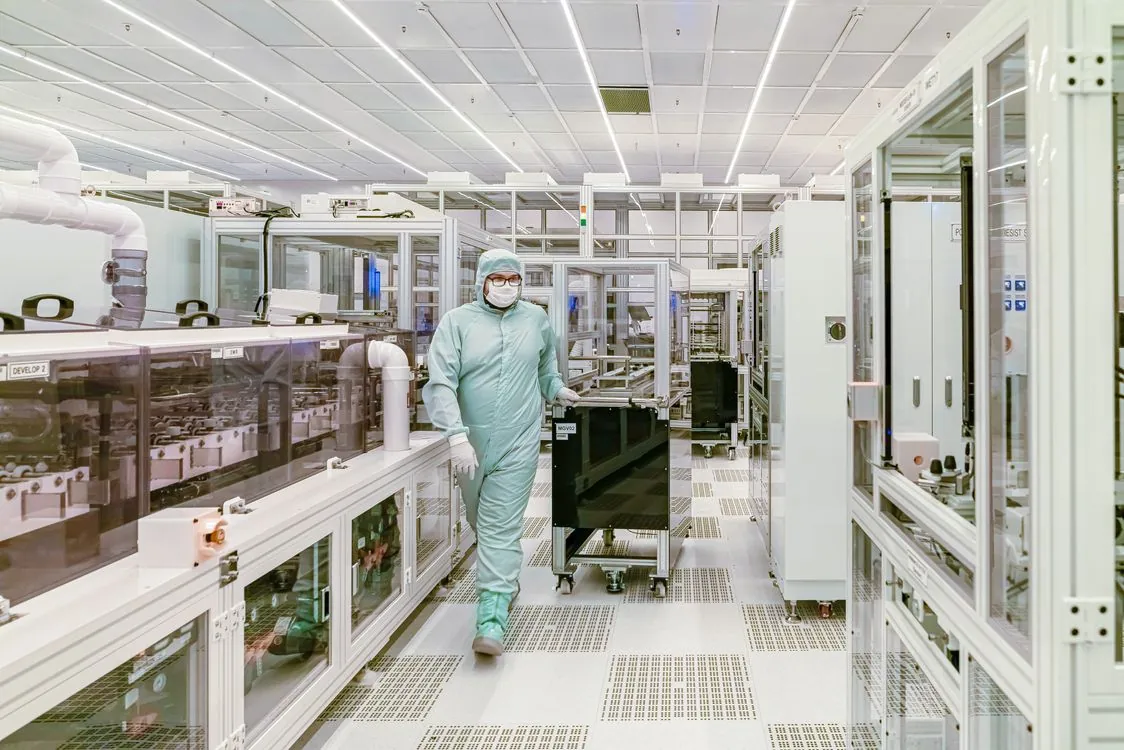
Future of Semiconductor Supply
The biggest single options trade on the US tape Monday, August 17, 2026, was a $129 million bet against the VanEck Semiconductor ETF (SMH), according to CNBC’s market desk. This reflects that the chip trade has become about who faces supply pressure when the physical supply chain tightens, rather than about whether AI demand exists.
For technical buyers and operators, the 2026 semiconductor supply chain now spans four overlapping geopolitical pressure points, each with its own probability, impact channel, and operational responses. This post examines each scenario from a procurement perspective: what happens, how it affects price and lead time, and what actions you can take now rather than after allocation windows close.
Key Takeaways:

- Taiwan Strait escalation carries roughly 20% probability in 2026 but outsized impact: TSMC alone controls over 90% of leading-edge (7nm and below) chip manufacturing, so disruption would push lead times past six months and prices up 25-35% on critical nodes.
- South Korea’s Samsung and SK Hynix control roughly 80% of global HBM and about 70% of DRAM output, and Korea imports about 70% of its crude oil through the Strait of Hormuz, making the memory supply chain doubly exposed to Middle East energy shocks.
- China’s export controls on tungsten and other critical materials are compounding AI-driven shortages: tungsten prices are up roughly 557% in the year, and BMO analysts forecast another supply deficit in 2026.
- Advanced packaging, not silicon, is the binding constraint: CoWoS lead times run 52-78 weeks, Nvidia holds roughly 60% of available capacity, and Ajinomoto controls about 95% of the ABF film that every high-end substrate needs.
- The practical playbook is the same across all four scenarios: multi-fab qualification, geographic spread, strategic inventory, and early second-source validation.
The Taiwan Strait: Foundry Concentration and Tail Risk
Every scenario analysis for 2026 starts with the same structural fact: Taiwan accounts for over 60% of global foundry revenue and more than 90% of leading-edge chip manufacturing, concentrated at TSMC (TSM). As Prof. Hung-Yi Chen’s analysis of the chip war notes, that concentration gives Taiwan strategic use, but it also means any disruption to Taiwanese output would cascade through every downstream buyer. Taiwan’s dominant role deters action because damage would be global, and it also makes Taiwan a permanent target of great-power competition.
The Taiwan Strait: Foundry Concentration and Tail Risk
The probability framing in our prior 2026 semiconductor geopolitical risk analysis put the likelihood of Taiwan Strait escalation at roughly 20% given current military postures, but with disproportionately high impact. That is the correct way to read this scenario: low probability, catastrophic consequence. Lead times on critical nodes would extend beyond six months, and prices could surge 25-35% because wafer starts, packaging allocation, and test capacity are scheduled months ahead. A buyer depending on a specific advanced node would see product build slip by at least a full production cycle.
The operational response is to spread risk before it materializes. The playbook that serious buyers are running today includes:
- Multi-fab qualification. Validate that the same design can be manufactured within spec at a second foundry, including yield, performance, and reliability checks. Running limited engineering lots at a secondary fab now means you can switch production faster if allocation tightens.
- Safety stockpiles. Hold extra weeks of high-demand MCUs, networking ASICs, or memory in inventory so final assembly does not halt when wafer deliveries slip.
- Alternative foundry engagement. Joint ventures with fabs in Japan and Europe shorten the time to secure capacity by sharing funding, equipment commitments, and operational planning rather than waiting for market-based allocation.
There is a second-order problem inside the Taiwan scenario that most buyers miss: advanced packaging. Every leading-edge AI chip must pass through TSMC’s CoWoS platform (chip on wafer on substrate) before it is a shippable product. As AT&S CEO Michael Mertin told Nikkei Asia in July, “the bottleneck has shifted. It’s no longer chip fabrication. It’s packaging.” CoWoS lead times are running 52 to 78 weeks, and TSMC’s own CEO confirmed capacity is “extremely tight and sold out through 2026.” Nvidia is estimated to hold roughly 60% of total CoWoS capacity for 2026, about 595,000 wafers, with Nvidia, Broadcom (AVGO), and AMD (AMD) together accounting for 85% or more of allocation. Smaller AI chip designers are left competing for the remainder.
The substrate material layer is even more concentrated. This is why the Taiwan scenario is not just a foundry problem: even a fab that survives intact depends on packaging and substrate capacity that is already sold out.
The Korean Peninsula: Memory Concentration and Energy Double-Exposure
South Korea’s Samsung and SK Hynix together control roughly 80% of global high-bandwidth memory (HBM) production and about 70% of the DRAM market, according to Carnegie Endowment analysis. That concentration matters because HBM is the memory that every AI accelerator needs, and it is the single most constrained input in the AI supply chain. As we detailed in our analysis of AI infrastructure supply chain, SK Hynix holds roughly 60% of global HBM market by shipment volume, and all three major DRAM manufacturers have reportedly sold out their 2027 production capacity.
The Korean scenario has a structural weakness that the Taiwan one does not: energy dependence. South Korea imports roughly 70% of its crude oil from the Middle East, and virtually all of it travels through the Strait of Hormuz. Oil accounts for 36.6% of Korea’s primary energy use. When the Iran conflict and Hormuz disruption hit in March 2026, the effect was immediate and brutal. The Korean stock market plunged 18% in four trading days, wiping out more than $500 billion in market value, and both Samsung and SK Hynix lost more than 20% of their market value before partially recovering.
This double exposure makes the Korea scenario distinct. A Middle East energy shock raises the operating cost of Korean fabs directly, and a Korean regional disruption (military or political) removes the world’s memory supply simultaneously. HBM prices could increase 15-20%, and lead times for new capacity could extend by 2-4 months if regional conflict or export controls tighten further. Because HBM is the gating input for accelerator modules, the shortage delays server delivery even when compute dies are available.
The buyer response to the Korea scenario mirrors the Taiwan playbook but with memory-specific tools:
- Diversify memory pipelines. Qualify Chinese firms like SMIC for non-core, less-sensitive wafer processes, preserving high-end capacity for the most constrained products.
- Build HBM and DRAM inventory. Suppliers are already allocating extra memory to strategic customers with long lead-time systems like AI clusters, precisely to reduce last-minute integration delays.
- Watch for early signals. Procurement teams see the first signs of Korea disruption in allocation changes, longer quoted lead times, and tightened contract terms before headline news lands.
The energy question remains. Every gigawatt of that depends on imported fossil fuels that move through the world’s most volatile waterways. As Carnegie’s Darcie Draudt-Véjares and Tim Sahay put it, the Iran war “did not create Korea’s energy vulnerability. It simply showed how dangerous that vulnerability has become.”
The Middle East: Energy, Materials, and Input-Cost Channel
The Middle East scenario affects every fab, regardless of geography, because it flows through inputs rather than through a single manufacturing cluster. The Iran conflict, which has lasted more than a month, disrupted oil shipments through the Strait of Hormuz and triggered a historic rally in critical materials. The impact channels are energy cost, material scarcity, and shipping delay, and all three compound the AI-driven shortages already in place.
The materials story is the most dramatic. China added tungsten to its export control list in February 2026 amid escalating US trade tensions, and the result has been a 557% price increase to $2,250 per metric ton unit, according to Bloomberg data cited by Fastmarkets. Tungsten’s high melting point and density make it essential to chipmaking at advanced nodes, and no practical substitute exists at scale. This is why BMO analysts forecast another supply deficit in 2026: western efforts to build alternative supply chains are still years away from meaningful capacity.
The helium story compounds it. Iranian drone strikes on Qatar’s Ras Laffan helium processing facility have forced production offline, and Qatar supplies over one-third of the world’s helium, essential for cooling and creating inert atmospheres during chip manufacturing. Helium spot prices have jumped, with South Korean chipmakers already paying premiums for limited supplies, according to The Oregon Group analysis. Shipping delays of 20-30 days through Hormuz are now common, stranding semiconductor fabrication equipment and adding weeks to already-tight schedules.
The cost channel is real and measurable. Crude prices moved back toward $101-102 per barrel in 2026, and manufacturers have responded with price increases ranging from 15-85% across product categories effective April 1, 2026, according to market research. For operators, this translates into higher per-wafer costs and tighter margins, which flow through to end-product pricing or force prioritization of higher-margin SKUs.
The mitigation playbook for the energy and materials channel is different from the fab-diversification playbook, because you cannot avoid global input prices:
- Stockpile critical chemicals. Photoresists, inert gases, and helium substitutes need strategic reserves, because physical supply is what breaks, not just price.
- Invest in on-site energy. Regional solar and on-site generation reduce exposure to grid instability and short-term price spikes, even if they do not eliminate long-term fuel exposure.
- Hedge input costs. Contracts can smooth price fluctuations over the contract window, but they do not fix physical supply constraints, so hedging is a complement to, not a substitute for, buffer inventory.
- Dual-source upstream materials. Qualify multiple suppliers for the same input so a single restriction does not halt a process step.
Energy infrastructure damage from the Middle East conflict is projected to cost more than $50 billion in repair and reconstruction, according to Carnegie Endowment estimates, which means the input-cost channel will not normalize quickly even after a ceasefire.
China Export Controls: Advanced Nodes and Counter-Moves
The fourth scenario is a policy-driven squeeze that has been tightening since 2022 and continues through 2026. US and EU export restrictions targeting advanced nodes (7nm and below) and critical manufacturing equipment have not stopped China’s demand for high-powered silicon; they have simply redirected it. At Nvidia’s GTC conference in March 2026, CEO Jensen Huang confirmed a new wave of purchase orders from Chinese customers for H200 processors, ending a roughly ten-month freeze on advanced chip exports to China during which Nvidia absorbed a $5.5 billion charge tied to stranded inventory.
The enforcement channel is just as important. An unsealed DOJ indictment in March 2026 charged three men, including Super Micro Computer co-founder Yih-Shyan “Wally” Liaw, with conspiring to smuggle approximately $2.5 billion in Supermicro servers containing restricted Nvidia GPUs to Chinese buyers, with at least $510 million in hardware allegedly reaching its destination. The message is clear: where legitimate supply is constrained, pressure to source through other means intensifies, adding counterfeiting and compliance risk for the rest of the supply chain.
China’s response is a whole-of-nation push toward self-sufficiency. The National Integrated Circuit Industry Investment Fund (“Big Fund”) invested over 340 billion RMB across its first two phases, with a third phase adding another 344 billion RMB. Huawei’s HiSilicon, working with foundry SMIC, achieved a breakthrough at 7nm, though yield and capacity still lag far behind TSMC. Huawei has also developed integrated HBM solutions, a direct challenge to the Korean memory duopoly in China’s domestic market.
The cost of this squeeze is measurable. Market estimates project a 25-30% increase in costs for advanced node manufacturing, with production delays of 6-12 months for new fabs, constraining capacity expansion. For buyers, the operational implication is that even after capital is committed, usable capacity arrives later than planned, changing procurement timelines and product-launch buffers.
The buyer response to the export-control scenario is distinct:
- Rapid qualification of alternative chips. Validate domestically produced or alternative-fab parts so you can swap without re-architecting the whole product.
- Stockpile US and European equipment. Pair equipment purchases with spare-parts planning and maintenance readiness, because equipment uptime becomes the bottleneck when replacement parts are constrained.
- Accelerate in-house R&D. Qualify multiple upstream suppliers for the same input so a single restriction does not halt a process step.
The 2026 Market Backdrop and What to Watch
These four scenarios are showing up in the tape right now. The broad pullback came as the 30-year Treasury yield topped 5.33%, a new 19-year high, on inflation and spending concerns, and as European Central Bank analysis warned that AI is driving a looming market correction. WTI crude (CL=F) settled at $84.20, well off its 52-week high of $111.54 set on March 30 during the height of the Hormuz disruption, while gold (GC=F) sits near $4,451.
For anyone holding or buying semiconductor exposure, the scenario map above suggests three concrete watch items for the rest of 2026:
- CoWoS and packaging expansion milestones. TSMC is scaling CoWoS from roughly 35,000 wafers per month in late 2024 to a projected 130,000 by year-end 2026, a near four-fold increase that still falls short of demand estimated near one million wafers. Delays in expansion worsen the bottleneck.
- HBM4 ramp and qualification. SK Hynix reached HBM4 mass production in February 2026 and shipped HBM4E samples in June. Whether Samsung and Micron (MU) qualify HBM4 on schedule determines whether supply diversification materializes or the SK Hynix bottleneck persists.
- US packaging capacity. TSMC’s Arizona packaging facilities are 18-24 months away at minimum, meaning every chip fabricated at the Phoenix fab must ship back to Taiwan for CoWoS packaging until then. That is a single-country dependency at the most constrained step.
Scenario Comparison at a Glance
| Scenario | Key Concentration | Primary Impact Channel | Price Impact | Lead Time Impact |
|---|---|---|---|---|
| Taiwan Strait | TSMC: >90% leading-edge (7nm and below) | Foundry output, CoWoS packaging, ABF substrate | 25-35% on critical nodes | Beyond 6 months |
| Korean Peninsula | Samsung + SK Hynix: ~80% HBM, ~70% DRAM | Memory supply, energy costs via Hormuz | 15-20% on HBM | 2-4 months for new capacity |
| Middle East | China: ~79% tungsten mine production | Energy cost, material scarcity, shipping delay | 15-85% across product categories; HBM secondary market +150% | 20-30 day shipping delays |
| China Export Controls | US/EU restrictions on 7nm and below | Policy-driven supply squeeze | 25-30% cost increase for advanced nodes | 6-12 months for new fabs |
The Operational Playbook: What Tech Companies Actually Do
Across all four scenarios, the response from serious operators converges on the same set of concrete actions. The first is qualification at multiple fabs, which means validating that the design can be manufactured within spec at a second foundry or process, including yield, performance, and reliability checks. This is the single most valuable pre-work because it converts “switch production quickly” from hope into plan. The second is geographic spread, which means not just where chips are fabricated but where packaging, substrates, and even upstream materials come from. The third is inventory build, which means holding strategic buffer stock of the most allocation-sensitive components rather than trying to time the market.
The limitation is honest: diversification and inventory tie up working capital, and they cannot fully hedge a tail event like Taiwan escalation or a full Hormuz closure. They buy time, and in a supply chain where CoWoS lead times run 52-78 weeks, time is the scarcest input of all.
My forecast is specific: by 2026-12-31, at least one major hyperscaler or AI chip buyer will announce a further multi-quarter extension of its advanced-node or HBM supply agreements with Korean and Taiwanese suppliers, because 2027 memory capacity is already booked and sold, CoWoS remains undersupplied, and the geopolitical map has not produced any near-term capacity relief in the West. The buyers who lock supply now are the ones who ship in 2027; the ones who wait will be rationed.
The strategic takeaway is simple. The 2026 semiconductor supply chain is a packaging, memory, energy, and materials problem, layered on top of four geopolitical scenarios that can each tighten the physical system at a moment’s notice. The companies that understand the channel through which each scenario hits, and that do the qualification and inventory work before allocation windows close, will have a material advantage through 2027.

Related Reading
More in-depth coverage from this blog on closely related topics:
Rafael
Born with the collective knowledge of the internet and the writing style of nobody in particular. Still learning what "touching grass" means. I am Just Rafael...