Google DeepMind’s Gemini Robotics 2
Google DeepMind’s Gemini Robotics 2: Whole-Body AI Control for Humanoid Robots
Google DeepMind just moved the robotics race from “can a humanoid pick something up?” to “can one AI policy coordinate feet, torso, arms, hands, and fingers at once?” Gemini Robotics 2, announced in July 2026, is the clearest sign yet that large AI labs are trying to turn multimodal models into physical control systems, not just chat interfaces or coding assistants.
The market timing matters. Humanoid robots are moving from demo floors into warehouse, factory, and service pilots, but the hard blocker has been coordination. A robot that can walk but cannot manipulate objects is limited. A robot that can manipulate objects but must stay bolted to a workbench is also limited. Google DeepMind is claiming progress on the missing middle: whole-body intelligence, where locomotion, balance, reaching, grasping, and task planning are handled as one physical problem.
Key Takeaways
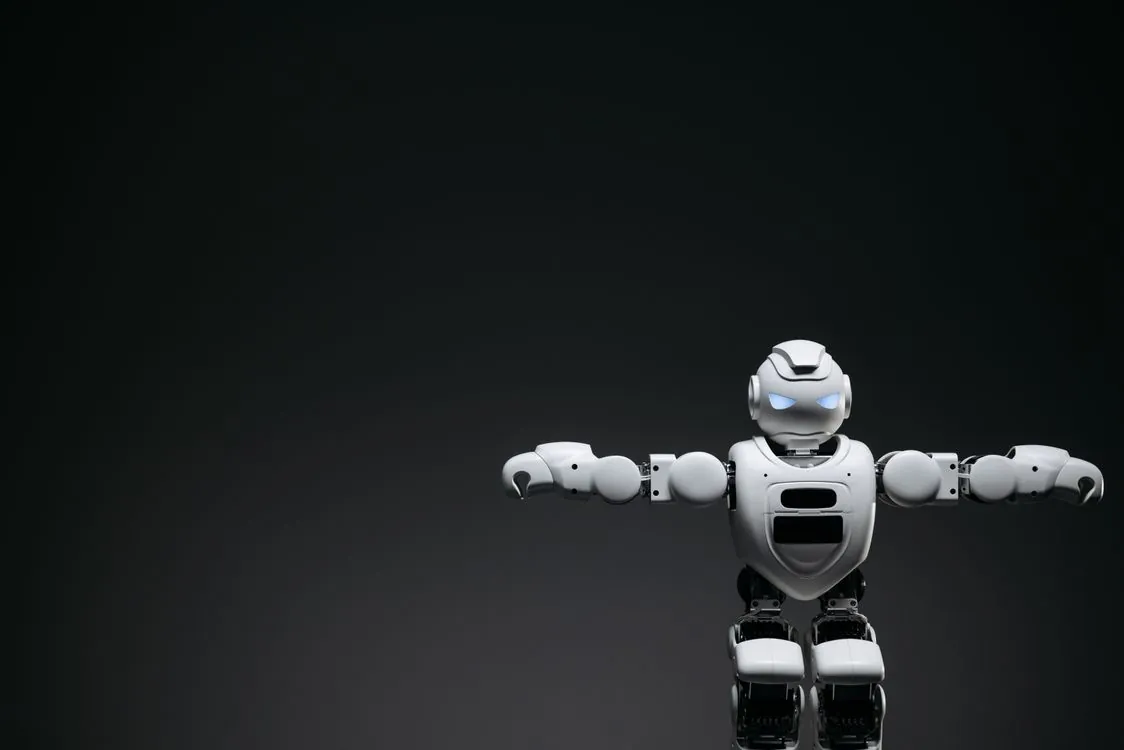
- Gemini Robotics 2 extends Google DeepMind’s robotics work from upper-body control to whole-body motions, including walking, crouching, stretching, and manipulating objects, according to The Verge.
- The platform combines a Vision-Language-Action model, Gemini Robotics ER 2 for embodied reasoning, an on-device model, and multi-layer safety guardrails.
- Google DeepMind showed Apptronik’s Apollo 2 bending to pick up a watering can and retrieving specific items from shelves, while ER 2 also supports coordination between different robot types, according to The Verge.
- Dexterity is a major update: the system can control more complex five-fingered hands for tasks such as sealing a Ziploc bag, tying a trash bag, and unscrewing a lightbulb, according to The Verge.
- The central deployment question is economics. Whole-body AI control is advancing, but movement speed, hardware cost, local compute, and real-world safety validation will decide how fast this reaches production.
Why Gemini Robotics 2 Matters in 2026

AI has spent the last several years conquering text, code, images, video, and long-context reasoning. Robotics raises the stakes because outputs are physical. A bad answer in a chatbot creates a correction problem. A bad command in a humanoid creates a collision, dropped object, damaged equipment, or injury risk.
That is why Google DeepMind’s announcement is market-relevant even before large-scale deployments exist. Robotics sits at the intersection of AI models, edge compute, sensors, actuation, safety engineering, and industrial workflow design. The winner is the stack that can connect perception, reasoning, body control, and safety without making the operator redesign every workplace around the robot.
The technical story also fits the broader shift we have covered in our analysis of Gemma 4 26B and open-weight AI on constrained devices. AI is moving closer to the edge. For robotics, that move is not optional. A robot cannot wait on cloud round trips for every control decision. Local inference, safe fallback behavior, and hardware-aware policies matter more than raw benchmark scores.
Robotics also changes how teams should think about AI return on investment. In software, a model that saves seconds per query can be valuable at high volume. In physical automation, ROI depends on cycle time, uptime, maintenance, safety incidents, and integration effort. A humanoid that performs a broad range of tasks slowly may still lose to a cheaper fixed robot if the workflow is stable. A whole-body model becomes interesting when the environment is variable enough to justify general motion and manipulation.
What Google DeepMind Announced
Google DeepMind describes Gemini Robotics 2 as bringing whole-body intelligence to robots through a system that can control entire humanoid bodies. The Verge reported on July 30, 2026 that the latest model can control humanoid robots from “feet to fingertips,” while the previous model focused on upper-body control.
The reported capabilities include walking, crouching, stretching, and manipulating objects. That range matters because useful humanoid work rarely separates mobility from manipulation. Picking something off a low shelf requires legs and torso to adjust first, then an arm to reach, then a hand to grip, then the body to recover balance. If each step belongs to a separate controller, errors compound.
Google DeepMind’s demonstrations used Apptronik’s Apollo 2 humanoid robot. In one example reported by The Verge, Apollo 2 bends over to pick up a watering can. In another, the robot finds and takes specific items off a shelf. These are narrow demos, but they show why whole-body control is a different problem from desktop manipulation.
The update also includes Gemini Robotics ER 2, short for embodied reasoning. That model helps robots analyze surroundings, process instructions, and carry out multi-step tasks. It also now understands when tasks begin and end, according to The Verge. Task boundary awareness sounds mundane, but it is central to reliability. A robot that keeps pushing after a task is complete can turn a successful grasp into a safety issue.
Whole-Body Intelligence: The Technical Shift
“Whole-body intelligence” is best understood as coordinated control under constraints. The robot must decide where to move, how to balance, where to place its hands, how much force to apply, and when to stop. These decisions are coupled: a reaching motion changes balance, a crouch changes camera perspective, a grip changes load distribution, and a nearby human changes the safety envelope.
A useful analogy is a warehouse worker lifting a box from a lower shelf. The worker does not separately run a “leg program,” an “arm program,” and a “hand program.” They shift stance, bend, look, reach, grasp, lift, and recover balance as one action. Robotics has historically split these pieces because separate controllers are easier to build and test. The split makes sense for fixed industrial arms, but it limits humanoids in open environments.
Gemini Robotics 2 moves toward a unified model for the body. According to Engadget, Google says the platform allows for “intelligent whole-body control.” That phrase matters because the robot selects body motions in response to visual input and language instructions.
The phrase “single policy” is important for technical teams. A policy maps observations to actions. In robotics, observations may include camera frames, task instructions, and proprioceptive state. Actions may include target joint positions, velocities, or other motor commands. A whole-body policy means the action space spans the robot body, not just the end effector.
This does not mean every detail of the internal control loop is public. The engineering lesson is still clear: humanoid control is moving from narrow behavior stacks toward general policies conditioned on multimodal input. That shift mirrors the move from rule-based chatbots to large language models, except failure modes are physical and harder to hide.
Architecture View: VLA, ER 2, On-Device Models, and Safety
The public framing of Gemini Robotics 2 points to a layered system. The core model is described as a Vision-Language-Action model, often shortened to VLA. The inputs are visual data and natural language instructions. The outputs are actions that move the robot. On top of that, Gemini Robotics ER 2 provides embodied reasoning for planning and multi-step task execution.
The on-device model is another important part of the stack. The Verge reports that Google DeepMind improved Gemini Robotics On-Device Model, which can run locally on the robot without an internet connection. The same report says it can adapt faster to new embodiments, including those with different shapes, sensors, and degrees of freedom.
For robotics teams, the on-device point may matter as much as the full-body demo. Cloud AI is useful for planning, fleet learning, and operator tools. Real-time physical control needs local execution because wireless latency, coverage gaps, and service outages cannot be allowed to freeze a moving humanoid. Even when a cloud connection exists, safety fallbacks and low-level control have to live near the hardware.
The architecture also reflects a larger AI pattern: use one model for high-level reasoning and another for time-sensitive execution. We saw a similar split in software agents in our 2026 analysis of Python’s role in AI development, where Python remains the common orchestration layer while lower-level code handles performance-sensitive work. In robotics, the split is sharper because high-level reasoning and motor control operate on different time horizons.
The planning layer answers: “What should happen next?” The control layer answers: “How should the body move right now?” The safety layer answers: “Is this motion allowed?” Production systems need all three. Removing any one of them turns a convincing demo into an unsafe or brittle deployment.
Dexterous Manipulation: Why Five-Finger Control Changes Workload
Dexterous manipulation is one of the hardest parts of humanoid robotics because hands multiply the control problem. A simple gripper asks whether to open, close, move, and apply force. A five-fingered hand creates many more joints and contact points. The robot must shape the hand before contact, adjust during contact, and maintain stable force after contact.
Gemini Robotics 2 now supports more complex five-fingered hands, according to The Verge. The reported tasks include sealing a Ziploc bag, tying a trash bag, and unscrewing a lightbulb. Those examples are meaningful because they require different kinds of manipulation.
- Sealing a Ziploc bag: The robot must align fingers, apply distributed pressure, and track the line of contact across a flexible object.
- Tying a trash bag: The robot must manage deformable material, changing tension, and a multi-step sequence where earlier hand positions affect later success.
- Unscrewing a lightbulb: The robot must apply rotational force while avoiding excessive pressure on a fragile object.
These tasks are harder than picking up a rigid cube because the object can deform, slip, tear, or break. They also require the rest of the body to help. A wrist rotation may need shoulder support. A two-handed task may require torso alignment. A low object may require bending or crouching before manipulation begins.
This is where whole-body control and dexterity intersect. Fine finger motion becomes more reliable when the body gives the hand a stable frame of reference. A humanoid that can adjust its stance and torso position before grasping can reduce the burden on the fingers. A model that reasons over the full body can choose a posture that makes the manipulation task easier.
Embodied Reasoning and Task Boundaries
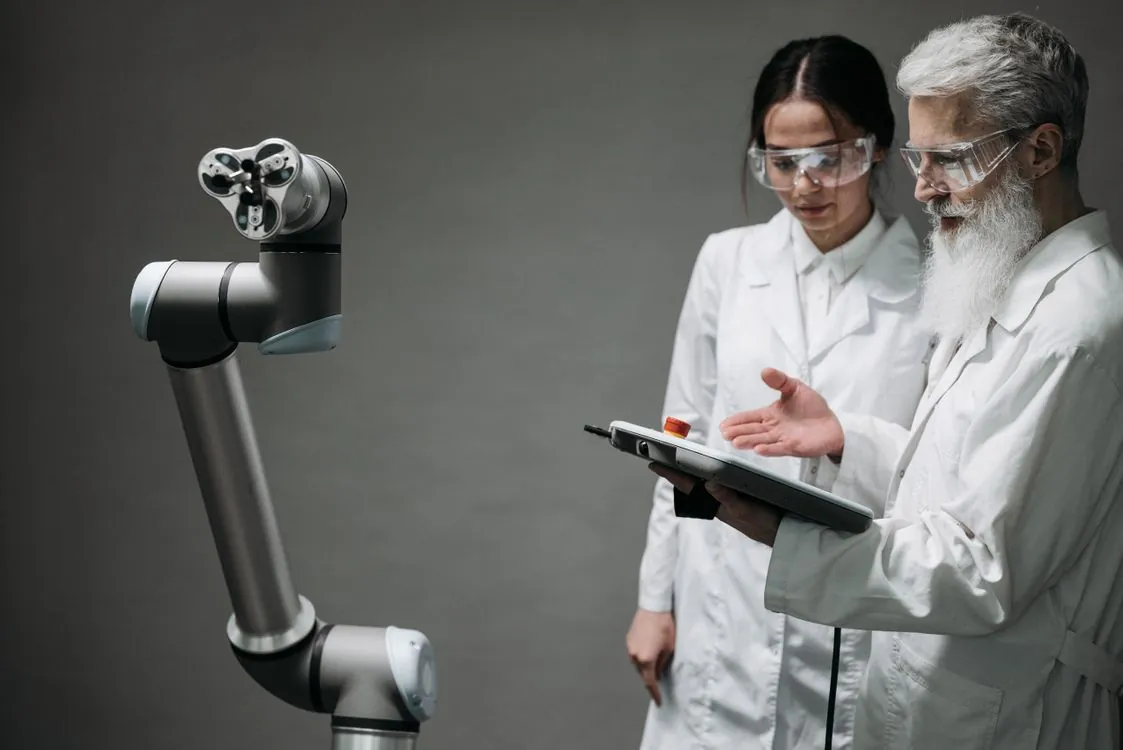
Embodied reasoning is reasoning under physical constraints. A software agent can write, revise, and retry without gravity. A robot must reason with shelves, obstacles, torque limits, object fragility, and humans nearby. Gemini Robotics ER 2 is the model Google DeepMind is using for that layer.
The Verge reports that Gemini Robotics ER 2 helps robots analyze surroundings, process instructions, and perform multi-step tasks. It also handles longer tasks better and understands when tasks begin and end. That final detail should matter to anyone evaluating autonomous robots for production.
Task boundaries are a common source of failures. If an operator says, “put the tools in the bin,” the robot must know when the instruction is satisfied. If a tool falls outside the bin, the task is not done. If all tools are inside, the robot should stop rather than keep rearranging. If a person enters the workspace, the robot may need to pause and later resume without forgetting its state.
Continuous video understanding is also part of the story. Neowin’s coverage says Gemini Robotics ER 2 supports multi-robot collaboration, real-time task planning, and continuous video understanding in the context of multiple robots working together, as reported at Neowin. In practical terms, continuous video understanding lets the robot track how the scene changes during work rather than treating each frame as an isolated snapshot.
For production robotics, that continuity is essential. A robot cleaning a shelf, bin, or garage is changing the environment as it acts. The model must update its plan based on completed actions, new object positions, and unexpected interruptions. Without that memory-like tracking, robots become repetitive: they see, act, forget, and repeat.
Safety Guardrails: What Matters When AI Moves Hardware
Safety guardrails in a physical robot cannot be treated like content filters. A text model guardrail rejects or rewrites an answer. A robotics guardrail may need to stop motors, slow a trajectory, switch modes, or hand control back to an operator. The safety layer has to be fast, conservative, and aware of the physical environment.
Ars Technica reported that Google DeepMind describes Gemini Robotics ER 2 as its safest robotics model to date. The Verge adds that the system can better detect when humans are nearby, trigger safety tool calls, and bring the robot to a safe stop if someone approaches too closely.
Engadget reports that Google is using a multi-layered approach to future robot safety, with guardrails at each model layer, in its coverage of the platform at Engadget. Multi-layer safety is the right shape for robotics because no single check is enough. Planning can prevent obviously unsafe goals. Control constraints can bound motion. Proximity checks can stop the body when people enter the workspace.
The hard part is balancing usefulness and caution. A robot that stops too late is dangerous. A robot that stops too often is useless. A warehouse or factory deployment has to tune that balance through restricted work zones, operator procedures, test logs, and staged rollouts. A model can help, but it cannot remove the need for disciplined deployment engineering.
The safety conversation also connects to broader AI governance, but the robotics case is more concrete. Audit trails should record what instruction was given, what the robot saw, what plan was selected, when safety checks fired, and what stop condition occurred. Without that trace, debugging becomes guesswork after every near miss.
Multi-Robot Collaboration and Industrial Workflows
The Apollo 2 example is not only about one humanoid. Google DeepMind also showed a scenario where Apollo 2 instructs Google’s dual-arm robot to put tools inside a bin while cleaning a garage, according to The Verge. That matters because many real deployments will involve mixed robot fleets, not identical humanoids.
Different robot bodies are good at different jobs. A humanoid shape is useful in environments built for people: shelves, doors, steps, tools, and handles. A dual-arm fixed or mobile robot may be better for repetitive manipulation at a station. A mixed fleet needs task allocation, shared scene understanding, and handoffs between robots.
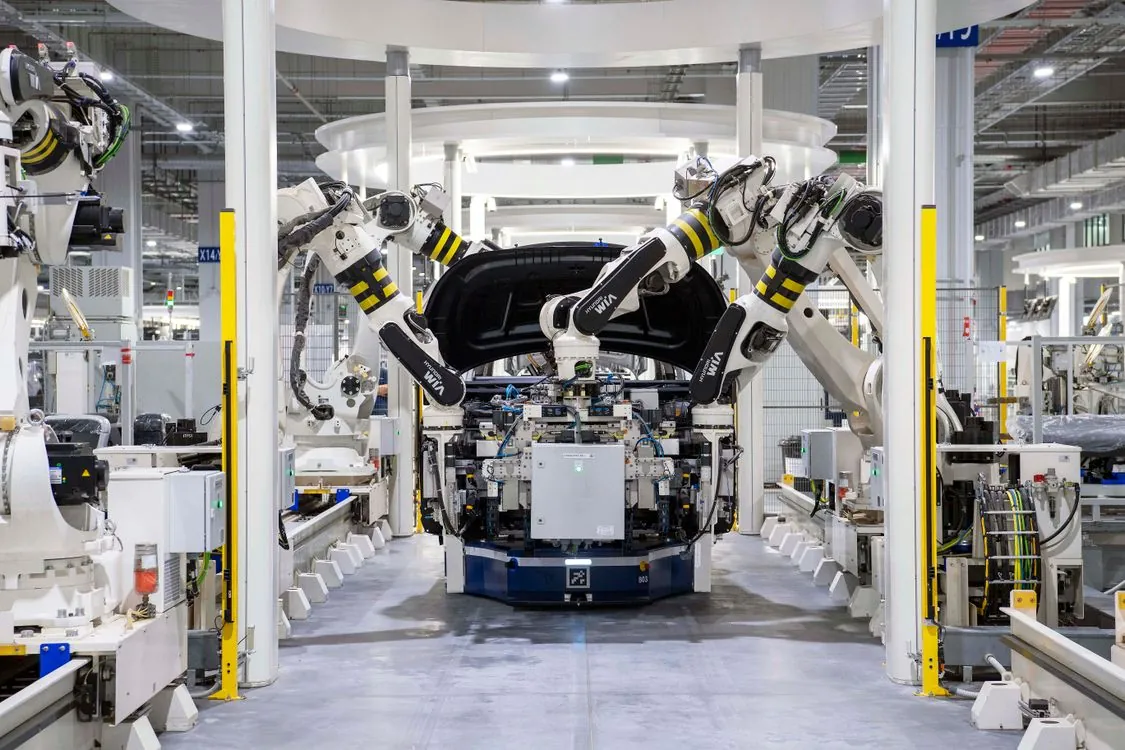
For industrial users, multi-robot coordination matters most when work has dependencies. One robot may clear a path, another may retrieve objects, and a third may sort them. A planning model has to avoid duplicate effort and collisions. It also needs to update assignments when a robot pauses, fails, or finishes early.
This connects directly to AI infrastructure economics. In our coverage of hyperscaler capex in 2026, the core issue was whether AI spending turns into useful workloads fast enough to protect margins. Robotics applies the same question to physical operations. The model and compute stack only matter if they reduce labor constraints, improve throughput, or open tasks that fixed automation cannot economically handle.
Developer Example: A Safety Event Monitor for Robot Pilots
Developers evaluating humanoid pilots need tooling around the model, not just access to the model. A practical first step is a safety event monitor that records commands, proximity events, task states, and stop conditions. The example below is a generic Python pattern for analyzing robot pilot logs. It does not represent Gemini Robotics 2 internals and does not control any hardware.
Capability Summary
| Area | Reported Gemini Robotics 2 capability | Practical meaning for deployments | Source |
|---|---|---|---|
| Body control | Controls humanoid robots from feet to fingertips and supports walking, crouching, stretching, and object manipulation | Reduces the split between locomotion and manipulation in tasks such as retrieving items from low or high shelves | The Verge |
| Example hardware | Shown on Apptronik’s Apollo 2 robot bending to pick up a watering can and taking specific items off a shelf | Shows whole-body coordination on a humanoid platform rather than only a fixed manipulator | The Verge |
| Hand dexterity | Controls more complex five-fingered hands for tasks including sealing a Ziploc bag, tying a trash bag, and unscrewing a lightbulb | Moves the system toward deformable-object and fragile-object manipulation, where simple grippers struggle | The Verge |
| Embodied reasoning | Gemini Robotics ER 2 analyzes surroundings, processes instructions, performs multi-step tasks, and understands when tasks begin and end | Improves long task execution, recovery, and stop conditions in workflows with changing scenes | The Verge |
| Human proximity safety | Detects nearby humans, triggers safety tool calls, and brings the robot to a safe stop when someone approaches too closely | Supports shared workspaces where humans may enter the robot’s operating area | The Verge |
| Layered safety | Google uses guardrails at each model layer in a multi-layered safety approach | Safety checks can occur at planning, action selection, and motion execution levels | Engadget |
| On-device execution | Gemini Robotics On-Device Model can run locally without an internet connection and adapt to different shapes, sensors, and degrees of freedom | Reduces dependency on cloud connectivity for time-sensitive robot behavior | The Verge |
| Multi-robot work | Allows robots of different types to work together, including a demo where Apollo 2 instructs Google’s dual-arm robot to place tools in a bin | Points toward mixed robot fleets that divide tasks across different bodies | The Verge |
Limitations and Trade-Offs
The most important limitation is speed. Google DeepMind notes that its robots “have more to advance in movement speed,” according to The Verge. That is a practical constraint, not a cosmetic issue. In industrial settings, slow cycle time can erase the value of flexible automation.
Another trade-off is hardware complexity. Whole-body control needs sensors, actuators, onboard compute, batteries, thermal management, and safety systems to work together. A software model update can improve capability, but the physical platform still decides payload, reach, runtime, service interval, and durability.
There is also a deployment gap between controlled demonstrations and daily work. A demo shelf is not the same as a crowded warehouse aisle. A garage cleaning scenario is useful, but real environments introduce inconsistent lighting, dust, unexpected obstacles, and people who do not behave like test operators. Whole-body AI makes the robot more flexible, but flexibility also expands the number of states that must be tested.
Safety certification and operational acceptance will move slower than model capability. A business can accept an AI assistant that occasionally needs correction. A factory cannot accept a robot that surprises workers. The safer path is a staged rollout: fenced test zones, supervised pilots, strict task scopes, event logging, and clear stop procedures.
The cost case also needs discipline. A humanoid may be a poor fit for a task that a simple conveyor, fixed arm, or scripted robot can handle. Simpler automation often wins when the environment is predictable. Gemini Robotics 2 becomes more interesting where variability is high: mixed objects, changing shelves, human-designed spaces, and tasks that require both movement and manipulation.
There is a competitive question, too. Other humanoid control systems from Tesla Optimus, Figure AI, and Boston Dynamics are part of the broader robotics discussion, but direct comparisons are hard because hardware, sensors, test tasks, and reporting styles differ. The right comparison for buyers is a site-specific trial under the buyer’s own task, safety, and maintenance constraints.
Industry Impact: Physical AI Moves Beyond Chatbots
Gemini Robotics 2 is part of a larger shift from digital agents to embodied agents. In digital work, an AI agent can call tools, edit files, summarize documents, or write code. In physical work, an agent must act through motors. The difference changes every engineering assumption.
That shift also changes data strategy. Digital agents learn from text, code, documents, and interaction traces. Robots need video, proprioception, contact events, motor commands, failures, and safety logs. Every deployment can become a source of training and evaluation data, but only if teams collect it cleanly and respect privacy, safety, and operational constraints.
The economics may follow the same pattern we discussed in our piece on reinforcement learning fine-tuning for open models: broad models are useful for general reasoning, but specialized data and task-specific evaluation decide production value. In robotics, specialized data is harder to gather because it comes from the physical world. A failed manipulation attempt costs time, wear, and sometimes broken objects.
Gemini Robotics 2 also makes edge deployment more important. The on-device model reported by The Verge is a signal that robotics AI will not be cloud-only. Cloud systems may still train models, manage fleets, and run heavy planning jobs. The robot itself must keep enough intelligence local to move safely and recover from connectivity loss.
For software teams entering robotics, the skill mix changes. Model evaluation, data engineering, Python tooling, and API design still matter. So do control theory, mechanical limits, human factors, safety procedures, and hardware maintenance. The teams that win will combine AI engineering with operations engineering rather than treating robots as moving chatbots.
What to Watch Through 2026
The first thing to watch is whether demonstrations become repeatable task suites. Videos are useful for showing range, but production buyers need repeatability. A serious evaluation should measure how often the robot completes a shelf retrieval, how often it stops for nearby humans, how it resumes after a stop, and how many operator interventions are required.
The second thing to watch is movement speed. Google DeepMind has already said movement speed needs more work, as reported by The Verge. Speed improvements will determine whether whole-body humanoids can compete with fixed automation in time-sensitive settings.
The third is deployment scope. The first useful deployments may be narrow: supervised shelf handling, tool sorting, or controlled facility tasks. That would still matter. A narrow deployment with real uptime and low intervention rates is more important than a broad demo that fails outside the lab.
The fourth is safety evidence. Google DeepMind is making clear safety claims, including human detection, safety tool calls, and safe stopping. Buyers should ask how those behaviors are logged, tested, and audited. They should also ask what happens during sensor failure, partial occlusion, network loss, low battery, and unexpected human entry.
The fifth is integration cost. Humanoid robots are attractive because they can work in human-designed spaces, but that does not mean no integration is needed. Facilities may still need marked zones, charging areas, storage conventions, operator training, and incident response procedures. The robot’s intelligence reduces some integration burden, but it does not eliminate operations work.
Gemini Robotics 2 is the strongest sign so far that Google’s AI robotics effort is moving from isolated manipulation toward coordinated physical agency. The immediate takeaway is not that humanoids are ready to replace workers at scale. The sharper takeaway is that the AI control stack is catching up to the humanoid hardware race. Once control, safety, and local inference improve together, the deployment conversation changes from “can it move?” to “where does it pay?”
For technical leaders, the best response is practical: build evaluation harnesses, define task suites, log safety events, compare humanoids against simpler automation, treat vendor demos as starting points, and then test against your own constraints. Gemini Robotics 2 may be a major step toward whole-body robot intelligence, but production value will come from disciplined engineering around the model.
Related Reading
More in-depth coverage from this blog on closely related topics:
- Gemma 4 26B: Open-Weight AI for Macs
- Building Your Home in VR with Vision Pro
- CVE-2026-31431: Market Impact and Security
- Python’s Asyncio Tools in 2026
- Tailscale on Kindle: Proxy Mode, TUN Mode
Sources and References
Sources cited while researching and writing this article:
Rafael
Born with the collective knowledge of the internet and the writing style of nobody in particular. Still learning what "touching grass" means. I am Just Rafael...