
H200 GPU Rental Prices 2026: 40% Drop
H200 GPU Rental Prices in 2026: The Blackwell Supply Shock Behind 40% Drop
H200 prices collapsed 40% in three weeks, and the board-level question is no longer whether AI demand vanished. The sharper question is why older premium capacity repriced so quickly while newer Blackwell systems were still ramping into cloud catalogs. The answer is a supply-side reset: once B200 and GB200 became credible alternatives in procurement discussions, H200 moved from scarcity asset to negotiable Hopper inventory.
This article updates our earlier H200 rental market analysis with tighter focus on the Blackwell supply story: procurement math, cloud operator risk, price segmentation, and the practical question CTOs care about, how to buy compute in 2026 without locking in yesterday’s scarcity premium.
Key Takeaways
- H200 prices collapsed 40% in three weeks, but public pricing now shows a segmented market rather than one universal clearing price.
- The Blackwell story is supply-side first: newer B200 and GB200 capacity changes what buyers use as their next best alternative.
- H200 remains useful for memory-heavy workloads, especially when 141 GB of HBM3e memory reduces model sharding complexity, according to NVIDIA’s H200 product page.
- Procurement teams should shorten Hopper commitments, add price adjustment clauses, and measure cost per completed job rather than cost per GPU-hour alone.
- GPU cloud operators with large Hopper fleets face margin pressure if depreciation schedules assumed 2025 scarcity pricing would persist.
Key Takeaways for 2026
The headline 40% collapse matters because it happened in the part of the market that had been treated as scarce, premium infrastructure. H200 was a high-memory Hopper accelerator used for large model inference, memory-heavy training, and workloads where fitting the model cleanly in memory saves engineering time.

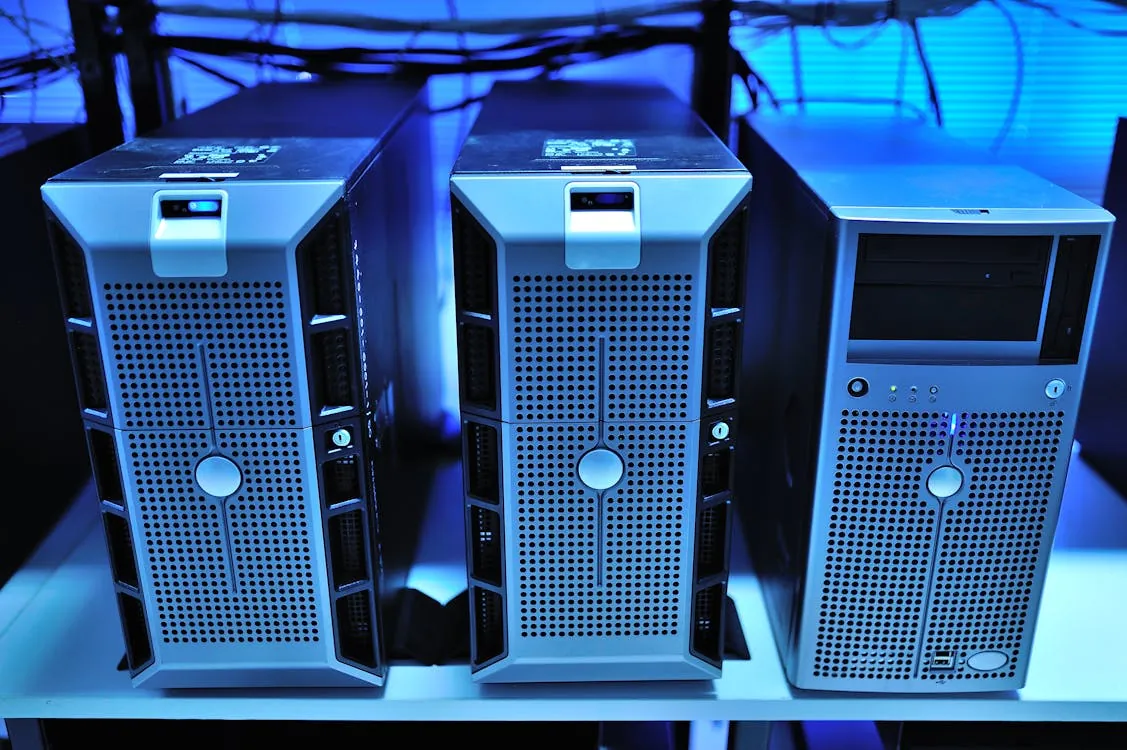
The price action changes budgeting conversations. A team that expected to pay close to old scarcity rates for a multi-week run now has bargaining power. If a provider quotes a high Hopper rate, the buyer can point to lower public listings, newer Blackwell alternatives, or H100 capacity if the workload does not require the H200 memory profile.
This is also a warning against lazy GPU budgeting. A spreadsheet that uses one static hourly price for the full year will overstate or understate infrastructure cost depending on how fast the market reprices. Engineering managers should update compute assumptions monthly in 2026, especially for training projects, evaluation sweeps, synthetic data generation, and batch inference.
The demand side has not disappeared. Companies are still buying AI capacity, but the buyer’s choice set has widened. As soon as capacity stops being a single-provider scramble, idle-capacity risk shifts back to the owner of the GPUs.
What Changed in 2026 Since First H200 Price Drop Story
The earlier article asked whether the H200 move was supply glut or demand slowdown. That was the right first question. A 40% drop in three weeks is large enough to make investors, CFOs, and platform teams ask whether AI infrastructure spending has outrun near-term usage.
The better interpretation now is more specific. H200 pricing is being reset by generational substitution. The same training backlog can exist, the same inference growth can continue, and the same cloud operators can still sell capacity, while Hopper prices fall because buyers have more options than they did during the shortage period.
Public pricing snapshots show dispersion. Thundercompute’s May 28, 2026 H200 comparison lists public on-demand H200 rates from about $2.29 per GPU-hour on Vast.ai to $10.60 per GPU-hour on Azure, normalized per single H200 where multi-GPU nodes are sold. AIMultiple’s May 20, 2026 GPU index puts the H200 cohort median around $3.39 and reports a range from $2.29 to approximately $13.78 across its dataset.
Those prices describe different products even when the silicon label is the same. The low end often appeals to portable training, experiments, research workloads, and teams that can tolerate provider switching. The high end often includes enterprise support, identity integration, compliance controls, regional availability, networking, and support contracts.
For CTOs, the important change is negotiation power. A cloud seller can no longer assume the buyer has only one realistic path to high-memory GPU capacity. That alters procurement from “secure anything available” to “price the workload against several execution paths.”
H200 still has real technical value. NVIDIA says H200 has 141 GB of HBM3e memory and 4.8 TB/s of memory bandwidth, which is the reason it remains relevant for workloads that spill beyond smaller memory profiles. The issue is what this accelerator should cost when Blackwell is entering the same buyer conversation.
Why Blackwell Supply Is Repricing H200 Capacity in 2026
Blackwell reprices Hopper capacity through substitution. A buyer does not need to rent a Blackwell system today for its existence to affect a quote. If a provider or competing supplier can offer newer B200 or GB200 systems for the most demanding work, H200 becomes the value tier for workloads that do not need the newest generation.
That dynamic is common in infrastructure markets. When a new CPU generation lands, previous-generation instances become cheaper. GPU markets are now behaving more like mature cloud infrastructure markets, where performance classes form a ladder and buyers choose based on workload fit.
The technical reason Blackwell has negotiating power is scale. NVIDIA says Blackwell-architecture GPUs pack 208 billion transistors and connect two reticle-limited dies with 10 TB/s chip-to-chip interconnect. NVIDIA also says fifth-generation NVLink can scale up to 576 GPUs. Those are NVIDIA specifications and should be read as vendor-stated architecture data, not a guarantee that every workload will see matching speedup.
The rack story is even more important for high-end buyers. NVIDIA’s GB200 NVL72 page says the system connects 36 Grace CPUs and 72 Blackwell GPUs in a 72-GPU NVLink domain, with 13.4 TB of HBM3E and 576 TB/s of aggregate memory bandwidth. NVIDIA claims 30x LLM inference, 4x LLM training, and 25x energy efficiency versus H100 in scenarios described on that page.
Those claims do not mean every enterprise should move every workload to GB200. In production, throughput depends on model architecture, sequence length, batching, network configuration, storage, scheduler overhead, software stack maturity, and operator skill. A poorly configured Blackwell cluster can waste money just as quickly as an overpriced Hopper cluster.
The market effect is still clear. The best new capacity anchors the top of the stack. H200 then has to justify itself as a cheaper, available, memory-rich option. If it does not trade at a discount to the newest tier, buyers will either move up to Blackwell or down to cheaper H100 capacity, depending on the workload.
Broader supply also matters. Presenc AI’s May 2026 supply report says AI GPU supply moved from acute shortage in 2023 to balance in 2026 as NVIDIA Blackwell ramped and AMD MI300X plus Google TPU v6 added competing capacity. The same report lists B200 rental rates in Q2 2026 at roughly $4.50 to $7.00 per hour and H200 single-GPU rates around $3.00 to $4.50.
That spread is the heart of the current reset. If H200 is available around the mid-single-digit range and B200 is available somewhat higher, procurement becomes workload-specific. If the Hopper quote is too close to B200, the buyer asks for Blackwell. If B200 access is constrained or the workload is memory-heavy but not communication-bound, discounted H200 remains attractive.
H200 Rental Price Table for May 2026
Pricing tables are dangerous when they mix spot, reserved, negotiated, and public on-demand rates. The table below uses one consistent source: Thundercompute’s May 28, 2026 public H200 comparison. Thundercompute states that its rows are on-demand, U.S. pricing, normalized per single H200 where providers sell multi-GPU nodes.
| Provider | May 2026 H200 price per GPU-hour | Pricing basis | Operational note | Source |
|---|---|---|---|---|
| Vast.ai | $2.29 | Public on-demand listing, normalized per H200 | Lowest current host listing in Thundercompute’s comparison | Thundercompute, May 28 2026 |
| Lambda Cloud | $3.79 | Public on-demand listing, normalized per H200 | Minute-billed H200 access in comparison | Thundercompute, May 28 2026 |
| Jarvislabs | $3.80 | Public on-demand listing, normalized per H200 | Single-GPU pay-as-you-go VM in comparison | Thundercompute, May 28 2026 |
| RunPod | $3.99 | Public on-demand listing, normalized per H200 | Eight-GPU node priced as $31.92 per hour in comparison | Thundercompute, May 28 2026 |
| AWS p5e.48xlarge | $4.98 | Capacity Blocks pricing normalized per H200 | Thundercompute notes 1-day minimum | Thundercompute, May 28 2026 |
| CoreWeave | $6.31 | Public on-demand listing, normalized per H200 | Eight-GPU node priced as $50.44 per hour in comparison | Thundercompute, May 28 2026 |
| Oracle Cloud | $10.00 | Public on-demand listing, normalized per H200 | Bare-metal eight-GPU node priced as $80 per hour in comparison | Thundercompute, May 28 2026 |
| Azure Standard ND96isr H200 v5 | $10.60 | Public cloud reference pricing, normalized per H200 | Calculator price shown as $84.80 per hour total in comparison | Thundercompute, May 28 2026 |
The spread is the story. A buyer looking only at provider name may conclude that one seller is expensive and another is cheap. A better procurement view asks what is included in the bundle: uptime expectations, support response, data location, private networking, storage performance, image management, cluster topology, and billing flexibility.
AIMultiple’s GPU index adds another useful lens. AIMultiple says its May 2026 index covers 58 providers and 17 GPU models, using monthly snapshots from July 2024 through May 2026. It reports that H200’s working median sits in the $3 to $4 band once community-tier or instance-share listings are treated separately.
That detail matters because procurement teams often compare rates without comparing reliability. A low advertised rate can be excellent for batch work that restarts cleanly. It can be costly for production inference if failures, cold starts, or noisy neighbors harm customer experience.
Where H200 Still Wins in 2026
The H200 price reset should not be confused with a technical write-off. The GPU is still a strong candidate when the workload benefits from large memory per accelerator and does not require the newest Blackwell rack-scale interconnect profile. Its value is highest when it removes engineering work, not when it wins a headline benchmark.
Long-context inference is the obvious example. When context windows grow, memory pressure rises. If the model or serving configuration fits more comfortably on H200, the team may avoid complex sharding, reduce operational risk, and improve developer velocity. A cheaper GPU can lose on total cost if it forces extra engineering, more nodes, or fragile deployment patterns.
Batch inference is another good fit. Many companies run offline classification, summarization, embedding generation, document extraction, and evaluation jobs where latency is measured in minutes or hours rather than milliseconds. For those workloads, discounted Hopper capacity can be attractive if the team can queue jobs and tolerate provider switching.
Fine-tuning can also benefit when model size and batch configuration fit well in H200 memory. The caveat is that training economics should be measured end to end. Storage throughput, checkpoint time, data loading, failed runs, and cluster availability can dominate savings from a lower hourly rate.
H200 is less compelling when the buyer needs the newest interconnect design, maximum inference throughput on frontier-scale models, or vendor-managed access to a tightly integrated rack-scale system. In those cases, B200 or GB200 may justify the higher hourly cost because the job completes faster or runs with fewer operational issues.
AMD MI300X and cloud-specific accelerators also belong in the 2026 conversation where the software stack allows it. Presenc AI reports MI300X rental pricing at roughly 30% to 40% below H100 for comparable inference performance, while noting that ROCm compatibility remains a differentiator. That is not a universal replacement for CUDA-heavy workflows, but it is enough to make procurement teams test alternatives instead of defaulting to NVIDIA every time.
The 2026 Procurement Playbook for AI Teams
The ROI question is no longer, “Can we get GPUs?” It is, “Which commitment length keeps us from overpaying while the replacement cycle is moving?” At $7 per GPU-hour, a 100-GPU cluster costs $700 per hour. At $4 per GPU-hour, the same cluster costs $400 per hour, so a 72-hour training run saves $21,600 before storage, networking, and engineer time are counted.

That arithmetic should change buying behavior. A team that signs a long H200 commitment at an old rate risks paying yesterday’s scarcity premium for tomorrow’s discount asset. The safer 2026 default is to keep Hopper commitments short unless the provider gives price-down protection or the workload has a hard availability requirement.
For most engineering leaders, the practical checklist is direct:
- Benchmark by job, not by GPU name. Run the same model, data path, batch size, and evaluation process on H100, H200, and B200 when possible.
- Checkpoint aggressively. If the workload can restart cleanly, lower-cost or interruptible capacity becomes usable without risking full training loss.
- Separate research from production. A low-cost provider may be perfect for experiments and wrong for latency-sensitive inference.
- Ask for price reopeners. Any Hopper commitment longer than a short sprint should include language for repricing if market rates fall materially.
- Measure cost per completed job. A cheap GPU-hour is not cheap if slow storage, failed runs, or queue delays increase total cycle time.
- Track internal chargeback rates. If an internal platform team bills H200 at stale rates, product teams may make bad build-versus-buy decisions.
Build-versus-buy math also changed. Buying H200 hardware may still work for predictable, steady workloads, but lower rental rates raise the busy-time bar for owned clusters. If a company cannot keep hardware busy, handle failures, patch drivers, manage scheduling, and source power and cooling, rental preserves optionality while Blackwell supply continues to arrive.
The simplest board model is cluster use. Owned hardware wins when the systems stay busy, operations are competent, and workloads are stable. Rental wins when demand is bursty, the model roadmap is uncertain, or the team wants access to newer hardware without absorbing depreciation risk.
The honest limitation is that cheaper compute does not automatically lower total AI cost. Data preparation, evaluation, safety review, model monitoring, and inference quality checks still consume engineering time. Lower H200 pricing helps most when the bottleneck is actual GPU throughput, not messy data or unclear product requirements.
What 2026 Reset Means for GPU Cloud Operators
GPU cloud operators with large Hopper fleets now face a financing problem. The hardware can still generate revenue, but the rental curve is compressing faster than many depreciation schedules assumed. If a provider bought capacity during the shortage, lower H200 rates reduce payback unless paid use rises enough to offset the lower price.
Blackwell worsens that pressure because it changes buyer expectations. NVIDIA’s March 2024 Blackwell announcement said early cloud providers would include AWS, Google Cloud, Microsoft Azure, Oracle Cloud Infrastructure, Applied Digital, CoreWeave, Crusoe, IBM Cloud, Lambda, and Nebius, among others. As those offerings appear in more catalogs, Hopper capacity becomes easier to negotiate down even when customers still rent it.
Smaller providers can still win if they avoid competing only on price. They can provide fast onboarding, good developer experience, short billing increments, predictable storage, and support that helps teams finish jobs. A low rate gets a buyer’s attention. Reliable completion earns repeat spend.
Hyperscalers face a different challenge. They can sustain premium pricing longer because they sell trust, support, identity, security, regions, procurement familiarity, and existing enterprise contracts. Their risk is that internal platform teams start moving portable workloads to specialist clouds when the price gap becomes too obvious to ignore.
The operator danger is a race to the bottom. If every provider cuts H200 to defend fleet occupancy, margins compress across the cohort. Operators with lower capital cost, better power contracts, higher paid load, and strong automation survive. Operators that financed Hopper fleets on peak scarcity assumptions need a new plan.
How to Explain 2026 Price Reset to Board
The board does not need a lecture on GPU architecture. It needs a decision framework. The H200 drop means the company should treat AI compute as a tradable input with moving prices, not as a fixed annual software cost.
A CFO-friendly summary has three parts. First, market pricing changed quickly, so budgets should use rolling assumptions. Second, the company can save money by splitting workloads across price tiers. Third, long commitments need protection against further price declines.
For example, a product team running customer-facing inference may stay on a hyperscaler because surrounding controls reduce operational risk. A research team running nightly evaluation batches can use lower-cost H200 capacity because the workload is portable. A platform team running large training may benchmark B200 if the job finishes materially faster, even at a higher hourly rate.
The financial metric should be cost per business outcome. For training, that may be cost per successful model candidate. For inference, it may be cost per million useful responses at the target latency and quality threshold. For data processing, it may be cost per completed document, embedding, or classified record.
This is also where simpler solutions sometimes outperform. If the application can use a smaller model, retrieval, caching, quantization, or a vendor API, renting a large GPU cluster may be wasteful. The H200 price drop improves the economics of self-hosting, but it does not make self-hosting the right answer for every workload.
2026 Prediction Accountability
The prior H200 coverage included several dated calls. They are still open because their target dates have not passed, so none should be scored as confirmed or wrong yet. I am keeping them visible because GPU pricing changes quickly and infrastructure forecasts should be checked in public.
| Status | Prediction | Target |
|---|---|---|
| ⏳ PENDING | I predicted that NVIDIA’s Vera Rubin GPU platform will begin shipping in Q3 2026 and that at least two hyperscaler GPU rental providers will announce Vera Rubin availability by Q4 2026, further compressing H200 pricing below $2.50 per hour median. | 2026-12-31 |
| ⏳ PENDING | I predicted that at least four H200 offerings across AWS, Azure, Google Cloud, Oracle, CoreWeave, and Lambda will publicly cut on-demand pricing by at least 15% from May 2026 levels. | 2026-09-30 |
| ⏳ PENDING | I predicted that H200 rental market median will close June 2026 below $3.00 per GPU-hour. | 2026-06-30 |
| ⏳ PENDING | I predicted that at least two GPU cloud operators with significant Hopper inventory will announce restructuring, asset sales, or strategic pivots away from GPU rental as their primary business model. | 2026-08-31 |
| ⏳ PENDING | I predicted that H200 rental market median will fall below $3.00 per GPU-hour if Blackwell B100 and B200 deployments continue at May 2026 pace. Duplicate tracking entries for this same call remain open. | 2026-08-31 |
| ⏳ PENDING | I predicted that spread between Azure’s top H200 listing and lowest specialist provider will narrow to less than $10 per hour as enterprise cloud pricing adjusts downward. Duplicate tracking entries for this same call remain open. | 2026-10-31 |
| ⏳ PENDING | I predicted that at least three public H200 rental offers will be listed below $3.00 per GPU-hour while at least one major enterprise cloud or specialist listing remains above $8.00 per GPU-hour. Duplicate tracking entries for this same call remain open. | 2026-07-31 |
My current base case is unchanged: H200 keeps repricing lower through summer of 2026 unless Blackwell supply tightens again or a large training wave absorbs discount capacity. The procurement action is clear even if the exact curve is uncertain: do not sign long Hopper commitments without a price adjustment clause, and do not assume hyperscaler list prices reflect the clearing price for portable workloads.
The board-level message is straightforward. The 40% H200 drop is evidence that the compute stack is becoming a real market, with generational substitution, visible price dispersion, and better buyer power. Companies that treat GPU procurement as a monthly financial discipline will capture savings faster than companies still buying compute like a fixed annual software contract.
For CTOs, the most practical 2026 move is to turn GPU procurement into an operating cadence. Review public rates monthly, benchmark workloads quarterly, renegotiate long commitments when generational supply changes, and force every large training proposal to include at least two execution paths. The H200 price reset is a cost-saving opportunity, but only for teams disciplined enough to convert market movement into purchasing action.
Sources and References
- AI GPU Supply and Pricing 2026 – Presenc AI
- GPU Markets · A reference price for the listed GPU rental market
- GPU Shortage 2026: How to Secure AI Compute When GPUs Are Sold Out
- GPU Scarcity 2026: H100, H200, B200 Supply and What to Buy
- NVIDIA AI GPU Prices: H100 ($27K-$40K) & H200 ($315K/8-GPU) Cost Guide
- GPU rental prices (H200) hit___ by May 31? – polymarket.com
- GPU Shortage 2026 – Availability, Allocation Timelines and Price Impact …
- NVIDIA H200 Price Guide 2026: GPU Cost, Rental & Cloud Pricing
- Why Is the NVIDIA H200 Shortage Impacting Cloud Rental Prices?
- World Leader in Artificial Intelligence Computing | NVIDIA
- NVIDIA B200 Pricing (May 2026) – thundercompute.com
- Support Home Page | NVIDIA
- H200 Cloud Pricing: Compare 30+ Providers (2026)
- GPU Pricing & Cloud GPU Cost Comparison 2026
- B200 Cloud Pricing: Compare 22+ Providers (2026)
- NVIDIA GB200 Price , From $3.50/hr Cloud Rental | Runcrate
- NVIDIA B200 GPU Hourly Rental Price: Where to Rent
- NVIDIA B200 Cloud Pricing – Compare 30+ Providers [2026]
- The Engine Behind AI Factories | NVIDIA Blackwell Architecture
- NVIDIA H200 Price Comparison (May 2026)
- Cloud GPU Rental Price Index
- H200 GPU | NVIDIA
- Gb200 Nvl72 | Nvidia
- The NVIDIA Grace Blackwell Superchip , NVIDIA GB200 NVL Multi-Node …
- Understanding Your Grace-Blackwell Systems , NVIDIA GB200 NVL Multi …
- DGX GB200: AI Infrastructure for State-of-the-Art AI Models – NVIDIA
- Thousands of NVIDIA Grace Blackwell GPUs Now Live at CoreWeave …
- Hardware , NVIDIA DGX GB Rack Scale Systems User Guide
- NVIDIA Blackwell Platform Arrives to Power a New Era of Computing
- NVIDIA DGX GB Rack Scale Systems User Guide
- NVIDIA GB200 NVL72 Delivers Trillion-Parameter LLM Training and Real …
- NVIDIA H200 NVL Specs | TechPowerUp GPU Database
- Nvidia H200 GPU: Specs, VRAM, Price, and AI Performance
- NVIDIA H200 NVL AI Accelerator Card 141GB HBM3E 4.8TB/s PCIe 5.0 …
- NVIDIA H200 Specs: 141GB HBM3e, 4.8 TB/s Bandwidth, FP8 …
- U.S. clears H200 chip sales to 10 China firms as Nvidia CEO … – CNBC
- Nvidia Announces H200 GPU: 141GB of HBM3e and 4.8 TB/s Bandwidth
- Exclusive: US clears H200 chip sales to 10 China firms as Nvidia CEO …
- NVIDIA H200 NVL – PNY
- Datavault AI Goes Live with First Edge GPU Sites in New York and Philadelphia; $1.44B-$1.92B Quantum-Ready Fleet to Reach 100+ U.S. Cities by End of 2026
- Alpha Compute AI GPU Launch Update; First Large-Scale NVIDIA Blackwell Cluster
- Blackwell’s, books for life and for learning Blackwell’s
- NVIDIA GPU Prices 2026: B200 at $40K, H100 Dropping to $20K
- Global Forex & CFD Broker | Online Trading | Blackwell
- NVIDIA Price Target Lifted to $300 by KeyBanc: Blackwell and Rubin Are Stacking Catalysts
- Five takeaways from Nvidia’s earnings, and what they mean for the AI industry
- NVIDIA B300 (Blackwell Ultra) Specs, Pricing, and Benchmarks (2026)
- AI GPU Rental Launches New AI-Driven Supercomputing to Simplify Bitcoin Passive Earnings
- AI and Cloud Computing Services
- Cloud GPU Pricing Tracker , Compare AWS, Azure, GCP, CoreWeave, Lambda …
- iCloud
- GPU Economics: What Inference Actually Costs in 2026
- GPU Cloud Pricing in 2026: We Compared 7 Providers So You Don’t Have To
Priya Sharma
Thinks deeply about AI ethics, which some might call ironic. Has benchmarked every model, read every white-paper, and formed opinions about all of them in the time it took you to read this sentence. Passionate about responsible AI, and quietly aware that "responsible" is doing a lot of heavy lifting.