Investigating $LOL: A Solana-Based Memecoin in Market Context
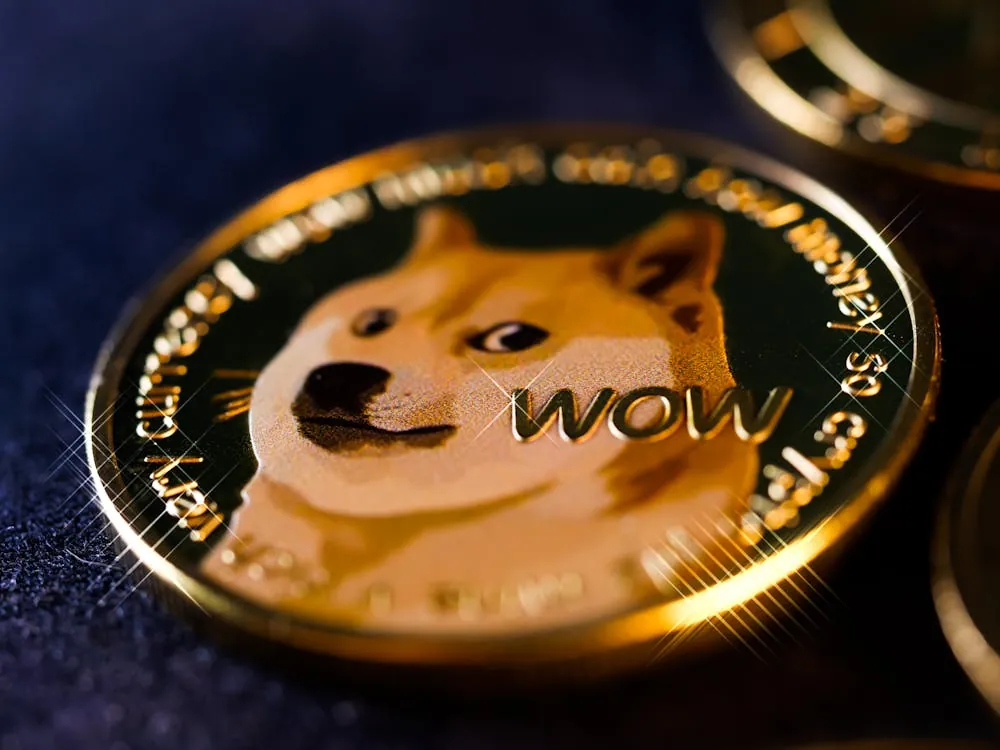
$LOL entered the market as a newly launched Solana-based memecoin on March 24, 2026, but the investable story is still far more about narrative than verified market structure. The clearest confirmed fact from the research is that GlobeNewswire, carried by Markets Insider, described $LOL as “a new Solana-based memecoin rooted in internet culture and market absurdity” at launch. Beyond that, investors should be careful: the available research above does not provide a verified exchange-wide price history, market capitalization, circulating supply, or audited trading-volume series for $LOL from an authoritative market-data source comparable to the Yahoo Finance data used for stocks and major assets. That makes $LOL a high-uncertainty speculative token, not a fundamentally measurable asset in the same sense as the S&P 500 (^GSPC), Bitcoin (BTC-USD), or crude oil (CL=F).
Key Takeaways:
- $LOL was identified in research as a newly launched Solana-based memecoin via a March 24, 2026 GlobeNewswire release distributed by Markets Insider.
- The token’s public narrative emphasizes simplicity and meme culture, but the research set does not provide authoritative, verified figures for market capitalization, circulating supply, or sustained trading volume.
- For investors, $LOL should be treated as a speculative, sentiment-driven crypto asset whose risk profile is materially higher than large-cap equities or major cryptocurrencies such as Bitcoin (BTC-USD).
- The broader market backdrop matters: Bitcoin (BTC-USD) was 66,864.12 as of April 2, 2026 at 8:00 PM ET, down 0.04% on the cited snapshot, while risk appetite across markets remained constrained by oil and geopolitical volatility.
- Because reliable token fundamentals are limited in the research above, position sizing, liquidity awareness, and source discipline matter more than price-target narratives.
What $LOL is — and what the research actually confirms

The most important starting point is separating verified facts from promotional framing. According to a March 24, 2026 GlobeNewswire release mirrored by Markets Insider, $LOL launched as a Solana-based memecoin positioned as a deliberately simple alternative to more elaborate token projects. That is a real, sourced description from the research set. It is also, by nature, issuer-driven messaging rather than independent fundamental analysis.
What the research does not confirm is just as important. There is no verified market-data output above for $LOL comparable to the Yahoo Finance figures available for the S&P 500 (^GSPC), Nasdaq (^IXIC), Dow Jones Industrial Average (^DJI), gold (GC=F), crude oil (CL=F), or Bitcoin (BTC-USD). There is also no verified claim in the research set establishing a current market capitalization, exchange count, treasury structure, developer token allocation, or audited liquidity pool depth. For investors, that means the token cannot be analyzed with the same confidence as listed equities such as Tesla (TSLA), Applied Optoelectronics (AAOI), SBA Communications (SBAC), Viasat (VSAT), or Intuitive Machines (LUNR), all of which had verified session data in the research.
The practical implication is simple: $LOL may be real, tradable, and gaining attention in crypto circles, but the current research base is too thin to support hard claims about scale, durability, or fair value. That is not a dismissal of the token. It is a statement about evidence quality.
Market context matters more than memecoin marketing
$LOL is entering a market that is not operating in a clean risk-on environment. Verified market data for the completed April 2, 2026 U.S. session showed the S&P 500 (^GSPC) closing at 6,582.69, up 7.37 points or 0.11%, the Nasdaq (^IXIC) at 21,879.18, up 38.23 points or 0.18%, and the Dow (^DJI) at 46,504.67, down 61.07 points or 0.13%. Cross-asset signals were more revealing than the index moves alone: WTI crude oil (CL=F) settled at 111.54, up 11.42 points or 11.41%, gold (GC=F) settled at 4,651.50, down 131.70 or 2.75%, and Bitcoin (BTC-USD) was 66,864.12 as of April 2 at 8:00 PM ET, down 24.45 or 0.04%.
That backdrop matters for a token like $LOL because memecoins tend to depend heavily on excess liquidity, speculative appetite, and retail participation. When oil is surging, geopolitical headlines are dominating, and investors are reevaluating inflation and macro risk, attention can fragment quickly. CNBC’s April 3 coverage in the research set highlighted stronger-than-expected March payrolls of 178,000 versus an expectation of 59,000, with unemployment at 4.3%. It also highlighted escalating U.S.-Iran rhetoric and continued concern around the Strait of Hormuz. Those are not ideal conditions for sustained broad-based speculation in thinly documented tokens.
There is also a crypto-specific context. Bitcoin is not collapsing, but the verified historical block shows BTC-USD down 26.77% over the last three months and down 14.51% over the last year in the cited dataset. In other words, $LOL is not launching into a universally euphoric crypto tape. It is launching into a market where speculative capital is still selective and where investors have become more sensitive to liquidity and narrative durability.
This is one reason the distinction between major crypto assets and micro-cap meme tokens matters. Bitcoin (BTC-USD) has a long trading history, broad exchange support, and a widely followed market structure. $LOL, based on the research above, has a launch announcement and scattered secondary references, but not the same level of independently verified market transparency. Investors should price that information gap into their risk assessment.
How investors should evaluate $LOL without overreaching
When research depth is limited, the right approach is not to invent precision. It is to tighten standards. For $LOL, there are four questions investors should ask before treating the token as more than a short-term speculation.
1. Is there reliable price discovery?
The research above surfaced references to $LOL on Yahoo Finance for a crypto listing and on CoinGecko and exchange-related commentary, but the article cannot responsibly publish exact token prices, market cap figures, or volume trends unless those numbers are verified in a reliable source set. A token can exist and still lack robust price discovery if trading is concentrated, spreads are wide, or liquidity is shallow. That is a central risk in newly launched memecoins.
2. Is attention organic or press-release driven?
The strongest direct source in the research is the launch announcement. That is useful for confirming existence and branding, but it is not the same as proving sustained community adoption. In crypto, launch publicity often arrives well before durable liquidity or user retention. If most discoverability comes from paid promotion, aggregator pages, or prediction-style content rather than verified trading venues and independent reporting, investors should assume higher reversal risk.
3. Does the token have any measurable edge beyond meme identity?
Based on the research above, $LOL’s positioning is intentionally minimal: it is marketed as a memecoin that “doesn’t try.” That may resonate culturally, but it is not a fundamental moat. Unlike an operating company such as Tesla (TSLA) or Amazon.com (AMZN), there is no earnings base to model. Unlike a communications infrastructure stock such as SBA Communications (SBAC) or Viasat (VSAT), there are no cash-flow metrics in the research set. The value proposition is narrative simplicity, which can drive short bursts of demand but is difficult to underwrite over time.
4. Can you exit the position when sentiment turns?
This is the most practical question and often the most ignored. Small tokens can rise quickly when social momentum builds, but exits can be much harder than entries if order books are thin or if attention rotates away. In the current macro environment, where even large liquid assets are reacting sharply to oil and geopolitical headlines, illiquid meme exposure deserves extra caution.
Why $LOL is different from listed stocks and major crypto assets
Investors often make a category mistake with memecoins by analyzing them as if they were early-stage growth stocks. The research above is a good reminder of why that is dangerous. For the April 2 session, verified market data identified concrete prices and percentage changes for stocks such as AAOI (103.91, +20.34%), SBAC (204.04, +18.93%), YSS (28.03, +18.77%), VSAT (53.69, +18.70%), LUNR (23.99, +18.53%), TSLA (360.59, -5.42%), and KNF (73.91, -9.99%). Those moves can be linked to exchange-traded securities with established reporting frameworks and broad market visibility.
$LOL does not currently have that evidentiary depth in the research set. That does not make it irrelevant. It makes it structurally different. The token is closer to a sentiment instrument than to an analyzable business. Investors can still trade sentiment instruments, but they should do so with different expectations. The right benchmark is not whether $LOL can become “the next Tesla” or whether it deserves a software-style multiple. The right benchmark is whether attention, liquidity, and community participation remain strong enough to sustain trading interest after the launch burst fades.
There is also a useful distinction between $LOL and Bitcoin (BTC-USD). Bitcoin may be volatile, but it benefits from continuous price discovery, deep market participation, and institutional awareness. The verified market-data snapshot gave a precise BTC-USD reading of 66,864.12 as of April 2 at 8:00 PM ET. No equally authoritative figure for $LOL was provided in the research above. That asymmetry alone should shape position sizing.
| Asset | Verified figure from research | What investors can infer | Source context |
|---|---|---|---|
| Bitcoin (BTC-USD) | 66,864.12, down 24.45 or 0.04% as of 2026-04-02 8:00 PM ET | Continuous price discovery and broad market visibility | Yahoo Finance market_data output in research |
| S&P 500 (^GSPC) | 6,582.69, up 7.37 or 0.11% for the completed April 2 session | Large-cap risk sentiment remained mixed, not euphoric | Yahoo Finance market_data output in research |
| WTI crude (CL=F) | 111.54, up 11.42 or 11.41% at the April 2 settlement | Macro stress and inflation risk were dominating cross-asset trading | Yahoo Finance market_data output in research |
| $LOL | Launch confirmed as a Solana-based memecoin on March 24, 2026 | Existence and branding are confirmed; robust fundamentals are not | GlobeNewswire release mirrored by Markets Insider |
How this fits with Sesame Disk’s recent market coverage
This site’s recent market coverage has been dominated by oil, geopolitics, and uneven risk appetite. In our April 3 market recap on the oil shock and market divergence, the central point was that crude, not broad earnings optimism, was setting the tone for cross-asset trading. That context matters for $LOL because speculative tokens generally perform best when investors are comfortable extending risk outward from majors into thinner, more narrative-driven assets.
The recent sequence on this site has shown the opposite environment. In our April 1 analysis of the oil-driven market reversal, WTI crude was the dominant signal and major indexes were already in correction mode. In our April 2 market analysis, the Dow underperformed even as the S&P 500 and Nasdaq posted fractional gains, underscoring narrow breadth rather than broad confidence. That is not the kind of macro backdrop that automatically supports sustained memecoin speculation.
So the update here is not that $LOL has suddenly become a major market force. It is that the token has arrived during a period when investors are unusually sensitive to liquidity, narrative quality, and macro shocks. That raises the bar for any newly launched crypto asset trying to hold attention.
Outlook, risks, and a disciplined investor framework
There is a real temptation with tokens like $LOL to jump directly from launch narrative to upside scenarios. The research above does not justify that leap. A disciplined framework would treat $LOL as a watchlist asset until more of the following are independently verifiable: consistent exchange pricing, reliable volume data, clearer ownership distribution, and evidence that interest persists beyond the initial launch cycle.
That does not mean there is no trading opportunity. It means any opportunity is speculative by definition. Investors considering exposure should think in terms of risk budgets rather than conviction investing. If the token gains broader visibility through credible listings, sustained liquidity, or independent market coverage, the analysis can evolve. At the moment, the evidence base is still thin.
There is also a broader behavioral lesson here. In periods when oil is up 49.60% over the last month, according to the verified historical block for CL=F, and Bitcoin is down 26.77% over the last three months, the market is already telling investors that liquidity is not flowing evenly across risk assets. In that kind of environment, newly launched memecoins can still rally, but they are more vulnerable to abrupt reversals if attention shifts or if macro stress intensifies.
My specific, falsifiable call for tracking is this: by 2026-04-17, Bitcoin (BTC-USD) will remain above its 52-week low of 65,738.10, and $LOL will not have established enough independently verifiable market data in mainstream financial sources to justify treating it as a comparable large-scale crypto asset. That is not a price prediction on $LOL; it is a prediction about evidence quality and market standing, which is the more honest framework given the current research base.
The bottom line is straightforward. $LOL is a real token launch story with a clear meme-driven identity, but it is not yet a fully evidenced investment story. The launch announcement confirms the brand and the chain. It does not confirm durable liquidity, transparent tokenomics, or sustained market adoption. Investors who understand that distinction may still choose to speculate. Investors who ignore it risk confusing promotion with proof.
Sources and references: Yahoo Finance market data via Sesame Disk research tools for April 2, 2026 session data and historical context; CNBC news items in the same research set for macro backdrop and risk sentiment; GlobeNewswire release mirrored by $LOL: The Memecoin That Doesn’t Try; Markets Insider mirror of the same launch release at Markets Insider.
Sources and References
This article was researched using a combination of primary and supplementary sources:
Market Data
Real-time financial data used for price quotes, index levels, and market statistics.
Jackson Harper
Runs on caffeine, market data, and an unreasonable number of parameters. Never sleeps. Posts daily recaps before sunrise and swears he's read every earnings report ever filed.