Solana Memecoin $LOL: Market Dynamics and Risks
Key Takeaways:
- $LOL is a Solana memecoin branded as “lolonsol,” launched through pump.fun and positioned around internet humor rather than utility.
- CoinMarketCap listed LOL at $0.008649 with a market capitalization of $8.58 million, 24-hour volume of $4.5 million, and circulating supply of 992.24 million tokens on the page captured April 4, 2026.
- The token’s promotional identity is straightforward: no utility-heavy pitch, no grand roadmap language, and a community-first meme narrative, according to GlobeNewswire distribution carried by Markets Insider.
- The bigger investor story is not just $LOL itself, but the structure of the Solana memecoin market: fast launches, rapid price discovery, social-media-driven flows, and sharp reversal risk.
- For traders, the key variables are liquidity, holder concentration, exchange access, and whether attention remains organic after the launch spike fades.
$LOL is not a DeFi protocol, infrastructure project, or payments network. It is a Solana memecoin called LOL (lolonsol), launched into a market that still rewards viral attention but punishes weak liquidity quickly. That distinction matters, because the right way to analyze a meme token is not to force a fundamentals template onto it, but to judge its market structure, community traction, and risk profile against the rest of the Solana meme ecosystem.
The token’s public debut was framed as a culture-first launch. In a March 23, 2026 press release distributed by Markets Insider, the project described itself as a “new Solana-based memecoin rooted in internet culture and market absurdity.” That is not just branding language; it is the core investment case. $LOL is being sold to traders as a meme asset whose value depends on recognition, community participation, and trading momentum rather than cash flow, utility, or protocol revenue.

As of the CoinMarketCap page captured April 4, 2026, LOL traded at $0.008649, down 14.67% over 24 hours, with a reported market capitalization of $8,581,642 and 24-hour trading volume of $4,500,721. CoinMarketCap also listed a circulating supply of 992,241,837 LOL against a maximum supply of 1,000,000,000, with an all-time high of $0.01236 on April 1, 2026 and an all-time low of $0.00004129 on March 18, 2026. Those numbers are enough to place $LOL in the small-cap, high-volatility corner of crypto where price can move faster than conviction.
What $LOL Actually Is
The most important correction is simple: $LOL is a memecoin, not a platform. It is branded around a universally recognized internet expression and marketed as a deliberately simple token. The CoinMarketCap listing states that LOL launched on March 18, 2026 and was “fair launched via pump.fun,” with no presale, no team allocation, and no early investor access. That is a meaningful structural point because fair-launch language is often used to signal that insiders did not receive preferential pricing before public trading began.
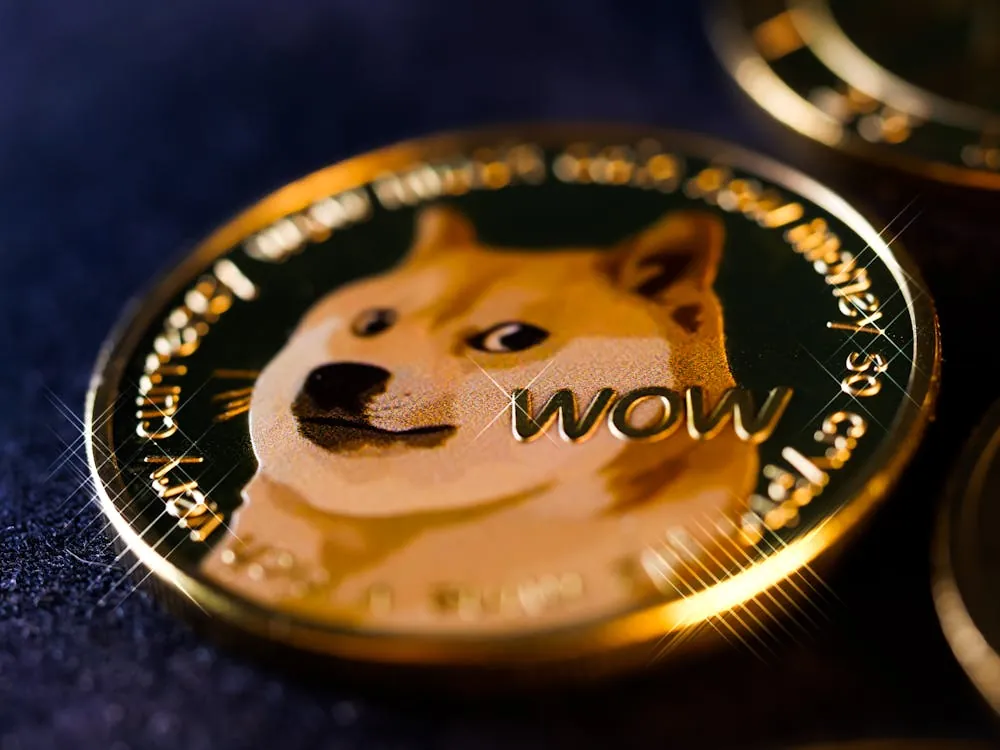
CoinMarketCap’s project description also says the token graduated from pump.fun’s bonding curve to PumpSwap AMM after launch, and that liquidity migrated through that mechanism. The listing further states that the mint authority was removed, which would mean no additional tokens can be created beyond the stated cap. It also describes a post-launch token burn that reduced supply from 1 billion to roughly 992.2 million tokens. For traders, that combination matters more than lofty branding: launch route, supply ceiling, and tradability are the real mechanics that shape meme-token behavior in the first weeks.
The project’s official channels listed in the Markets Insider release include its website, X account, and Telegram. That aligns with the standard pattern for Solana meme launches, where the social layer often drives the market layer. In practice, that means sentiment can change faster than fundamentals ever could, because the token is not trying to build a traditional product narrative in the first place.
Price Action and Token Metrics That Matter
For a newly launched memecoin, the first question is whether the market is actually engaging with it. On that score, CoinMarketCap’s snapshot is notable. A market capitalization of $8.58 million and 24-hour volume of $4.5 million imply active turnover relative to size. The listed volume-to-market-cap ratio of 52.44% is high enough to suggest that the token was still in a price-discovery phase rather than settling into a quiet post-launch drift.
The token’s range also shows how extreme that discovery process has been. CoinMarketCap listed a 24-hour low of $0.0082 and a high of $0.01204, while the all-time high of $0.01236 was reached on April 1, just days before the captured page. Against the all-time low of $0.00004129 on March 18, the move is the kind of explosive early-cycle repricing that attracts momentum traders and, just as often, late entrants who underestimate how quickly liquidity can reverse.
That volatility is not unusual inside Solana’s meme market. The same CoinMarketCap page places LOL among Solana-chain tokens and tags it under both “Memes” and “Solana Ecosystem.” It also shows the token as trending, which matters because trending visibility on major aggregators can become a self-reinforcing catalyst. Once a token appears on the radar of retail traders, social amplification can drive another round of buying even if the underlying thesis has not changed at all.
The supply profile is also worth watching. CoinMarketCap lists total supply at 991.27 million and circulating supply at 992.24 million, with the percentage shown near 99.2241837%. For meme-token traders, that kind of near-fully-circulating structure can be preferable to a token with large future unlocks. It does not make the asset safer, but it reduces one common source of dilution risk that often hangs over newly launched crypto names.
| Metric | LOL (lolonsol) | Source |
|---|---|---|
| Price | $0.008649 | CoinMarketCap |
| 24-hour change | -14.67% | CoinMarketCap |
| Market capitalization | $8,581,642 | CoinMarketCap |
| 24-hour volume | $4,500,721 | CoinMarketCap |
| Circulating supply | 992,241,837 LOL | CoinMarketCap |
| Max supply | 1,000,000,000 LOL | CoinMarketCap |
| All-time high | $0.01236 on Apr. 1, 2026 | CoinMarketCap |
| All-time low | $0.00004129 on Mar. 18, 2026 | CoinMarketCap |
Why the Solana Memecoin Ecosystem Matters More Than the Slogan
$LOL’s prospects depend heavily on the ecosystem it entered. Solana remains one of the most active chains for fast-moving meme-token launches because low transaction costs and easy token creation lower the barrier to speculation. CoinMarketCap’s related Solana-token listings on the LOL page included names such as Solana (SOL), Jupiter (JUP), Pump.fun (PUMP), Bonk (BONK), TROLL (SOL) (TROLL), FOMO (FOMO), and Just chill guy (CHILLGUY). That context matters because $LOL is not competing with Bitcoin (BTC) or Ethereum (ETH) for investor attention on its own terms; it is competing with a crowded field of meme and retail-driven tokens on the same chain.
That competition changes how price behaves. In a crowded meme market, attention is capital. A token with a catchy identity can rally sharply, but it also has to survive the next rotation. Traders in this segment often move from one narrative to another as soon as volume cools or a fresh listing appears. A token like $LOL can therefore show strong early volume without necessarily establishing durable staying power.
The project’s branding does give it one advantage: the term “LOL” is globally recognizable and easy to understand. CoinMarketCap’s project description leans hard into that point, calling it one of the most universal expressions in digital communication. That is a cleaner, broader meme than many niche tokens built around a temporary joke or obscure online trend. In retail markets, familiarity can be an edge because it lowers the friction for social sharing and meme creation.
Still, broad recognition is not the same as moat. The Solana meme market has shown repeatedly that brand recognition can attract traders, but liquidity depth, holder behavior, and community retention determine whether a token can keep a bid after the initial burst. In other words, the logo gets people in the door; the market structure decides whether they stay.
The Main Risks Investors Should Focus On
The biggest risk with $LOL is not that it lacks a utility pitch. Meme traders already know that. The bigger risk is that new tokens can look liquid until they are not. A memecoin with a few million dollars of daily volume can still be vulnerable to rapid slippage if buyers disappear, if a few large holders rotate out, or if social attention shifts to another launch. That is why market cap alone is not enough; turnover and trading venue quality matter just as much.
Holder concentration is another issue to watch closely. CoinMarketCap shows LOL with 10.04K holders, which is a useful early sign of distribution, but holder count does not reveal how concentrated the top wallets may be. In meme markets, a token can have thousands of holders and still be heavily influenced by a relatively small number of large positions. That can amplify both upside and downside, especially after a strong run.
Launch mechanics also create their own risks. Pump.fun-style launches can generate rapid early enthusiasm, but they also attract highly tactical traders who specialize in short holding periods. Those traders can provide the first wave of liquidity and the first wave of selling pressure. If a token does not convert launch excitement into sustained community activity, the post-launch chart can deteriorate quickly even after an impressive initial spike.
Another risk is narrative fatigue. $LOL’s appeal is clear and simple, which is good for marketing. But simplicity can cut both ways. Without a broader catalyst set, the token may depend on continued meme relevance and recurring social engagement to maintain attention. If the joke stops spreading, the market may decide there is nothing new to price in.
| Risk factor | Why it matters for $LOL | Source / context |
|---|---|---|
| High volatility | Price moved from an all-time low of $0.00004129 on Mar. 18 to an all-time high of $0.01236 on Apr. 1 | CoinMarketCap |
| Small-cap structure | Market capitalization of $8.58 million leaves the token sensitive to relatively small capital flows | CoinMarketCap |
| Social-driven thesis | Project marketing centers on humor, recognizability, and meme identity rather than utility | Markets Insider / GlobeNewswire |
| Launch-cycle speculation | Fair launch via pump.fun and migration to PumpSwap place it inside a fast-rotation meme trading environment | CoinMarketCap |
How to Think About $LOL Now
The cleanest way to frame $LOL is as a live test of whether a simple meme can hold value after launch hype. The token has several traits that traders usually want to see in a fresh meme name: a recognizable brand, a fair-launch pitch, active volume, broad wallet compatibility through the Solana ecosystem, and a chart that has already proven it can attract speculative interest. Those are real positives in the context of meme-token trading.
At the same time, none of those strengths remove the core reality that $LOL is a high-risk crypto asset whose price is likely to remain sentiment-led. The token’s own marketing leans into that truth rather than hiding from it. In that sense, the project is unusually honest about what it is: a meme vehicle for traders who understand the culture and accept the volatility that comes with it.
For investors who insist on a traditional framework, $LOL will look thin. For traders who understand Solana meme cycles, the more relevant questions are practical. Is volume staying healthy after the first headlines? Are community channels still active after the initial spike? Does the token keep trending on major crypto discovery platforms? Are buyers stepping in on pullbacks, or is each bounce weaker than the last? Those questions will determine far more than any slogan on the homepage.
The broader takeaway is that $LOL is best understood as part of the Solana memecoin machine, not apart from it. It is a token built for attention, priced by momentum, and sustained only if the crowd keeps caring. In that market, simplicity is a feature, but durability still has to be earned one trading session at a time.
Sources and References
This article was researched using a combination of primary and supplementary sources:
Market Data
Real-time financial data used for price quotes, index levels, and market statistics.
Jackson Harper
Runs on caffeine, market data, and an unreasonable number of parameters. Never sleeps. Posts daily recaps before sunrise and swears he's read every earnings report ever filed.