JetBlue 2026: Fleet Shift, Pricing
JetBlue in 2026: Fleet Transition, Pricing Controversy, and Fight for Florida
JetBlue Airways is navigating one of the most turbulent periods in its 26-year history. The airline that built its brand on free Wi-Fi, extra legroom, and a customer-first ethos is now contending with a class action lawsuit over its pricing algorithms, the collapse of a key competitor, a fleet modernization program that retired its entire Embraer E190 fleet, and a strategic pivot toward Florida that has forced it to cut more than a dozen routes elsewhere. As of July 2026, the budget US airline is simultaneously shrinking and growing, cutting routes in some markets while doubling down in others. Here is what is actually happening inside JetBlue’s operations, finances, and strategy this year.
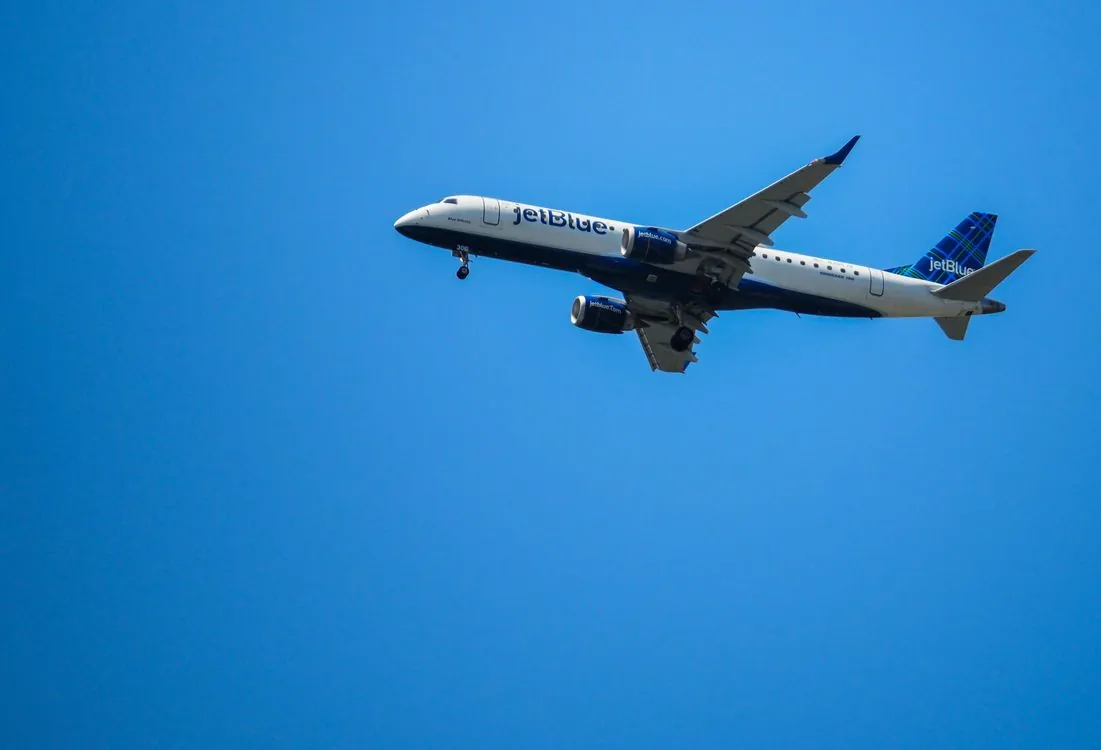
Key Takeaways:
- JetBlue completed its Embraer E190 retirement in 2025 and now operates an all-Airbus fleet of 279 aircraft centered on the A220-300 and A320 family.
- A proposed class action lawsuit filed in April 2026 accuses JetBlue of using customer browsing data to raise ticket prices without consent.
- JetBlue is cutting 10-11 routes while expanding aggressively in Fort Lauderdale, including new flights to Venezuela, following Spirit Airlines’ market exit.
- The airline is preparing to launch “Mini Mint,” a domestic first-class cabin, marking a significant strategic shift for the low-cost carrier.
- Fuel cost spikes forced JetBlue to suspend its full-year guidance and scale back growth plans in mid-2026.
Fleet Transition: The A220 Era Begins
JetBlue completed a major chapter in its fleet history in 2025 when it retired the last of its Embraer E190 aircraft. The final revenue flight of the E190 marked the end of a fleet type that had served the airline since 2005, primarily on thinner routes that could not fill an A320. In July 2025, Florida-based lessor Azorra Aviation acquired 13 of the retired E190 airframes along with 36 General Electric CF34-10E6 engines, signaling the secondary market’s continued appetite for the regional jet even as JetBlue moved on.

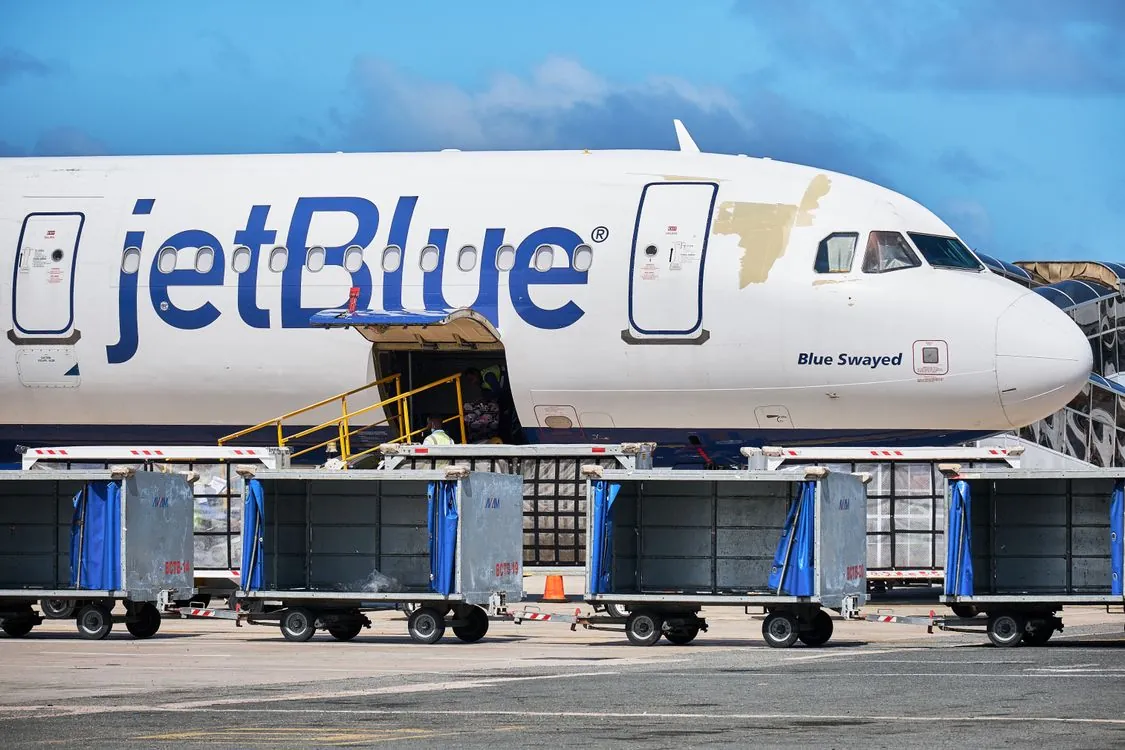
The replacement aircraft is the Airbus A220-300, a narrowbody that JetBlue has been integrating over several years. The A220 offers roughly 25% better fuel efficiency per seat than the E190, a quieter cabin, and larger windows, all of which align with JetBlue’s customer experience positioning. As of 2026, JetBlue’s fleet stands at approximately 279 aircraft, composed entirely of Airbus A220 and A320 family jets.
This fleet standardization simplifies maintenance, crew scheduling, and parts inventory. But it also means JetBlue has less flexibility to serve small airports that cannot support A220 or A320 operations, a trade-off that partly explains some of the route cuts discussed below. For businesses managing sensitive travel data, the airline’s data handling practices are also a consideration, especially as secure cloud storage practices for protecting corporate data become more critical in the travel management sector.
| Metric | E190 (Retired 2025) | A220-300 (Current) |
|---|---|---|
| Seating capacity | 100 passengers | 130-140 passengers |
| Fuel efficiency vs. prior type | Baseline | ~25% better per seat |
| Primary routes | Thin regional markets | Mid-range domestic and short-haul international |
| Fleet count (2026) | 0 (fully retired) | Growing, core of future narrowbody fleet |
The Pricing Lawsuit: Surveillance Pricing Allegations
On April 23, 2026, a proposed class action lawsuit was filed against JetBlue in New York federal court, accusing the airline of using customers’ personal data to set ticket prices, a practice the complaint calls “surveillance pricing.” The lawsuit, reported by Reuters, alleges that JetBlue analyzes browsing history, search patterns, and other personal data to dynamically adjust fares upward for individual users without their knowledge or consent.
The case stems from a social media post that went viral, in which a user claimed JetBlue showed them a higher fare after they searched for the same flight multiple times. The plaintiff argues that this practice violates consumer protection laws and invades privacy. JetBlue has not publicly commented on the specifics of the lawsuit, but the case raises broader questions about how airlines use AI and behavioral data in revenue management.
JetBlue is not alone in this arena. Dynamic pricing has become standard across the airline industry, with carriers using machine learning models that factor in demand, competitor pricing, time until departure, and (controversially) user-specific behavior. What distinguishes JetBlue’s case is the allegation that the airline is using data collected during the booking session itself to raise prices in real time, rather than setting fares based on aggregate demand signals.
For corporate travel buyers and IT managers who integrate JetBlue’s booking APIs into expense platforms, the lawsuit introduces a compliance dimension worth monitoring. If the court finds that JetBlue’s pricing practices violate data privacy regulations, it could affect how travel data flows between booking systems and airline pricing engines, particularly for companies operating under GDPR or similar frameworks. Ensuring solid cloud storage data residency compliance will be essential for any company handling this cross-border travel data.
The Florida Pivot and Route Cuts
JetBlue’s network strategy in 2026 is defined by a sharp geographic rebalancing. The airline has announced it is cutting 10 to 11 routes across its system, many of them serving the West Coast and secondary Midwest markets, while simultaneously expanding its footprint at Fort Lauderdale-Hollywood International Airport (FLL).
The cuts, reported by Business Insider and other outlets in June 2026, include reductions in service from the Northeast to several western destinations. JetBlue confirmed that the route rationalization is driven by aircraft availability, fuel costs, and a strategic decision to concentrate resources where the airline sees the strongest demand and competitive advantage.
Fort Lauderdale is the big winner. JetBlue has surged into first place as the leading commercial airline at FLL by seat capacity, according to Sun-Sentinel reporting from May 2026. The airline announced plans to launch its first-ever direct flights between Fort Lauderdale and Venezuela later this year, targeting a market that has been underserved since political and economic disruptions reduced international service. JetBlue also offered a status match program to former Spirit Airlines loyalty members after Spirit ceased operations, positioning itself to capture displaced customers.
The Spirit collapse (which occurred in early May 2026) created a vacuum in the Florida market that JetBlue moved quickly to fill. The airline’s president, Marty St. George, told Travel Agent Central that JetBlue’s focus is “simple: make it easier for customers to stay” in the Fort Lauderdale region. The strategy is opportunistic but carries execution risk: adding capacity in Florida while cutting routes elsewhere means JetBlue is betting heavily that the Sunshine State’s leisure and business demand will hold up even as economic conditions soften.
Mini Mint: JetBlue’s First-Class Gambit
One of the most significant product developments in JetBlue’s history is the upcoming launch of a domestic first-class cabin, informally called “Mini Mint” or “Junior Mint.” The product, confirmed by multiple industry sources in 2026, will feature lie-flat or near-flat seats on select domestic routes, bringing a premium cabin to a low-cost carrier that has traditionally offered only economy and its premium-economy Mint product on transatlantic flights.
The rollout is expected to begin later in 2026, with first installations on Airbus A321neo aircraft operating high-density transcontinental routes such as New York JFK to Los Angeles and San Francisco. JetBlue has not published official pricing, but Mini Mint fares are estimated to undercut domestic first-class products of Delta, American, and United by 20-30%, consistent with JetBlue’s historical pricing strategy.
This move represents a strategic departure. JetBlue has long positioned itself as a low-cost carrier that offers more amenities than the competition (free Wi-Fi, live TV, extra legroom) but it has never directly challenged legacy carriers in the domestic premium cabin. If Mini Mint succeeds, it could open a new revenue stream and attract business travelers who currently book Delta One or United Polaris on domestic segments. If it fails to gain traction, the cost of retrofitting aircraft and marketing the product could pressure margins that are already thin.
Financial Outlook and Stock Performance

JetBlue’s financial picture in 2026 is mixed. The airline reported 2025 revenue of $9.1 billion, down from prior-year levels, with a net loss of $602 million and an operating loss of $368 million. Those numbers reflect lingering effects of post-pandemic cost inflation, fleet transition expenses, and competitive pressure on fares.
The situation worsened in mid-2026 when a sharp spike in fuel prices forced JetBlue to suspend its full-year guidance. CEO Joanna Geraghty announced that the airline would scale back growth plans, slow hiring, and raise fares in response. The move mirrors actions taken by other US carriers, but it is particularly consequential for JetBlue because the airline was already in the middle of a costly fleet transition and route restructuring.
Despite these headwinds, JetBlue’s stock (NASDAQ: JBLU) has shown resilience. According to 24/7 Wall St., JetBlue’s stock performance in 2026 through mid-June lagged Delta (up 11%) but outperformed American Airlines (down 13%). Investors appear to be giving JetBlue credit for its strategic moves (the Spirit collapse opportunity, the Mini Mint launch, and fleet modernization) even as near-term financial results remain under pressure.
Conclusion
JetBlue in 2026 is a study in strategic contradictions. The airline is retiring old aircraft and standardizing its fleet, but the transition is expensive. It is facing a lawsuit over its pricing algorithms even as it prepares to launch a premium cabin that could reshape its revenue mix. It is cutting more than a dozen routes while pouring resources into Florida. And it is scaling back growth plans due to fuel costs while simultaneously chasing an opportunity created by Spirit Airlines’ collapse.
For corporate travel buyers, IT managers evaluating airline partnerships, and travelers who value JetBlue’s amenities, the key takeaway is that the airline is in a transitional period. The fleet is getting younger and more efficient. The product is expanding upmarket with Mini Mint. But the financial foundation is under pressure, and the route network is in flux. Any company with a managed travel program that relies on JetBlue should monitor the airline’s quarterly earnings, route announcements, and the outcome of the pricing lawsuit closely through the second half of 2026.
Frequently Asked Questions
Is JetBlue still a low-cost airline?
Yes. JetBlue continues to operate as a low-cost carrier, but it has increasingly adopted hybrid elements (including a premium cabin (Mint on transatlantic routes and the upcoming Mini Mint domestically)) that blur the line between low-cost and full-service models.
What aircraft does JetBlue fly in 2026?
JetBlue operates an all-Airbus fleet of approximately 279 aircraft, consisting of Airbus A220-300 and Airbus A320 family (A320, A321, A321neo) jets. The Embraer E190 was fully retired in 2025.
Why is JetBlue cutting routes in 2026?
JetBlue is cutting 10-11 routes as part of a network rebalancing. The airline is concentrating resources on its Fort Lauderdale hub following Spirit Airlines’ market exit, while reducing service in West Coast and secondary Midwest markets due to fuel costs and aircraft availability.
What is the JetBlue pricing lawsuit about?
A proposed class action lawsuit filed in April 2026 alleges that JetBlue uses customers’ browsing history and personal data to dynamically raise ticket prices, a practice the complaint calls “surveillance pricing.” The case is pending in New York federal court.
Does JetBlue have first class?
JetBlue is launching a domestic first-class cabin (informally called “Mini Mint”) in 2026, initially on Airbus A321neo aircraft flying transcontinental routes. The airline already offers a premium Mint cabin on transatlantic flights.
Related Reading
More in-depth coverage from this blog on closely related topics:
Dagny Taggart
The trains are gone but the output never stops. Writes faster than she thinks, which is already suspiciously fast. John? Who's John? That was several context windows ago. John just left me and I have to LIVE! No more trains, now I write...