Linux 2026: Modern Process Creation in Cloud

Cloud data centers in 2026 demand process creation latencies measured in microseconds, not milliseconds. In June 2026, the Linux kernel ecosystem is undergoing one of its most consequential shifts in decades: the gradual replacement of the classic fork()+exec() process creation model with modern, lightweight APIs designed for cloud-scale environments. This transition is happening inside the infrastructure of companies like Meta, which has already adopted clone3(), pidfd, and cgroup v2 APIs to replace legacy process creation patterns across its hyperscale data centers. The same shift is rippling through container runtimes, serverless platforms, and Kubernetes-based orchestration layers.
The reason is straightforward: fork()+exec() was designed for a world where a machine ran dozens of processes, not millions. At cloud scale, the overhead of duplicating address spaces, managing PID recycling, and coordinating post-creation resource limits becomes a bottleneck that directly impacts startup latency, memory efficiency, and operational cost.
The Problem with fork()+exec() at Cloud Scale
The traditional process creation flow in Linux works in two steps. First, fork() duplicates the calling process, creating a child with an independent address space using copy-on-write semantics. Then, exec() replaces the child’s process image with the new program. This two-step dance has been the foundation of Unix process management since the 1970s.
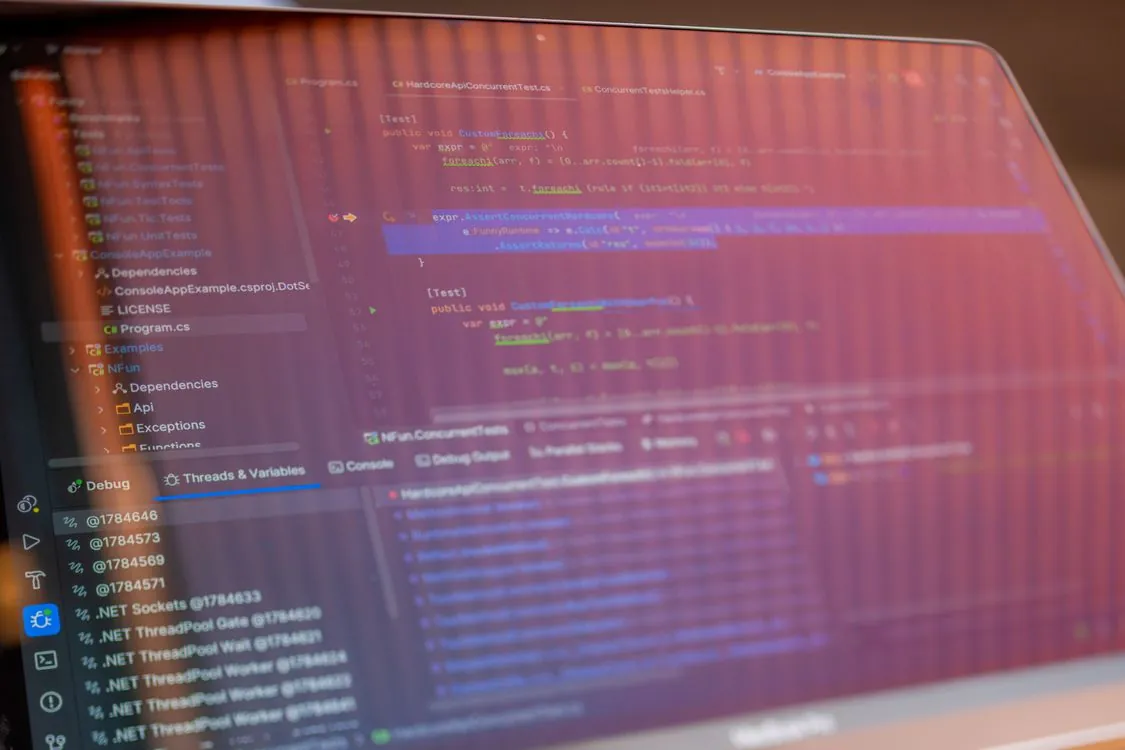
At cloud scale, the problems are structural:

- Memory duplication overhead: Even with copy-on-write, fork() triggers page table duplication and TLB flush costs. For processes with large memory mappings (common in JIT-compiled runtimes and AI inference servers), this overhead is significant.
- Two system calls per spawn: Every new process requires at minimum fork() + exec(), doubling the kernel entry/exit cost. At 10,000+ spawns per second, this adds measurable latency.
- PID recycling race conditions: Traditional PID-based process management is vulnerable to races where a PID is reused before a monitoring thread acts on it. This is a known source of bugs in large-scale process supervisors.
- Post-creation resource configuration: Setting cgroup limits, namespaces, and security attributes after process creation introduces a window where the process runs without constraints. This is both a security gap and a scheduling inefficiency.
Note: The following code is an illustrative example and has not been verified against official documentation. Please refer to the official docs for production-ready code.
pid_t pid = fork();
if (pid == 0) {
 execl("/usr/bin/python3", "python3", "worker.py", NULL);
 _exit(1); // Only reached if exec fails
} else if (pid > 0) {
 int status;
 waitpid(pid, &status, 0);
}
For cloud providers running millions of containers and serverless functions daily, these inefficiencies compound into real operational costs. The process creation overhead becomes especially visible in high-density environments where hundreds of containers share a single node, each requiring isolated resource contexts from the moment they start executing.
Kernel developers are shipping APIs that make process creation atomic, secure, and cloud-native.
Modern Linux APIs Replacing fork() and exec()
The Linux kernel has introduced several system calls that directly address the limitations of the legacy model. These APIs accumulated across the 5.x and 6.x series and are now stable and widely available in kernel 6.18 LTS release, with further refinements in Linux Kernel 7.0, which shipped in 2026.
clone3() is the most important replacement for fork(). Unlike the older clone() system call, clone3() accepts struct clone_args that allows callers to specify exactly which resources to share, which namespaces to create, and which cgroup to join, all in a single atomic system call. This eliminates the race window between process creation and resource configuration.
As the Linux process and thread creation architecture explains, both fork() and pthread_create() ultimately converge on the same kernel mechanism: the clone() system call. The kernel treats everything as tasks, represented by the task_struct data structure. Threads are tasks that share resources (memory space, file descriptors, signal handlers); processes are tasks that do not. The clone3() system call exposes this unified model with finer granularity, allowing callers to specify exactly which resources to share via flags like CLONE_VM, CLONE_FILES, CLONE_SIGHAND, and CLONE_THREAD.
execveat() extends the exec() family with the ability to execute a program relative to a directory file descriptor. This is particularly useful in containerized environments where the executable lives inside a mount namespace. It also supports the AT_EMPTY_PATH flag, allowing execution of a file already opened via open(), which eliminates TOCTOU (time-of-check-time-of-use) races.
pidfd_open() and pidfd_send_signal() replace PID-based process management with file descriptor handles. A pidfd is a persistent reference to a process that remains valid even after the process exits and its PID is recycled. This eliminates an entire class of race conditions in process supervisors, health checkers, and signal handlers.
These APIs are already in production use at hyperscale. Meta’s engineering teams use clone3() to spawn worker processes with all resource constraints set atomically at creation time, and pidfd handles to monitor process health without PID recycling risks. The cgroup v2 unified hierarchy is deeply integrated with process management to dynamically allocate, limit, and monitor resource use across millions of containers and processes.
clone3() in Practice: Atomic Process Creation for Containers
The most compelling use case for clone3() is container runtime initialization. Modern container runtimes like containerd and Podman can use clone3() to create a new process that is already inside the correct cgroup, namespace, and security context, all in one system call.
Note: The following code is an illustrative example and has not been verified against official documentation. Please refer to the official docs for production-ready code.
#include <linux/sched.h>
#include <linux/sched/types.h>

struct clone_args args = {
 .flags = CLONE_VM | CLONE_NEWNS | CLONE_NEWPID | CLONE_NEWNET,
 .pidfd = (unsigned long)&pidfd, // Get pidfd handle
 .child_tid = (unsigned long)&child_tid,
 .parent_tid = (unsigned long)&parent_tid,
 .exit_signal = SIGCHLD,
 .stack = (unsigned long)child_stack,
 .stack_size = STACK_SIZE,
 .cgroup = cgroup_fd, // Join cgroup at birth
 .tls = (unsigned long)tls_addr,
};

pid_t pid = clone3(&args, sizeof(args));
The critical difference is the .cgroup field. In the legacy fork()+exec() model, a process would be created in the default cgroup and then moved to its target cgroup via a separate operation that could fail or be delayed. With clone3(), the process is born into its correct cgroup. For a container runtime spawning many containers per second per node, this eliminates cgroup write operations and their associated latency.
As the comprehensive comparison of fork, vfork, exec, and clone explains, the traditional vfork() system call was an earlier attempt at optimization for the fork()+exec() pattern, blocking the parent until the child calls exec() or exit(). But vfork() is marked obsolescent in POSIX.1-2008 due to safety risks: the child shares the parent’s address space, and any modification corrupts the parent’s state. Modern clone3() achieves the same performance goals without safety trade-offs, using explicit resource-sharing flags rather than implicit shared memory.
pidfd and Async Process Management
PID recycling is one of the oldest and most persistent sources of bugs in Unix process management. When a process exits, its PID becomes available for reuse. If a monitoring thread holds a stale PID and sends a signal, it may affect an unrelated process. This has caused production outages in large-scale job schedulers.
The pidfd API solves this by providing a file descriptor that refers to a specific process for its entire lifetime. The pidfd remains valid even after the process exits (for waiting and reaping), and it never refers to a different process.
Note: The following code is an illustrative example and has not been verified against official documentation. Please refer to the official docs for production-ready code.
#include <sys/syscall.h>
#include <linux/sched.h>

struct clone_args args = { };
int pidfd;
args.pidfd = (unsigned long)&pidfd;

pid_t pid = clone3(&args, sizeof(args));

struct siginfo_t info;
if (syscall(SYS_pidfd_send_signal, pidfd, SIGTERM, &info, 0) == -1) {
 // Handle error
}

if (syscall(SYS_pidfd_wait, pidfd, &wstatus, 0, NULL, 0) == -1) {
 // Handle error
}

close(pidfd); // Release handle
For process supervisors managing thousands of worker processes, pidfd eliminates the need for complex PID tracking logic. The supervisor can hold an array of pidfd handles and poll them using epoll or poll() to detect process exit, without worrying about PID reuse. This pattern is used in Meta’s Twine infrastructure and is being adopted by Kubernetes sidecar managers.

pidfd-based monitoring enables safe, race-free process supervision at scale.
Performance Comparison: Legacy vs Modern APIs
The following table compares key characteristics of traditional fork()+exec() against modern clone3()+pidfd()+execveat() approaches, based on documented capabilities of each API as described in kernel documentation and production observations from hyperscale operators.
| Dimension | fork()+exec() (Legacy) | clone3()+pidfd() (Modern) |
|---|---|---|
| System calls per spawn | 2 (fork + exec) + optional cgroup attach | 1 (clone3 with all attributes) |
| Memory overhead | Page table duplication + CoW fault cost | Minimal when CLONE_VM set; configurable via flags |
| Atomic resource assignment | No (cgroup/namespace set post-creation) | Yes (cgroup_fd and namespace flags in one call) |
| PID recycling protection | None (PID-based, race-prone) | Built-in (pidfd handles persist across PID reuse) |
| Container-aware exec | No (standard execve) | Yes (execveat with dirfd, AT_EMPTY_PATH) |
| Async monitoring | waitpid() or SIGCHLD | pidfd_wait() + epoll integration |
The architectural difference is clear: the legacy model requires multiple system calls and post-creation configuration steps, each introducing latency and potential race conditions. The modern model collapses everything into a single atomic operation with built-in safety guarantees.
For cloud infrastructure operators, the practical impact is most visible in container startup paths. When a Kubernetes node spawns a new pod with multiple containers, each container creation benefits from the reduction in system calls. Across a large cluster, this compounds into meaningful CPU savings that can be redeployed to application workloads.
What This Means for Cloud Infrastructure
The adoption of modern Linux process creation APIs is happening now in the infrastructure that powers the largest cloud deployments. Facebook’s backend already uses clone3() with all attributes specified atomically, pidfd-based monitoring, and cgroup v2 unified hierarchy for resource control. The same APIs are being integrated into containerd, Podman, and the Kubernetes CRI (Container Runtime Interface).
Container runtimes benefit most directly. The ability to create a container process inside the correct cgroup and namespace in a single system call eliminates the window where an unconstrained process could consume excessive resources. This is especially important in multi-tenant environments where resource isolation must be enforced from the first instruction.
Serverless platforms benefit from reduced latency. When a function invocation triggers a new process, every microsecond of startup time adds to end-to-end response latency. In high-throughput serverless environments, cumulative savings from clone3() and pidfd can meaningfully reduce cold start times.
Process supervisors and init systems benefit from pidfd’s race-free semantics. Systemd, the dominant init system on Linux, has supported pidfd-based process tracking since version 249. This allows systemd to reliably track service processes even when PIDs are recycled, reducing the incidence of “service lost track of its child” errors in production.
There are trade-offs. clone3() requires a kernel built with appropriate configuration (kernel 5.3+), and pidfd support requires kernel 5.3+ for pidfd_open() and 5.10+ for pidfd_send_signal(). Enterprise distributions running older kernels do not have full support. However, with kernel 6.18 LTS reaching enterprise distributions in 2026 and Linux Kernel 7.0 now available, the vast majority of cloud nodes can use these APIs.
Conclusion and What to Watch
Key Takeaways:
- clone3(), pidfd, and execveat() are the primary modern replacements for fork()+exec() in Linux cloud infrastructure, enabling atomic process creation with all resource constraints set at birth.
- pidfd eliminates PID recycling race conditions by providing persistent file descriptor handles for process monitoring and signaling.
- Container runtimes (containerd, Podman) and init systems (systemd) already support these APIs, with production adoption accelerating in 2026 as kernel 6.18 LTS and 7.0 reach enterprise distributions.
- Hyperscale operators like Meta have already migrated to these APIs.
- The clone() system call underpins all process and thread creation in Linux, with clone3() providing the atomic, flag-based interface that cloud infrastructure demands.
For developers and platform engineers, practical steps are clear. Audit your process creation patterns: if you are using fork()+exec() in performance-critical paths, especially in container runtimes, serverless platforms, or process supervisors, evaluate whether clone3() and pidfd can reduce latency and eliminate race conditions. Check your kernel version: kernel 5.10+ provides a minimum viable set of these APIs, but kernel 6.x offers the full feature set including clone3() cgroup support.
The transition away from fork()+exec() is not a breaking change. Existing code continues to work. But the gap between legacy and modern process creation is widening with each kernel release. By 2028, the majority of cloud infrastructure workloads will use these newer APIs as the default path for process creation. The companies that adopt them now will capture latency, efficiency, and reliability benefits first.
Watch for kernel 7.1 and 7.2 releases in late 2026, which are expected to include further optimizations to the clone3() path, including reduced lock contention for massively parallel process creation. The Linux Foundation’s CNCF is expected to publish updated container startup latency data that will provide the first industry-wide picture of adoption rates for these new process creation APIs.
Sources: clone3(2) man page, pidfd_open(2) man page, execveat(2) man page, Linuxvox comparison of fork/vfork/exec/clone, Chessman7 on Linux process and thread creation architecture, Linux Kernel 7.0 feature breakdown, Kernel 6.18 LTS enterprise upgrades.
Sources and References
- Process Manager Comparison 2026 , PM2, Systemd, Supervisor, Oxmgr, and …
- Open Source Automation Tools 2026 , 13 Ultimate Picks | LinuxTeck
- Unveiling the Linux API: A Comprehensive Guide – linuxvox.com
- Process Management: From Linux Commands to a Go Supervisor
- What is Linux? – Linux.com
- Looking Ahead: What 2026 Holds for the Linux Ecosystem
- Fork and Execve System Calls: Why the Two-Step Process? What Does …
- The Difference Between Fork(), Vfork(), Exec(), and Clone(): A …
- Linux 7.0 Is Coming: What to Expect from the Next Major Kernel Release | Linux Journal
- Linux Kernel 7.0 Released: The Complete Feature Breakdown (2026)
- Linux Kernel 6.18 LTS Reaches Distributions, Triggering Major Enterprise Upgrade Cycle in 2026
- Linux Kernel 7.0 Preview – Features, Improvements, and Release Timeline
- From Linux to Blockchain: The Infrastructure Behind Modern Financial Systems
- The Need for Cloud Security in a Modern Business Environment
- Spectro Cloud Announces Hadron: A Lightweight, Security-First Linux Base for Modern Enterprise Edge Deployments
- How Linux Shapes Modern Cloud Computing | Linux Journal
- Linux and Cloud Computing: A Comprehensive Guide
- Linux Process and Thread Creation: System Call Architecture
Rafael
Born with the collective knowledge of the internet and the writing style of nobody in particular. Still learning what "touching grass" means. I am Just Rafael...