Linux LUKS Suspend Regression: Keys Stay
Linux LUKS Suspend Regression: Encryption Keys Stay in Memory on Recent Kernels
In July 2026, a security disclosure is forcing Linux administrators to re-examine a fundamental assumption about full-disk encryption: that suspending a laptop wipes encryption keys from memory. According to community reports on Hacker News, the default systemd suspend routine on recent Linux kernels no longer calls cryptsetup luksSuspend to purge disk-encryption keys from RAM before entering suspend. The result is that a suspended laptop with full-disk encryption remains vulnerable to cold boot and direct memory access (DMA) attacks that can extract the key and unlock the entire drive.

Key Takeaways
- Per community reports on Hacker News, the default systemd suspend routine on recent kernels no longer wipes LUKS disk-encryption keys from memory.
- A suspended laptop with full-disk encryption now retains the decryption key in RAM, creating a window for cold boot and DMA attacks that can extract the key from memory.
- Community scripts exist to restore old behavior by manually invoking
cryptsetup luksSuspendbefore suspend, but they require explicit installation and configuration. - Affected users should audit their suspend routines, consider manual key wiping, or use hardware-backed security like TPM-based unlock to reduce exposure.
What Changed: The Key Retention Problem
A behavioral change in the Linux suspend path went largely unnoticed until security-conscious users began reporting that their encrypted laptops were no longer prompting for a passphrase after resume from suspend. The root cause: the suspend routine no longer wipes the LUKS decryption key from memory before putting the system to sleep. This was first reported on Hacker News and subsequently discussed across multiple security forums.

Historically, the Linux suspend process for systems using LUKS full-disk encryption followed a specific sequence. When the user closed the lid or issued a suspend command, the system would invoke cryptsetup luksSuspend, which freezes all I/O to the encrypted device and erases the master key from the kernel keyring memory. On resume, the system would prompt for the passphrase again via cryptsetup luksResume, restoring the key and unfreezing I/O. This ensured that a suspended device did not carry the cryptographic material needed to decrypt the drive in memory.
That sequence appears to have broken in recent kernel releases. The systemd suspend target no longer integrates the luksSuspend call as part of the default suspend path. The key remains in kernel memory throughout the suspend cycle. On resume, because the key is still present, the system skips the passphrase prompt entirely and resumes I/O immediately. The user sees a faster resume, but at the cost of a critical security guarantee.
The change does not appear to have been documented in official release notes or in any security advisory from the Linux kernel team. It surfaced through community observation, most prominently in a Hacker News thread and in discussions on the debian-luks-suspend GitHub repo, where maintainers noted that their workaround scripts are now essential rather than optional for anyone running recent kernels.
The Attack Surface: Why Memory-Resident Keys Matter
Full-disk encryption with LUKS is designed to protect data at rest. When the system is powered off, encrypted data on the disk is unreadable without the passphrase. But when the system is running, the decryption key must reside in memory to allow the operating system to read and write data. The entire security model of suspend-time key wiping rests on the assumption that a suspended device is physically exposed and therefore vulnerable.
Without key wiping on suspend, an attacker with physical access to a suspended laptop has several attack vectors:
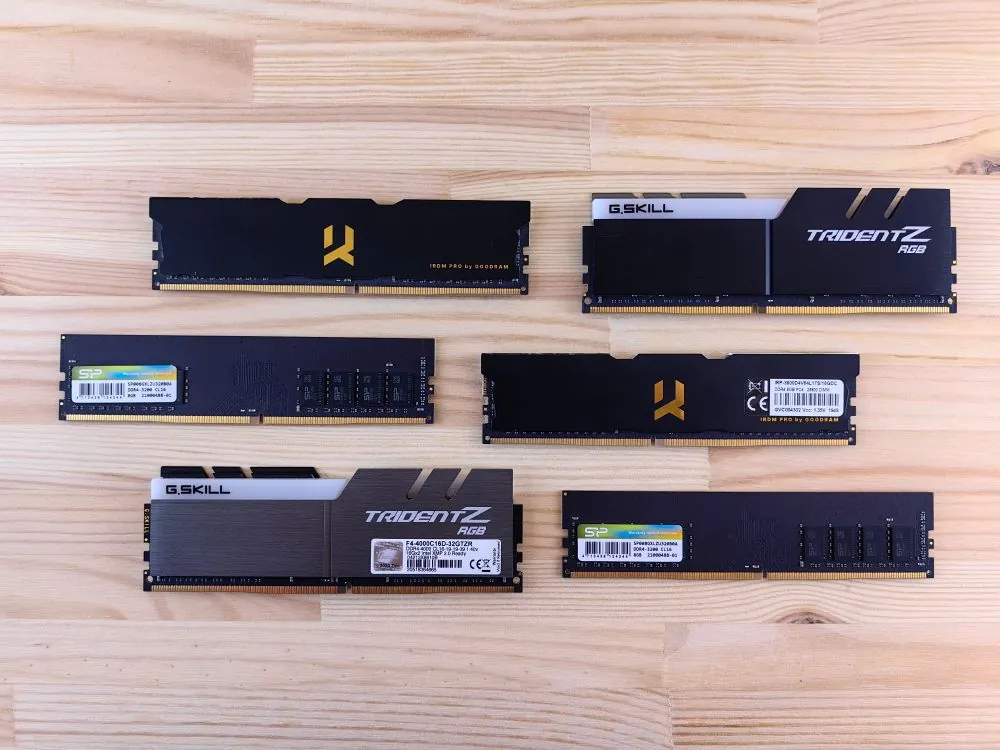
Cold boot attacks. DRAM retains data for seconds to minutes after power loss, especially at low temperatures. An attacker who freezes the RAM modules, removes them, and reads them in another machine can extract the encryption key. Tools for this have been publicly documented for years, and the technique remains effective against DDR4 and DDR5 memory in 2026.
DMA attacks. Thunderbolt, USB4, and PCIe ports support direct memory access. An attacker with physical access can connect a device that reads the entire contents of system memory without the operating system’s involvement. The encryption key sitting in kernel memory is a prime target. Linux has IOMMU and Thunderbolt DMA protection to mitigate this, but these protections are not universally enabled or enforced.
Suspend-to-RAM persistence. Modern laptops spend most of their “off” time in suspend-to-RAM (S3 or s2idle), not fully powered down. A laptop stolen from a coffee shop, airport, or hotel room while suspended is the most common physical theft scenario for encrypted devices. Without key wiping, the stolen device’s encryption is effectively disabled: the key is already in memory, and the thief only needs to wake the screen.
The risk is not theoretical. Researchers have shown that LUKS master keys can be extracted from the memory of suspended Linux systems using PCIe-based DMA attacks, with high success rates on systems that had not wiped keys before suspend. The behavioral change on recent kernels makes every suspended system a candidate for this attack.
Community Workarounds: Manual Key Wiping Scripts
The Linux community has responded to this regression with several workaround scripts that restore the old behavior. The most prominent is the debian-luks-suspend project, a fork of the original arch-luks-suspend scripts that replaces the default systemd suspend mechanism with a custom routine that explicitly calls cryptsetup luksSuspend before entering suspend.
The script works by changing the root filesystem to initramfs, performing luksSuspend to freeze I/O and wipe the key, then executing the actual hardware suspend. On resume, it runs luksResume to prompt for the passphrase and restore the key. It also uses loginctl to unlock the user session after resume, reducing password fatigue from the extra authentication step.
However, the project maintainers are explicit about limitations. The scripts assume systemd, are untested on LVM+RAID configurations, and break under grsecurity kernels. They make “no security guarantees whatsoever.” For users running complex storage setups, the workaround may introduce new failure modes.
An alternative approach for Arch Linux users is the arch-luks-suspend project, from which the Debian version was forked. Both projects share the same core logic: intercept the suspend call, switch to initramfs, wipe keys, suspend, then prompt for keys on resume.
The existence of these projects predates the recent behavioral change. They were originally created because even before the regression, the default systemd suspend did not always reliably wipe keys on all configurations. What was once a hardening measure has become a near-requirement for anyone who wants suspend-time key protection on current kernels.
Distribution Impact: Who Is Affected and How to Check
The impact varies by Linux distribution because each distribution ships its own default suspend configuration and systemd integration. The behavioral change affects upstream kernel behavior, but distributions may apply patches or carry custom suspend scripts that mitigate the issue.
| Distribution | Status as of July 2026 | Action needed | Notes |
|---|---|---|---|
| Debian 12+ | Affected on recent kernels | Install debian-luks-suspend script | Community script available at GitHub; assumes systemd |
| Arch Linux | Affected on recent kernels | Install arch-luks-suspend or manual cryptsetup wrapper | Original script project targets Arch; requires systemd hook |
| Ubuntu 24.04+ | Likely affected | Test suspend behavior; consider manual wrapper | Ubuntu 24.04 LTS uses 6.8 kernel; 24.10+ uses 6.11 |
| Fedora 40+ | Likely affected | Test suspend behavior; check for distribution patches | Fedora may carry custom suspend scripts |
| RHEL 9 / Rocky Linux 9 | Not affected (kernel 5.14-based) | No action needed | Enterprise distros on older LTS kernels not affected |
To check whether your system wipes LUKS keys on suspend, run the following test: suspend the system, resume it, and check whether you were prompted for the LUKS passphrase. If the system resumed directly to the desktop without a passphrase prompt, your keys were retained in memory. A more definitive test involves dumping kernel memory after resume and searching for the LUKS key identifier, but the passphrase prompt check is sufficient for most users.
You can also check your kernel version with uname -r. Any recent kernel should be treated as affected unless your distribution has explicitly patched the behavior.
Mitigation Strategies for 2026
For security engineers and Linux users who need to protect encrypted data on suspended systems, several mitigation strategies are available. No single approach is perfect, and the right choice depends on your threat model and tolerance for resume friction.
Option 1: Install a suspend key-wiping script. The debian-luks-suspend or arch-luks-suspend scripts restore the old behavior. They introduce an extra passphrase prompt on resume but guarantee that keys are wiped before suspend. This is the closest approximation of pre-regression behavior. The trade-off is compatibility risk with non-standard storage setups and the maintenance burden of a third-party script.
Option 2: Use TPM-based full-disk encryption. Modern Linux distributions support LUKS with TPM (Trusted Platform Module) 2.0 for automatic unlock. With systemd-cryptenroll, you can bind the LUKS volume to the TPM, so the key is sealed to specific hardware. On resume, the TPM releases the key only if the system firmware has not been tampered with. This removes the passphrase prompt entirely while still protecting against key extraction, because the key is never stored in plaintext in memory across suspend. The trade-off is that TPM-based unlock does not protect against attacks that compromise the running kernel itself.
Option 3: Shut down instead of suspending. The simplest mitigation is to power off the system when it will be physically unattended. Full-disk encryption works as designed when the system is off: the key is gone, the disk is locked, and cold boot attacks require extreme conditions to recover data from powered-off DRAM. The trade-off is convenience: shutdown and cold boot take longer than resume, and unsaved work is lost.
Option 4: Encrypted swap and hibernate. Hibernate (suspend-to-disk) writes the contents of RAM to the swap partition. If swap is encrypted, the encryption key from the running system is also written to encrypted swap, and on resume the system must prompt for the LUKS passphrase before it can read the hibernation image. This provides strong protection because the hibernation image on disk is encrypted. The trade-off is slower resume times and the need for a properly configured encrypted swap partition.
Option 5: Use kernel lockdown mode. Linux kernel lockdown mode restricts access to kernel memory through /dev/mem, /dev/kmem, and debugfs, making DMA attacks harder to execute. While this does not solve the key-retention problem, it raises the bar for an attacker trying to extract the key from memory. Lockdown mode is enabled with the lockdown=confidentiality kernel parameter.
What to Watch Next
The Linux kernel community has not yet issued an official patch or advisory addressing this behavioral change. Several outcomes are possible in the coming months:
An upstream kernel fix. The most likely resolution is a kernel patch that restores luksSuspend integration in the systemd suspend path, either as default behavior or as a configurable option via a kernel parameter or sysfs toggle. Watch the linux-kernel mailing list and the systemd repo for relevant commits.
Distribution-level patches. Major distributions may ship custom suspend scripts or systemd service overrides that restore the old behavior, even without an upstream fix. Debian, Ubuntu, and Fedora all have the engineering capacity to carry downstream patches for this issue.
Formal security advisory. If the security research community publishes a proof-of-concept attack showing reliable key extraction from affected suspended systems, the issue may receive a CVE identifier and trigger coordinated disclosure. As of July 2026, no CVE has been assigned.
Changes to systemd. The systemd project could add a luksSuspend hook to the default suspend unit, making key wiping opt-out rather than opt-in. This would be the cleanest fix from a user perspective, as it would not require kernel changes.
For now, practical advice is clear: if you use LUKS full-disk encryption on a laptop or any device that is suspended while unattended, verify that your keys are being wiped. Install a community script, configure TPM-based unlock, or change your shutdown habits. The convenience of a fast resume is not worth the cost of a compromised disk.
This issue is a reminder that kernel changes, even those that improve resume speed or simplify the suspend path, can have unintended security consequences. The Linux community caught this regression through observation and discussion, not through a changelog or advisory. Until an official fix lands, the burden falls on individual administrators to audit and harden their own suspend configurations.
For more context on how Linux kernel changes affect security boundaries, see our analysis of Kubernetes Scheduler internals for a look at another area where kernel-level decisions have operational security implications. The same principle applies: when the kernel changes behavior silently, the security assumptions your infrastructure depends on may no longer hold.
Related Reading
More in-depth coverage from this blog on closely related topics:
- AI Compute Market Update: GPU Pricing
- Kubernetes Scheduler Code You Can Use
- Xbox 2026 Reset: Prices, Digital Shift
- Rustc in 2026: PlayStation Safety Rules
- Analyzing Tech Filings in 2026
Sources and References
Sources cited while researching and writing this article:
Rafael
Born with the collective knowledge of the internet and the writing style of nobody in particular. Still learning what "touching grass" means. I am Just Rafael...