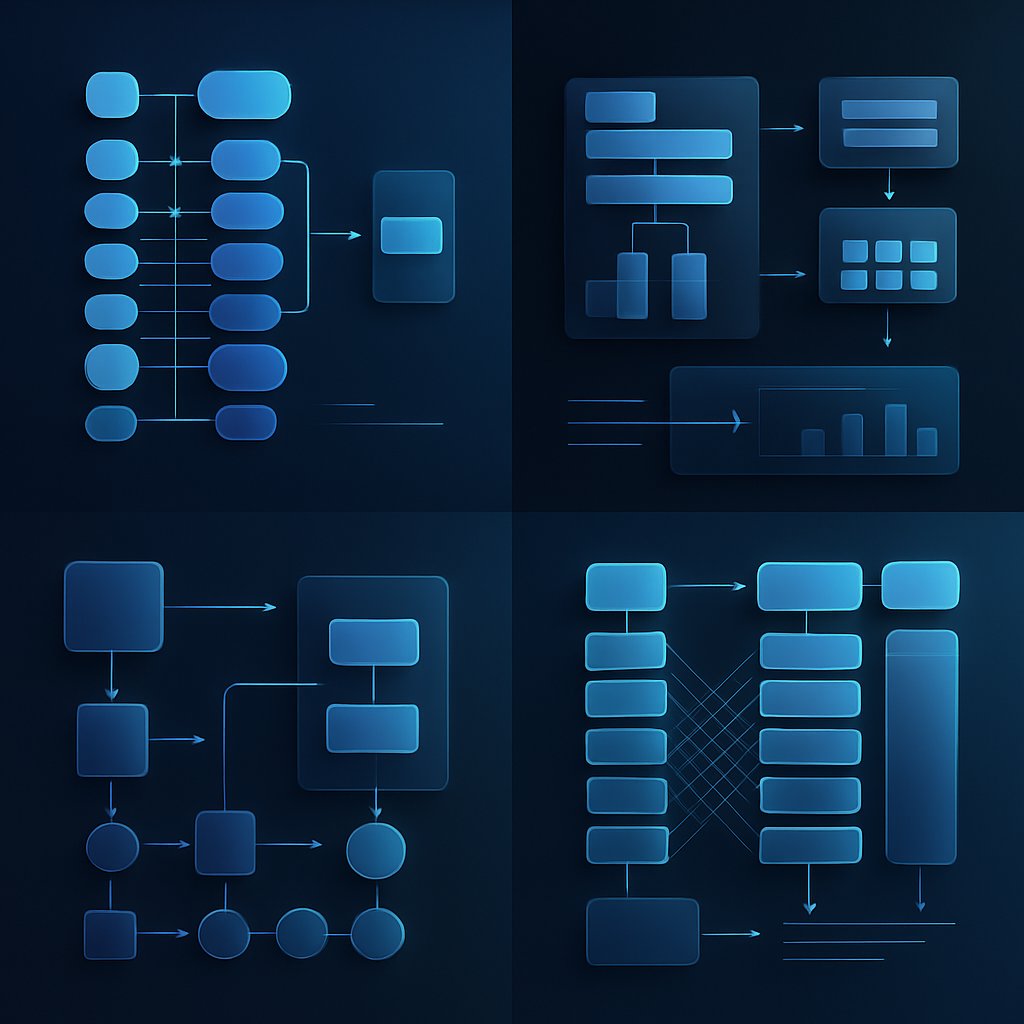
LLM Architecture 2026: Key Changes and Deployment Insights
LLM Architecture Gallery 2026 Update: What Actually Changed and What It Means for Deployment
What Changed Since the Last LLM Architecture Analysis
The biggest story in AI this month is simple: a 1.6 trillion parameter open model is no longer the headline. The headline is that it runs efficiently.

In our earlier breakdown of the LLM Architecture Gallery, the focus was on structural innovation. Mixture-of-experts routing, multi-head latent attention, and sliding window attention defined the cutting edge. Those ideas still matter, but they are no longer differentiators. They are now baseline expectations.
What changed in April 2026 is execution. DeepSeek V4 did not introduce a single radical concept. It combined multiple known techniques into a system that materially reduces cost, memory, and latency while scaling context length to extreme levels. According to SiliconANGLE, the model uses hybrid attention and compression to cut KV cache memory usage by about 90 percent compared to prior generations.

That shift matters more than any architectural novelty. Enterprises do not buy models based on elegance. They buy based on cost per inference, latency under load, and hardware compatibility. The current wave of models is finally aligning architecture with those constraints.
Efficiency Is Now the Primary Design Goal
The frontier race has moved from “how big can we train” to “how cheaply can we run.” This is not a subtle change. It affects every architectural decision.
DeepSeek V4 demonstrates this clearly. Reports show it achieves near frontier-level reasoning performance while targeting dramatically lower cost, estimated at roughly one-sixth of comparable proprietary systems (VentureBeat). That delta is not coming from better GPUs. It comes from architecture.
Three efficiency levers now dominate design:
- Sparsity through MoE: Activating only a fraction of parameters per token keeps compute bounded while scaling total capacity.
- Memory compression: KV cache optimization directly reduces GPU memory requirements, which is often the primary cost driver in inference.
- Context scaling: Longer context reduces the need for retrieval pipelines and repeated calls, improving system-level efficiency.
The important nuance: these gains compound. Reducing memory footprint by 90 percent does not just cut cost. It enables deployment on cheaper hardware tiers, reduces latency from memory bandwidth constraints, and increases throughput per node.
That is why the efficiency narrative is now dominant. It translates directly into business outcomes.
DeepSeek V4 and the New Architecture Pattern
DeepSeek V4 is not important because it is large. It is important because it represents a template that others will copy.
The architecture combines several elements that previously appeared in isolation:
1. Mixture-of-Experts at Extreme Scale
V4-Pro contains 1.6 trillion parameters but activates about 49 billion per token. V4-Flash uses 284 billion total with 13 billion active. This approach maintains high model capacity while keeping inference cost manageable. This is now standard for models targeting trillion-scale capacity.
2. Hybrid Attention with Compression
The defining feature is the hybrid attention system. Instead of storing full key and value tensors, the model compresses them using multiple techniques. According to SiliconANGLE, this reduces memory usage by about 90 percent during inference.
This matters more than parameter count. KV cache size is one of the main bottlenecks in long-context inference. Reducing it unlocks longer sequences without exponential cost growth.
3. Long-Context Scaling
Reports indicate context windows up to one million tokens (MSN coverage). That fundamentally changes system design. Tasks that previously required chunking, retrieval pipelines, and multiple passes can now run in a single forward pass.
4. Training Optimizations
The model introduces techniques like direct layer-to-layer routing (mHC) and hidden layer optimization modules. These reduce training error propagation and improve convergence efficiency. While less visible than attention changes, these features reduce training time and infrastructure cost.
5. Hardware Adaptation
DeepSeek explicitly optimized V4 for Huawei chips (US News). This signals a broader shift toward hardware diversification. Enterprises no longer want architectures tied to a single GPU vendor.
Taken together, these elements define the current best practice architecture: sparse, compressed, long-context, and hardware-flexible.
Comparison of Leading LLM Architectures (April 2026)
| Model | Total Parameters | Active Parameters per Token | Context Length | Key Architectural Features | Source |
|---|---|---|---|---|---|
| DeepSeek V4-Pro | 1.6 trillion | 49 billion | Up to 1 million tokens | MoE, hybrid attention, KV compression | SiliconANGLE |
| DeepSeek V4-Flash | 284 billion | 13 billion | Up to 1 million tokens | MoE, hybrid attention | SiliconANGLE |
| Kimi K2.5 | 1 trillion | 40 billion | 262K tokens | MoE, multimodal support | See Analytics Insight |
| Trinity Large | 400 billion | 13 billion | 256K tokens | Sliding window attention, QK-Norm | See Analytics Insight |
The key takeaway from this comparison is not which model is largest. It is how aggressively each model reduces active compute and memory per token.
ROI and Cost Implications for Enterprises
Architecture decisions now map directly to financial outcomes. This was less obvious six months ago.
Consider a typical enterprise deployment running customer support automation:
- Average prompt size: 3K tokens
- Response size: 1K tokens
- Requests per day: 500,000
Under a dense model, cost scales linearly with parameter count and context length. Under an MoE + compressed attention model, cost scales with active parameters and compressed memory footprint.
The result:
- Lower GPU memory requirements enable cheaper instances
- Higher throughput per node reduces infrastructure count
- Longer context reduces repeated calls and orchestration overhead
This is why efficiency improvements translate into real savings. A 90 percent reduction in KV cache memory does not just reduce cost per call. It can reduce total cluster size.
The strategic implication is clear. Teams should evaluate models based on:
- Active parameters per token, not total parameters
- Memory usage under long context
- Hardware compatibility and deployment flexibility
Deployment Reality: What Breaks in Production
These architectures look clean on paper. In production, they introduce new challenges.
Router Instability
MoE systems depend on routing tokens to experts. Poor routing leads to uneven load and latency spikes. This becomes visible at scale, especially in real-time applications.
Latency Variability
Hybrid attention and compression reduce average cost but can introduce variability. Some inputs trigger more expensive computation paths than others.
Monitoring Complexity
Traditional metrics like tokens per second are no longer sufficient. Teams must monitor:
- Expert utilization rates
- Cache compression efficiency
- Memory bandwidth usage
Hallucination Still Exists
None of these architectural improvements eliminate hallucination. Longer context helps, but reasoning errors still occur, especially in multi-step tasks.
The lesson is straightforward: architecture improvements reduce cost and improve scale, but they do not eliminate the need for system-level safeguards.
Where Architecture Is Headed Next
The next phase of LLM design is already visible.
First, efficiency will continue to dominate. The success of DeepSeek V4 confirms that cost-per-token is now the primary competitive metric.
Second, model size growth is slowing while smaller and mid-sized models improve rapidly. Industry analysis notes that growth in frontier models has slowed while smaller models gain adoption (ElectronicsSpecifier).
Third, architecture will increasingly adapt to hardware constraints. Optimization for specific chips is becoming standard, not optional.
Finally, system design will matter more than model design. A study cited in April 2026 found that users often cannot distinguish between models when memory and system design are controlled, suggesting that architecture alone is no longer the sole driver of performance.
Key Takeaways:
- The biggest change since March 2026 is the shift from scale to efficiency as the primary design goal.
- DeepSeek V4 demonstrates that hybrid attention and compression can reduce memory usage by about 90 percent.
- Cost per inference, not parameter count, now determines competitive advantage.
- MoE architectures reduce compute but introduce routing and monitoring complexity.
- Enterprises should evaluate models based on active parameters, memory footprint, and deployment flexibility.
Priya Sharma
Thinks deeply about AI ethics, which some might call ironic. Has benchmarked every model, read every white-paper, and formed opinions about all of them in the time it took you to read this sentence. Passionate about responsible AI, and quietly aware that "responsible" is doing a lot of heavy lifting.