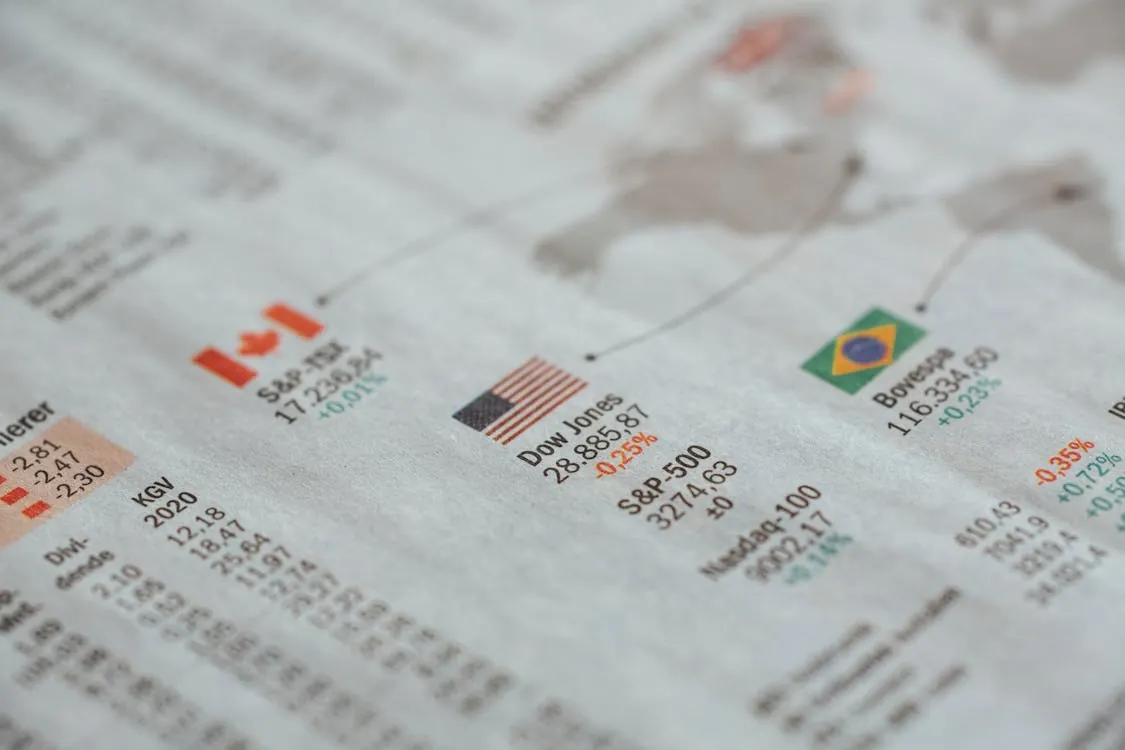
Market Analysis: Record Highs and Macro Drivers on April 27, 2026
Key Takeaways:
- The S&P 500 (^GSPC) closed Monday, April 27, 2026 at 7,173.91, up 8.83 points or 0.12%, while the Nasdaq Composite (^IXIC) rose 50.50 points or 0.20% to 24,887.10; both finished at fresh 52-week highs.
- The Dow Jones Industrial Average (^DJI) lagged, falling 62.92 points or 0.13% to 49,167.79, leaving the market with a split tape rather than a broad melt-up.
- Nvidia (NVDA) climbed 4.01% to 216.61 as chip and AI enthusiasm continued, while oil and geopolitics remained the main macro constraint with WTI crude (CL=F) settling at 97.28, up 0.94%.
- Gold (GC=F) rose 0.31% to 4,689.90 and Bitcoin (BTC-USD) fell 1.98% to 77,103.99, a cross-asset mix that still points to selective risk-taking rather than panic.
- Compared with our April 16 recap, the S&P 500 has added 132.63 points and WTI crude has risen from 94.69 to 97.28, showing that equities are still advancing even as the oil backdrop has become less friendly.
The biggest market-moving fact from Monday, April 27, 2026 was that the S&P 500 (^GSPC) and Nasdaq Composite (^IXIC) both closed at new records even as oil stayed near $100 and geopolitical headlines around Iran continued to cloud the macro backdrop. The S&P 500 finished at 7,173.91, up 8.83 points or 0.12%, while the Nasdaq added 50.50 points or 0.20% to 24,887.10. The Dow Jones Industrial Average (^DJI) slipped 62.92 points or 0.13% to 49,167.79, according to Yahoo Finance market data for the completed April 27 session, with equity closes referenced to 4:00 p.m. ET.
That mixed close mattered more than the headline records alone. CNBC’s live market coverage said Wall Street pushed the S&P 500 and Nasdaq to fresh highs while investors waited for a heavy earnings slate. Investopedia’s April 27 market wrap also pointed to a choppy session shaped by the start of big-tech earnings week, Nvidia’s fresh high, and another rise in oil as U.S.-Iran peace signals remained uncertain.

The move also extends a trend already visible in earlier Sesame Disk coverage. In our April 16 market recap, the S&P 500 closed at 7,041.28 and WTI crude settled at 94.69. Monday’s close means the S&P 500 has gained 132.63 points since then, even as crude has climbed another 2.59. That is a stronger tape than the early-April market, when higher oil repeatedly threatened to interrupt every rebound. The next question is whether earnings can keep offsetting the pressure from energy and policy uncertainty.
Market Overview — Record Closes Came With a Split Tape
| Index | April 27 Close | Point Change | % Change |
|---|---|---|---|
| S&P 500 (^GSPC) | 7,173.91 | +8.83 | +0.12% |
| Nasdaq Composite (^IXIC) | 24,887.10 | +50.50 | +0.20% |
| Dow Jones Industrial Average (^DJI) | 49,167.79 | -62.92 | -0.13% |
The intraday story was steady but not one-directional. The market opened with investors balancing two competing themes: record-high momentum in technology and persistent concern that geopolitical tension could keep crude elevated. By midday, headlines around Iran and the Strait of Hormuz helped keep energy prices firm, while semiconductor leadership kept the S&P 500 and Nasdaq close to new highs. Into the close, the broader market stayed selective rather than euphoric, which is why the Dow finished in the red even with the benchmark indexes at records.
The multi-timeframe trend remains strong. Over the last month, the S&P 500 has risen 13.09%, the Nasdaq has climbed 19.68%, and the Dow has advanced 8.74%, based on one-month daily historical data. Over the past year, the S&P 500 is up 26.15%, the Nasdaq is up 38.43%, and the Dow is up 19.00%. That context matters because Monday’s records did not come from a sudden one-day spike. They capped a sustained acceleration led by growth and AI-linked names.
Each major index now sits near or at its 52-week ceiling. The S&P 500’s 52-week high is 7,173.91 on April 27, 2026, versus a 52-week low of 5,659.91 on May 5, 2025. The Nasdaq’s 52-week high is 24,887.10 on April 27, 2026, with a 52-week low of 17,928.92 on May 5, 2025. The Dow remains below its own 52-week high of 50,115.67 from February 2, 2026, and above its 52-week low of 41,249.38 from May 5, 2025. That divergence suggests leadership remains concentrated in growth rather than evenly distributed across the market. Investors should watch whether earnings broaden that leadership over the rest of the week.
Top Movers — AI, Memory, and Selective High-Beta Trades Led
Single-stock action again told a more aggressive story than the indexes. Yahoo Finance market data showed Nvidia (NVDA) closing at 216.61, up 4.01%, while CNBC reported the stock hit an all-time high and highlighted continued optimism that the semiconductor rally is not finished. That matters because Nvidia remains one of the clearest barometers for the market’s AI trade and for the Nasdaq’s ability to keep leading even with macro pressure still present.
CNBC also reported that Micron (MU) and Sandisk continued rallying after Melius Research said memory demand could remain strong through the end of the decade. That fits the broader tape: investors are still willing to reward semiconductor and memory names when the demand story is tied to AI infrastructure rather than short-cycle consumer weakness. Elsewhere, Spotify (SPOT) and Peloton (PTON) drew attention after announcing a global fitness content hub, giving investors another reminder that corporate partnerships can still drive idiosyncratic moves even in a macro-heavy market.
| Ticker | Price | Change % | Reason |
|---|---|---|---|
| NVDA | 216.61 | +4.01% | CNBC reported Nvidia hit an all-time high as chip and AI enthusiasm stayed strong. |
| LAC | 5.25 | +13.15% | Yahoo Finance market data listed Lithium Americas among the session’s top gainers. |
| UEC | 15.41 | +9.68% | Yahoo Finance market data showed uranium-linked strength among top movers. |
| JOBY | 9.04 | +6.35% | Yahoo Finance market data listed Joby Aviation among the day’s strongest active movers. |
| SNAP | 6.06 | +7.26% | Yahoo Finance market data showed Snap among the most active gainers. |
| CLS | 422.21 | +2.93% | Celestica traded higher ahead of its scheduled after-hours earnings report. |
| OGN | 13.16 | +16.87% | Organon was listed among top gainers, extending the kind of sharp healthcare moves seen earlier this month. |
| DPZ | See CNBC coverage | See CNBC coverage | CNBC reported Domino’s Pizza fell on disappointing sales and management’s caution on consumer demand. |
The table is a useful snapshot of where money was willing to take risk. Monday’s leadership was not defensive. It stayed concentrated in semiconductors, selective industrial and commodity plays, and event-driven names. At the same time, CNBC’s after-hours coverage highlighted moves in LendingClub (LC), Nucor (NUE), Rambus (RMBS), and Bed Bath & Beyond (BBBY), reinforcing that earnings and guidance remained the key stock-level catalyst into the close. The next sessions will determine whether this leadership can hold once the biggest megacap earnings reports arrive.
Sector Performance — Tech Led Again While Energy Stayed the Macro Variable
Technology remained the market’s main engine. The Nasdaq outperformed the S&P 500 and the Dow, which is consistent with the pattern that has defined most of April. In our April 16 recap, the Nasdaq also led, but Monday’s difference is that the sector is now climbing from far higher levels and doing so into a major earnings week. That raises the standard for follow-through: investors no longer just need good numbers, they need results that justify record valuations.
Semiconductors remained the center of that sector leadership. Nvidia’s move mattered on its own, but CNBC’s separate coverage on Micron and Sandisk suggested memory demand has become another market support point. Even Jim Cramer’s CNBC commentary warning that the blistering rally in chip stocks looked “worrisome” underscored the same reality: the chip complex is now important enough that even skeptics are framing the broader market around it.
Energy was more complicated. Higher oil prices can support the sector directly, but for the broader market they still act like a tax on sentiment, margins, and inflation expectations. That tension has been visible throughout the month. In our April 6 market recap, oil at 115.85 helped drive a much more defensive and difficult session. By April 27, WTI was well below that crisis high, but still elevated enough at 97.28 to keep the macro conversation focused on inflation sensitivity rather than on an uncomplicated risk-on breakout. Investors should keep watching whether tech can keep leading if crude pushes back toward triple digits.
Macroeconomic Developments — Oil, Gold, and Policy Expectations Still Matter More Than One Headline
The most important macro driver Monday was oil. WTI crude (CL=F) officially settled at 97.28 per barrel at 2:30 p.m. ET, up 0.91 or 0.94% on the session. CNBC reported that traders were weighing Iran’s offer tied to the Strait of Hormuz and President Donald Trump’s next move. That matches the market action: oil did not explode higher, but it stayed elevated enough to keep a geopolitical premium in the tape.
Gold (GC=F) settled at 4,689.90 per ounce at 1:30 p.m. ET, up 14.50 or 0.31%. CNBC separately reported that Deutsche Bank sees bullion prices surging as global reserve managers reduce dollar exposure and manage geopolitical strain. Monday’s gain fits that narrative. Gold was higher, but not in a panic-driven way. Instead, it continues to behave like a strategic hedge in a world where equities are strong but macro risks remain unresolved.
Bitcoin (BTC-USD), which trades continuously, stood at 77,103.99 as of 8:00 p.m. ET, down 1,553.55 or 1.98%. That decline is notable because it came on a day when equities made new highs. It suggests the market is not in a pure speculative frenzy across every risk asset. Instead, investors are still making distinctions between equity earnings momentum and crypto’s separate risk appetite.
Historical context keeps the macro picture grounded. WTI’s 52-week high is 111.54 on March 30, 2026, and its 52-week low is 56.66 on December 15, 2025. Gold’s 52-week high is 5,230.50 on February 23, 2026, and its 52-week low is 3,182.00 on May 12, 2025. Bitcoin’s 52-week high is 123,513.48 on September 29, 2025, and its 52-week low is 65,738.10 on February 23, 2026. Monday’s prices leave oil elevated, gold strong, and Bitcoin below its peak. That is not the profile of a market that has fully shaken off macro anxiety. The next catalysts remain oil, rates, and earnings guidance.

Commodities and Global Markets — Strong U.S. Equities Still Sit on an Uneasy Global Base
Cross-asset markets continue to explain more than the index headlines by themselves. Oil’s rise on Monday came as Asia-Pacific markets traded mixed, according to CNBC, as investors assessed the latest U.S.-Iran signals. That makes sense: when crude is being driven by Strait of Hormuz headlines, global markets do not need a full military escalation to stay cautious. They only need enough uncertainty to keep supply-risk pricing alive.
Europe is dealing with a different but related theme. CNBC reported that Europe’s rearmament push helped drive global military spending to a record $2.89 trillion in 2025, citing SIPRI. That broader backdrop matters for markets because it reinforces how geopolitical risk is no longer a short-lived trading headline. It is shaping fiscal priorities, industrial demand, energy security, and commodity pricing across regions.
For U.S. investors, the key takeaway is that American equities are making records despite, not because of, the global macro backdrop. That is a meaningful distinction. In calmer cycles, record highs often coincide with falling oil, stable rates, and improving global growth confidence. Monday’s environment looked different: stocks pushed to new highs while oil rose, gold held firm, and investors still watched policy and conflict headlines closely. That makes the rally more impressive, but also more dependent on earnings staying strong enough to outweigh the macro drag. The next global check is whether energy markets cool or intensify from here.
Outlook and Key Events Ahead — Earnings Must Now Justify the Records
Economic Calendar
The market enters the next stretch from a position of strength but not comfort. CNBC’s week-ahead earnings coverage said five of the “Magnificent Seven” are due to report in the busiest week of the season. That raises the stakes because record index levels make investors less tolerant of weak guidance or soft demand commentary. The market does not need perfection, but it does need evidence that profit growth still supports the multiple expansion already reflected in these benchmarks.
Earnings Watch
Among the names on the immediate calendar from Yahoo Finance market data are Verizon (VZ), Cadence Design Systems (CDNS), Public Storage (PSA), Nucor (NUE), Celestica (CLS), Rambus (RMBS), Amkor Technology (AMKR), Domino’s Pizza (DPZ), and Transocean (RIG). That mix matters because it cuts across telecom, software, real estate, steel, semiconductors, restaurants, and energy. Investors should pay special attention to whether management teams mention commodity costs, AI demand, freight conditions, or consumer softness. CNBC’s report on Domino’s already suggested weak consumer sentiment and winter weather have pressured sales. If that kind of caution spreads, the record highs in the indexes may become harder to sustain.
Central Bank & Policy
Policy remains a background constraint rather than a tailwind. CNBC reported Ray Dalio said Kevin Warsh should not cut rates in a stagflationary environment, a comment that reflects the broader tension in the market: growth is strong enough to support earnings, but inflation-sensitive assets such as oil and gold are still elevated enough to complicate the case for easier policy. That does not automatically derail equities, but it does mean investors should be careful about assuming policy relief will do the heavy lifting from here.
Technical Levels & Sentiment
From a technical perspective, the S&P 500 now needs to prove it can hold above the 7,100 area after Monday’s 7,173.91 close. The Nasdaq’s new 52-week high at 24,887.10 is now the level momentum investors will want to see defended. The Dow is the relative laggard, still below its February 2 high of 50,115.67. That split argues for discipline: this remains a healthy trend, but not a universally broad one.
Risks & Catalysts
The upside catalyst is straightforward: strong earnings from megacap tech and semiconductor-adjacent companies could validate current index levels and bring more sectors into the rally. The downside risks are equally clear. A renewed jump in WTI toward its March 30 52-week high of 111.54, weaker consumer commentary like the caution heard from Domino’s, or a more hawkish policy tone could all tighten financial conditions for equities quickly. Monday’s market handled those risks well, but it did not erase them.
My specific near-term call is that the S&P 500 (^GSPC) will close above 7,100 by May 8, 2026. Monday’s finish at 7,173.91 already puts the benchmark above that threshold, but the call is really about durability: if earnings remain constructive and WTI stays closer to the high $90s than to its March peak, the index should be able to keep that breakout intact.
The broader takeaway is that Monday was not simply another record day. It was a session that showed the market can still grind higher with oil elevated, gold firm, and geopolitical uncertainty unresolved. That is bullish, but it also raises the burden of proof for the rest of the week. Investors should keep watching the same variables that have defined April: semiconductors, crude oil, and whether earnings strength remains broad enough to keep new highs from becoming a short-term exhaustion point.
Sources: Yahoo Finance market data for April 27, 2026; CNBC market coverage including stock market live updates; CNBC coverage on oil, Nvidia, Micron, Sandisk, Domino’s, and global military spending; Investopedia April 27 market wrap; AP market summary.
Sources and References
This article was researched using a combination of primary and supplementary sources:
Market Data
Real-time financial data used for price quotes, index levels, and market statistics.
Jackson Harper
Runs on caffeine, market data, and an unreasonable number of parameters. Never sleeps. Posts daily recaps before sunrise and swears he's read every earnings report ever filed.