Market Recap: April 6, 2026 – Oil Surge and Sector Shifts
U.S. stocks closed lower Monday, April 6, 2026, as oil surged to a fresh 52-week high and investors rotated sharply into health insurers, with the S&P 500 (^GSPC) falling 46.00 points to 6,565.83, the Nasdaq Composite (^IXIC) dropping 220.39 points to 21,775.94, and the Dow Jones Industrial Average (^DJI) losing 297.89 points to 46,371.99. The biggest market-moving fact was not the index decline by itself. It was the cross-asset split: WTI crude oil (CL=F) settled at 115.85, up 3.44 or 3.06%, while UnitedHealth Group (UNH) jumped 7.34% to 302.01 and Humana (HUM) rose 6.07% to 193.73 after the Trump administration finalized a better-than-feared Medicare Advantage payment rate, according to CNBC.
Key Takeaways:
- The S&P 500 (^GSPC) closed April 6 at 6,565.83, down 46.00 points or 0.70%, while the Nasdaq (^IXIC) fell 1.00% and the Dow (^DJI) lost 0.64%.
- WTI crude oil (CL=F) settled at 115.85, up 3.06%, and marked a new 52-week high on April 7, extending the energy shock that has dominated April trading.
- Health insurers outperformed after the administration set a 2.48% average Medicare Advantage payment increase for 2027, lifting UnitedHealth (UNH) 7.34% and Humana (HUM) 6.07%.
- Broadcom (AVGO) rose 3.20% to 324.50 after CNBC reported expanded chip deals with Google and Anthropic, offering a counterweight to broader tech weakness.
- Compared with our March 4 recap, the market has shifted from a crypto-led relief rally to an oil-led inflation and policy tape, with the S&P 500 now 303.67 points below that earlier 6,869.50 close.
Market Overview

Monday’s session was another reminder that April’s market is being driven less by broad risk appetite and more by macro stress transmission. The S&P 500 (^GSPC) closed at 6,565.83, down 0.70%, after trading between 6,564.61 and 6,601.93. The Nasdaq Composite (^IXIC) ended at 21,775.94, down 1.00%, with an intraday range of 21,773.15 to 21,927.64. The Dow Jones Industrial Average (^DJI) finished at 46,371.99, off 0.64%, after moving between 46,332.77 and 46,744.76.

| Index | April 6 Close | Point Change | % Change | 52-Week High | 52-Week Low |
|---|---|---|---|---|---|
| S&P 500 (^GSPC) | 6,565.83 | -46.00 | -0.70% | 6,966.28 on 2026-01-05 | 5,282.70 on 2025-04-14 |
| Nasdaq Composite (^IXIC) | 21,775.94 | -220.39 | -1.00% | 23,724.96 on 2025-10-27 | 16,286.45 on 2025-04-14 |
| Dow Jones Industrial Average (^DJI) | 46,371.99 | -297.89 | -0.64% | 50,115.67 on 2026-02-02 | 39,142.23 on 2025-04-14 |
The intraday story was straightforward. Stocks opened under pressure as ceasefire hopes in the Middle East faded ahead of President Donald Trump’s deadline for Iran to reopen the Strait of Hormuz, according to CNBC’s live market coverage published April 7 at 9:51 a.m. ET. Oil strength then reinforced inflation concerns, keeping pressure on rate-sensitive growth shares even as select defensive groups and policy beneficiaries outperformed.
The one-month trend has turned clearly negative. Over the last month, the S&P 500 has declined 3.41%, the Nasdaq has fallen 4.04%, and the Dow has slipped 2.89%. On a three-month weekly basis, the pullback is steeper: the S&P 500 is down 5.77%, the Nasdaq is off 8.00%, and the Dow has lost 6.35%. That matters because it shows Monday’s weakness was not an isolated event; it extended a broader de-risking phase that has replaced the crypto-and-AI momentum tone seen in early March. The next question is whether earnings season can interrupt that trend.
That marks a sharp change from our March 4 market recap, when the S&P 500 closed at 6,869.50 and the Nasdaq finished at 22,807.48 during a relief rally led by crypto-linked equities. Since then, the S&P 500 has dropped 303.67 points, the Nasdaq has fallen 1,031.54 points, and the market’s leadership has shifted from high-beta speculation to healthcare, energy sensitivity, and selective AI infrastructure. That evolution is the real story investors need to track this week.
Top Movers
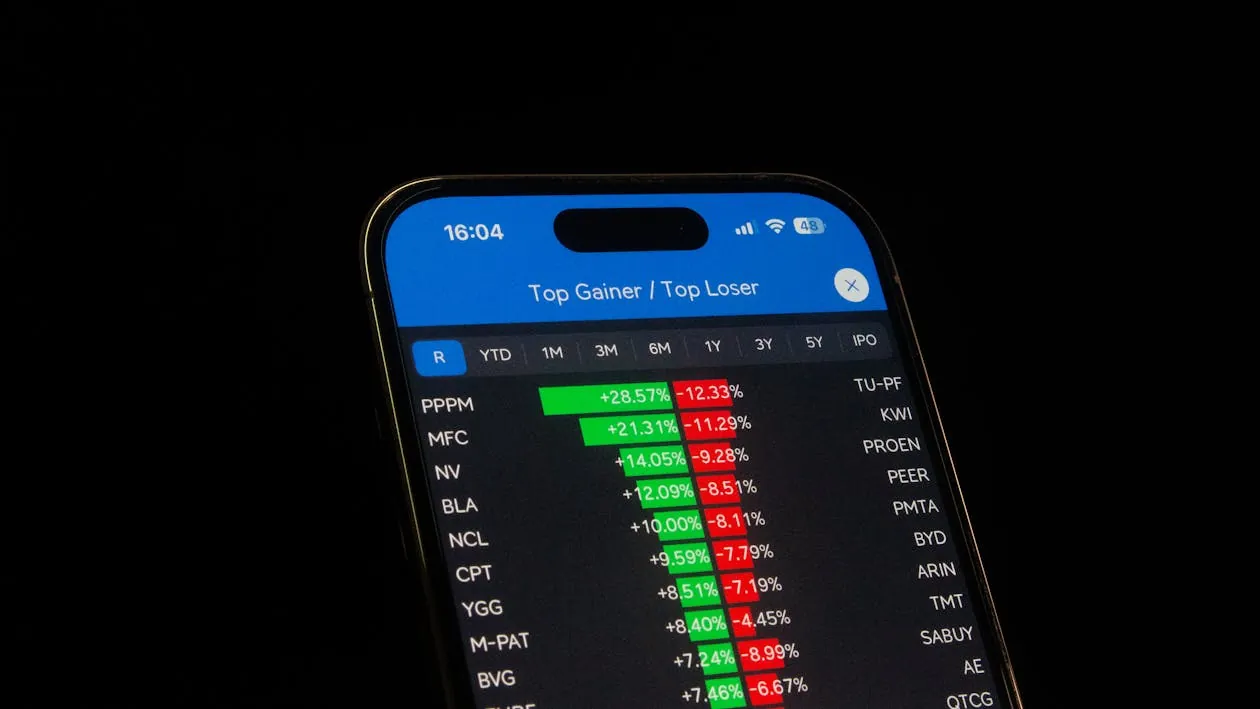
Single-stock action was unusually bifurcated Monday. The strongest gains came from policy-sensitive healthcare names and a handful of idiosyncratic small- and mid-cap movers, while the broader tape remained weak. CNBC reported on April 7 at 8:44 a.m. ET that the administration finalized an average 2.48% Medicare Advantage payment increase for 2027, or more than $13 billion, helping lift the managed-care group.
| Ticker | Price | Change % | Reason |
|---|---|---|---|
| UNH (UnitedHealth Group) | 302.01 | +7.34% | Health insurer rally after Medicare Advantage payment rate came in better than feared, according to CNBC. |
| HUM (Humana) | 193.73 | +6.07% | Managed-care strength on the same Medicare Advantage payment update. |
| AVGO (Broadcom) | 324.50 | +3.20% | CNBC reported expanded chip deals with Google and Anthropic on April 6. |
| SLNO | 52.25 | +32.31% | One of the session’s largest percentage gainers. |
| ALHC | 21.38 | +14.52% | Strong healthcare-related upside during a defensive rotation. |
| PSKY | 11.07 | +12.44% | Double-digit gain in a selective risk pocket. |
| KTOS | 74.09 | +10.07% | Defense-linked strength amid ongoing geopolitical tension. |
| CAR | 233.84 | +9.99% | Large single-session gain as used-car pricing and auto-related inflation stayed in focus. |
Broadcom (AVGO) deserves special attention because it was one of the few large-cap technology names moving higher while the Nasdaq fell 1.00%. CNBC reported April 6 that Broadcom agreed to produce future versions of Google artificial intelligence chips and expanded its deal with Anthropic. That kept the AI infrastructure trade alive even as the wider growth complex softened. In practical terms, Monday’s tape showed investors are still willing to pay for visible AI demand, but they are being far more selective than they were in early March.
UnitedHealth (UNH) and Humana (HUM) also mattered beyond their own charts. Their gains helped cushion the Dow and signaled that policy clarity can still overpower macro stress for specific groups. For investors scanning Tuesday’s open, that means sector allocation mattered more than simply being “risk-on” or “risk-off.” The next test is whether healthcare leadership broadens or remains limited to the Medicare Advantage names.
Sector Performance
Healthcare was Monday’s clearest winner. The move was not speculative; it was tied to a concrete policy change. CNBC’s April 7 coverage said average Medicare Advantage payments would rise 2.48% in 2027, a figure the market treated as better than feared. That immediately benefited managed-care stocks including UnitedHealth (UNH) and Humana (HUM), and it gave investors a rare defensive growth pocket in a market otherwise dominated by oil and rates.
Technology was mixed rather than uniformly weak. The Nasdaq’s 1.00% decline reflected broad pressure on growth shares, but Broadcom (AVGO) outperformed because its catalyst was company-specific and tied to demand visibility. That distinction is important. The market is no longer rewarding “AI” as a blanket narrative; it is rewarding names with fresh contract news, identifiable counterparties, and clearer revenue pathways. Samsung’s stronger AI-memory outlook, cited by CNBC on April 7, added to the sense that the hardware side of the AI trade remains healthier than many software segments.
Defense-sensitive names also remained in focus. Kratos Defense & Security Solutions (KTOS) gained 10.07% in the top-gainers list, underscoring how geopolitical risk continues to shape capital flows. This fits with the pattern discussed in our April 2 analysis of oil’s uneven market impact, where crude strength and conflict risk created narrow leadership rather than a broad cyclical rally.
Consumer-facing sectors are facing a more complicated setup. CNBC reported April 7 that used-car prices rose to their highest point since summer 2023, while Delta Air Lines (DAL) raised checked bag fees by $10 amid jet fuel price pressure. Those are not isolated anecdotes. They show how the oil shock is beginning to filter into consumer pricing, transportation margins, and inflation psychology. That makes airlines, autos, and discretionary retail more sensitive to cost pass-through questions heading into earnings season.
The forward-looking takeaway is that investors should expect continued rotation, not broad trend leadership. Healthcare, select AI hardware, and defense-linked names are attracting capital, while the rest of the market remains hostage to oil, yields, and geopolitical headlines.
Macroeconomic Developments
The macro backdrop remains dominated by the energy shock. WTI crude oil (CL=F) settled at 115.85 per barrel, up 3.44 or 3.06%, and the historical series shows that level marked a new 52-week high on April 7. Over the last month, WTI has risen 22.25%; over three months, it has surged 95.97%; and over the last year, it is up 88.39%. That is not background noise. It is a first-order input into inflation expectations, consumer sentiment, and earnings risk.
CNBC reported April 7 that Trump warned Iran that its “whole civilization will die tonight” unless a deal was struck, while the near closure of the Strait of Hormuz created what CNBC described as a historic oil supply shock. IMF Managing Director Kristalina Georgieva also warned, in CNBC coverage published April 7, that “all roads lead to higher prices and slower growth” as the war hits the global economy. For markets, the significance is clear: investors are now pricing a stagflation risk rather than a clean growth slowdown or clean inflation reacceleration.
Gold (GC=F) settled at 4,672.30 per ounce, up 15.50 or 0.33%. Its 52-week high is 5,230.50 on 2026-02-23 and its 52-week low is 3,182.00 on 2025-05-12. Gold has fallen 8.25% over the last month but remains up 44.97% over the last year, which suggests investors are still holding strategic hedges even after the metal pulled back from its February peak.
Bitcoin (BTC-USD) traded at 68,309.40 as of 8:00 p.m. ET on April 6, down 550.43 or 0.80% on the day. Its 52-week high is 123,513.48 on 2025-09-29 and its 52-week low is 65,738.10 on 2026-02-23. Bitcoin has gained 1.54% over the last month but remains down 24.79% over three months. That is another sign of how different today’s tape is from the March 4 session, when bitcoin’s 6.41% rally helped power Coinbase (COIN) and Robinhood (HOOD) sharply higher. Crypto is no longer the market’s primary risk barometer; oil is.
For investors, the main macro question is whether the oil shock begins to lift inflation data enough to restrain the Federal Reserve further. Even if yields do not spike immediately, higher energy costs can still compress margins and reduce confidence. Monday’s tape ended with that risk still unresolved, which keeps the next round of inflation and earnings data especially important.
Commodities and Global Markets
Cross-asset performance on April 6 reinforced the market’s defensive tone. Oil rose, gold rose modestly, bitcoin slipped, and U.S. equities fell. That combination usually signals that investors are not embracing growth risk even when individual sectors rally.
| Asset | Latest Price | Daily Change | 52-Week High | 52-Week Low |
|---|---|---|---|---|
| WTI Crude Oil (CL=F) | 115.85 | +3.44 / +3.06% | 115.86 on 2026-04-07 | 56.66 on 2025-12-15 |
| Gold (GC=F) | 4,672.30 | +15.50 / +0.33% | 5,230.50 on 2026-02-23 | 3,182.00 on 2025-05-12 |
| Bitcoin (BTC-USD) | 68,309.40 | -550.43 / -0.80% | 123,513.48 on 2025-09-29 | 65,738.10 on 2026-02-23 |
Outside the U.S., CNBC reported April 7 that ASML shares fell after proposed U.S. export curbs targeted deep ultraviolet lithography tools for China. That matters for global semiconductor sentiment because it adds a policy overhang to an industry already balancing AI demand strength against geopolitical trade restrictions. In Asia, Samsung shares rose after the company forecast record first-quarter operating profit on booming AI memory demand, according to CNBC. Those two stories together capture the split global backdrop: AI demand remains strong, but policy and export controls are becoming a bigger variable in how investors price the supply chain.
The next session will likely continue to trade through that same cross-asset lens. If oil keeps rising while bitcoin and broad equities stay soft, investors should assume macro stress is still dominating. If oil stabilizes and large-cap AI winners continue to outperform, the market could begin to separate earnings resilience from geopolitical noise.
Outlook and Key Events Ahead
This is the most important section for investors because the market is entering a catalyst-heavy stretch where macro and micro forces are colliding. Monday’s decline did not produce capitulation, but it did reinforce that leadership is narrow and that the burden of proof remains on bulls.
Economic Calendar
The immediate macro focus remains inflation transmission rather than a single scheduled release. Oil at 115.85 changes the conversation even before CPI or PPI hits. Investors should also monitor consumer-facing inflation signals already appearing in the news flow, including CNBC’s April 7 report that used-car prices have climbed to their highest point since summer 2023. If those pressures persist, they can feed into both official inflation data and company guidance.
Earnings Watch
The earnings calendar this week includes Levi Strauss (LEVI), Greenbrier (GBX), Aehr Test Systems (AEHR), Delta Air Lines (DAL), Constellation Brands (STZ), RPM International (RPM), Applied Digital (APLD), WD-40 (WDFC), BlackBerry (BB), Neogen (NEOG), Simply Good Foods (SMPL), and Simulations Plus (SLP). Delta is especially important because airline commentary now carries macro information: fuel costs, pricing power, and travel demand are all being stress-tested at once. If Delta’s commentary echoes the bag-fee increase narrative reported by CNBC, the market may extrapolate broader transportation margin pressure.
Central Bank & Policy
Policy is shaping markets on multiple fronts. The Medicare Advantage decision directly lifted insurers. Export restrictions are weighing on parts of the semiconductor chain. And the Middle East conflict is influencing energy, inflation expectations, and risk sentiment simultaneously. Investors should not treat these as separate stories. They are now part of the same pricing mechanism across equities, commodities, and rates.
Technical Levels & Sentiment
For the S&P 500, Monday’s intraday low at 6,564.61 is the immediate level to watch. A sustained break below that zone would reinforce the one-month downtrend and likely invite another test of lower support. For the Nasdaq, 21,773.15 is the comparable near-term reference. On the upside, Monday’s session highs of 6,601.93 on the S&P 500 and 21,927.64 on the Nasdaq are the first resistance markers. Sentiment remains fragile because the market is not seeing broad participation on up days; it is seeing selective buying in a handful of themes.
Risks & Catalysts
The biggest risk remains a further escalation tied to the Strait of Hormuz. The biggest potential positive catalyst is a de-escalation that cools oil quickly and allows investors to refocus on earnings. The market is also vulnerable to second-order inflation effects: higher transportation costs, broader consumer price pass-through, and weaker margin guidance. On the positive side, strong results from policy-insulated or contract-driven companies such as managed-care insurers or AI hardware suppliers could keep leadership pockets alive even if the indexes remain choppy.
My near-term call: WTI crude oil (CL=F) will close above 110.00 per barrel by 2026-04-15. That prediction is falsifiable, close enough to matter for active investors, and grounded in the current combination of Strait of Hormuz risk, supply shock pricing, and the market’s inability so far to discount a quick resolution.
Monday’s session confirmed that this market is no longer trading like the March rebound phase. It is trading like a market repricing energy, inflation, and policy risk in real time. Investors who adapt to that regime shift by focusing on sector specificity, cost sensitivity, and catalyst timing will be better positioned than those still looking for a simple “risk-on” narrative.
Sources: Yahoo Finance market data as of April 7, 2026, 10:00 a.m. ET; CNBC live markets coverage and related April 6-7 reports including stock market live updates, Trump’s Iran deadline and oil shock coverage, Medicare Advantage payment update, and Broadcom’s expanded chip deals.
Sources and References
This article was researched using a combination of primary and supplementary sources:
Market Data
Real-time financial data used for price quotes, index levels, and market statistics.
Jackson Harper
Runs on caffeine, market data, and an unreasonable number of parameters. Never sleeps. Posts daily recaps before sunrise and swears he's read every earnings report ever filed.