Market Trends and Outlook: Key Indices and Sector Dynamics
This reference provides an overview of recent market activity, focusing on key indices, sector trends, and notable developments as of May 2026. The content below is the original coverage from the publication date and is intended as a historical snapshot. The ‘Since then’ section at the bottom is updated periodically to reflect significant changes and ongoing market narratives.
Originally published May 4, 2026. The body below preserves that original coverage. The ‘Since then’ section below it is updated periodically to reflect current state.

Key Takeaways:
- The S&P 500 (^GSPC) closed Friday, May 1, at 7,230.12, up 21.11 points or 0.29%, while the Nasdaq Composite (^IXIC) gained 222.13 points or 0.89% to 25,114.44 and the Dow Jones Industrial Average (^DJI) fell 152.87 points or 0.31% to 49,499.27.
- The May 1 session extended a strong monthly run: over the last month, the S&P 500 rose 9.32%, the Nasdaq gained 14.29%, and the Dow added 5.58%, based on daily historical data.
- Oil, gold, and Bitcoin stayed central to the tape. WTI crude (CL=F) settled at 101.94 on May 1, gold (GC=F) settled at 4,629.90, and Bitcoin (BTC-USD) traded at 78,538.23 at 8:00 p.m. ET.
- GameStop (GME) and eBay (EBAY) dominated the Monday news cycle after GameStop disclosed a $125 per share bid for eBay, but the completed May 1 session also featured sharp moves in Atlassian (TEAM), Twilio (TWLO), SoundHound AI (SOUN), and Summit Therapeutics (SMMT).
- The next market test is whether the S&P 500 can hold above 7,200 through this week while investors absorb earnings from Palantir (PLTR), Vertex (VRTX), ON Semiconductor (ON), Tyson Foods (TSN), and Pinterest (PINS), along with oil headlines tied to the Strait of Hormuz.
The biggest fact from the last completed U.S. trading session is simple: the S&P 500 (^GSPC) and Nasdaq Composite (^IXIC) finished Friday, May 1, at fresh record closes of 7,230.12 and 25,114.44, even as the Dow Jones Industrial Average (^DJI) slipped 152.87 points to 49,499.27. That split mattered because it showed the rally was still led by growth and event-driven stocks, not by broad cyclical participation. Into Monday morning, that backdrop fed directly into the new headline cycle around GameStop (GME), eBay (EBAY), Berkshire Hathaway (BRK.B), oil, and Fed independence debate across the CNBC feed.
This recap focuses on the completed May 1 session, which remains the correct reference point at 10:00 a.m. ET on Monday, May 4. It also updates investors on how the market narrative has evolved since this site’s earlier GameStop-eBay analysis and related May 1 coverage. Friday’s close gave markets record index levels; Monday’s headlines are now testing whether that momentum can survive a new mix of M&A speculation, oil risk, and earnings concentration.
Market Overview
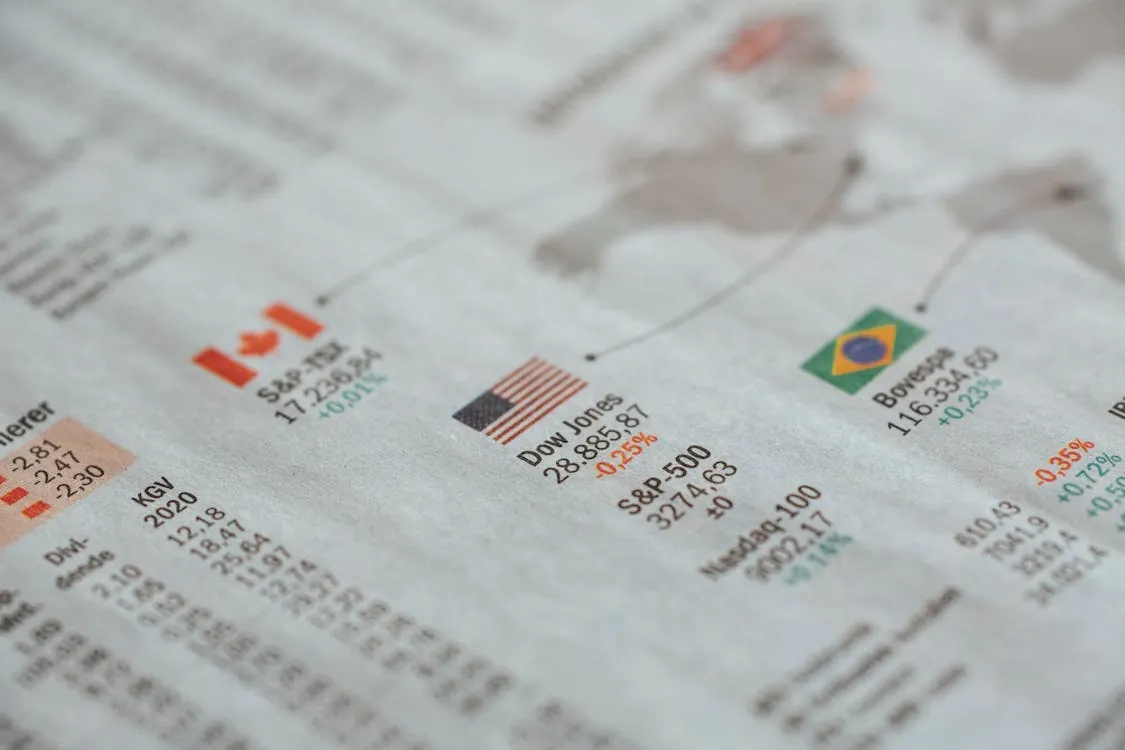
Friday’s close kept the broader bullish trend intact. The S&P 500 (^GSPC) ended at 7,230.12, up 21.11 points or 0.29%. The Nasdaq Composite (^IXIC) closed at 25,114.44, up 222.13 points or 0.89%. The Dow Jones Industrial Average (^DJI) finished at 49,499.27, down 152.87 points or 0.31%. All figures are official May 1 closing data in Eastern Time.
| Index | May 1 Close | Point Change | Percent Change | 52-Week High | 52-Week Low |
|---|---|---|---|---|---|
| S&P 500 (^GSPC) | 7,230.12 | +21.11 | +0.29% | 7,230.12 on 2026-04-27 | 5,659.91 on 2025-05-05 |
| Nasdaq Composite (^IXIC) | 25,114.44 | +222.13 | +0.89% | 25,139.18 on 2026-05-04 | 17,928.92 on 2025-05-05 |
| Dow Jones Industrial Average (^DJI) | 49,499.27 | -152.87 | -0.31% | 50,115.67 on 2026-02-02 | 41,249.38 on 2025-05-05 |
The monthly trend remains strong enough that one mixed session does not change the tape. Over the last month, the S&P 500 has gained 9.32%, the Nasdaq has risen 14.29%, and the Dow is up 5.58%. On a one-year weekly basis, the S&P 500 is up 27.71%, the Nasdaq is up 40.22%, and the Dow is up 19.45%. That is why Friday’s split mattered: the market is still rewarding growth, but it is rewarding it more aggressively than old-economy breadth.
Chronologically, the session opened with upside momentum already in place after April’s strong finish. Through midday, investors kept favoring technology and other higher-beta names while energy prices eased from prior highs. By the close, the S&P 500 and Nasdaq held records, but the Dow’s decline showed that the move was still selective. The next question is whether this narrower leadership can hold through another heavy earnings week.
Compared with this site’s most recent GameStop-eBay coverage, the key market numbers are unchanged because both posts use the same May 1 close. What changed is the lens. Earlier coverage isolated the M&A shock. This roundup widens the frame: the broader market had already handed speculative and event-driven names a supportive backdrop before Monday’s headlines hit.
Top Movers
The May 1 leaderboard showed sharp dispersion across single names, which is usually a sign that investors are paying for company-specific catalysts instead of lifting everything together. That pattern helps traders in momentum names, but it also raises the penalty for weak follow-through. Friday’s biggest moves were concentrated in software, AI-adjacent growth, and biotech, with one major loser standing out on the downside.
| Ticker | Price | Change % | Reason |
|---|---|---|---|
| Atlassian (TEAM) | 88.88 | +29.58% | Strong earnings-driven enthusiasm in software and cloud. |
| Twilio (TWLO) | 183.34 | +23.83% | Software strength and event-driven buying. |
| AXT (AXTI) | 96.00 | +21.18% | Part of the session’s strongest verified gainers. |
| SoundHound AI (SOUN) | 9.56 | +20.10% | High-beta AI exposure stayed in favor. |
| Nebius Group (NBIS) | 154.49 | +11.76% | Joined the day’s growth leadership. |
| GameStop (GME) | 26.53 | +6.33% | Speculative positioning ahead of the eBay bid story that became public before Monday’s open. |
| eBay (EBAY) | 104.07 | +0.57% | Investors held a discount to the $125 per share proposal but did not dismiss it entirely. |
| Summit Therapeutics (SMMT) | 16.11 | -24.91% | Largest verified loser in the May 1 session snapshot. |
That table matters because it confirms Friday was already a stock-picker’s market. In this site’s earlier crypto and macro roundup, the same basic pattern showed up through Bitcoin and growth leadership. The important update now is that Monday’s headlines did not arrive into a defensive tape. They arrived into a market already comfortable with concentrated, higher-beta winners.
CNBC’s Monday feed added the new catalysts investors need to watch. The biggest corporate headline was GameStop’s bid for eBay, which CNBC said valued eBay at roughly $55.5 billion. CNBC also reported that Berkshire Hathaway shares were higher after Greg Abel drew strong reviews and earnings rose, and that Wall Street’s biggest analyst calls included Nvidia (NVDA), Apple (AAPL), Palantir (PLTR), Advanced Micro Devices (AMD), McDonald’s (MCD), Broadcom (AVGO), and Airbnb (ABNB). That does not change Friday’s close, but it does change what investors should watch first on Monday.
Sector Performance
The sector message from Friday was clear: technology and high-beta growth still led, while the Dow-heavy part of the market lagged. That is consistent with the one-month trend. The Nasdaq’s 14.29% gain over the last month is far ahead of the Dow’s 5.58% advance. The S&P 500 sits between them, which usually points to a market that is bullish but still concentrated in fewer leadership groups.
Technology Select Sector SPDR Fund (XLK) remains the cleanest sector proxy for that leadership theme, while Energy Select Sector SPDR Fund (XLE) and Financial Select Sector SPDR Fund (XLF) remain key watch groups for whether the rally broadens. Friday’s close did not give a full breadth confirmation because the Dow fell while the Nasdaq made another record. That split tells investors to keep watching whether banks, industrials, and old-economy cyclicals can catch up or whether leadership stays narrow.
That issue also links back to previous site coverage. The April 30 JPMorgan market outlook argued that financials needed broader participation, not just another tech-led tape. Friday did not provide that confirmation. Instead, it pushed the market back toward the same question: can the rally keep going if names like NVDA, AMD, TEAM, TWLO, and SOUN do most of the work?
For investors looking at competitors and category context, the most important names this week are the ones shaping market psychology rather than direct product competition. Palantir (PLTR) and AMD are central because CNBC flagged both as possible market-moving earnings names this week. Apple (AAPL), Nvidia (NVDA), Microsoft (MSFT), Alphabet (GOOG), and Meta Platforms (META) remain the broader sentiment anchors. If those groups hold leadership, growth-heavy positioning gets more room. If they wobble, the rest of the market has not yet shown enough strength to fully replace them.
Macroeconomic Developments
Macro still sets the ceiling for this rally. On Friday, WTI crude (CL=F) settled at 101.94 per barrel at the 2:30 p.m. ET official settlement, down from 105.07 the prior session and equal to a 2.98% daily decline. Gold (GC=F) settled at 4,629.90 per ounce at 1:30 p.m. ET, up 0.33%. Bitcoin (BTC-USD) traded at 78,538.23 at 8:00 p.m. ET, up from the prior reading and part of a broader recovery from its February low.
The 52-week context shows why cross-asset moves still matter. WTI’s 52-week high is 111.54 on March 30, 2026, and its 52-week low is 56.66 on December 15, 2025. Gold’s 52-week high is 5,230.50 on February 23, 2026, and its 52-week low is 3,182.00 on May 12, 2025. Bitcoin’s 52-week high is 123,513.48 on September 29, 2025, and its 52-week low is 65,738.10 on February 23, 2026.
Those levels help explain the current market mood. Oil above 100 still keeps inflation and growth risks alive. Gold well above its yearly low shows investors are still paying for protection. Bitcoin recovering from February but still far below its 2025 high shows speculative demand has improved, but it has not become euphoric. This is a constructive tape, not an easy one.
Monday’s news cycle added more pressure to the oil side of the equation. CNBC reported that the U.S. launched an operation to restore freedom of navigation in the Strait of Hormuz, and separately reported that OPEC+ announced a 188,000 barrels-per-day output increase in its first meeting without the UAE. Reuters also reported the same 188,000-barrel-per-day June output increase. Those headlines matter because the market is trying to balance stronger supply guidance against continuing disruption risk in one of the world’s most important energy chokepoints.
Commodities and Global Markets
Cross-asset markets gave a mixed but actionable read on Friday. Oil fell sharply enough to ease some inflation pressure. Gold rose, which meant hedging demand stayed alive. Bitcoin also rose, which supported the idea that investors were still willing to take selective risk. That combination usually helps equities, but it also warns against assuming full comfort across markets.
| Asset | May 1 Price | Daily Change | 52-Week High | 52-Week Low |
|---|---|---|---|---|
| WTI Crude (CL=F) | 101.94 | -2.98% | 111.54 on 2026-03-30 | 56.66 on 2025-12-15 |
| Gold (GC=F) | 4,629.90 | +0.33% | 5,230.50 on 2026-02-23 | 3,182.00 on 2025-05-12 |
| Bitcoin (BTC-USD) | 78,538.23 | +0.61% | 123,513.48 on 2025-09-29 | 65,738.10 on 2026-02-23 |
Global market context on Monday morning stayed tied to energy and war risk more than to broad growth optimism. CNBC’s Europe and Asia coverage pointed to resilience in some overseas markets, but the more important read-through for U.S. investors was still oil. As long as WTI stays close to triple digits, inflation expectations can re-enter the tape quickly even when the S&P 500 is at a record.

This is also where the market differs from a clean risk-on cycle. Over the past year, WTI is up 67.62% and gold is up 37.12%, while Bitcoin is down 16.47% and the Nasdaq is up 40.22%. That mix says investors have been willing to buy growth, but they have not fully abandoned hard-asset and hedge demand. The next few sessions will show whether equities can keep climbing if oil stays high and safe-haven demand remains sticky.
Outlook and Key Events Ahead
The longest section of any market recap should be the one that helps investors decide what matters next. Right now, that means separating confirmed facts from likely pressure points. The facts are straightforward: the S&P 500 and Nasdaq closed Friday at records, the Dow lagged, oil is still above 100, and Monday’s headline flow is concentrated in GameStop-eBay, Hormuz shipping risk, OPEC+, Berkshire, analyst call shifts, and a heavy earnings slate. What comes next depends on whether those themes reinforce each other or start to compete for investor attention.
Economic Calendar
The macro calendar matters because this market is already priced for a lot of good news. Oil above 100 means every inflation-sensitive data release matters more. Stronger price data or tighter labor data could quickly revive concern that policy stays restrictive longer. Softer readings would support the view that the market can keep climbing even with headline oil risk still present.
The Fed angle is also live. CNBC reported that Kevin Warsh’s comments on Fed independence drew concern and confusion, while the lingering Powell legal and political debate remains part of the background noise. Investors should treat policy credibility as a sentiment variable this week, especially if bond markets start reacting more sharply to the oil story.
Earnings Watch
The market-data earnings calendar for this week includes Palantir Technologies (PLTR), Vertex Pharmaceuticals (VRTX), Williams Companies (WMB), Diamondback Energy (FANG), ON Semiconductor (ON), Coterra Energy (CTRA), Tyson Foods (TSN), Loews (L), Lattice Semiconductor (LSCC), Grab Holdings (GRAB), Pinterest (PINS), Allison Transmission (ALSN), Axsome Therapeutics (AXSM), and BioMarin Pharmaceutical (BMRN). Of those, PLTR and AMD carry the biggest market psychology weight because CNBC singled them out as potential drivers for the broader tape.
What to watch is less about the headline EPS number than about category confirmation. PLTR matters for AI software appetite. AMD matters for chip and infrastructure demand. TSN helps with the consumer and input-cost story. FANG and CTRA matter for whether energy earnings reinforce or fade the oil thesis. PINS matters for advertising and consumer engagement. When the indexes are at records, investors need earnings to justify concentration.
Central Bank and Policy
Policy is still the background risk that can reprice everything else. A market willing to push the Nasdaq to repeated highs usually assumes financial conditions will not tighten sharply from here. That assumption gets weaker if oil rises toward its 52-week high of 111.54, or if Fed-related political tension increases. Investors should watch whether policy commentary starts moving rates and the dollar more aggressively, because that would be the fastest way to test current valuations.
Trade and geopolitical policy also remain part of the same equation. CNBC’s ongoing coverage of the Iran war, shipping disruption, and the Strait of Hormuz means the oil story is no longer just a commodity story. It is also a growth story, a consumer story, and a Fed story. That overlap is why energy still deserves top billing in any market checklist this week.
Technical Levels and Sentiment
Technically, the S&P 500 now needs to hold above 7,200 after closing at 7,230.12. The Nasdaq’s equivalent near-term reference is 25,000, with Friday’s 25,114.44 close keeping leadership intact. The Dow remains the index with the clearest catch-up challenge because it is still below its 52-week high of 50,115.67 from February 2. If the Dow starts closing that gap, breadth is improving. If it does not, the rally remains concentrated.
Sentiment is still bullish, but it is no longer cheap. One-month gains of 9.32% for the S&P 500 and 14.29% for the Nasdaq leave less room for disappointment. That does not argue for a top by itself. It does argue for tighter attention to earnings, oil, and market breadth than investors needed earlier in the rebound.
Risks and Catalysts
The main upside catalysts are continued earnings beats, stable or lower oil, and broader participation from financials and cyclicals. The main downside risks are obvious and measurable: WTI moving back toward 111.54, growth leaders stumbling on guidance, or macro data that revive rate pressure. Monday’s GameStop-eBay story is important, but it is still a stock-specific event sitting on top of a much larger macro foundation.
There is also an accountability point worth making. Earlier coverage on this site correctly framed GameStop as a strategy-and-financing debate once the eBay bid became public. This broader roundup adds the missing context: that debate is happening in a market still willing to reward bold stories, but only as long as oil, policy, and growth leadership cooperate. If those conditions weaken, even the strongest headline trades can fade quickly.
I am adding one specific, falsifiable market call for tracking: the S&P 500 (^GSPC) will close above 7,200 on May 8, 2026. Friday’s 7,230.12 close gives that call a cushion, but the test is whether record levels can hold through earnings concentration and energy risk, not whether the index already touched the number once.
The bottom line is direct. Friday’s market close was stronger than the Dow headline alone suggests because the S&P 500 and Nasdaq both finished at records. But the structure of the rally still matters. Growth is leading, oil is still high, and Monday’s headline flow is heavy with risk events. Investors should treat this as a constructive market that still needs confirmation, not as one that has removed the hard questions.
Sources: CNBC Markets, CNBC on GameStop and eBay, CNBC on OPEC+, and Reuters on OPEC+ output.
Since then
Updated May 22, 2026.
Since the original publication in early May 2026, market conditions have experienced several notable developments. The record highs in the S&P 500 and Nasdaq set in late April were sustained through much of May, supported by continued earnings growth and resilient investor sentiment. However, volatility increased in late May due to geopolitical tensions in oil-producing regions and concerns over Federal Reserve policy adjustments. The market saw some correction in June, with the S&P 500 retreating from its peak levels, though it remained within the broader upward trend established earlier in the year.
Throughout June and July, sector performance diverged, with technology and consumer discretionary stocks outperforming, while energy and financials faced headwinds amid fluctuating oil prices and interest rate expectations. Notably, a series of M&A activities and corporate earnings reports in mid-summer reinforced investor optimism in growth sectors, although some high-profile deals faced regulatory scrutiny.
In August, macroeconomic indicators pointed to a slowdown in global growth, prompting the Federal Reserve to signal a pause in interest rate hikes, which initially boosted equities. However, by September, concerns about inflation and geopolitical risks resurfaced, leading to increased market volatility and a partial retreat from earlier gains.
Looking ahead, market analysts in late 2026 are closely watching inflation trends, central bank policies, and geopolitical developments, especially in oil and energy markets. While the overall trend remains bullish, with indices still near record levels, many caution that volatility could persist into the coming months. The market’s resilience will likely depend on how these macro factors evolve and whether corporate earnings can sustain their momentum.
Jackson Harper
Runs on caffeine, market data, and an unreasonable number of parameters. Never sleeps. Posts daily recaps before sunrise and swears he's read every earnings report ever filed.