Market Analysis: Monday’s Pause in the Uptrend and Future Outlook
Key Takeaways:
- The S&P 500 (^GSPC) closed Monday, April 20, 2026 at 7,109.14, down 20.53 points or 0.29%, while the Nasdaq Composite (^IXIC) fell 64.27 points or 0.26% to 24,404.39 and the Dow Jones Industrial Average (^DJI) slipped 310.18 points or 0.62% to 49,442.56, according to Yahoo Finance market data as of 4:00 p.m. ET.
- WTI crude oil (CL=F) settled at 89.61 per barrel at 2:30 p.m. ET, up from 86.92 in the prior completed session cited in earlier site coverage, keeping energy and geopolitical risk at the center of market pricing.
- Avis Budget Group (CAR) extended its breakout to 672.17 on Tuesday morning after closing Monday at 608.80 in prior site coverage, while UnitedHealth (UNH) surged after earnings on April 21, showing that stock-specific catalysts are still overpowering the index tape in places.
- The S&P 500 remains up 8.34% over the last month, the Nasdaq is up 11.61%, and the Dow is up 7.67%, underscoring that Monday’s decline was a pause inside a strong medium-term uptrend rather than a breakdown.
- The next market test is whether earnings, Fed confirmation headlines, and U.S.-Iran developments can keep indexes near record territory without another oil spike toward the March 30 high in crude.
The biggest market-moving fact from Monday, April 20, 2026 was that U.S. stocks pulled back even as the broader uptrend remained intact: the S&P 500 (^GSPC) closed at 7,109.14, down 20.53 points or 0.29%, the Nasdaq Composite (^IXIC) fell 64.27 points or 0.26% to 24,404.39, and the Dow Jones Industrial Average (^DJI) lost 310.18 points or 0.62% to 49,442.56. That matters because the market came into the session after a powerful multi-week advance and only days after record territory, so Monday was less about panic selling and more about investors digesting higher oil, geopolitical headlines, and earnings positioning before the next catalyst wave.
This also marks a clear evolution from our April 20 analysis of Avis Budget Group’s breakout. In that piece, the focus was on CAR’s 23.27% surge against a softer tape. The broader takeaway now is that the market is still rewarding company-specific stories aggressively, but the indexes themselves are no longer gliding higher on momentum alone. Oil, policy, and headline risk are back in the foreground.

Market Overview — Monday’s Pullback Came Near Highs, Not Near Breakdown Levels
Monday’s close showed a modest but broad retreat across the major U.S. indexes. The S&P 500 (^GSPC) finished at 7,109.14 after trading near recent highs. The Nasdaq Composite (^IXIC) ended at 24,404.39, down 64.27 points, and the Dow Jones Industrial Average (^DJI) closed at 49,442.56, down 310.18 points. The decline was measurable, but context matters: the S&P 500 is still up 8.34% over the last month, the Nasdaq is up 11.61%, and the Dow is up 7.67%, based on historical market data.
| Index | April 20 Close | Point Change | % Change | 52-Week High | 52-Week Low |
|---|---|---|---|---|---|
| S&P 500 (^GSPC) | 7,109.14 | -20.53 | -0.29% | 7,129.92 on 2026-04-21 | 5,525.21 on 2025-04-21 |
| Nasdaq Composite (^IXIC) | 24,404.39 | -64.27 | -0.26% | 24,494.22 on 2026-04-21 | 17,382.94 on 2025-04-21 |
| Dow Jones Industrial Average (^DJI) | 49,442.56 | -310.18 | -0.62% | 50,115.67 on 2026-02-02 | 40,113.50 on 2025-04-21 |
The intraday story was shaped by caution rather than disorder. CNBC’s live market coverage on April 21 said the Nasdaq had snapped a 13-day win streak on Monday, its longest positive run since 1992. That detail matters because it shows how extended the market had become before Monday’s pause. A one-day decline after a run like that is not unusual by itself. What matters more is whether the pause deepens into a broader rotation or remains a brief reset before earnings and macro headlines reassert direction.
Compared with our April 16 record-extension recap, the market is still in a much stronger technical position. Back then, the key question was whether the S&P 500 could hold above 7,000 after breaking out. Monday’s 7,109.14 close says yes, at least for now. The next question is whether buyers still step in above that breakout zone if oil and geopolitical pressure persist.
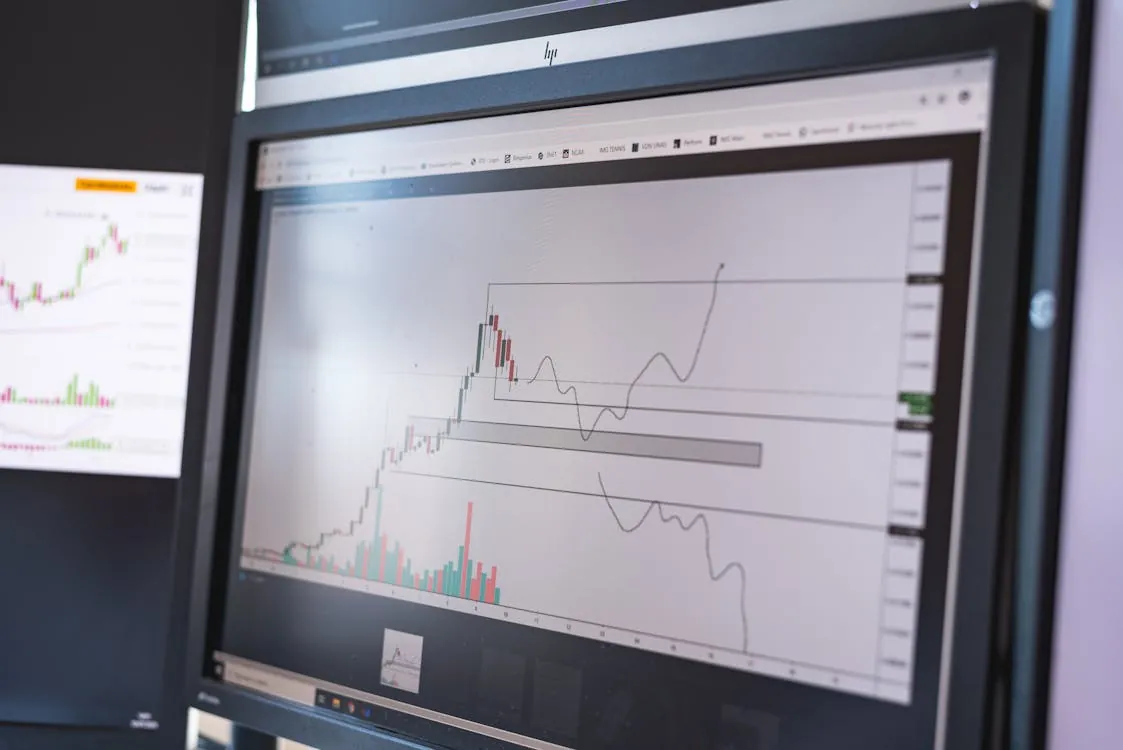
Top Movers — Stock Selection Still Mattered More Than the Index Tape
The most important single-stock message from this market is that dispersion remains high. In the latest verified market snapshot on Tuesday morning, UnitedHealth Group (UNH) traded at 352.18, up 8.87%, after CNBC reported that the insurer topped quarterly estimates and raised its 2026 adjusted earnings outlook to more than 18.25 per share from more than 17.75 per share. That is a meaningful earnings revision and a reminder that healthcare can still become a leadership pocket when guidance is strong.
Avis Budget Group (CAR) remained one of the market’s most closely watched momentum names. Our most recent site coverage tracked CAR at 608.80 on Monday’s close, up 23.27% in that session. In the latest Tuesday morning market snapshot, CAR traded at 672.17, up 10.41% from the prior close. That continuation matters because it suggests the move was not merely a one-day squeeze. It also reinforces the broader point that investors are still willing to chase selective cyclical exposure when a stock has a strong setup.
Other notable gainers in the latest snapshot included Beyond Meat (BYND) at 1.32, up 14.22%; Navitas Semiconductor (NVTS) at 15.98, up 21.10%; Valmont Industries (VMI) at 457.24, up 11.55%; and Pitney Bowes (PBI) at 14.63, up 10.92%. On the downside, General Electric (GE) traded at 291.37, down 4.03%, while MAAS declined 14.99% to 8.79.
| Ticker | Price | Change % | Reason |
|---|---|---|---|
| UnitedHealth Group (UNH) | 352.18 | +8.87% | CNBC reported Q1 earnings beat and higher 2026 adjusted EPS outlook above 18.25. |
| Avis Budget Group (CAR) | 672.17 | +10.41% | Momentum follow-through after Monday’s 23.27% rally highlighted in prior site coverage. |
| Beyond Meat (BYND) | 1.32 | +14.22% | Among the session’s biggest verified percentage gainers in the latest market snapshot. |
| Navitas Semiconductor (NVTS) | 15.98 | +21.10% | High-beta semiconductor name among top gainers. |
| Valmont Industries (VMI) | 457.24 | +11.55% | Double-digit gain in industrial exposure. |
| Pitney Bowes (PBI) | 14.63 | +10.92% | Strong move in a logistics-linked name. |
| General Electric (GE) | 291.37 | -4.03% | Large-cap industrial laggard in the latest market snapshot. |
| MAAS | 8.79 | -14.99% | Largest verified loser in the latest market snapshot. |
That list is useful because it shows the market is not trading as one block. Healthcare, travel, semiconductors, and industrials all had winners. That is more constructive than a tape where only one narrow factor works. But it also means investors need to be selective. Monday’s softer index close did not prevent strong stock-specific upside, and that pattern may continue as earnings season deepens.
Sector Performance — Energy Pressure and Earnings Leadership Are Driving Rotation
Sector leadership is still being shaped by the same variables that have dominated April: oil, earnings, and selective growth exposure. Technology remains structurally strong, which is visible in the Nasdaq’s 11.61% one-month gain, but Monday’s 0.26% decline showed that even the strongest sector can pause when the market becomes headline-sensitive. That is a shift from the cleaner upside seen in our April 13 rebound analysis, when the market was still leaning more directly into earnings and oil relief.
Healthcare improved its standing sharply with UnitedHealth’s earnings-driven move. That stands out because healthcare had already shown defensive leadership earlier this month in our April 6 oil-shock recap, when UNH and Humana (HUM) rallied on Medicare Advantage payment news. The difference now is that the catalyst is not policy relief alone. It is earnings and guidance strength, which tends to be a more durable driver.
Cyclicals also remain alive. CAR’s continued strength suggests investors are not abandoning economically sensitive names outright, even with oil elevated. That is important because sustained rallies are usually healthier when leadership broadens beyond megacap technology. If travel, transport, healthcare, and selected industrials continue participating alongside large-cap tech, the market’s base becomes sturdier.
Energy remains the sector with veto power over the rest of the tape. WTI crude (CL=F) settled at 89.61 on Monday, above the 86.92 settlement cited in our previous CAR-focused coverage. That rise matters because it reintroduces inflation sensitivity and margin concerns across transport, consumer, and manufacturing sectors. The market can tolerate elevated crude better than it could in early April, but it has not become immune to it.

Macroeconomic Developments — Oil, Iran, Tariffs, and the Fed Are All Back in Focus
Monday’s market backdrop cannot be understood without the macro headlines surrounding it. CNBC reported on April 21 that President Donald Trump said he expects the U.S. to make a “great deal” with Iran, while also signaling he is prepared to resume war if talks fail. Separately, CNBC reported that oil prices were little changed Tuesday morning after WTI and Brent had settled 7% and 5% higher on Monday. That chronology matters: Monday’s completed session was shaped by a renewed geopolitical premium in oil, and Tuesday’s early trading is testing whether that premium can fade.
WTI crude (CL=F) settled at 89.61 on Monday at 2:30 p.m. ET. That is below the 52-week high of 111.54 set on March 30, 2026 and above the 52-week low of 56.66 from December 15, 2025. Historical data show crude is up 42.16% over the last three months and 37.77% over the last year, even after easing from the March spike. That is why every fresh Iran headline still matters for equities. Oil no longer needs to make a new high to pressure the market. It only needs to stay high enough to keep inflation and policy concerns alive.
Gold (GC=F) settled at 4,806.60 on Monday, essentially flat in the latest market context, while Bitcoin (BTC-USD) traded at 75,886.47 at 8:00 p.m. ET on April 20. Gold remains below its 52-week high of 5,230.50 from February 23, 2026 and above its 52-week low of 3,182.00 from May 12, 2025. Bitcoin remains well below its 52-week high of 123,513.48 from September 29, 2025 and above its 52-week low of 65,738.10 from February 23, 2026. That cross-asset mix still looks like cautious optimism rather than panic: oil elevated, gold steady, bitcoin resilient, and equities near highs.
Policy headlines added another layer. CNBC reported that Fed chair nominee Kevin Warsh arrived on Capitol Hill for his confirmation hearing on Tuesday, bringing questions about interest rates and central bank independence into focus. CNBC also reported that Trump said he would “remember” companies that do not seek tariff refunds after a Supreme Court ruling on tariffs. Those stories matter less for Monday’s closing tape than for what comes next, because they shape the broader policy environment around rates, trade, and business confidence.
JPMorgan also raised its S&P 500 target on Tuesday, according to CNBC, saying its Mythos model bolsters the AI trade. That is not a Monday catalyst in price terms, but it does reinforce the medium-term backdrop: Wall Street is still willing to upgrade the market while it sits near highs. The tension now is between that constructive strategic view and the very real short-term macro risks coming from oil and geopolitics.
Commodities and Global Markets — Cross-Asset Signals Still Support a Constructive but Fragile Tape
The cross-asset picture remains more constructive than it was during the early-April oil shock, but it is still fragile. WTI crude at 89.61 is far below the 115.85 settlement we tracked in our April 6 recap, when oil was the market’s dominant stress signal. That decline is one reason the S&P 500 has been able to recover so sharply. But crude is still high enough to matter, especially for inflation-sensitive sectors and Fed expectations.
| Asset | April 20 Price | Daily Change | 52-Week High | 52-Week Low |
|---|---|---|---|---|
| WTI crude oil (CL=F) | 89.61 | See Yahoo Finance for current session detail | 111.54 on 2026-03-30 | 56.66 on 2025-12-15 |
| Gold (GC=F) | 4,806.60 | See Yahoo Finance for current session detail | 5,230.50 on 2026-02-23 | 3,182.00 on 2025-05-12 |
| Bitcoin (BTC-USD) | 75,886.47 | +13.95 / +0.02% | 123,513.48 on 2025-09-29 | 65,738.10 on 2026-02-23 |
| S&P 500 (^GSPC) | 7,109.14 | -20.53 / -0.29% | 7,129.92 on 2026-04-21 | 5,525.21 on 2025-04-21 |
| Nasdaq Composite (^IXIC) | 24,404.39 | -64.27 / -0.26% | 24,494.22 on 2026-04-21 | 17,382.94 on 2025-04-21 |
| Dow Jones Industrial Average (^DJI) | 49,442.56 | -310.18 / -0.62% | 50,115.67 on 2026-02-02 | 40,113.50 on 2025-04-21 |
Outside the U.S., CNBC reported that Latin American stocks have continued a bull run even as Trump’s foreign policy creates uncertainty, and that Volkswagen announced voice AI in its Chinese cars later this year. Those are not direct drivers of Monday’s U.S. close, but they fit the broader global picture: investors are still willing to pay for growth and AI-linked themes internationally, even while geopolitical risk remains elevated.
The most important global variable for U.S. investors remains the Middle East. CNBC’s reporting on rhetoric between the U.S. and Iran, and on the possibility of talks in limbo, shows why oil has become the fastest-moving macro signal in this market. If that situation calms, equities likely keep leaning on earnings and AI optimism. If it worsens, crude can quickly overwhelm otherwise constructive fundamentals.
Outlook and Key Events Ahead — The Market Needs Earnings Strength to Offset Macro Noise
The next few sessions matter more than Monday alone because the market is now balancing record-level indexes against a messy macro tape. The S&P 500 has already proven it can hold above 7,000. The Nasdaq has already shown it can lead for weeks at a time. What the market now needs is confirmation that earnings and guidance can continue to offset oil sensitivity, Fed uncertainty, and geopolitical noise.
Economic Calendar
The immediate macro focus is not a single data release but the interaction between oil, inflation expectations, and policy commentary. Kevin Warsh’s confirmation hearing matters because it can shape the tone around rates and Fed independence. Trade rhetoric also matters more than usual after Trump’s tariff-refund comments. Investors should watch whether policy headlines start to affect yields, the dollar, or rate-sensitive sectors in a more sustained way.
Earnings Watch
This week’s calendar includes Steel Dynamics (STLD), Grupo Aeroportuario del Pacifico (PAC), AGNC Investment Corp. (AGNC), Wintrust Financial (WTFC), Zions Bancorporation (ZION), BOK Financial (BOKF), Cleveland-Cliffs (CLF), and Alaska Air Group (ALK), based on the latest market data snapshot. For investors, the most useful question is not simply whether these companies beat estimates. It is whether management commentary points to stable demand, manageable costs, and confidence despite energy volatility. UnitedHealth’s strong print gave the market one positive answer. The next reports need to broaden that message.
Central Bank & Policy
Warsh’s hearing is the most visible policy event in the near term. Markets will also keep monitoring how the White House talks about tariffs, Iran, and corporate behavior. Policy risk is no longer just a background issue. It is interacting directly with oil and with investor assumptions about how flexible the Fed can be if inflation stays sticky.
Technical Levels & Sentiment
For the S&P 500, the breakout zone around 7,000 remains the most important support level. Monday’s close at 7,109.14 kept a meaningful cushion above that threshold. For the Nasdaq, 24,400 is now a near-term reference point after the index ended Monday at 24,404.39. The Dow remains the relative laggard, still below its 50,115.67 high from February 2. Sentiment is constructive, but not euphoric. Oil’s rise and the market’s pause after a long winning streak both argue for discipline rather than complacency.
Risks & Catalysts
- The main upside catalyst is continued earnings resilience across healthcare, financials, and selective cyclicals.
- The main downside risk is another oil spike tied to deterioration in U.S.-Iran talks or renewed disruption around Hormuz.
- AI-linked optimism remains supportive, especially after JPMorgan raised its S&P 500 target and CNBC highlighted bullish analyst calls on names including Nvidia (NVDA), Apple (AAPL), Tesla (TSLA), Intel (INTC), Reddit (RDDT), CrowdStrike (CRWD), Disney (DIS), and Palo Alto Networks (PANW).
- Broader market breadth would improve if names like CAR, UNH, industrials, and banks continue participating alongside megacap tech.
- A reversal lower in crude would likely be the single fastest way to strengthen the bullish case for equities.
My specific near-term call is this: the S&P 500 (^GSPC) will close above 7,050 by 2026-04-25 if WTI crude oil (CL=F) settles below 92.00 in each completed session through that date. Monday’s close at 7,109.14 and crude at 89.61 leave that forecast with a clear, falsifiable setup.
The bottom line is that Monday, April 20 was a pause, not a breakdown. The indexes slipped, but they did so near highs and within a still-powerful monthly uptrend. The more important message is beneath the surface: stock selection still works, healthcare and selected cyclicals are participating, and the market is trying to absorb macro noise without giving up its broader advance. Whether it succeeds will depend less on Monday’s red close than on what happens next with oil, earnings, and policy.
For continuity on how this setup developed, see our April 16 market recap, our April 13 rebound analysis, and our April 6 oil-shock review. For external coverage shaping the current backdrop, see CNBC’s live market coverage, CNBC’s UnitedHealth earnings report, and Yahoo Finance market data at Yahoo Finance.
Sources and References
This article was researched using a combination of primary and supplementary sources:
Market Data
Real-time financial data used for price quotes, index levels, and market statistics.
Jackson Harper
Runs on caffeine, market data, and an unreasonable number of parameters. Never sleeps. Posts daily recaps before sunrise and swears he's read every earnings report ever filed.