Market Analysis: Stocks, Oil, and Gold Outlook
Key Takeaways:
- The S&P 500 (^GSPC) closed Tuesday, April 21, 2026 at 7,118.36, up 54.35 points or 0.77%, while the Nasdaq Composite (^IXIC) rose 210.20 points or 0.87% to 24,470.16 and the Dow Jones Industrial Average (^DJI) gained 454.55 points or 0.92% to 49,603.93.
- The Nasdaq finished at a fresh 52-week high of 24,472.86 on April 22 in the latest historical context, while the S&P 500 remained just below its 52-week high of 7,126.06 set on April 13, showing that the broader uptrend is intact even after recent geopolitical volatility.
- WTI crude oil (CL=F) settled at $91.61 per barrel at 2:30 p.m. ET, down $0.52 or 0.56%, but still up 50.02% over the last three months and 45.38% over the last year, keeping energy inflation and Middle East headlines central to market risk.
- Gold (GC=F) settled at $4,776.20 per ounce, up 1.66%, while Bitcoin (BTC-USD) traded at $78,869.00 at 8:00 p.m. ET, up 3.30%, a cross-asset mix that signals risk appetite remains alive but hedging demand has not disappeared.
- The next market test is whether equities can hold near record levels as investors digest earnings, Fed patience, and fresh Strait of Hormuz headlines reported by CNBC.
The biggest market fact from Tuesday, April 21 was simple and actionable: U.S. stocks rallied back toward record territory, with the Dow Jones Industrial Average (^DJI) jumping 454.55 points, even as oil stayed above $90 and Middle East shipping risk remained in focus. The S&P 500 (^GSPC) closed at 7,118.36, up 0.77%, the Nasdaq Composite (^IXIC) finished at 24,470.16, up 0.87%, and the Dow ended at 49,603.93, up 0.92%, according to Yahoo Finance market data for the completed session at 4:00 p.m. ET.
That rebound matters because it came immediately after a softer April 20 session covered in our analysis of Avis Budget Group’s outlier rally in a cautious tape. On Monday, the S&P 500 closed at 7,109.20 and the Nasdaq at 24,404.39. Tuesday’s close pushed both benchmarks higher again, showing that the broader market absorbed oil volatility better than many investors expected. The market is still headline-driven, but the tape remains constructive.

The intraday story was not a clean “all-clear” risk-on move. CNBC’s live coverage on April 22 kept attention on Iran, the Strait of Hormuz, Google’s AI chip announcement, Boeing’s earnings commentary, United Airlines’ fuel-cost warning, AT&T’s subscriber growth, and Palantir’s $300 million USDA contract. For investors scanning the market during earnings season, the takeaway is that stocks rose not because risks disappeared, but because buyers were still willing to pay for earnings resilience, industrial execution, and selective technology leadership.
| Index | April 21 Close | Point Change | % Change | 52-Week High | 52-Week Low |
|---|---|---|---|---|---|
| S&P 500 (^GSPC) | 7,118.36 | +54.35 | +0.77% | 7,126.06 on 2026-04-13 | 5,525.21 on 2025-04-21 |
| Nasdaq Composite (^IXIC) | 24,470.16 | +210.20 | +0.87% | 24,472.86 on 2026-04-22 | 17,382.94 on 2025-04-21 |
| Dow Jones Industrial Average (^DJI) | 49,603.93 | +454.55 | +0.92% | 50,115.67 on 2026-02-02 | 40,113.50 on 2025-04-21 |
Historical context keeps the one-day move in perspective. Over the last month, the S&P 500 is up 8.16%, the Nasdaq is up 11.51%, and the Dow is up 7.34%. Over the last year, those gains widen to 28.83% for the S&P 500, 40.79% for the Nasdaq, and 23.65% for the Dow. Over five years, the secular trend is still strongly positive, with the S&P up 69.32%, the Nasdaq up 77.96%, and the Dow up 43.65%. The forward question is no longer whether the rebound exists; it is whether earnings and macro conditions can keep the indexes pinned near highs.
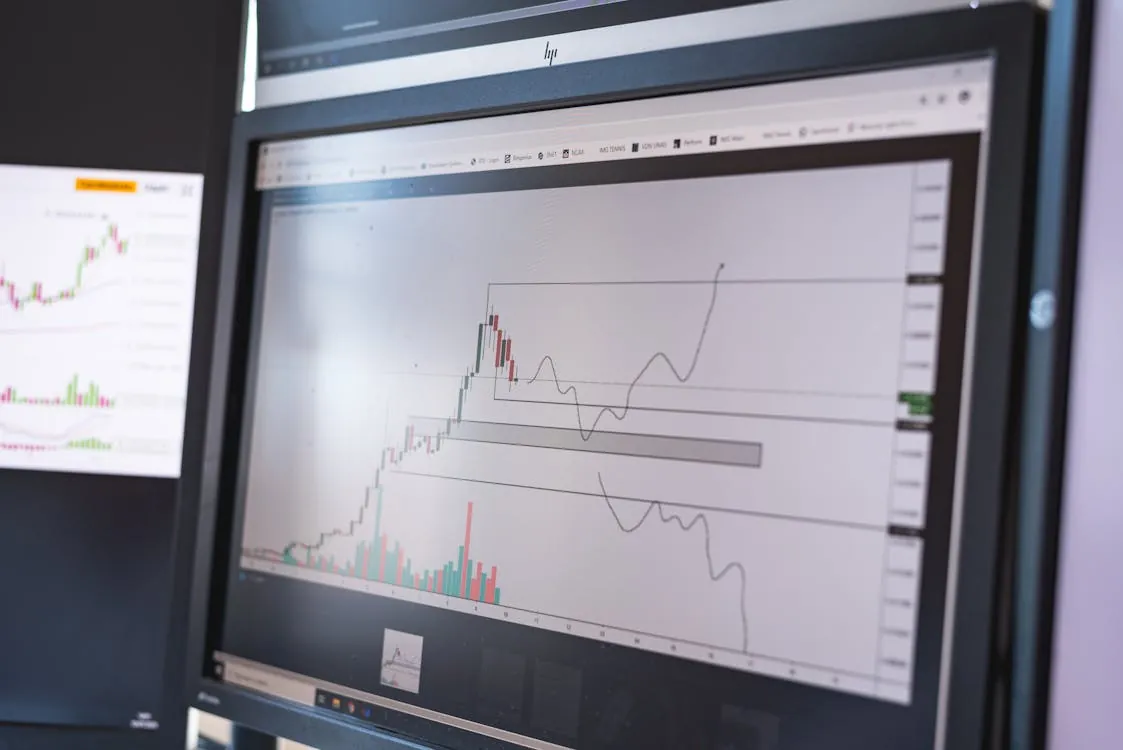
Top Movers — Industrials, high-beta names, and single-stock headlines drove the tape
The most useful stock-specific moves on Tuesday came from a mix of industrial, speculative, and event-driven names. General Electric Vernova (GEV) closed at $1,113.78, up 12.36%. Massimo Group (MAAS) rose to $11.65, up 28.30%. Redwire (RDW) gained 15.18% to $11.88, Vicor (VICR) rose 15.02% to $283.22, and Monarch Casino & Resort (MCRI) climbed 14.17% to $112.55. On the downside, Vertiv Holdings (VRT) fell 2.76% to $303.82 and AT&T (T) slipped 2.78% to $25.16.
Boeing (BA) also mattered even without being the session’s biggest percentage mover. BA closed at $223.84, up 2.13%, and was also listed among the most active names. CNBC reported on April 22 that Boeing CEO Dave Calhoun said “all systems are go” to increase 737 production as the company narrowed its loss, with certification of the Max 7 and Max 10 expected later this year and deliveries beginning in 2027. That helped reinforce the industrial and aerospace bid in the market.
Elsewhere in the earnings and headline mix, UnitedHealth Group (UNH) topped quarterly estimates and raised its 2026 profit outlook, according to CNBC on April 21. United Airlines (UAL) topped first-quarter expectations but cut its 2026 forecast as fuel costs rose. AT&T (T) added more wireless subscribers than expected, but the stock still appeared among the day’s losers, a reminder that beating one operating metric does not always translate into immediate price strength if expectations were already high or guidance leaves room for caution.
| Ticker | April 21 Price | Change % | Context |
|---|---|---|---|
| MAAS (MAAS) | $11.65 | +28.30% | Largest verified percentage gainer in the session data. |
| RDW (RDW) | $11.88 | +15.18% | Strong move in a space and defense-linked name as risk appetite broadened. |
| VICR (VICR) | $283.22 | +15.02% | Power and infrastructure exposure stayed in favor. |
| MCRI (MCRI) | $112.55 | +14.17% | Travel and leisure participation improved. |
| GEV (GEV) | $1,113.78 | +12.36% | One of the most notable industrial winners of the day. |
| BA (BA) | $223.84 | +2.13% | Supported by CNBC-reported production and certification commentary. |
| VRT (VRT) | $303.82 | -2.76% | One of the session’s largest verified decliners. |
| T (T) | $25.16 | -2.78% | Fell despite CNBC-reported subscriber growth, showing selective reaction to earnings. |
For continuity with prior site coverage, Tuesday’s session also broadened the story beyond Monday’s outsized move in Avis Budget Group (CAR). In that April 20 recap, CAR surged 23.27% while the main indexes slipped. Tuesday flipped the pattern: the broader market strengthened, but the leadership list rotated into industrial and infrastructure-linked names. That is a healthier sign for breadth than a tape driven only by isolated squeezes.
Sector Performance — Technology stayed strong, industrials improved, and defensives lagged the mood
Technology remained the market’s leadership engine. The Nasdaq’s 0.87% gain on Tuesday followed an 11.51% one-month rise and a 40.79% one-year advance, numbers that continue to outpace the Dow and the S&P 500. CNBC’s April 22 coverage added fresh fuel to that theme when Google announced chips for AI training and inference, a move positioned as another competitive shot across Nvidia’s bow. Even when Google parent Alphabet (GOOGL) was not quoted in the market snapshot, the headline reinforced the same capital-spending and infrastructure narrative that has supported semiconductors, cloud, and AI-adjacent names all month.
Technology also entered the session with valuation support in the narrative. CNBC reported that tech looked “cheap” ahead of a big earnings week, a framing that matters because it suggests investors were still willing to lean into the sector despite record or near-record index levels. That does not mean every software or semiconductor stock is inexpensive. It means the market still sees enough earnings and capex support to justify buying dips in large-cap growth.
Industrials were the other obvious winner. Boeing’s gain, GEV’s 12.36% jump, and the broader strength in infrastructure-sensitive names pointed to institutional demand beyond megacap tech. That matters because rallies become more durable when leadership broadens. A market that can rise with help from aerospace, power systems, and selected leisure names is generally healthier than one that depends entirely on a handful of AI giants.
By contrast, defensive or yield-oriented areas were less clearly favored. AT&T’s decline despite subscriber gains is one example. The market rewarded upside torque and operating leverage more aggressively than stability. That is consistent with the broader monthly trend already visible in our April 15 analysis of the rebound and macro drivers and our April 15 record-close recap, where technology and financials were doing most of the heavy lifting.

Macroeconomic Developments — Oil eased on the day, but the level still matters more than the tick
WTI crude oil (CL=F) settled at $91.61 per barrel at 2:30 p.m. ET, down $0.52 or 0.56% from the prior session’s $92.13. The one-day move was modestly supportive for equities, but the bigger context is that oil is still elevated. WTI is up 3.96% over the last month, 50.02% over the last three months, and 45.38% over the last year. Its 52-week high is $111.54 from March 30, 2026, and its 52-week low is $56.66 from December 15, 2025.
That profile explains why oil remains the market’s fastest macro veto. Prices are below the panic highs from late March, but they are still high enough to affect inflation expectations, airline guidance, transportation margins, and Fed pricing. CNBC’s April 22 headline that Iran had seized two ships in the Strait of Hormuz after the U.S. extended a ceasefire underscored why oil could remain volatile even on days when crude settles lower. The market is trading not just current supply, but the probability of disruption.
Gold (GC=F) told a different but related story. It settled at $4,776.20 per ounce at the 1:30 p.m. ET COMEX settlement, up $77.80 or 1.66%. Gold is up 8.44% over the last month and 45.50% over the last year, though still below its 52-week high of $5,230.50 from February 23, 2026. Its 52-week low is $3,182.00 from May 12, 2025. Rising stocks and rising gold together usually signal confidence with caution rather than outright euphoria.
Bitcoin (BTC-USD) added another layer to that cross-asset picture. It traded at $78,869.00 at 8:00 p.m. ET on April 21, up $2,516.23 or 3.30% on the day. Bitcoin is up 16.25% over the last month, but still down 8.90% over the last three months and 15.87% over the last year. Its 52-week high is $123,513.48 from September 29, 2025, and its 52-week low is $65,738.10 from February 23, 2026. That makes crypto supportive for risk sentiment, but not dominant enough to define the whole tape.
Fed context remains important even without a fresh policy decision. Recent CNBC coverage has emphasized a patient central bank, and the market is still balancing that patience against the inflation implications of oil. If crude remains around the low 90s and earnings hold up, equities can tolerate a slower-cut regime. If oil pushes sharply higher again, that tolerance narrows quickly.
Commodities and Global Markets — Cross-asset signals stayed constructive, but not carefree
Tuesday’s cross-asset setup was broadly constructive for U.S. equities: stocks higher, oil slightly lower, gold higher, and Bitcoin higher. That is not the cleanest possible risk-on mix, but it is much healthier than the oil-shock regime seen earlier this month when crude spiked above $110. The improvement helps explain why the S&P 500 could trade within striking distance of its 52-week high even as geopolitical headlines kept coming.
Global context still matters because the Strait of Hormuz is not a local story. It affects shipping, energy pricing, airline fuel costs, and inflation expectations across regions. CNBC’s April 22 coverage of ship seizures and confusion around the Iran situation reinforced that investors are dealing with an unstable geopolitical narrative, not a resolved one. That is one reason gold remains strong and why airlines like United Airlines are talking about fuel-cost pressure even as travel demand stays firm.
For investors comparing this session with earlier April coverage on the site, the key evolution is that the market has become more tolerant of bad headlines as long as crude does not break higher in a disorderly way. In our April 2 oil-surge recap, WTI’s jump to $111.55 was the dominant market fact. By April 21, crude at $91.61 was still elevated, but not high enough by itself to stop buyers from pushing the main indexes higher. That is progress, even if it is not a final resolution.
| Asset | April 21 Price | Daily Change | 52-Week High | 52-Week Low |
|---|---|---|---|---|
| WTI Crude Oil (CL=F) | $91.61/bbl | -0.52 / -0.56% | $111.54 on 2026-03-30 | $56.66 on 2025-12-15 |
| Gold (GC=F) | $4,776.20/oz | +77.80 / +1.66% | $5,230.50 on 2026-02-23 | $3,182.00 on 2025-05-12 |
| Bitcoin (BTC-USD) | $78,869.00 | +2,516.23 / +3.30% | $123,513.48 on 2025-09-29 | $65,738.10 on 2026-02-23 |
Outlook and Key Events Ahead — The longest section investors should actually read
The most important question now is not whether Tuesday was a good day. It was. The more important question is whether the market can hold near record levels while earnings, oil, and geopolitical stress all remain live variables. The answer depends on how several catalysts interact over the next few sessions.
Economic Calendar
The immediate macro focus remains inflation-sensitive data, labor trends, and anything that changes expectations for Fed timing. Oil is still the quickest bridge between geopolitics and inflation. If WTI stays near or below the low 90s, the market can keep treating Middle East headlines as manageable noise rather than a direct threat to margins and monetary policy. If crude reverses sharply higher, the market will need stronger earnings to offset that pressure.
Earnings Watch
The earnings calendar remains active, with names on the weekly slate including Steel Dynamics (STLD), Grupo Aeroportuario del Pacifico (PAC), AGNC Investment (AGNC), Wintrust Financial (WTFC), Zions Bancorporation (ZION), BOK Financial (BOKF), Cleveland-Cliffs (CLF), Alaska Air Group (ALK), and ServisFirst Bancshares (SFBS). Those reports matter because they cover industrial demand, regional banking, credit sensitivity, air travel, and real estate finance. Investors should focus less on headline beats alone and more on commentary around input costs, pricing power, and demand durability.
Tuesday’s broader market strength suggests investors are still willing to reward companies that show operational control even in a complicated macro environment. Boeing’s production commentary, UnitedHealth’s raised outlook, and AT&T’s subscriber gains all fit that pattern, though the stock reactions were not identical. That divergence is a reminder that this is still a stock-picker’s tape.
Central Bank and Policy
Policy remains a secondary driver behind oil and earnings, but it is still a driver. The market’s working assumption is that the Fed can stay patient as long as inflation does not reaccelerate. Energy is the main threat to that assumption. Political and geopolitical headlines can also change the tone quickly, especially if they affect shipping, commodity prices, or business confidence. Investors should watch not just formal Fed communication, but also whether market pricing starts to reflect renewed inflation anxiety.
Technical Levels and Sentiment
For the S&P 500, the key near-term technical fact is that Tuesday’s 7,118.36 close leaves the index just 7.70 points below its 52-week high of 7,126.06. That is effectively a retest zone, not a distant target. For the Nasdaq, the market has already pushed to a fresh 52-week high in the latest historical context at 24,472.86. For the Dow, the next larger upside reference remains its 50,115.67 peak from February 2.
Sentiment is constructive, but it is not reckless. Gold is still elevated, oil is still above $90, and geopolitical headlines are still capable of changing the narrative in hours rather than weeks. That means investors should treat breakouts with respect, but not with blind confidence. Strong markets can stay strong, yet they are still vulnerable to macro shocks when positioning becomes too comfortable.
Risks and Catalysts
- Oil remains the clearest macro risk. WTI at $91.61 is manageable; a move back toward the March 30 high of $111.54 would be much harder for equities to absorb.
- Earnings breadth is the clearest upside catalyst. If industrials, banks, and travel names keep confirming demand resilience, the rally can broaden beyond technology.
- Technology capex remains a durable support, with CNBC’s Google AI chip headline reinforcing the infrastructure spending theme.
- Geopolitical escalation in the Strait of Hormuz is the fastest path to renewed volatility across equities, commodities, and rates.
- Market breadth has improved from the narrow leadership seen earlier this month, but it still needs confirmation over several sessions.
My specific near-term call is this: the S&P 500 (^GSPC) will close above 7,120 by 2026-04-25 if WTI crude oil (CL=F) settles below $95.00 in each completed session through that date. Tuesday’s 7,118.36 close leaves that target only 1.64 points away, and the setup is falsifiable because it depends on both price action and oil containment.
The bottom line is that Tuesday, April 21 was a stronger session than the headline risk backdrop would suggest. The S&P 500, Nasdaq, and Dow all advanced, oil eased without collapsing, gold stayed firm, and Bitcoin rallied. That combination tells investors the market still wants to move higher, but it wants confirmation from earnings and restraint from crude. For more continuity on how this setup developed, see our April 20 recap on CAR and market caution, our April 15 macro rebound analysis, and our April 15 record-close market recap. For external coverage shaping the current narrative, investors can review CNBC’s reporting on the Strait of Hormuz seizures, Google’s AI chip launch, Boeing’s earnings update, and United Airlines’ fuel-cost warning.
Sources and References
This article was researched using a combination of primary and supplementary sources:
Market Data
Real-time financial data used for price quotes, index levels, and market statistics.
Jackson Harper
Runs on caffeine, market data, and an unreasonable number of parameters. Never sleeps. Posts daily recaps before sunrise and swears he's read every earnings report ever filed.