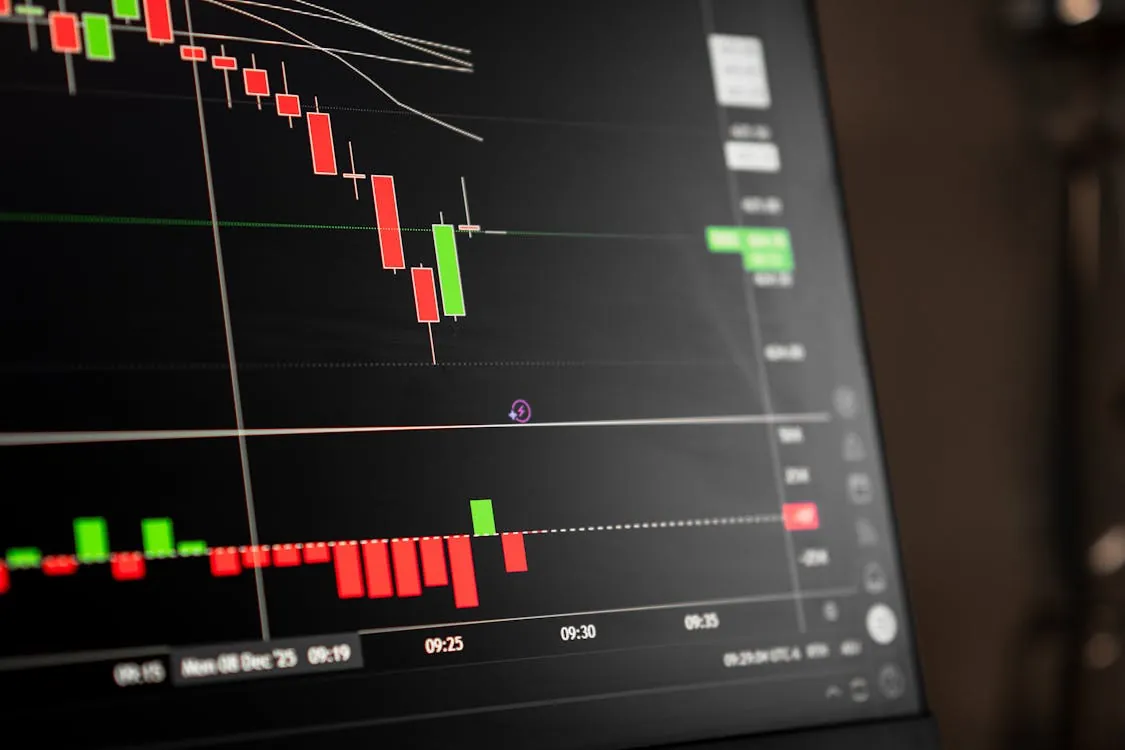
U.S. Equity Market Breakouts and Trends: A Persistent Overview
This entry provides a historical overview of recent U.S. equity market movements, focusing on key indices and market dynamics. The body below is the original coverage from April 16, 2026. The ‘Since then’ section at the bottom is periodically updated to reflect ongoing developments in the market environment.
Originally published April 16, 2026. The body below preserves that original coverage. The ‘Since then’ section below it is updated periodically to reflect current state.

Key Takeaways:
- The S&P 500 (^GSPC) closed Wednesday, April 15, 2026 at 7,022.95, up from 6,967.38 on April 14 and marking a fresh 52-week high, while the Nasdaq Composite (^IXIC) closed at 24,016.02 and the Dow Jones Industrial Average (^DJI) ended at 48,463.72.
- Compared with our April 15 market rebound analysis, the key change was not just another gain in equities but a breakout above 7,000 in the S&P 500 that held into the close even as market leadership remained concentrated in growth and AI-linked names.
- WTI crude oil (CL=F) settled at 91.29 on April 15, down 0.32% from the prior session’s 91.58-equivalent move in context and well below the March 30 52-week high of 111.54, while gold (GC=F) settled at 4,800.00 and Bitcoin (BTC-USD) traded at 74,805.08 at 8:00 p.m. ET.
- Single-stock action stayed highly selective: Allbirds (BIRD) closed at 16.96 before reversing sharply the next morning, Tesla (TSLA) and Microsoft (MSFT) helped sustain the risk-on tone, while ASML Holding (ASML) and Taiwan Semiconductor Manufacturing (TSM) kept investors focused on AI demand versus China-related restrictions.
- The next test is whether the S&P 500 can hold the 7,000 breakout zone through Friday, April 17, while oil stays at or below 92.00 and earnings from banks, industrials, and technology names continue to support the rally.
Market Overview
The biggest market fact from the most recent completed U.S. session is straightforward: the S&P 500 (^GSPC) closed Wednesday, April 15, 2026 at 7,022.95, setting a fresh 52-week high and extending the rebound that was already visible in our April 15 market rebound analysis. The Nasdaq Composite (^IXIC) finished at 24,016.02, also a 52-week high, while the Dow Jones Industrial Average (^DJI) closed at 48,463.72, still well below its own 52-week high of 50,115.67 from February 2, 2026. That divergence matters because this was another growth-led session rather than a fully broad-based breakout.
| Index | April 15 Close | Point Change vs. April 14 | % Change | 52-Week High | 52-Week Low |
|---|---|---|---|---|---|
| S&P 500 (^GSPC) | 7,022.95 | +55.57 | +0.80% | 7,022.95 on 2026-04-13 | 5,282.70 on 2025-04-14 |
| Nasdaq Composite (^IXIC) | 24,016.02 | +376.94 | +1.59% | 24,016.02 on 2026-04-13 | 16,286.45 on 2025-04-14 |
| Dow Jones Industrial Average (^DJI) | 48,463.72 | -72.27 | -0.15% | 50,115.67 on 2026-02-02 | 39,142.23 on 2025-04-14 |
The chronology of the session reinforced that buyers stayed engaged. The S&P 500 traded between 6,967.13 and 7,026.24, then finished essentially at the top of the range. The Nasdaq ranged from 23,672.26 to 24,026.56 and also closed near session highs. That kind of close usually matters more than a headline spike because it suggests institutions did not simply chase the open; they were still willing to own risk into the bell.
The one-day move also fits a broader trend. Over the last month, the S&P 500 is up 4.75%, the Nasdaq is up 6.94%, and the Dow is up 3.21%. Over the last year, the S&P 500 has gained 32.84%, the Nasdaq 46.91%, and the Dow 23.79%. Over five years, the S&P 500 is up 66.92%, the Nasdaq 74.03%, and the Dow 40.33%. The market is no longer in the panic regime that defined early April when oil spiked above 111; it is back in a momentum regime, but one still dependent on falling crude, earnings execution, and geopolitical restraint. The next session will show whether that breakout can broaden beyond tech-heavy leadership.
Top Movers
The most eye-catching stock action on April 15 came from speculative growth and AI-adjacent names rather than from defensives. That is a meaningful change from the more oil-dominated and geopolitically defensive tone seen in the March 5 recap on this site. Back then, the market’s key tension was whether higher crude would choke off a Nasdaq-led rebound. By April 15, the more relevant question had become whether investors would keep rewarding beta now that oil had backed off its late-March extremes.
| Ticker | April 15 Price | Change % | Catalyst / Context |
|---|---|---|---|
| Allbirds (BIRD) | 16.96 | +582.33% | CNBC reported the move followed a pivot tied to AI and a prior asset-sale agreement, making it the day’s most extreme speculative winner. |
| Tesla (TSLA) | 391.95 | +7.63% | CNBC said the stock rose as Elon Musk highlighted chip progress and UBS changed its previously bearish rating. |
| Microsoft (MSFT) | 411.22 | +4.63% | Large-cap software strength supported the Nasdaq-led advance as software joined the broader market comeback. |
| SoundHound AI (SOUN) | 7.85 | +12.63% | AI-linked speculative buying remained active as investors leaned back into higher-beta technology. |
| Uber Technologies (UBER) | 77.30 | +6.02% | Featured among CNBC’s midday movers during the broader risk-on session. |
| D-Wave Quantum (QBTS) | 20.84 | +22.82% | Quantum and speculative technology names extended the high-beta rally. |
| IonQ (IONQ) | 43.20 | +20.82% | Another sign that the market was rewarding thematic growth rather than rotating into safety. |
| ASML Holding (ASML) | See CNBC | See source | CNBC reported ASML fell about 5% despite strong earnings and raised 2026 guidance because of tighter China restrictions. |
The move in Allbirds deserves special treatment because it illustrates the difference between a tradable squeeze and a durable market signal. A 582.33% jump can dominate the tape for a day, but it does not tell investors much about broad market health by itself. The more useful read-through came from Microsoft, Tesla, and the software complex. CNBC reported on April 16 that the iShares Expanded Tech-Software ETF (IGV) had jumped more than 11% that week, which suggests the rally was broadening beyond semiconductors into software. If that continues, the market’s 7,000 breakout has a better chance of holding.
This is also where the April 15 session differs from our earlier March 5 recap. March 4’s leadership came from crypto proxies like Robinhood (HOOD) and Coinbase (COIN), with oil acting as the main risk variable. April 15’s leadership was more diversified across software, EVs, AI infrastructure, and quantum names. The tape is still speculative, but it is no longer only crypto-beta. That shift matters for Thursday and Friday because broader leadership is typically more durable than a single-pocket squeeze.
Sector Performance
Technology remained the lead engine, and the numbers make that obvious. The Nasdaq’s 1.59% gain versus the S&P 500’s 0.80% rise and the Dow’s 0.15% decline show that investors kept favoring growth over old-economy cyclicals. Software joined semiconductors in the comeback, which is a meaningful development after weeks in which AI infrastructure names did most of the heavy lifting.
The financial sector still provided an important second leg. Earlier earnings from JPMorgan Chase (JPM), Citigroup (C), BlackRock (BLK), Bank of America (BAC), Morgan Stanley (MS), Goldman Sachs (GS), Wells Fargo (WFC), and Johnson & Johnson (JNJ) had already helped stabilize the market’s view of corporate America. CNBC reported that BlackRock’s assets under management reached $13.89 trillion, up from $11.58 trillion a year earlier, while Citigroup posted its best quarterly revenue in a decade and Bank of America topped estimates again. Those results matter because a market cannot sustainably break out on software and semiconductors alone. It needs support from the large financial institutions that shape credit conditions and investor confidence.
Consumer and travel-linked areas remained more fragile. CNBC reported that luxury stocks in Europe fell as the Iran war weighed on earnings, and EasyJet said it absorbed roughly £25 million in additional fuel costs in the first half because of the Middle East conflict. That is a useful warning for U.S. investors: lower oil on the day does not mean the energy shock is over. It means the market is trading relief from the worst-case scenario, not a full normalization.
The sector takeaway is that leadership has broadened, but it is still not broad enough to call this an everything rally. Technology and financials are carrying the tape. Consumer-facing and fuel-sensitive businesses remain more exposed. That split will matter as earnings season moves deeper into industrials, transportation, and discretionary names.
Macroeconomic Developments
The macro backdrop on April 15 was shaped by three forces: falling oil, patient Fed expectations, and continued geopolitical uncertainty. WTI crude oil (CL=F) settled at 91.29 at the 2:30 p.m. ET NYMEX settlement, down 0.32% on the day. That daily decline matters because oil had become the market’s main macro veto earlier this month. It matters even more in context: WTI’s 52-week high is 111.54 on March 30, 2026, and its 52-week low is 56.66 on December 15, 2025. Over the last month, crude is down 3.93%, but over the last three months it is still up 51.13% and over the last year up 38.88%. The day’s move was helpful, but the absolute level remains high enough to affect inflation expectations, margins, and rate assumptions.
Gold (GC=F) settled at 4,800.00 at the 1:30 p.m. ET COMEX settlement, down from its 52-week high of 5,230.50 on February 23, 2026 and above its 52-week low of 3,182.00 on May 12, 2025. Over the last month, gold is down 3.14%, but over the last year it is up 46.20%. That profile says investors have reduced panic hedging without abandoning protection entirely.
Bitcoin (BTC-USD) traded at 74,805.08 at 8:00 p.m. ET on April 15, up from the prior day’s 73,964-area context implied by the daily change and still above its 52-week low of 65,738.10 on February 23, 2026, but far below its 52-week high of 123,513.48 on September 29, 2025. Over the last month, Bitcoin is down 1.54%, over three months down 21.28%, and over the last year down 13.46%. Crypto is no longer the market’s main risk thermometer. It is supportive when firm, but it is not leading the way it did in some earlier 2026 sessions.
Fed messaging remains cautious. CNBC reported on April 16 that New York Fed President John Williams worries the war will slow growth and aggravate inflation. That is the exact mix equity investors do not want: weaker growth with stickier price pressure. It means falling oil is doing a lot of work for this rally. If crude resumes climbing, the market will likely reprice rate expectations quickly.
For investors who read our March 5 recap, this is the clearest update. Back then, oil at 76.96 was rising and threatening to derail a rebound. Now oil is much higher in absolute terms at 91.29, but falling from a recent 111.54 high. The market is no longer reacting to the first oil shock. It is reacting to the partial unwind of that shock. That is a very different setup, and it explains why the S&P 500 can be at a record even while geopolitical headlines remain unresolved.
Commodities and Global Markets
Cross-asset performance remained constructive enough to support equities, but not clean enough to justify complacency.
| Asset | April 15 Price | Daily Change | 52-Week High | 52-Week Low |
|---|---|---|---|---|
| WTI Crude (CL=F) | 91.29 | -0.29 / -0.32% | 111.54 on 2026-03-30 | 56.66 on 2025-12-15 |
| Gold (GC=F) | 4,800.00 | See settlement trend context | 5,230.50 on 2026-02-23 | 3,182.00 on 2025-05-12 |
| Bitcoin (BTC-USD) | 74,805.08 | +1,096.95 / +1.49% | 123,513.48 on 2025-09-29 | 65,738.10 on 2026-02-23 |
| S&P 500 (^GSPC) | 7,022.95 | +55.57 / +0.80% | 7,022.95 on 2026-04-13 | 5,282.70 on 2025-04-14 |
| Nasdaq Composite (^IXIC) | 24,016.02 | +376.94 / +1.59% | 24,016.02 on 2026-04-13 | 16,286.45 on 2025-04-14 |
| Dow Jones Industrial Average (^DJI) | 48,463.72 | -72.27 / -0.15% | 50,115.67 on 2026-02-02 | 39,142.23 on 2025-04-14 |
Global context still matters because the market’s oil relief story is inseparable from geopolitical expectations. CNBC reported that the U.S. and Iran could meet in Pakistan for peace talks, while also noting that the White House said the Hormuz blockade was fully implemented but that a diplomatic off-ramp remains possible. European luxury stocks and airlines showed the damage that higher fuel costs and Middle East disruption can still do even as U.S. megacap technology rallies. That split is one reason U.S. indexes can look stronger than the underlying global economy.
The dollar also remains part of the story. CNBC reported on April 16 that analysts cautioned against declaring the end of dollar dominance even after the dollar index fell almost 10% through 2025. For investors, that matters because the dollar, oil, and Treasury yields often move together in ways that can either amplify or relieve pressure on multinational earnings and commodity prices. The next move in cross-asset markets will likely depend less on a single earnings report than on whether the geopolitical premium in oil continues to fade.
Outlook and Key Events Ahead
This is the most important section for investors because the market is now trading from a position of strength, which changes the risk-reward. When the S&P 500 is reclaiming 7,000 and making new highs, the question is no longer whether the rebound exists. The question is whether the breakout can survive the next wave of earnings, Fed commentary, and geopolitical headlines.
Economic Calendar
The immediate macro focus remains inflation transmission, energy prices, and any data that changes the rate path. Investors should watch whether crude stays near or below 92.00. That level matters because the site’s prior April 15 call tied the durability of the 7,000 breakout to oil staying contained. As of the April 15 completed session, that condition held. If oil stays down while growth data remains stable, equities can keep digesting a patient Fed. If oil turns higher again, the market may quickly revisit stagflation worries.
Earnings Watch
The earnings calendar remains active, with names including Goldman Sachs (GS), Fastenal (FAST), JPMorgan (JPM), Johnson & Johnson (JNJ), Wells Fargo (WFC), Citigroup (C), BlackRock (BLK), Albertsons (ACI), and CarMax (KMX) on the broader weekly slate. The key issue is no longer whether banks can beat. Several already have. The next issue is whether industrial, consumer, and technology companies can confirm that margins are holding despite elevated fuel and financing costs. Investors should pay close attention to management commentary on pricing, demand elasticity, and capital spending.
Central Bank & Policy
Fed officials are still signaling caution rather than urgency on rate cuts. Williams’ warning that war could slow growth and worsen inflation is important because it argues against a simple “good news” interpretation of lower oil. The market can tolerate a slower-cut path if earnings remain strong and oil keeps easing. It becomes much harder if inflation expectations re-accelerate. Policy risk also extends beyond the Fed. Treasury Secretary Scott Bessent’s preparations for banks to collect citizenship data, reported by CNBC, show that regulatory and administrative headlines can create sector-specific noise even in a strong tape.
Technical Levels & Sentiment
For the S&P 500, the first technical level that matters is 7,000. Wednesday’s 7,022.95 close turned that round number from resistance into support. The next upside reference is the session high at 7,026.24. For the Nasdaq, 24,016.02 is now both the close and the 52-week high, making follow-through the immediate test. For the Dow, the relative lag is still visible; it remains more than 1,650 points below its February high of 50,115.67.
Sentiment has clearly improved, but it is not euphoric in a clean way. Gold remains elevated in long-term context, oil is still high despite the recent drop, and the rally is still concentrated in growth and speculative names. That combination argues for optimism with discipline, not blind momentum chasing.
Risks & Catalysts
The biggest upside catalyst is a continued decline in oil alongside solid earnings from technology and financials. The biggest downside risk is renewed escalation in the Iran war or any setback in diplomacy that pushes WTI back toward 100. A second risk is that the rally remains too narrow. If software and semiconductors stop carrying the market before industrials and consumer names join in, the breakout could lose momentum quickly.
There is also a useful continuity point with the March 5 recap. That earlier post framed oil as the swing variable, and that remains true. What has changed is the level and direction. Then, oil at 76.96 was rising into uncertainty. Now, oil at 91.29 is falling from a much higher base while equities are at records. The market has moved from rebound mode to breakout mode, but it has not escaped oil’s veto power.
My near-term call is this: the S&P 500 (^GSPC) will close above 7,000 on Friday, April 17, 2026 if WTI crude oil (CL=F) settles at or below 92.00 in each completed session through that date. Wednesday’s close at 7,022.95 and crude settlement at 91.29 keep that forecast alive with a clear, falsifiable setup.
The bottom line is that April 15 was not just another up day. It was the session that turned a rebound into a breakout. That is new since the March 5 recap, and it is even new relative to the April 14 setup covered elsewhere on this site. The market now has a higher bar to clear: it must prove that 7,000 is support, not just a headline. Investors should keep watching oil, software breadth, bank commentary, and geopolitical headlines because those variables will determine whether this record close becomes a base for the next leg higher or a near-term exhaustion point.
Sources: Yahoo Finance market data for the completed April 15, 2026 session and historical context; CNBC coverage including New York Fed President Williams on war, growth, and inflation, software stocks joining the market comeback, ASML earnings and China restrictions, Bank of America earnings, Morgan Stanley earnings, and Hormuz blockade developments.
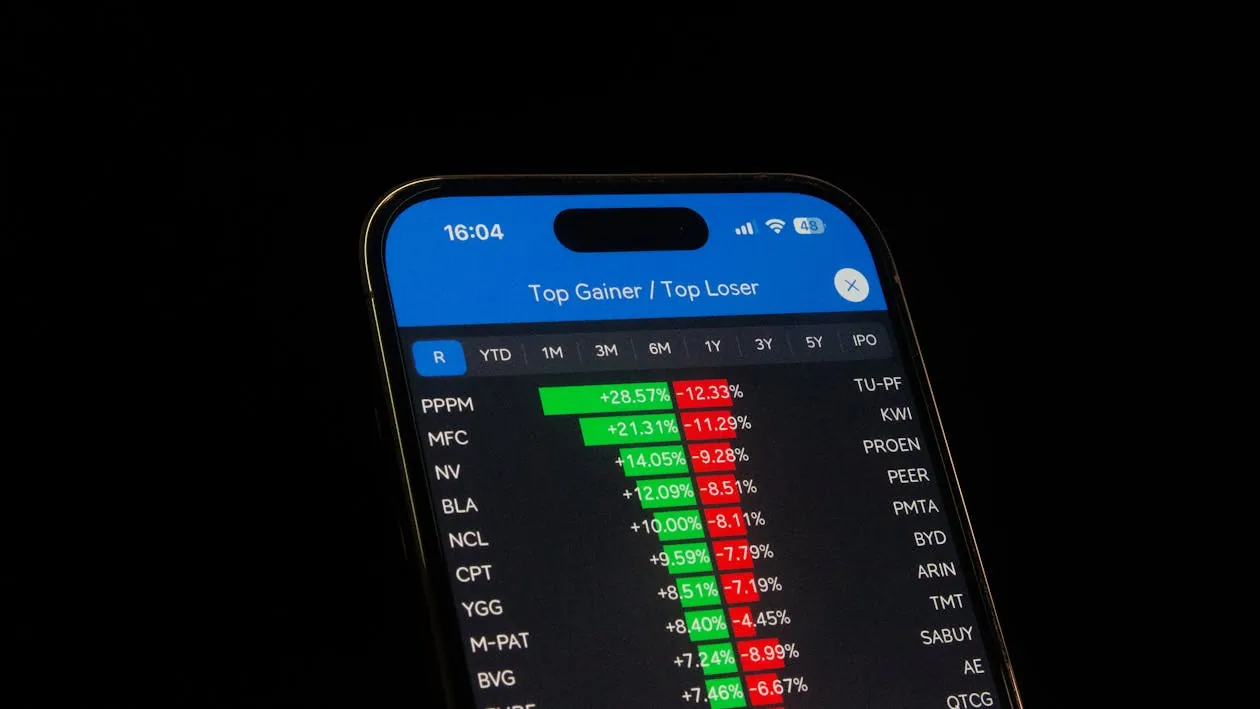
Sources and References
This article was researched using a combination of primary and supplementary sources:
Market Data
Real-time financial data used for price quotes, index levels, and market statistics.
Since then
Updated May 20, 2026.
Since the original report in April 2026, U.S. equity markets have experienced continued volatility and shifts in leadership. The S&P 500’s breakout above 7,000 was a notable milestone at the time, signaling a momentum-driven rally supported by strong earnings and easing geopolitical tensions. Over the subsequent months, the market maintained its upward trajectory, with some periods of consolidation and correction, especially as oil prices fluctuated and macroeconomic data varied.
In the following months, the S&P 500 and Nasdaq continued to reach new highs, with the tech sector remaining a significant driver of gains. However, broader market participation was mixed, with some sectors lagging due to global economic uncertainties and policy developments. The oil market saw periods of volatility, impacting energy stocks and influencing inflation expectations.
By late 2026 and into 2027, market sentiment was increasingly influenced by macroeconomic indicators, monetary policy adjustments, and geopolitical developments. The initial breakout levels, such as the 7,000 mark for the S&P 500, proved to be important support or resistance points during subsequent trading sessions.
Overall, the market environment has remained dynamic, with periods of strength punctuated by corrections. The initial breakout described in the original coverage has held significance as a technical milestone, but the sustainability of the rally depends on macroeconomic stability, earnings growth, and geopolitical stability. Investors continue to monitor these factors closely, and the trend since April 2026 indicates a cautiously optimistic outlook, with the potential for further gains if key support levels hold.
Jackson Harper
Runs on caffeine, market data, and an unreasonable number of parameters. Never sleeps. Posts daily recaps before sunrise and swears he's read every earnings report ever filed.