Market Cap Surge 2024: Investor Impacts
Nvidia (NVDA) surged 171.2% in 2024, while top U.S. banks increased their combined market value by about 30%, making that year one of the clearest examples of how concentrated leadership can add trillions of dollars to equity market capitalization in a short period. The chip rally, bank re-rating, and global scale of listed assets remain relevant in 2026 because investors are still deciding whether the same companies deserve premium valuations after such a huge expansion in market value.
Key Takeaways:
- Nvidia (NVDA) was the defining stock in the 2024 market value boom, with its share price up 171.2%, according to S&P Global Market Intelligence data cited by The Motley Fool.
- The combined market capitalization of the top 10 U.S. banks reached a record $2.2 trillion in 2024, with Voronoi describing the group as up about 30% for the year in its U.S. Top 10 Banks’ Market Cap Surges 30% in 2024 chart.
- LSEG’s 2024 market-size chart pack said global markets exceeded $1 quadrillion in 2023, giving investors a scale reference for why even small percentage shifts in large asset classes create large dollar-value changes.
- The rally was broad enough to include banks but concentrated enough to leave 2026 investors exposed to valuation risk in AI hardware, mega-cap technology, and rate-sensitive financial stocks.
- The main 2026 question is earnings durability: companies that gained market value quickly now need revenue, margins, capital returns, and balance-sheet strength to support those higher valuations.

Market Overview 2026: The Market Cap Surge Was Concentrated, but It Was Not Only a Tech Story
The 2024 expansion in equity value had two main engines: artificial-intelligence-linked technology stocks and a recovery in large U.S. banks. Nvidia (NVDA) was the most visible leader because its share price climbed 171.2% in 2024, with the move tied to demand for AI graphics processors, earnings beats, and its stock split, according to Yahoo Finance’s republication of Nvidia’s 2024 performance story. That type of gain changes index math because a mega-cap company adds more market value per percentage point than a smaller company can add after a much larger move.
The bank side of the story was different. JPMorgan Chase (JPM), Bank of America (BAC), Wells Fargo (WFC), Citigroup (C), Morgan Stanley (MS), Goldman Sachs (GS), Charles Schwab (SCHW), PNC Financial (PNC), U.S. Bancorp (USB), Truist Financial (TFC), and Capital One (COF) were part of the U.S. top-bank group tracked by Voronoi. Voronoi’s market chart said the combined market capitalization of the group reached a record $2.2 trillion in 2024 and described the increase as roughly 30% for the year in its U.S. bank market capitalization review.
The global scale makes the dollar impact larger than percentage figures suggest. LSEG’s “Size of global market 2024 in charts” said global markets exceeded $1 quadrillion in 2023, which puts the 2024 equity advance into a larger cross-asset frame, as shown in the LSEG chart pack. When listed equities, bonds, derivatives, and other financial assets sit at that scale, valuation changes in a handful of large sectors can reshape portfolio risk quickly.
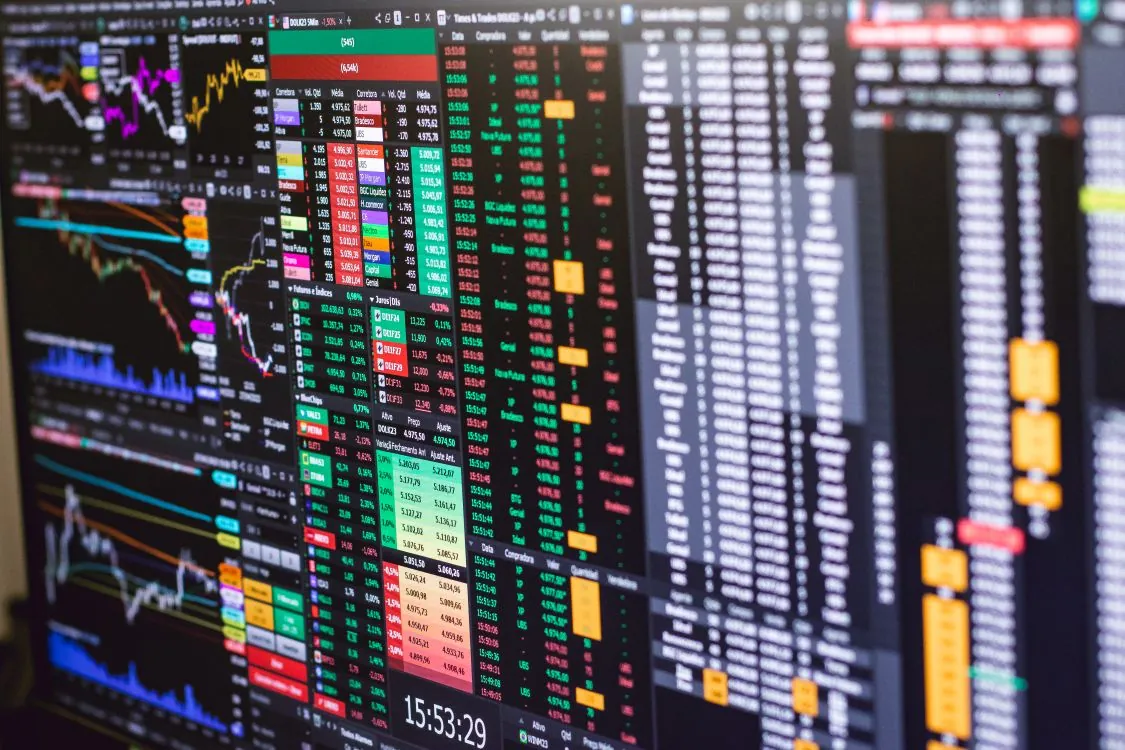
The 2026 investor lesson is that market value growth should be separated from business quality. Nvidia’s 171.2% stock gain reflected a sharp repricing of expected AI demand, while the bank rally reflected improved investor appetite for large financial franchises. Both moves can be justified by better fundamentals, but both also raise the bar for future earnings.
Verified Market Cap Evidence 2026: The Numbers That Define the Surge
The cleanest way to read the 2024 market capitalization boom is to split it into documented catalysts. The following table includes only figures that appeared in cited market summaries, and each row points to the source that carried the number.
| Market area | Verified figure | Why it mattered for investors | Source |
|---|---|---|---|
| Nvidia (NVDA) | Share price up 171.2% in 2024 | The move showed how AI hardware demand could add market value at mega-cap scale. | The Motley Fool |
| Top U.S. banks | Combined market capitalization reached $2.2 trillion in 2024 | The financial sector added value even though the year’s strongest narrative came from technology. | Voronoi |
| Top U.S. banks | Market capitalization rose about 30% in 2024 | The gain signaled a large-cap bank re-rating rather than a narrow single-stock move. | Voronoi |
| Global markets | Exceeded $1 quadrillion in 2023 | The figure gives scale context for how small percentage changes in financial markets create large dollar movements. | LSEG |
| Single-day market value moves | 2024 included some of the largest U.S. market cap swings | The pattern raised the importance of liquidity, index concentration, and event risk in mega-cap stocks. | Yahoo Finance |
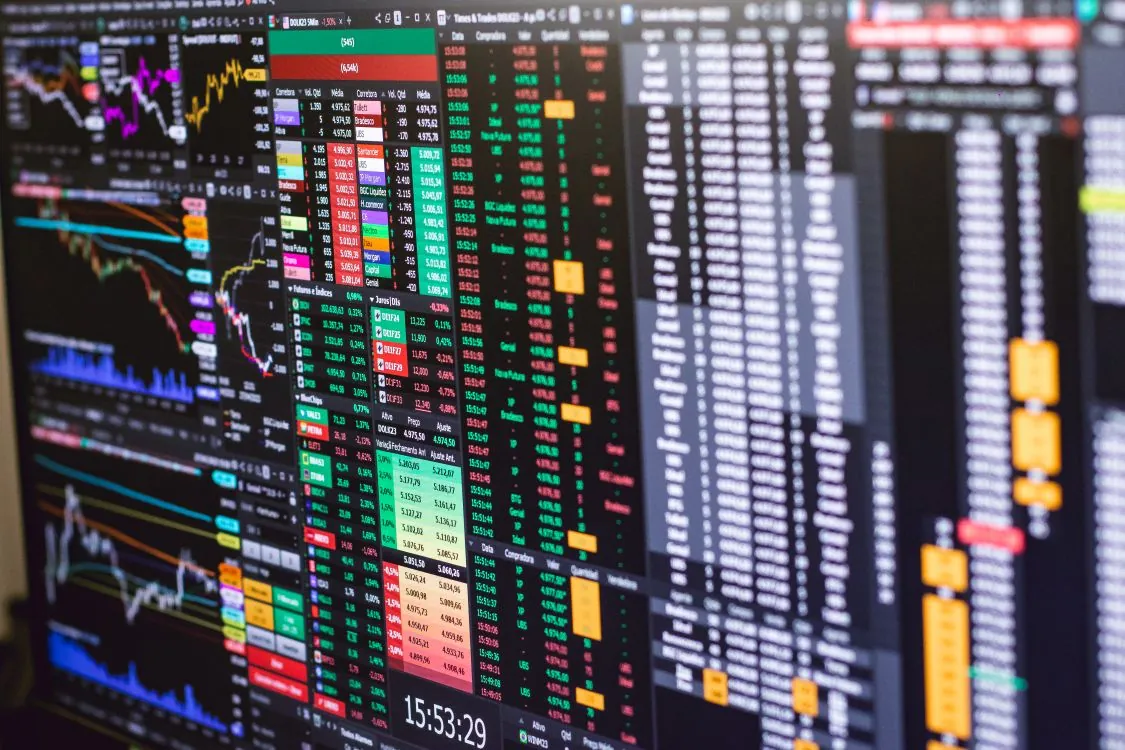
The facts point to a market where leadership was both powerful and narrow. Nvidia (NVDA), Microsoft (MSFT), Apple (AAPL), and other mega-cap technology companies were central to the AI valuation cycle, while banks added a separate financial-sector contribution. The result was a market where index investors benefited from concentration, but also became more dependent on that same concentration continuing to work.
Top Movers 2026: Nvidia Led, Banks Re-Rated, and Mega-Cap Risk Increased
Nvidia (NVDA) was the defining market value story because its 171.2% share-price gain combined a large starting valuation with fast-rising demand expectations. That matters more than a similar percentage move in a small company because market capitalization is share price multiplied by shares outstanding. A mega-cap company can add hundreds of billions of dollars in value even without being the best percentage performer in the entire market.
The banking group matters because it added a second engine to the rally. Voronoi’s U.S. bank chart listed JPMorgan Chase (JPM), Bank of America (BAC), Wells Fargo (WFC), Citigroup (C), Morgan Stanley (MS), Goldman Sachs (GS), Charles Schwab (SCHW), PNC Financial (PNC), U.S. Bancorp (USB), Truist Financial (TFC), and Capital One (COF) in the top-bank grouping, with combined value at a record $2.2 trillion in 2024, as shown in the Voronoi market cap chart. That list spans universal banks, investment banks, consumer banking, brokerage exposure, and regional banking scale.
| Ticker or group | Documented move or level | Market cap driver | Investor issue for 2026 |
|---|---|---|---|
| Nvidia (NVDA) | Up 171.2% in 2024 | AI GPU demand, earnings beats, and stock split cited in market coverage | Future revenue growth must support premium valuation |
| Top U.S. banks | Up about 30% in 2024 | Large-bank re-rating across group tracked by Voronoi | Credit quality, net interest income, capital returns, and policy rates matter more after the run-up |
| Top U.S. banks | Record $2.2 trillion combined market capitalization in 2024 | Broad increase across biggest U.S. banking names | Investors need to separate franchise quality from multiple expansion |
| U.S. mega-cap equities | Major market cap swings in 2024 | Large single-stock moves changed daily index behavior | Liquidity and event risk remain higher when index value depends on fewer stocks |
The table also shows the main trade-off. A rising market capitalization is good for existing shareholders, but it can make forward returns harder because future earnings need to justify a higher base. That is especially true in AI-linked hardware and software, where expectations can outrun reported cash flow if demand timing slips.
Sector Performance 2026: Technology Stocks Led the Charge, Banks Added Breadth
Technology stocks led the charge in 2024 market value expansion, with Nvidia (NVDA) becoming the clearest example of AI-driven repricing. The gain reflected investor belief that data centers, cloud platforms, and enterprise AI spending would create sustained demand for high-end processors.
There is a trade-off in that narrative. AI demand can be real while individual stock valuations still become stretched. Our 2026 analysis of TSMC capacity expansion and Apple’s hardware margin risk discussed the pressure created when advanced-chip demand tightens supply for large customers such as Apple (AAPL) and supports Taiwan Semiconductor Manufacturing Company (TSM). The same supply-demand tension that helps semiconductor suppliers can increase cost pressure for buyers and make the final profit pool harder to split.
Banks added breadth because the value increase was not limited to one technology chain. JPMorgan Chase (JPM), Bank of America (BAC), Wells Fargo (WFC), Citigroup (C), Morgan Stanley (MS), Goldman Sachs (GS), Charles Schwab (SCHW), PNC Financial (PNC), U.S. Bancorp (USB), Truist Financial (TFC), and Capital One (COF) cover different balance-sheet and fee-income models. A 30% increase in the combined value of that group suggests investors were willing to pay more for large financial institutions, not only for AI-linked growth stocks.
That breadth does not remove risk. Large banks still depend on credit conditions, loan growth, deposit costs, capital rules, trading activity, wealth-management flows, and the rate cycle. A bank market capitalization rally can reverse if investors start to price higher credit losses or lower profitability from the same balance sheets.
Macroeconomic Developments 2026: Why Market Cap Growth Can Outrun the Economy
Market capitalization can rise faster than the real economy when investors raise the multiple they are willing to pay for future earnings. That is what made 2024 so powerful for mega-cap technology. The market was paying for the possibility that AI infrastructure demand would expand the future profit pool for companies such as Nvidia (NVDA), Microsoft (MSFT), and Apple (AAPL).
The banking rally had a different macro channel. Banks can benefit when investors believe earnings, deposits, credit conditions, and capital returns are more durable than previously priced. A rising market value for banks can also reflect relief after a period of stress, because a lower perceived risk premium raises equity valuation even without explosive revenue growth.
The LSEG figure that global markets exceeded $1 quadrillion in 2023 is useful because it shows how financial markets can become larger and more sensitive than headline economic indicators imply. When the asset base is that large, a small shift in discount rates, growth expectations, or sector leadership can move market value by an amount that looks enormous next to annual corporate earnings. The implication for 2026 is direct: valuation discipline matters more when financial assets are already priced at scale.
This is also where the latest Sesame Disk company coverage offers contrast. In our Tourmaline Oil 2026 stock outlook, the issue was whether reserves, production, and capital spending could convert into per-share cash flow. That same cash-flow discipline now applies to companies that benefited from the 2024 market value surge.
Commodities and Global Markets 2026: The Trillion-Dollar Scale Changes Risk Management
The global market size reference matters because investors do not allocate capital in a vacuum. Equity market value competes with bonds, commodities, currencies, crypto assets, private markets, and cash. LSEG’s $1 quadrillion global market scale figure gives context for why asset-allocation changes can have large effects across sectors, as shown in the LSEG 2024 chart pack.
In a large global market, the distinction between company-specific value and asset-class flow becomes important. Nvidia (NVDA) can rise because of company-specific AI chip demand, while the same stock can also rise because global investors increase exposure to U.S. mega-cap growth. Banks can gain because earnings expectations improve, while also benefiting from broad flows into financials.
Crypto adds another example of how market capitalization can move quickly when liquidity concentrates. Our Bitcoin 2026 market recap discussed how Bitcoin (BTC-USD) can diverge from equities when risk appetite changes. The comparison is useful for equity investors because it shows that market value growth is strongest when narrative, liquidity, and positioning move together. It is weakest when one of those supports breaks.
Commodities are a useful check on equity optimism. If oil, gas, or gold signals stress, equity investors often reassess cyclicals, banks, and high-multiple growth. That does not mean every commodity move will break the stock rally. It means market capitalization should be read as a pricing signal, not as proof that the underlying economy has become equally stronger.
Outlook and Key Events Ahead 2026: What Investors Should Watch After the Market Cap Surge
Economic Calendar 2026: Inflation, Growth, and Rate Expectations
The main macro test for market capitalization in 2026 is whether inflation and growth data support the earnings assumptions embedded in high valuations. A high-multiple technology stock can tolerate slower economic growth if the company’s revenue keeps compounding, but it is more sensitive to discount-rate pressure when investors demand higher returns. Banks have the opposite sensitivity in many periods: they can benefit from certain rate environments, but credit stress can offset that benefit if loan quality weakens.
Investors should track inflation reports, employment data, GDP updates, and central-bank communication because those releases shape discount rates and risk appetite. The key is not a single number in isolation. The important market question is whether the data support earnings growth and capital returns for the companies that added the most value during the 2024 surge.
Earnings Watch 2026: The Profit Test for Mega-Cap Leaders
Earnings are the next stage of proof for Nvidia (NVDA), Microsoft (MSFT), Apple (AAPL), Taiwan Semiconductor Manufacturing Company (TSM), and the biggest U.S. banks. For Nvidia, investors need to see whether AI processor demand remains strong enough to justify the valuation created after a 171.2% stock gain in 2024. For Apple, the issue is whether hardware margins can absorb supply-chain and chip-cost pressure while still supporting its premium multiple.
For banks, the earnings watch is more balance-sheet focused. JPMorgan Chase (JPM), Bank of America (BAC), Wells Fargo (WFC), Citigroup (C), Morgan Stanley (MS), Goldman Sachs (GS), Charles Schwab (SCHW), PNC Financial (PNC), U.S. Bancorp (USB), Truist Financial (TFC), and Capital One (COF) need to support their higher combined market value with credit quality, fee income, net interest income, and capital-return plans. A $2.2 trillion combined market capitalization gives the group scale, but it also gives investors a high base from which to judge disappointment.
Central Bank and Policy 2026: Valuation Depends on the Discount Rate
Central-bank policy matters because market capitalization is partly the present value of expected future earnings. When discount rates rise, long-duration growth companies can face pressure even if business demand remains strong. When investors believe rates have peaked or policy risk is fading, higher-multiple sectors often receive more support.
Large banks sit on both sides of this debate. They can earn more in certain rate environments, but higher rates can also stress borrowers, increase deposit competition, and reduce credit demand. That is why the bank market cap surge should be judged against earnings quality rather than treated as a simple rate story.
Technical Levels and Sentiment 2026: Concentration Is a Signal
The technical risk after a market capitalization surge is concentration. When a few mega-cap stocks drive a large share of index value, daily market moves become more dependent on the same names. Yahoo Finance’s review of 2024 market cap swings described that year as one that redefined major single-day market value changes, with Nvidia appearing repeatedly in the largest moves, as covered in Yahoo Finance’s market cap swings article.
Sentiment should be read through price reaction to earnings, not only through headlines. If a company reports good results and the stock falls, expectations were higher than the results. If a bank reports modest growth and the stock rises, investors may have been positioned for worse. After a major market value expansion, the reaction matters as much as the release itself.
Risks and Catalysts 2026: What Can Extend or Break the Rally
The strongest catalyst for extending market value gains is earnings confirmation. Nvidia (NVDA) needs continued AI demand, large banks need stable credit and capital returns, and global investors need enough macro confidence to keep paying higher multiples. If those conditions hold together, the 2024 surge can become a base for further gains rather than a late-cycle peak.
The biggest risk is that valuation growth has pulled future returns forward. A 171.2% stock gain in one year is difficult to repeat from a larger base, even for a strong company. A 30% increase in combined bank market capitalization is also meaningful because banks are large, mature institutions where earnings cycles and regulation can limit multiple expansion.
The second risk is capital rotation. Investors who gained from AI hardware and mega-cap technology may rebalance into banks, energy, defensives, bonds, or cash if earnings momentum slows. That does not require a collapse in the underlying companies. It only requires a better risk-reward trade elsewhere.
The third risk is narrative crowding. A market cap boom can attract momentum capital that leaves quickly when price action turns. The 2026 task is to separate durable business gains from crowded positioning. For long-term investors, that means reading earnings quality, balance sheets, cash flow, and capital allocation rather than relying on market value alone.
Investor Action Plan 2026: How to Read the Next Market Cap Surge
Investors should start with a simple question: did market capitalization rise because earnings power improved, or because the market paid a higher multiple for the same earnings base? Nvidia (NVDA) clearly had a company-specific demand story in 2024, but the 2026 test is whether that demand converts into sustained revenue and margin strength. Banks had a clear re-rating, but the 2026 test is whether credit quality and capital returns support the higher value.
The second step is to compare sector leadership. A healthy market can have technology leadership and bank participation at the same time. A fragile market often depends on one narrow trade. The 2024 pattern had both concentration and breadth, which is why it deserves attention rather than a simple label.
The third step is to use market capitalization as a risk measure. A company that has added a large amount of value can still be a good investment, but the expected outcome must be larger and more certain than before. That is the basic math of valuation.
The bottom line for 2026 is that the 2024 market cap surge was not just a backward-looking statistic. It changed index concentration, raised earnings expectations, and shifted investor attention toward whether AI leaders and major banks can defend higher valuations. Nvidia’s 171.2% move and the top-bank group’s record $2.2 trillion combined value are headline numbers, but the investable question is cash flow durability from here.
Sources and References
- 📈 U.S. Top 10 Banks’ Market Cap Hits Record $2.2 Trillion in 2024 – Voronoi
- 📈 Top 10 U.S. Banks’ Market Cap Soars to Record $2.5 …
- 📈 U.S. Top 10 Banks’ Market Cap Surges 30% in 2024 – …
- Largest banks and bank holding companies by market cap
- U.S. Top 10 Banks’ Market Cap Hits Record $2.2 Trillion in 2024
- World Leader in Artificial Intelligence Computing | NVIDIA
- Drivers – Download NVIDIA Drivers
- Support Home Page | NVIDIA
- By the numbers: The global economy in 2023 – Atlantic Council
- Globle Game – Guess the Country Challenge
- List of public corporations by market capitalization – Wikipedia
- Global News | Breaking, Latest News and Video for Canada
- Global Player | Radio, Podcasts, Playlists and Videos
- Watch TV Shows Online Free | Stream Live TV Series & Full Episodes
- EYE ON THE MARKET | OUTLOOK 2026 Smothering Heights
- Global Cross-Border Payments: A $1 Quadrillion Evolving Market?
- 2024 Redefined Massive Market Cap Swings. One Company Shows Up More Than Any Other In The Wildest Single-Day Stock Changes Ever Seen
- Markets: Indexes, Bonds, Forex, Key Commodities, ETFs
- Markets: World Indexes, Futures, Bonds, Currencies, Stocks & ETFs …
- Stock Market Data – US Markets, World Markets, and Stock Quotes – CNN
- Markets Today , Quotes, Charts, and Events , TradingView
Jackson Harper
Runs on caffeine, market data, and an unreasonable number of parameters. Never sleeps. Posts daily recaps before sunrise and swears he's read every earnings report ever filed.