Market Highs and Sector Leaders: April 2026 Weekly Review
The biggest market-moving fact from Friday, April 24, 2026 was the split inside the major averages: the S&P 500 (^GSPC) closed at 7,165.08, up 56.68 points or 0.80%, and the Nasdaq Composite (^IXIC) jumped 398.10 points or 1.63% to 24,836.60, both at record highs, while the Dow Jones Industrial Average (^DJI) slipped 79.61 points or 0.16% to 49,230.71 as investors piled into chip and AI-linked names and looked past another week of oil and Fed headline risk.
Key Takeaways:
- The S&P 500 (^GSPC) closed Friday, April 24, 2026 at 7,165.08, up 56.68 points or 0.80%, while the Nasdaq Composite (^IXIC) rose 398.10 points or 1.63% to 24,836.60 and the Dow Jones Industrial Average (^DJI) fell 79.61 points or 0.16% to 49,230.71.
- Intel (INTC) closed at $82.54, up 23.60%, in its best day since 1987, according to CNBC, helping drive another breakout session in semiconductors and large-cap tech.
- WTI crude oil (CL=F) settled at $94.40 per barrel at 2:30 p.m. ET, down $1.45 or 1.51%, while gold (GC=F) settled at $4,722.30 per ounce, up $17.20 or 0.37%, and Bitcoin (BTC-USD) traded at $77,684.45 at 8:00 p.m. ET, up $229.14 or 0.30%.
- The S&P 500 is up 8.70% over the past month, the Nasdaq is up 13.25%, and both benchmarks are sitting at their 52-week highs, underscoring how quickly the market has moved from early-April oil shock to late-April record highs.
- The week ahead matters because record index levels now face a heavy test from megacap earnings, the Federal Reserve, and continued U.S.-Iran headlines tied to the Strait of Hormuz and global energy flows.
Market Overview

Friday’s close capped another powerful week for US equities, but the leadership was narrow enough to matter. The S&P 500 (^GSPC) finished at 7,165.08 after trading between 7,112.82 and 7,168.59, breaking above Thursday’s 7,108.40 close and matching its 52-week high first set on April 20, 2026. The Nasdaq Composite (^IXIC) closed at 24,836.60 after an intraday range of 24,524.37 to 24,854.04, also matching its April 20 52-week high. The Dow Jones Industrial Average (^DJI), by contrast, closed at 49,230.71 after trading between 49,085.75 and 49,393.34, still below its 52-week high of 50,115.67 set on February 2, 2026.
| Index | April 24 Close | Point Change | % Change | 52-Week High | 52-Week Low |
|---|---|---|---|---|---|
| S&P 500 (^GSPC) | 7,165.08 | +56.68 | +0.80% | 7,165.08 on 2026-04-20 | 5,525.21 on 2025-04-21 |
| Nasdaq Composite (^IXIC) | 24,836.60 | +398.10 | +1.63% | 24,836.60 on 2026-04-20 | 17,382.94 on 2025-04-21 |
| Dow Jones Industrial Average (^DJI) | 49,230.71 | -79.61 | -0.16% | 50,115.67 on 2026-02-02 | 40,113.50 on 2025-04-21 |
The intraday story was straightforward. Stocks opened with momentum after strong earnings reactions in technology and industrial names, then extended gains as investors weighed reports that the Department of Justice had dropped its criminal probe into Federal Reserve Chair Jerome Powell, a development highlighted by CNBC and Yahoo Finance in their April 24 market coverage. At the same time, hopes for a restart to U.S.-Iran talks helped keep oil from retesting recent highs, easing one of the biggest macro pressures that had defined earlier April trading.
The monthly context is just as important as the single-day move. Over the last month, the S&P 500 has climbed 8.70%, the Nasdaq has rallied 13.25%, and the Dow has gained 6.03%. That is a sharp change from the more fragile tone discussed in our April 10 macro-shift analysis and the oil-driven caution described in our April 6 market recap. By April 24, the market was no longer merely surviving elevated crude; it was making new highs with WTI still near $94.
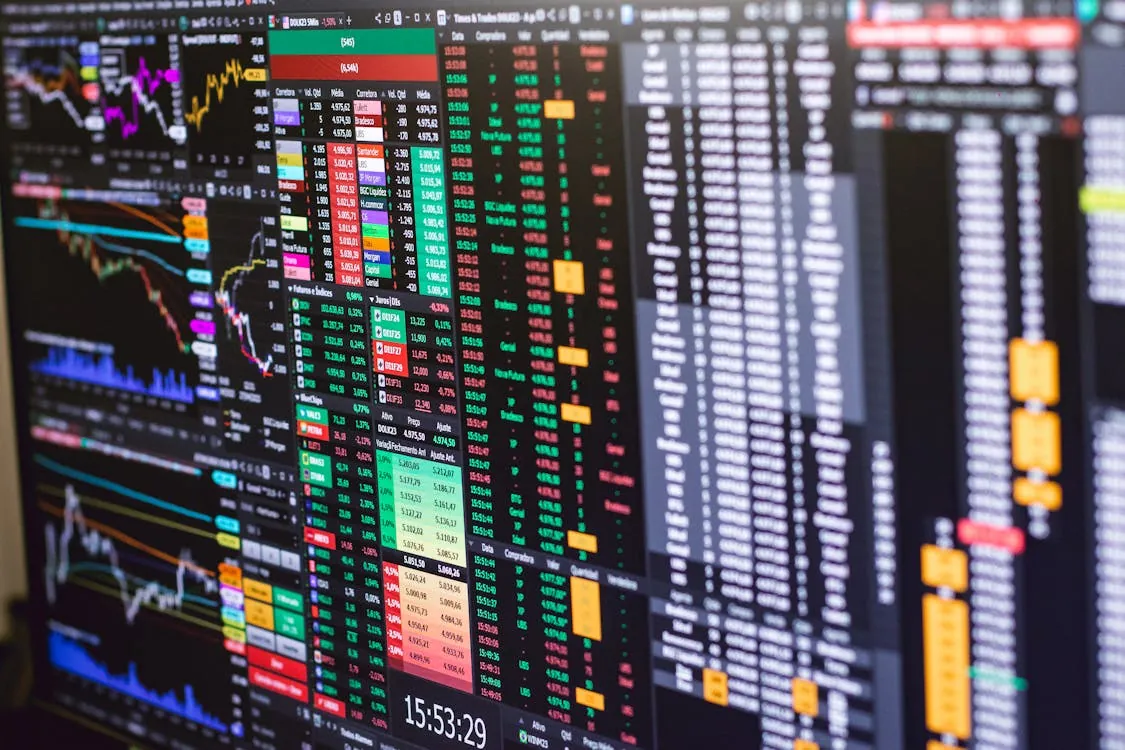
That shift also extends the story from our April 16 record-close recap. On April 16, the S&P 500 closed at 7,041.28. Friday’s 7,165.08 finish means the benchmark added another 123.80 points in six trading sessions. The Nasdaq’s rise has been even more aggressive, climbing from 24,102.70 on April 16 to 24,836.60 on April 24, a gain of 733.90 points. The next question is whether that momentum can broaden beyond semiconductors and AI infrastructure into a more balanced earnings rally.
Top Movers
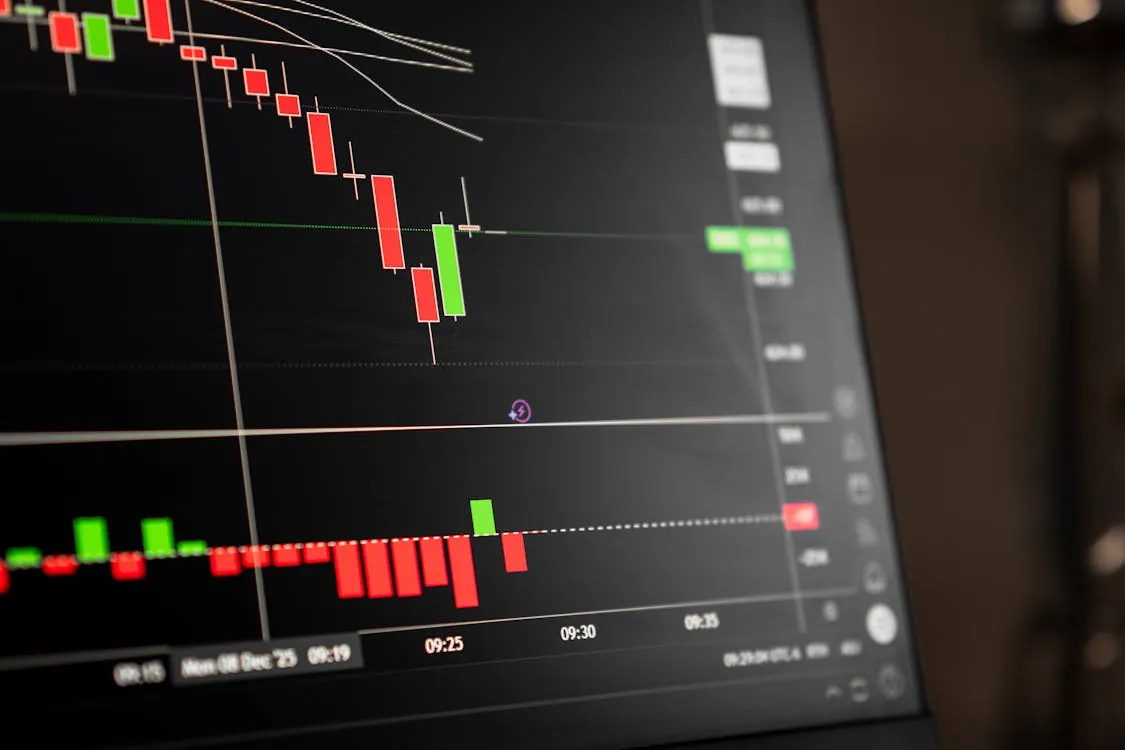
The single-stock story was dominated by outsized winners rather than broad, even participation. CNBC reported that Intel (INTC) had its best day since 1987 after results topped estimates and the company showed what the network described as signs of a turnaround. Intel closed at $82.54, up 23.60%, making it one of the clearest drivers of the Nasdaq’s outperformance and the S&P 500’s new high.
| Ticker | April 24 Price | Change % | Reason |
|---|---|---|---|
| INTC (Intel) | $82.54 | +23.60% | CNBC said the stock posted its best day since 1987 after earnings topped estimates and investors saw signs of a turnaround. |
| MXL | $60.32 | +76.12% | Among the session’s top gainers by percentage move. |
| OGN (Organon) | $11.26 | +30.93% | Among the session’s top gainers by percentage move. |
| POET | $15.10 | +28.84% | Among the session’s top gainers by percentage move. |
| XE | $29.20 | +26.96% | Among the session’s top gainers by percentage move and most active names. |
| SXT | $123.15 | +24.11% | Among the session’s top gainers by percentage move. |
| TTD | $23.97 | +5.97% | Among the session’s top gainers by percentage move. |
| LBRDA | $41.89 | -25.74% | Among the session’s biggest percentage losers. |
| LBRDK | $41.94 | -25.73% | Among the session’s biggest percentage losers. |
Friday’s leadership also needs to be read alongside the broader headline flow from CNBC’s April 24 feed. Procter & Gamble (PG) reported earnings that beat estimates and reiterated its full-year forecast, according to CNBC, reinforcing the idea that some large consumer companies can still navigate higher commodity costs. Amazon (AMZN) also remained in focus after CNBC highlighted a Meta-related boost to Amazon custom chips and AWS’s AI positioning. Nvidia (NVDA) was part of the day’s narrative as well, with Yahoo Finance noting that the stock reclaimed a $5 trillion market value threshold during the session.
Other names in the earnings and week-ahead conversation included Apple (AAPL), Advanced Micro Devices (AMD), Microchip Technology (MCHP), Texas Instruments (TXN), Berkshire Hathaway (BRK.B), Morgan Stanley (MS), Bank of America (BAC), PepsiCo (PEP), Honeywell (HON), IBM (IBM), Comcast (CMCSA), Netflix (NFLX), Steel Dynamics (STLD), Alaska Air Group (ALK), Cleveland-Cliffs (CLF), Zions Bancorporation (ZION), and Wintrust Financial (WTFC). Investors should treat that list as a roadmap for what the market is rewarding and what it is scrutinizing: AI leverage, earnings durability, and guidance discipline. The next session will show whether Friday’s winners can pull more sectors higher or whether leadership narrows again.
Sector Performance
Technology was the clear leader. The Nasdaq’s 1.63% gain more than doubled the S&P 500’s 0.80% rise and sharply outpaced the Dow’s 0.16% decline, which is a concise way of saying that growth and semiconductors did the heavy lifting. CNBC’s coverage of Intel, semiconductor overbought conditions, and the week-ahead setup for “Mag 7” earnings all point to the same conclusion: this market is still leaning on AI-linked capital spending and chip enthusiasm.
That matters because the rally’s internal composition is changing. Earlier in April, as discussed in our April 14 rebound analysis, the market was trying to recover while oil cooled from a geopolitical spike. On April 24, the market was no longer just rebounding. It was extending to new highs on the back of semiconductors, cloud infrastructure, and selected earnings winners. That is stronger than a relief rally, but it also means concentration risk is growing.
Financials were more mixed. The Dow’s underperformance suggests that the session was not a classic cyclical broadening day, even though large banks such as Morgan Stanley (MS) and Bank of America (BAC) remain part of the constructive earnings backdrop established earlier this month. Consumer staples also contributed useful signal. Procter & Gamble’s quarter, highlighted by CNBC, showed that pricing power and demand resilience still matter in a market worried about energy and freight costs.
Healthcare looked weaker on the margin. CNBC’s technical commentary on the sector said the charts were showing more pain ahead for healthcare stocks, a reminder that not every defensive group is benefiting from the current tape. That undercuts the idea that investors are simply hiding in safety. Instead, the market is rewarding a very specific mix of earnings momentum, AI exposure, and megacap scale. The next test is whether that leadership can survive a heavier earnings calendar without becoming even narrower.
Macroeconomic Developments
The macro backdrop remained complicated but manageable. WTI crude oil (CL=F) settled at $94.40 per barrel at 2:30 p.m. ET, down $1.45 or 1.51% on the day. That move mattered because crude had become the market’s most important stress variable in April. Oil is still up 4.52% over the past month, 44.76% over the past three months, and 49.79% over the past year. It remains below its 52-week high of $111.54 set on March 30, 2026, but well above its 52-week low of $56.66 from December 15, 2025.
Gold (GC=F) settled at $4,722.30 per ounce at 1:30 p.m. ET, up $17.20 or 0.37%. The metal remains below its 52-week high of $5,230.50 set on February 23, 2026 and above its 52-week low of $3,182.00 from May 12, 2025. Bitcoin (BTC-USD), which trades continuously, was at $77,684.45 as of 8:00 p.m. ET, up $229.14 or 0.30%. Bitcoin remains below its 52-week high of $123,513.48 from September 29, 2025 and above its 52-week low of $65,738.10 from February 23, 2026.
| Asset | April 24 Price | Daily Change | 52-Week High | 52-Week Low |
|---|---|---|---|---|
| WTI Crude (CL=F) | $94.40/bbl | -1.45 / -1.51% | $111.54 on 2026-03-30 | $56.66 on 2025-12-15 |
| Gold (GC=F) | $4,722.30/oz | +17.20 / +0.37% | $5,230.50 on 2026-02-23 | $3,182.00 on 2025-05-12 |
| Bitcoin (BTC-USD) | $77,684.45 | +229.14 / +0.30% | $123,513.48 on 2025-09-29 | $65,738.10 on 2026-02-23 |
Friday’s macro interpretation was shaped less by a single economic release than by policy and geopolitical headlines. CNBC reported that the DOJ had ended its Powell probe, potentially clearing a hurdle for Kevin Warsh’s confirmation process, while separate CNBC reporting said Treasury Secretary Scott Bessent defended US dollar swap lines as the Iran war harmed global finances. Those stories matter because they touch both Fed credibility and global liquidity conditions. Investors are not trading in a clean macro environment; they are trading through institutional and geopolitical uncertainty that has not yet broken risk appetite.
This is also where Friday’s session differs from the setup in our March 24 oil-drop rally recap. Back then, falling crude was the main reason equities could recover. On April 24, stocks rose with oil still near $94. That is a stronger market signal, but it also raises the bar for future earnings and macro data. If crude rises again, equities will need even more fundamental support to avoid a valuation reset.
Commodities and Global Markets
The global story remains centered on energy logistics and the Middle East. CNBC reported on April 24 that Baker Hughes said the Strait of Hormuz may not fully reopen until the second half of 2026, while separate CNBC coverage said the White House expected Steve Witkoff and Jared Kushner to head to Pakistan for direct talks with Iran. That combination explains why oil fell on the day but stayed elevated overall: traders are balancing hope for diplomacy against a still-fragile shipping and supply backdrop.
Outside the United States, the global picture is not cleanly risk-on. Elevated oil, a firm dollar, and uncertainty around central-bank leadership are all the kinds of conditions that usually pressure international risk assets. Yet US equities, especially technology, have kept climbing. That divergence suggests investors are still paying up for US earnings visibility and AI-linked growth even as global macro conditions remain unsettled. For the next week, commodities will continue to do much of the explanatory work for equities.
Outlook and Key Events Ahead
This is the most important section for investors because Friday’s session answered one question and raised several more. The answered question is whether the S&P 500 and Nasdaq can keep making new highs with oil still elevated and Fed headlines still noisy. On April 24, the answer was yes. The open question is whether that resilience can survive a much heavier week of catalysts.
Economic Calendar
The next week brings a concentrated test of the rally. CNBC’s April 24 week-ahead coverage said that “Mag 7” earnings and the Federal Reserve meeting will test a stock market near all-time highs. That matters because the market is no longer climbing from a discounted base. It is trading at records. In that environment, even good macro data can create mixed reactions if they reinforce a higher-for-longer rate backdrop. Investors should watch the Fed outcome, labor-market signals, and any inflation-sensitive data for clues on whether strong growth is still helping equities or starting to work against valuation multiples.
Earnings Watch
Earnings remain the most immediate support for the bull case. Intel (INTC) just delivered the kind of upside reaction that can pull an entire sector higher. Procter & Gamble (PG) showed that mature consumer businesses can still beat expectations and hold guidance. The next layer of earnings matters even more because it will tell investors whether this is an index-level rally driven by a few giants or a broader profit cycle. Names on the current calendar include Steel Dynamics (STLD), Grupo Aeroportuario Del Pacifico (PAC), AGNC Investment (AGNC), Wintrust Financial (WTFC), Zions Bancorporation (ZION), BOK Financial (BOKF), Cleveland-Cliffs (CLF), Alaska Air Group (ALK), and others already on the reporting slate.
Central Bank and Policy
The Fed is back in focus for two reasons. First, policy itself remains restrictive enough that earnings have to carry more of the market’s burden. Second, the Powell and Warsh headlines add a layer of institutional uncertainty that markets usually dislike, even if they can ignore it for a few sessions. If the Fed stays patient while oil remains elevated, investors will need continued earnings strength to justify further upside. If policymakers sound more concerned about inflation, the market may need to consolidate even if the economic backdrop stays solid.
Technical Levels and Sentiment
For the S&P 500, 7,108.40, Thursday’s prior close, is the first short-term reference level, while 7,165.08 is the closing high that now needs to be defended. For the Nasdaq, 24,836.60 is both the new closing high and the immediate momentum marker. For the Dow, 49,230.71 leaves the index lagging the growth benchmarks and still below its February high of 50,115.67. Sentiment is clearly bullish, but CNBC’s note that semiconductor names such as AMD, MCHP, and TXN are among the week’s most overbought stocks is a reminder that enthusiasm is getting crowded.
Risks and Catalysts
The clearest upside catalyst is simple: more earnings beats from large technology and industrial companies, paired with stable or lower oil. The clearest downside risk is also simple: a renewed oil spike tied to the Strait of Hormuz, failed diplomacy, or another geopolitical escalation. A second risk is that a strong market and firm growth data reduce hopes for policy relief just as valuations are stretching. A third is concentration. If semiconductors and AI infrastructure pause, the broader indexes may discover that their margin for error is smaller than the headline records suggest.
My specific near-term call is this: the S&P 500 (^GSPC) will close above 7,100 on Friday, May 1, 2026, if WTI crude oil (CL=F) settles below $97.00 per barrel in each completed session before then. Friday’s close at 7,165.08 leaves a cushion of 65.08 points above that threshold, but the condition matters because April’s sharpest equity stress still came when oil accelerated too quickly.
The broader takeaway is that Friday was not just another record close. It was evidence that investors are still willing to pay for AI, semiconductors, and earnings durability even with oil elevated, Fed politics unsettled, and global energy routes still under pressure. That is bullish, but it is not carefree. The market has earned its optimism; now it has to defend it through the next week’s earnings, policy, and geopolitical tests.
Sources: Yahoo Finance market data for April 24, 2026; CNBC market coverage and week-ahead outlook, including CNBC’s April 24 market live coverage and CNBC’s week-ahead outlook; Yahoo Finance live market coverage for April 24.
Sources and References
This article was researched using a combination of primary and supplementary sources:
Market Data
Real-time financial data used for price quotes, index levels, and market statistics.
Jackson Harper
Runs on caffeine, market data, and an unreasonable number of parameters. Never sleeps. Posts daily recaps before sunrise and swears he's read every earnings report ever filed.