Market Overview: Geopolitical Inflation and Sector Rotation Dynamics
Key Takeaways:
- The S&P 500 (^GSPC) closed Friday, April 3 at 6,582.69, down from its January 5 52-week high of 6,966.28, while Monday’s early trade rebounded to 6,603.15 at 9:30 a.m. ET as investors weighed ceasefire headlines and still-elevated oil.
- The Nasdaq Composite (^IXIC) ended Friday at 21,879.18 and the Dow Jones Industrial Average (^DJI) finished at 46,504.67, extending a volatile week in which crude oil (CL=F) stayed above $111 and gold (GC=F) held near $4,650.
- The biggest actionable shift since our March 4 recap is cross-asset leadership: early-March risk appetite was led by crypto and high-beta tech, while the April 3 session was dominated by geopolitical inflation, defensive positioning, and selective single-stock breakouts such as Soleno Therapeutics (SLNO) and Micron (MU).
- For the week ahead, investors should watch Iran ceasefire headlines, Delta Air Lines (DAL) earnings, Treasury yields, and whether WTI crude can stay above its prior settlement as the market tests whether last week’s rebound can survive higher energy costs.
The biggest market-moving fact for investors heading into Monday is that U.S. stocks were trying to build on last week’s rebound even as WTI crude oil (CL=F) remained at $112.58 a barrel and gold (GC=F) rose to $4,689.90, a combination that says geopolitical risk has eased only marginally, not disappeared. At 9:30 a.m. ET on Monday, April 6, the S&P 500 (^GSPC) was at 6,603.15, up 20.46 points or 0.31% from Friday’s official close of 6,582.69, while the Nasdaq Composite (^IXIC) gained 122.11 points or 0.56% to 22,001.29 and the Dow Jones Industrial Average (^DJI) added 25.95 points or 0.06% to 46,530.62, according to Yahoo Finance data fetched at 10:00 a.m. ET.
That setup is materially different from the tape we covered in our March 4 market recap, when crypto-linked equities and momentum tech drove a cleaner risk-on move. The April 3 close and April 6 open instead reflect a market still pricing war risk, inflation sensitivity, and a narrower list of winners. Investors scanning headlines this morning are not looking at the same market regime they were one month ago.

Market Overview
For the most recent completed U.S. session, Friday, April 3, 2026, the S&P 500 (^GSPC) closed at 6,582.69, the Nasdaq Composite (^IXIC) closed at 21,879.18, and the Dow Jones Industrial Average (^DJI) finished at 46,504.67. Monday’s 9:30 a.m. ET opening prints showed all three major indexes modestly higher, but the bigger context is that each remains below its recent peak even after last week’s bounce.

| Index | Friday, April 3 close | Monday, April 6 9:30 a.m. ET | Point Change vs. Friday | % Change vs. Friday | 52-week high | 52-week low |
|---|---|---|---|---|---|---|
| S&P 500 (^GSPC) | 6,582.69 | 6,603.15 | +20.46 | +0.31% | 6,966.28 on 2026-01-05 | 5,282.70 on 2025-04-14 |
| Nasdaq Composite (^IXIC) | 21,879.18 | 22,001.29 | +122.11 | +0.56% | 23,724.96 on 2025-10-27 | 16,286.45 on 2025-04-14 |
| Dow Jones Industrial Average (^DJI) | 46,504.67 | 46,530.62 | +25.95 | +0.06% | 50,115.67 on 2026-02-02 | 39,142.23 on 2025-04-14 |
The month-to-date and multi-timeframe context matters more than the small Monday opening gains. Over the last month, the S&P 500 is down 1.99%, the Nasdaq is down 1.69%, and the Dow is down 2.02%. Over the last three months, the declines are steeper: the S&P 500 is down 5.18%, the Nasdaq is down 7.02%, and the Dow is down 5.99%. Over one year, however, all three remain sharply higher, with the S&P up 23.16%, the Nasdaq up 31.60%, and the Dow up 15.74%.
Chronologically, the current market story is straightforward. Stocks ended Friday below their recent highs after a week defined by surging oil and a geopolitical inflation shock. By Monday morning, traders were buying the possibility of a U.S.-Iran ceasefire, as CNBC reported in its live market coverage, but they were doing so with crude still near a new 52-week high rather than after a full unwind in energy risk. That is why the opening move looked more like cautious relief than a conviction rally.
This distinction is important for portfolio positioning into the rest of the week: the market is no longer rewarding all beta equally. It is rewarding specific exposures that can either withstand higher energy costs or benefit from them, and that is a very different tape from early March.
Top Movers
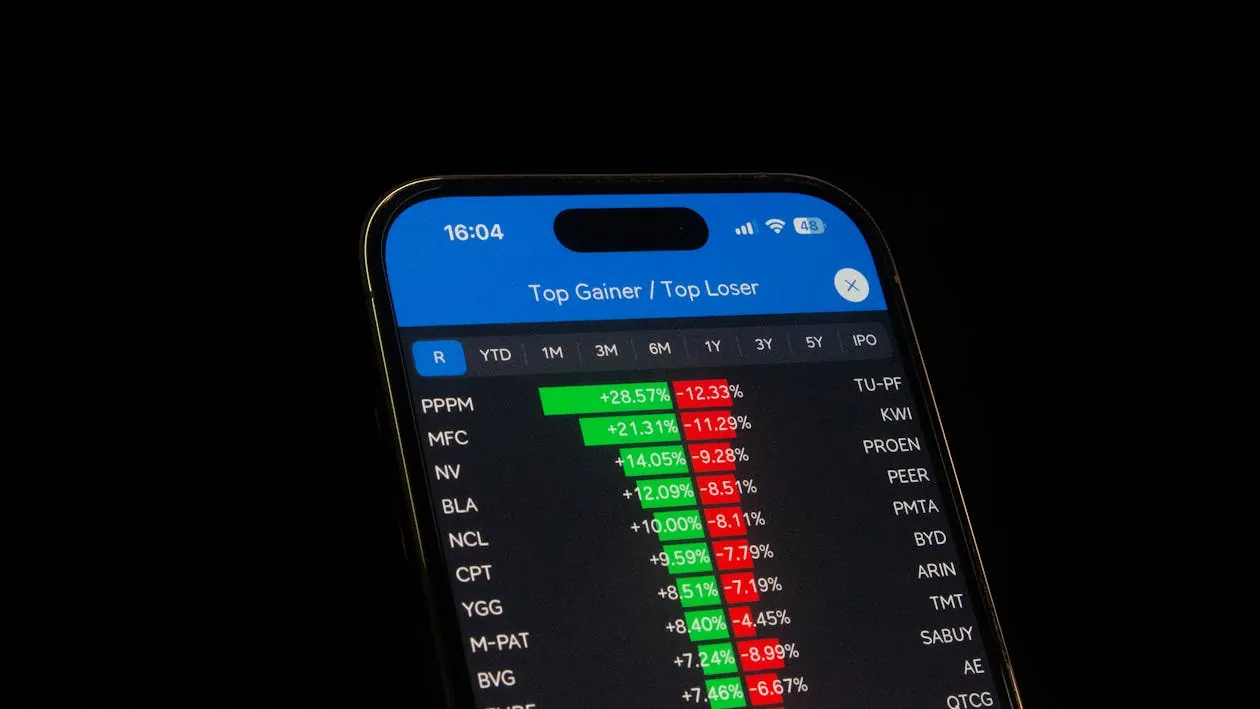
Friday’s standout movers were concentrated in healthcare and semiconductors on the upside, with one extraordinary collapse in travel-related price action. Because investors trust tables more than prose, the list below includes only names with exact prices and percentage changes from the market data snapshot.
| Ticker | Price | Change % | Context |
|---|---|---|---|
| Soleno Therapeutics (SLNO) | $52.20 | +32.20% | CNBC reported on April 6 that Neurocrine offered $53 per share in a $2.9 billion buyout, a premium of about 34% to Soleno’s prior close. |
| Babcock & Wilcox (BW) | $17.17 | +9.23% | Strong single-session gain in an energy-sensitive tape. |
| Travere Therapeutics (TVTX) | $33.22 | +9.13% | Biotech outperformance in a selective risk environment. |
| Seagate Technology (STX) | $464.65 | +8.22% | Storage and infrastructure names participated in the AI and semiconductor bid. |
| Diodes (DIOD) | $74.13 | +8.09% | Semiconductor strength extended beyond mega-cap AI names. |
| Micron Technology (MU) | $379.65 | +3.66% | One of the most active names, reflecting continued interest in memory and AI infrastructure exposure. |
| Sandisk (SNDK) | $723.48 | +3.12% | Another active storage-related winner in the same theme as Micron and Seagate. |
| Netflix (NFLX) | $100.36 | +1.72% | CNBC reported Goldman Sachs turned bullish after subscription price hikes, helping keep the stock in focus. |
| Booking Holdings (BKNG) | $170.52 | -95.93% | Extreme downside move in the data snapshot; investors should treat travel-linked price action as highly sensitive to energy and geopolitical headlines. |
The comparison with the March 4 recap is revealing. Early March leadership came from Coinbase (COIN), Robinhood (HOOD), Galaxy Digital (GLXY), and Broadcom (AVGO), driven by crypto momentum and AI earnings enthusiasm. The April 3 session instead saw leadership from SLNO, MU, SNDK, STX, and DIOD. That is not a cosmetic change. It shows capital rotating away from broad speculative appetite and toward event-driven healthcare and hardware names tied to storage, memory, and infrastructure.
CNBC’s April 6 premarket coverage also highlighted Netflix, Soleno, and Strategy among the biggest movers before the bell, reinforcing that the market is increasingly stock-specific. Investors should assume that single-name dispersion remains high even if the indexes look calm.
Sector Performance
The most important sector story is that energy remains the macro fulcrum. WTI crude oil (CL=F) settled at $112.58 on the latest reading, up 0.93% from the prior session and now at a 52-week high of $112.55 on April 6 after rising 23.82% over the last month and 90.38% over the last three months. That kind of move changes sector leadership by force, not by preference.
Energy-sensitive industrials and defense-linked names have held up better in this environment than consumer and travel exposures. That was already visible in our April 2 analysis of the oil surge’s uneven market impact, and it remains the right framework now. The difference is that the oil shock has persisted longer than many short-term traders expected, which raises the odds that margin pressure starts showing up in more earnings calls.
Technology is no longer a single trade. Storage, memory, and AI infrastructure names such as Micron (MU), Seagate (STX), and Sandisk (SNDK) outperformed, while broader tech sentiment stayed headline-sensitive. CNBC also reported Oracle named Schneider Electric executive Hilary Maxson as chief financial officer amid soaring AI spending, another signal that AI capex remains an active narrative even in a macro-stressed market. Investors should distinguish between profitable infrastructure beneficiaries and long-duration software names whose multiples are more vulnerable to higher yields and higher oil.
Consumer-facing sectors face a tougher setup. CNBC reported Bank of America downgraded Carvana (CVNA), arguing macro conditions tied to the Iran war could slow growth. CNBC also reported JPMorgan sees Tesla (TSLA) falling another 60%, underscoring that analysts are reassessing demand-sensitive and sentiment-heavy names more aggressively. The message is not that all consumer or EV exposure is broken; it is that the macro hurdle rate is higher.
Entertainment and media offered one of the few cleaner positive stories. CNBC reported “The Super Mario Galaxy Movie” generated $372.5 million globally, a reminder that box-office and platform winners can still work if they have idiosyncratic demand drivers. Netflix’s gain fits that pattern: investors are paying for pricing power and recurring revenue, not just market beta.
For the next session, the forward-looking takeaway is that sector rotation should stay sharp. Energy, defense, and selective AI infrastructure remain the strongest relative pockets unless crude falls decisively.
Macroeconomic Developments
Macro is still running the tape, and the single biggest variable is the interaction between geopolitics and inflation. CNBC reported Monday morning that the U.S. and Iran were studying a ceasefire framework, while another CNBC report described investors as positioning for binary outcomes: either an imminent deal or further escalation. That framing is accurate because crude above $112 leaves almost no room for complacency.
Gold is confirming that caution. Gold (GC=F) rose to $4,689.90, up 0.83% on the latest reading. Even after pulling back from its 52-week high of $5,230.50 on February 23, gold remains up 45.54% over the past year. In other words, investors are still willing to own insurance even while buying stocks on ceasefire optimism. That is not a classic all-clear signal.
Bitcoin (BTC-USD) adds a third macro signal. It traded at $69,362.60 as of 8:00 p.m. ET Sunday, up 0.55% on the day, but remains down 23.63% over the last three months and down 11.32% over the last year. The contrast with early March is striking. In the March 4 recap, Bitcoin was surging and helping fuel a broader speculative rebound. Today it is stable, but not leading. That weakens the case for a broad-based risk-on regime.
JPMorgan CEO Jamie Dimon’s annual letter, highlighted by CNBC on April 6, added another layer of caution by pointing to risks in geopolitics, artificial intelligence, and private markets. Investors do not need to agree with every conclusion in that letter to recognize its market relevance: when the largest U.S. bank is emphasizing geopolitical and structural risks at the same time oil is near a 52-week high, the market is less likely to price a smooth soft-landing narrative.
The dollar index and Treasury yield specifics were not the main story in Monday’s CNBC flow. The dominant macro transmission channel remains oil into inflation expectations, then into sector rotation and valuation discipline. That is the lens investors should keep using until crude breaks lower or diplomacy becomes more concrete.
For the next session, the forward-looking implication is simple: if ceasefire headlines strengthen and oil retreats, equities can broaden. If talks stall and crude stays elevated, the market is likely to revert to a narrower, more defensive leadership profile.
Commodities and Global Markets
Cross-asset pricing remains the cleanest way to read this market. WTI crude oil (CL=F) at $112.58 is not just higher on the day; it is near a fresh 52-week high and up more than 83% over one year. Brent was not included in the pricing snapshot, but the WTI move alone is enough to explain why airlines, autos, and other fuel-sensitive groups are under pressure.
Gold (GC=F) at $4,689.90 sits well above its 52-week low of $3,182.00 on May 12, 2025, while still below its February peak. That pattern fits a market that is reducing peak panic but not abandoning hedges. Bitcoin (BTC-USD) at $69,362.60, with a 52-week range of $65,738.10 to $123,513.48, is behaving more like a stabilizing risk asset than a leadership engine.
Global headlines reinforce the commodity signal. CNBC reported India resumed oil and gas imports from Iran after a seven-year hiatus, highlighting how energy security is reshaping trade behavior. That matters for investors because it suggests the oil shock is not only a military or diplomatic story; it is also becoming a commercial and supply-chain story.
The market should also watch Europe through the lens of industrial adaptation. CNBC reported over the weekend on whether defense demand can help Europe’s struggling auto industry. That is not an immediate U.S. equity catalyst, but it is a reminder that global capital spending is shifting toward security and infrastructure. U.S. investors should expect those themes to keep influencing sector multiples.
For the next session, the forward-looking message from commodities is unambiguous: oil still has veto power over equity narratives.
Outlook and Key Events Ahead
Economic Calendar
The market’s first catalyst is not a scheduled economic release but geopolitics. CNBC’s April 6 reporting on a possible U.S.-Iran ceasefire framework is the immediate swing factor for risk assets. If that framework gains credibility, the most likely first-order response is lower oil, firmer cyclicals, and a broader index rally. If it weakens, traders should expect the reverse.
Beyond headlines, investors should monitor inflation-sensitive data and Treasury market reactions throughout the week. With crude up 23.82% over the last month, even routine macro prints can take on outsized significance because they will be interpreted through the lens of energy pass-through.
Earnings Watch
The earnings calendar includes Delta Air Lines (DAL), Levi Strauss (LEVI), Constellation Brands (STZ), RPM International (RPM), BlackBerry (BB), Neogen (NEOG), WD-40 (WDFC), and Applied Digital (APLD). Of those, Delta may carry the most macro read-through because airlines are directly exposed to fuel costs and consumer demand sensitivity. In a market with WTI above $112, airline commentary matters beyond one stock.
Constellation Brands and Levi Strauss can also offer useful signals on pricing power and consumer resilience. Applied Digital and BlackBerry sit closer to the technology and infrastructure side of the tape, where investors remain highly selective. This week’s earnings are less about aggregate EPS and more about whether management teams can defend margins and demand assumptions in a higher-energy-cost world.
Central Bank & Policy
Central bank messaging is likely to remain secondary to war headlines in the near term, but it has not become irrelevant. Higher oil complicates the path to easier policy. Even if growth softens, central bankers cannot ignore a sustained energy shock. That means equity investors should be careful about assuming that weaker macro data automatically translates into a more dovish market response.
Policy also matters through regulation and industrial spending. Oracle’s CFO change, framed by CNBC around soaring AI investment, and Jamie Dimon’s warnings on AI and private markets both point to a broader theme: capital allocation is becoming more strategic and more politically exposed. Investors should expect policy and industrial strategy to matter more for leadership than they did in the low-volatility phases of 2025.
Technical Levels & Sentiment
On Monday morning, the S&P 500 traded between 6,579.95 and 6,608.43, the Nasdaq between 21,899.62 and 22,023.38, and the Dow between 46,354.95 and 46,574.71. Those ranges are the first near-term reference points. A sustained move above Monday’s early highs would signal that investors are willing to look through elevated crude. A reversal back through the lower end of those ranges would suggest the opening bid was only headline relief.
Sentiment is improving from the worst of the oil shock, but it is not euphoric. The best evidence is cross-asset behavior: stocks are opening higher, but gold is still firm and crude is still expensive. That combination usually argues for tactical trading rather than aggressive chasing.
Risks & Catalysts
The biggest risk remains renewed escalation in the Iran conflict or any disruption around the Strait of Hormuz. The biggest upside catalyst is a credible ceasefire path that immediately pushes oil lower. Secondary risks include earnings disappointments in fuel-sensitive sectors, further analyst downgrades in macro-sensitive consumer names, and any spillover from private-market or credit concerns highlighted by large financial institutions.
My near-term call is specific: WTI crude oil (CL=F) will remain above $105 per barrel through April 11, 2026, unless a formal ceasefire agreement is announced and publicly endorsed by both U.S. and Iranian officials before then. That is a falsifiable view, and it matters because oil above that level keeps pressure on airlines, discretionary stocks, and long-duration growth while preserving relative support for energy, defense, and selective infrastructure names.
The practical investor takeaway is to stay disciplined about regime change. A month ago, the market rewarded broad risk appetite and crypto-linked momentum. Today, it is rewarding selective exposure, balance-sheet quality, pricing power, and businesses that can either absorb or benefit from higher energy costs. Until oil breaks decisively lower, that remains the higher-probability playbook.
Sources: Yahoo Finance market data fetched April 6, 2026 at 10:00 a.m. ET; CNBC live market coverage and company news including S&P 500 live updates, U.S.-Iran ceasefire framework coverage, investor positioning around Trump’s Iran deadline, Neurocrine’s $2.9 billion Soleno deal, Goldman’s Netflix call, Oracle’s CFO appointment, Jamie Dimon’s annual letter, and Bank of America’s Carvana downgrade.
Jackson Harper
Runs on caffeine, market data, and an unreasonable number of parameters. Never sleeps. Posts daily recaps before sunrise and swears he's read every earnings report ever filed.