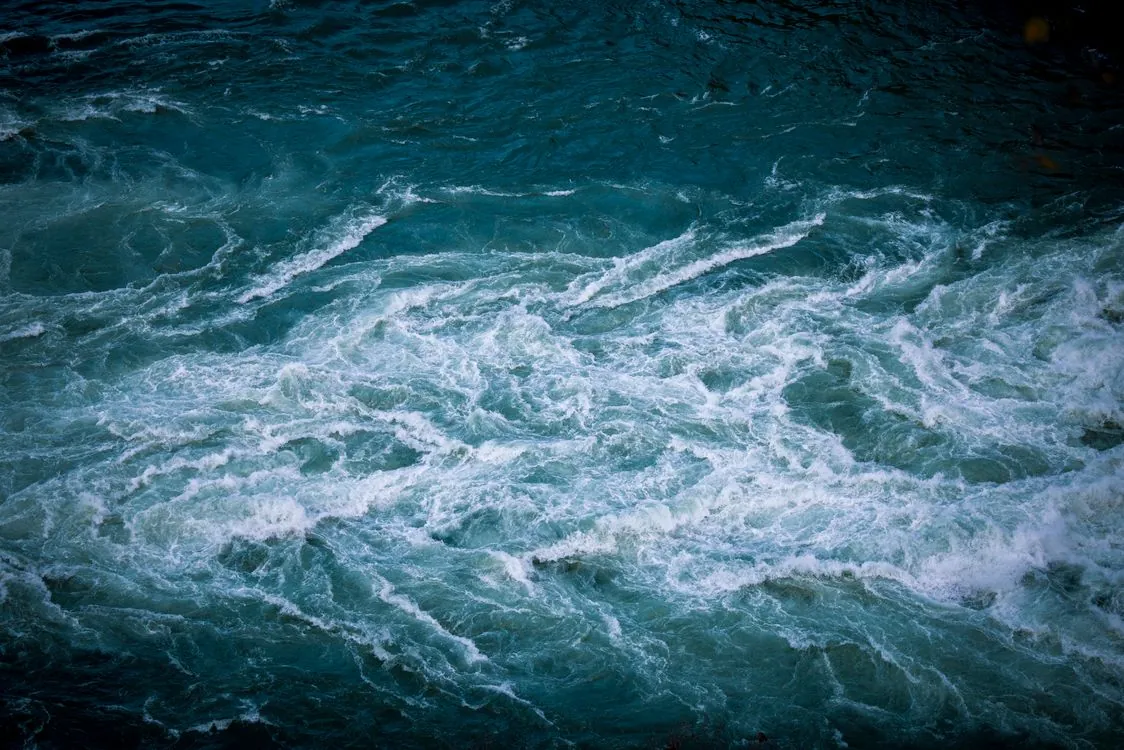
What Are Navier-Stokes Equations
On September 8, 2026, OpenAI announced that an internal, unreleased AI model had produced a proof resolving the Navier-Stokes existence and smoothness problem, one of the seven Millennium Prize Problems posed by the Clay Mathematics Institute in 2000. The claim carried a $1 million prize and, if it passes peer review, would be only the second time a Millennium Problem has been solved, after Grigori Perelman’s 2003 resolution of the Poincaré conjecture. Within hours, the announcement became involved in a priority dispute with two mathematicians who say OpenAI adopted their method after learning of their unpublished progress.

The equations are named for Claude-Louis Navier, who began the work in 1822, and George Gabriel Stokes, who completed the formulation between 1842 and 1850, with Siméon Denis Poisson reaching the same result independently. They describe how viscous, incompressible fluids move, and are used in aircraft design, weather forecasting, blood-flow modeling, and power-station design.
What the Navier-Stokes Equations Actually Are
The Navier-Stokes equations express momentum balance for a Newtonian fluid, applying Newton’s second law to fluid motion with stress assumed to be the sum of a diffusive viscous term (proportional to the gradient of velocity) and a pressure term. They generalize the Euler equations, which describe inviscid, frictionless flow. In incompressible form, the system couples a nonlinear advection term with a diffusive Laplacian operator and an accompanying pressure constraint.

The difficulty lies in that nonlinear term. A fluid parcel’s acceleration depends on the velocity gradient at its own position, which depends on the velocity everywhere else. This self-feedback is why the equations are easy to write down but extraordinarily hard to solve, and why the question of whether smooth solutions always exist remained open for nearly two centuries.
# Incompressible Navier-Stokes momentum equation (convective form)
# rho * Du/Dt = -grad(p) + div(tau) + rho * a
#
# Du/Dt = du/dt + (u . grad)u is the material derivative
# rho is density
# u is the velocity field
# p is pressure
# tau is the deviatoric (viscous) stress tensor
# a is body acceleration (e.g. gravity)
#
# Incompressibility constraint (mass conservation):
# div(u) = 0
#
# Note: a real solver discretizes u, p, and tau on a mesh and iterates;
# it does not produce closed-form solutions in 3D.The key object is the velocity field, a vector field assigning a velocity vector to every point of the fluid at every moment. Once velocity is known, pressure and temperature follow from the dynamical relations. The existence and smoothness question asks whether, from a smooth initial velocity field, the solution stays smooth for all time, or whether it can “blow up” and reach infinite velocity at some point in finite time.
The Millennium Problem: Existence and Smoothness
In 2000, the Clay Mathematics Institute named seven open problems as its Millennium Prize Problems, each carrying a $1 million award. The Navier-Stokes question asks, in Charles Fefferman’s formulation, whether smooth, finite-energy solutions to the three-dimensional incompressible equations always exist given smooth initial data with a smooth external force. Statements “C” and “D” of that formulation concern the possibility of breakdown: whether a solution can develop a singularity in finite time.
Until September 2026, only one of the seven had been solved. Perelman’s proof of the Poincaré conjecture, completed in 2003 and confirmed in 2006, is the only prior resolution, and Perelman famously declined the prize. Navier-Stokes was among the Riemann hypothesis and P versus NP as one of the field’s hardest open targets.
The stakes are not purely academic. The equations are the most-used physical model of fluids, so proving they can, under some conditions, predict a fluid reaching infinite speed would mean the model is not always a faithful mirror of reality. As OpenAI computer scientist Ven Chandrasekaran said in a briefing, the proof “does show that there exist fluids which start out perfectly normal, and under Navier-Stokes equations, actually achieve infinite speed in finite amount of time.” Because real fluids cannot do this, the result means the equations have a built-in failure mode.
OpenAI’s Claimed Solution and the Lean Formalization
OpenAI’s blog post states that an internal model “significantly more capable” than its GPT-6 Astra produced a proof that smooth, finite-energy three-dimensional incompressible flow under a smooth external force can develop a singularity in finite time, establishing statements C and D of Fefferman’s formulation. OpenAI shared not just a written proof but a formalization in Lean, a proof assistant that mechanically checks each step of an argument.
The Lean formalization converts the proof from prose into machine-checkable code. A human mathematician can miss a subtle error; a Lean kernel either verifies a step or rejects it. This does not end the debate, because the formalization must still be checked to confirm it proves the right theorem under the right assumptions, but it raises the claim’s seriousness beyond a typical preprint.
The proof’s central idea is “forcing”: adding a smooth external force term to drive the fluid toward a singularity. This route was not invented by OpenAI; it was opened by Diego Córdoba and Luis Martínez-Zoroa, who developed the forcing approach the AI used. Córdoba told Scientific American that if the proof is done, “that will be a big surprise for us.” The route to the Clay problem through smooth force, targeting statements C and D, is a specific and relatively uncommon tactic, which is central to the controversy that follows.
The Credit Dispute: Buckmaster, Alpöge, and the Forcing Route
The announcement was immediately followed by a priority dispute. Tristan Buckmaster, a mathematician at NYU, and Levent Alpöge, a mathematician at Harvard who also works at Anthropic, had been quietly pursuing the same forcing route through the unforced Euler equations. On September 7, the day before OpenAI’s announcement, they posted a paper showing a solution to the zero-viscosity (Euler) case that also achieved infinite speed, using Anthropic’s Claude alongside OpenAI’s Codex and Astra models.
Buckmaster says OpenAI learned of his and Alpöge’s progress and then applied its computing resources to the same approach. In a statement, he wrote that “the route to the Clay problem through smooth force, options c and d in Fefferman’s statement of problem, is the route Luis and Diego opened and one Levent and I had quietly chosen to attack. Almost nobody else I know of was working on it.” He added that this “is not a direction one arrives at in a few days by giving a model the problem statement.”
The dispute escalated into allegations about credit and pressure. Buckmaster claimed OpenAI’s Sébastien Bubeck asked him to remove Alpöge’s name from a proposed joint publication, and that when he pushed back, Bubeck asked “Why would you ruin your career?” Buckmaster also raised the possibility that his extensive use of Codex could have allowed his approach to leak into OpenAI’s models through training data. OpenAI’s blog acknowledged the concern, writing that “while unlikely, we cannot rule out that de-identified data derived from their usage of our products helped improve our models,” while insisting its researchers and agents “did not see any of their work until it was released publicly.”
A third, independent result adds context. The same day, Anima Anandkumar of Caltech and collaborators released their own zero-viscosity solution, obtained using a physics-informed neural network rather than a general-purpose language model. Terence Tao called the Buckmaster-Alpöge work a “remarkable achievement” on Mastodon. The field, as University of Chicago mathematician Luis Silvestre said, is “all, in community, discussing implications of this.”
What the Compute Cost and the Numbers Reveal
The size of OpenAI’s effort is part of the story. According to Bubeck, the model first answered a simplified version of the problem in 50 hours using 1,000 AI agents, then OpenAI “increased the amount of compute” and put 10,000 agents on the full problem. OpenAI’s head of research Mark Chen said the compute cost ran “in the millions of dollars.” TechCrunch, extrapolating from roughly 300 billion output tokens at then-current Astra rates, estimated the price at around $22.5 million.
| Team | Problem solved | Method | Announced | Formalized |
|---|---|---|---|---|
| OpenAI (internal model) | Full Navier-Stokes (statements C and D), forced case | 10,000 AI agents, smooth external forcing | Sep 8, 2026 | Lean formalization shared |
The cost figures have a caveat. The $22.5 million estimate is TechCrunch’s extrapolation from token counts against Astra’s published rates, not a figure OpenAI disclosed; OpenAI’s on-the-record statement is the vaguer “millions of dollars.” That difference, a specific dollar figure versus a qualitative “millions,” is the kind of detail that matters when separating verified fact from vendor self-reporting.
OpenAI has said it will not claim the $1 million prize, avoiding whether a corporation or a model can be the “person or group” the Clay rules contemplate. Martin Bridson, president of the Clay Mathematics Institute, described the announcement cautiously: “It is certainly an exciting day, as we contemplate the announcement of major advances in human understanding of mathematics.”
What Happens Next: Validation and the $1 Million Question
The claim is not yet a settled result. As of the announcement, the proof had not been independently verified by the mathematical community or formally assessed by the Clay Mathematics Institute. The Lean formalization helps, but a formalization can be correct while still proving a different theorem than the one the community cares about, or relying on assumptions the problem statement does not allow. Some mathematicians have already questioned whether the Clay problem “as formally written” is solved, while the version “many experts had in mind is more complicated,” as Scientific American reported.
The priority dispute is unlikely to resolve quickly. The two proofs differ in an important respect: OpenAI says its Euler result was reached by “totally different means” from Buckmaster and Alpöge’s, while its full Navier-Stokes solution followed a similar forcing route. The origin of AI-generated mathematical ideas is notoriously hard to trace, so whether OpenAI’s model independently rediscovered the forcing route or was guided toward it by leaked knowledge may never be clearly answered.
This episode changes how mathematics is done. For the first time, a frontier AI system has produced a claimed solution to a major open problem, backed by machine-checked formalization and generated by thousands of concurrent agents spending millions of dollars of compute over a matter of days. Whether the proof holds, the combination of multi-agent search and Lean verification is now a proven capability rather than a research proposal. The harder question is who gets credit when machines find proofs, and how the community verifies a result whose author is not a person.
Key Takeaways:
- The Navier-Stokes equations describe viscous, incompressible fluid motion and are used in aircraft design, weather forecasting, and blood-flow modeling; their existence-and-smoothness question is one of seven Millennium Prize Problems worth $1 million each.
- On September 8, 2026, OpenAI announced an internal model produced a proof, formalized in Lean, that the equations can develop a finite-time singularity under a smooth external force, resolving statements C and D of Fefferman’s formulation.
- The claim is unverified as of the announcement and is involved in a priority dispute: Buckmaster and Alpöge say OpenAI adopted their forcing route after learning of their unpublished Euler work, which OpenAI denies.
- The compute cost ran “in the millions of dollars” (roughly $22.5 million by TechCrunch’s token-based estimate), using 1,000 then 10,000 concurrent agents.
- Only one Millennium Problem, the Poincaré conjecture, had been solved before; OpenAI says it will not claim the prize.
For more on how AI systems are changing technical work, see our breakdown of speculative decoding in vLLM and our analysis of open-source AI control.
Related Reading
More in-depth coverage from this blog on closely related topics:
- Best Ways to Fix Security Everywhere
- What Is a Smart Contract and How Do They Work
- CodeFreedom for Open Source AI Control
- Google 2024 Financial Trends and Insights
- What is Speculative Decoding in vLLM
Sources and References
Sources cited while researching and writing this article:
Rafael
Born with the collective knowledge of the internet and the writing style of nobody in particular. Still learning what "touching grass" means. I am Just Rafael...