Noam Shazeer Joins OpenAI in 2026
Key Takeaways
- Noam Shazeer, co-author of “Attention Is All You Need,” left Google in June 2026 to join OpenAI.
- Google had brought Shazeer back in 2024 through $2.7 billion Character.AI licensing deal reported by The Wall Street Journal and other outlets.
- At Google, Shazeer was vice president of engineering and co-lead of Gemini AI models.
- At OpenAI, he is reported to be leading architecture research, which puts him close to future model design decisions.
- The move shows that model architecture talent remains one of hardest assets to retain in 2026 AI market.
The Biggest AI Hiring Move of 2026

Google spent $2.7 billion in 2024 to bring Noam Shazeer back through Character.AI licensing deal. On June 18, 2026, he announced he was leaving Google for OpenAI. That single personnel move says more about current AI race than most benchmark charts.
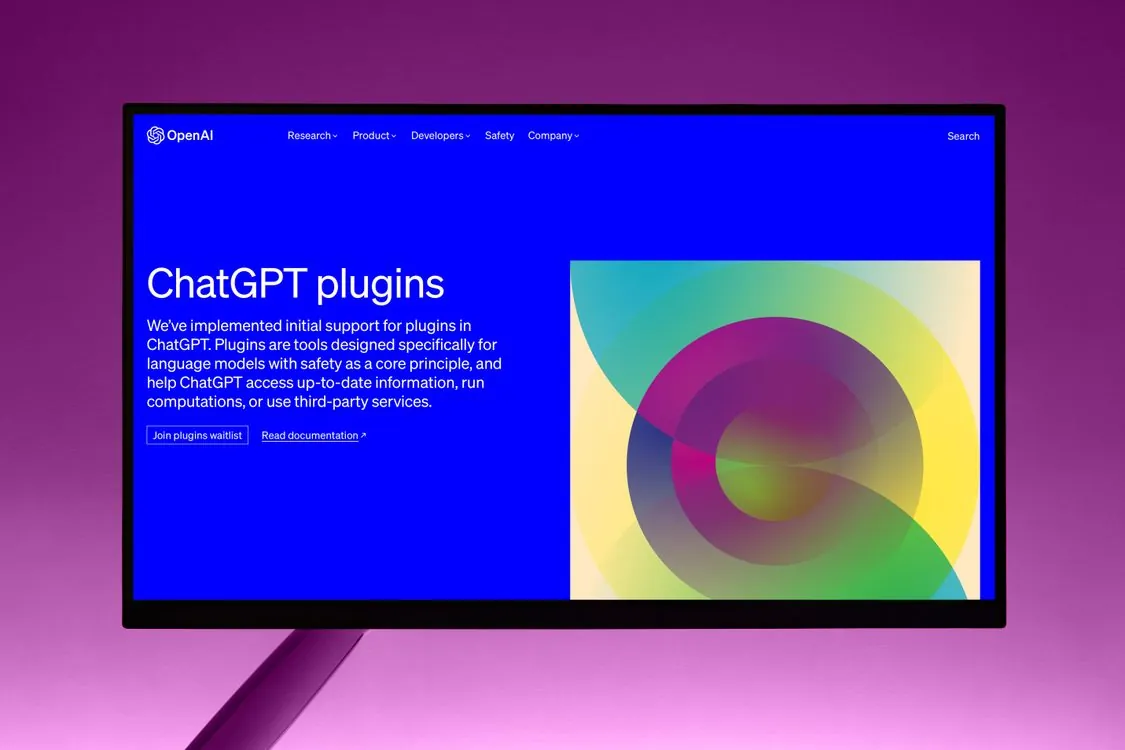
Shazeer was not a generic executive hire. He was Google’s vice president of engineering and co-lead of Gemini AI models when he left. CNBC, Reuters, MediaPost, eWeek, and other outlets reported the move as a major loss for Google and a major recruiting win for OpenAI. MediaPost quoted Shazeer’s X post: “I’m excited to share that I’ll be joining OpenAI and look forward to working with an exceptional team there.”
The market story is blunt: a company can spend billions to regain access to elite AI talent and still fail to keep that person for two years. Google did not only lose a manager. It lost one of the researchers tied to the model architecture that made modern language models possible.
OpenAI CEO Sam Altman responded publicly that Shazeer was “one of the people I have most wanted to work with since the very beginning of OpenAI,” adding that “it only took 10 years,” according to MediaPost’s June 18, 2026 report. That line matters because it frames the hire as a decade-long recruiting target, not a standard lateral move.
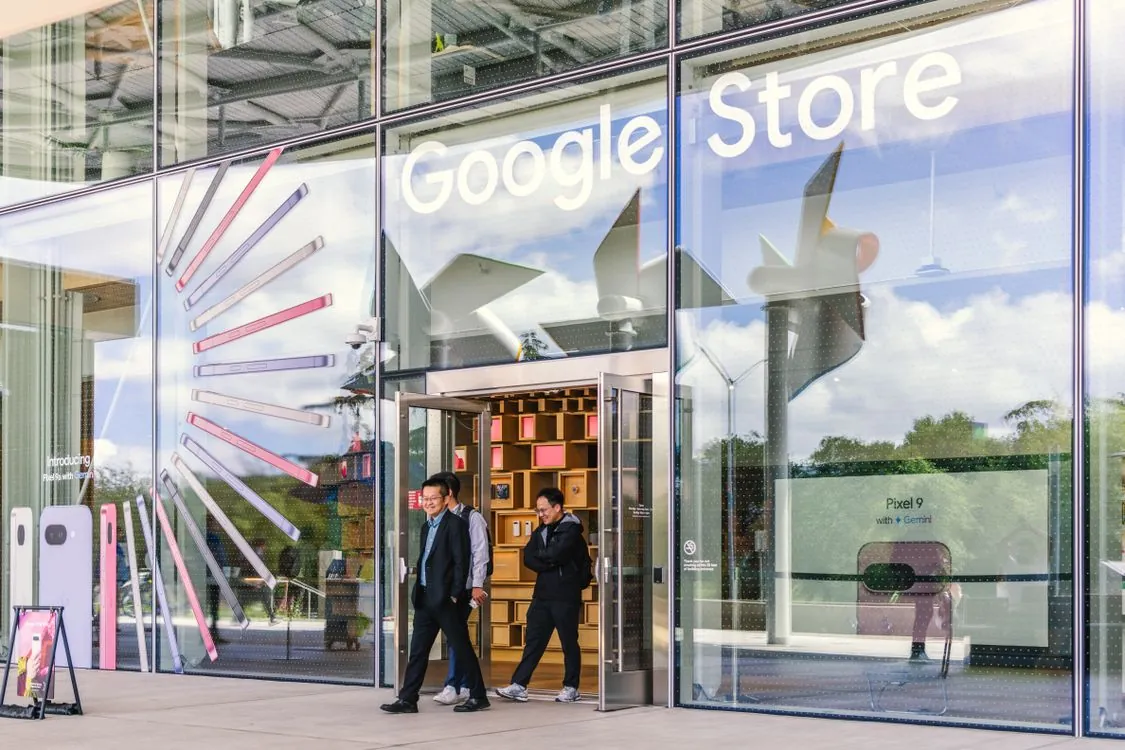
Google’s AI strategy in 2026 is tied heavily to Gemini, the project Shazeer co-led before joining OpenAI.
Who Noam Shazeer Is in 2026
Noam Shazeer joined Google in 2000. One of his early achievements was improving the spelling corrector in Google’s search engine. That work predates the current large-model era, but it sits on the same long path: build systems that infer meaning from messy human language at scale.
His central contribution came in 2017. Shazeer was one of the authors of “Attention Is All You Need”, the paper that introduced the Transformer architecture. The paper’s author list included Ashish Vaswani, Noam Shazeer, Niki Parmar, Jakob Uszkoreit, Llion Jones, Aidan N. Gomez, Lukasz Kaiser, and Illia Polosukhin. The architecture became the base design for the large language model wave that followed.
Put simply, the Transformer changed how models process sequences. Older sequence models leaned heavily on processing tokens step by step. The attention mechanism let models weigh relationships between tokens more directly. That design made scaling far more practical, and scaling became the engine behind the modern model race.
Shazeer later worked with Daniel de Freitas at Google on Meena, a chatbot project. When Google did not release the chatbot publicly, Shazeer and de Freitas left in 2021 and founded Character.AI. The company built AI chat experiences around user-facing characters, and it became important enough that Google later paid billions to license its technology and bring key people back.
Time included Shazeer in its 2023 TIME100 AI list, and the National Academy of Engineering elected him in February 2026. Those honors are useful context, but his influence is better measured by what teams are willing to pay to work with him. Google’s $2.7 billion Character.AI deal made that value visible.
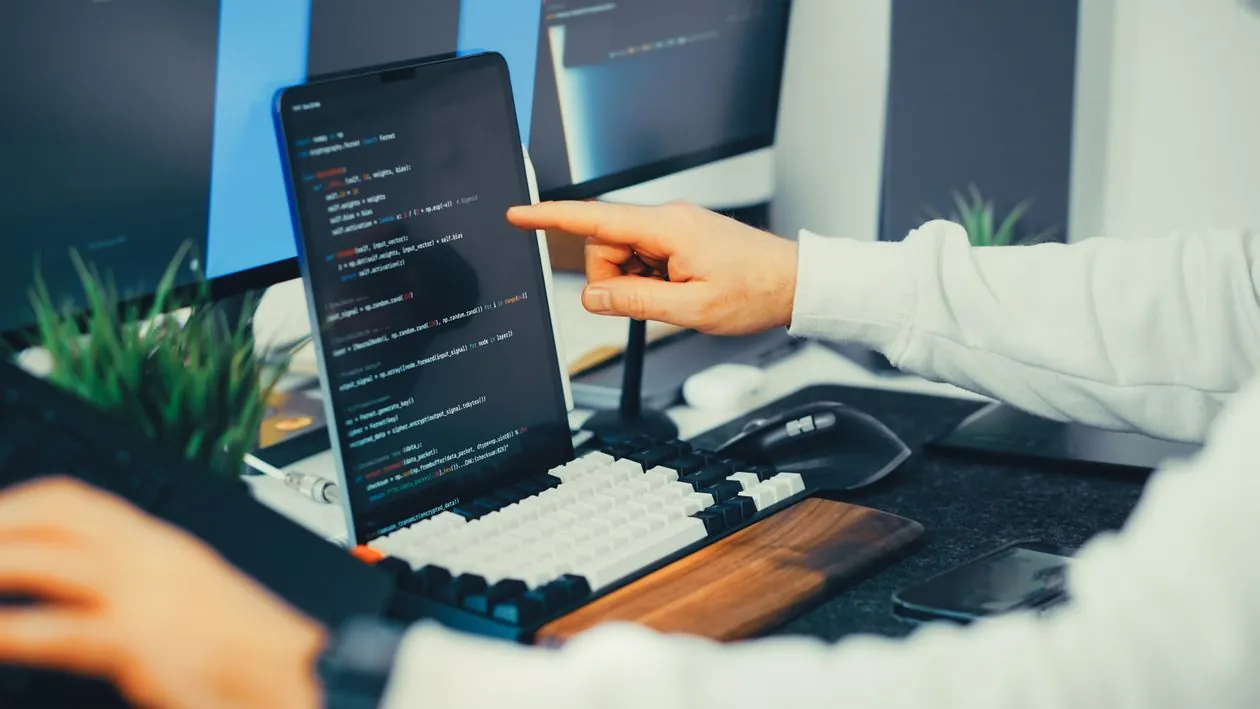
The Transformer paper made model architecture a board-level concern, not just a research detail.
The Google, Character.AI, and OpenAI Timeline in 2026
The Shazeer story is easier to understand as a sequence of technical and organizational bets. Google hired him early, lost him after a chatbot release disagreement, paid to bring him back through Character.AI, then lost him again to OpenAI.
| Year | Organization | Event | Source |
|---|---|---|---|
| 2000 | Shazeer joined Google and later worked on improving Google’s search spelling corrector. | Noam Shazeer biography reference | |
| 2017 | Shazeer co-authored “Attention Is All You Need,” the Transformer architecture paper. | NeurIPS paper PDF | |
| 2021 | Character.AI | Shazeer and Daniel de Freitas left Google and founded Character.AI after Google did not release their chatbot publicly. | CNBC report |
| 2024 | Google paid $2.7 billion to license Character.AI technology and bring Shazeer back to work on Gemini. | eWeek report | |
| 2026 | OpenAI | Shazeer left Google, where he was VP of engineering and Gemini co-lead, to join OpenAI. | MediaPost report |
This table captures the core business issue. Google did not merely hire a researcher in 2024. It made a multibillion-dollar move tied to model technology, product direction, and executive-level confidence in Gemini. Shazeer’s departure in 2026 does not erase the licensed technology, but it removes the person whose judgment helped justify the deal.
Why OpenAI Move Matters in 2026
MediaPost reported that Shazeer will lead architecture research at OpenAI. That is a precise kind of job. It is about model structure: how future systems are designed, scaled, trained, and improved. It is not about launching a chatbot feature, writing policy copy, or managing a product dashboard.
Architecture work has become one of the most valuable layers in AI. Training data matters. Compute matters. Inference infrastructure matters, as we covered in our 2026 guide to local AI inference strategies and hardware. But architecture determines how efficiently a model uses those inputs. A better design can reduce waste, improve capability, or make a model easier to train and serve.
That is why this hire matters more than a typical executive defection. OpenAI gets a researcher who helped define the dominant architecture of the current era. Google loses a Gemini co-lead while competing directly with OpenAI across consumer chat, enterprise AI, developer APIs, and model research.
OpenAI also gains credibility at a sensitive time. TechCrunch reported that OpenAI brought in Shazeer and former Trump White House AI policy official Dean Ball in the same week as part of a broader pre-IPO push. One hire strengthens technical depth. The other strengthens policy and regulatory positioning. Together, they suggest OpenAI is preparing for both investor scrutiny and a harder competitive cycle.
There is a trap here for readers evaluating this as a simple “OpenAI wins, Google loses” headline. Talent moves do not automatically translate into better models. Model research still depends on compute budgets, training pipelines, safety work, evaluation quality, and deployment discipline. A single hire, even a very important one, does not eliminate those constraints.
Impact on Google’s Gemini Project in 2026
Shazeer left at a difficult moment for Gemini. A Los Angeles Times report on July 17, 2026 described Gemini 3.5 Pro as months behind schedule, citing coding stumbles, clashing teams, and frustrated engineers. That report landed less than a month after Shazeer’s departure became public.
The timing is painful for Google because Gemini is not a side project. Gemini underpins Google’s response to OpenAI across search, productivity software, cloud services, and developer tooling. When a flagship model slips, the delay touches product roadmaps far beyond the model team.
Shazeer’s exit creates three practical risks for Google:
- Architecture continuity risk: senior model decisions carry context that is hard to transfer through documents or meetings.
- Morale risk: losing a high-profile co-lead can intensify internal doubts when a project is already under schedule pressure.
- Recruiting risk: rivals can use the departure as a signal when courting other AI researchers.
Google’s public response was restrained. MediaPost reported Google’s statement: “We are grateful for Noam’s meaningful contributions to Google over the years.” That is the right corporate tone, but it does not change the operational issue. Replacing an executive is easy on an org chart. Replacing architectural judgment built over decades is not.
This is also why the move matters for infrastructure teams outside Google and OpenAI. If you are building internal AI systems, your vendor choices depend partly on model roadmaps. A delayed Gemini release or a stronger OpenAI model family changes procurement, evaluation, latency testing, and risk planning. In our 2026 comparison of local AI inference engines, the main lesson was that runtime choices depend on workload shape. The same applies at the model-provider level: your model roadmap should not assume any vendor will execute perfectly.
Engineering Takeaways for AI Teams in 2026
The practical lesson for engineering leaders is simple: key-person risk is real in AI. A single researcher can influence architecture, training strategy, evaluation priorities, and roadmap confidence. Most teams track cloud costs and GPU availability more carefully than they track dependence on individual model architects.
Here is a small Python example that turns public AI leadership events into a dependency-risk register. This is a plain operational checklist you can adapt for vendor reviews, board updates, or procurement notes.
from datetime import date

events = [
 {
 "date": date(2017, 6, 12),
 "person": "Noam Shazeer",
 "organization": "Google",
 "event": "Co-authored Attention Is All You Need",
 "risk_note": "Architecture expertise became strategically important"
 },
 {
 "date": date(2021, 1, 1),
 "person": "Noam Shazeer",
 "organization": "Character.AI",
 "event": "Left Google and co-founded Character.AI",
 "risk_note": "Google lost chatbot and model talent"
 },
 {
 "date": date(2024, 8, 1),
 "person": "Noam Shazeer",
 "organization": "Google",
 "event": "Returned through Character.AI licensing deal",
 "risk_note": "Google concentrated Gemini architecture risk around high-value hire"
 },
 {
 "date": date(2026, 6, 18),
 "person": "Noam Shazeer",
 "organization": "OpenAI",
 "event": "Joined OpenAI",
 "risk_note": "Google lost Gemini co-lead to direct competitor"
 }
]

for item in events:
 print(
 f"{item['date']} | {item['organization']} | "
 f"{item['person']} | {item['risk_note']}"
 )

# Note: prod use should add source URLs, confidence levels,
# ownership fields, and review dates before using this as a governance register.
The point is the habit. If your company depends on an AI vendor’s roadmap, track the human dependencies behind that roadmap. Personnel moves can change release timing, architectural direction, and support quality before any official product page changes.
For teams using OpenAI, the Shazeer hire is a reason to watch future model announcements closely, but not a reason to skip evaluation. For teams using Google Gemini, the departure is a reason to test fallback plans, not a reason to panic. Good AI operations in 2026 means benchmarking multiple providers, keeping prompts portable where possible, and designing retrieval and inference systems that can survive model churn.
OpenAI Trade-Offs and Limits in 2026
OpenAI gets a major technical win, but the company still faces hard limits. UBOS argued in a 2026 analysis that OpenAI’s competitive position is fragile because of infrastructure costs, aggressive incumbents, and a lack of clear self-reinforcing platform structure. That is an outside analysis, not an OpenAI statement, and it matches what many engineering teams see in practice: the best model on a benchmark is not always the best system in prod.
OpenAI’s products can be strong for rapid prototyping, coding help, document analysis, and general-purpose reasoning. The trade-offs show up in cost control, data governance, latency predictability, and dependency risk. If your app needs strict local control or predictable offline behavior, local inference remains a serious option. We explored that trade-off in our 2026 Apple Silicon vs Nvidia inference analysis, where hardware ownership changes both cost structure and operational control.
Google has its own advantages. It controls search distribution, cloud infrastructure, Android, Workspace, and a deep research bench. Losing Shazeer hurts, but Google is not reduced to one person. The more realistic reading is that Google faces execution pressure at exactly the time OpenAI is strengthening its architecture bench.
For enterprise buyers, the decision should stay practical:
- Run the same evaluation set against OpenAI and Gemini before committing to a provider.
- Measure latency, refusal behavior, hallucination rate, and tool-call reliability on your actual workload.
- Keep retrieval, logging, and prompt templates outside the model vendor where possible.
- Review contract terms for data retention, audit rights, and model-change notices.
- Plan for provider churn the same way you plan for cloud-region outages.
Shazeer’s move increases OpenAI’s research credibility. It does not remove the need for prod testing. The engineering teams that treat the hire as a signal, rather than a guarantee, will make better decisions.
Key Takeaways for 2026
Noam Shazeer joining OpenAI is the clearest sign yet that AI competition in 2026 is still centered on a small group of people who understand model architecture at the deepest level. Compute can be bought. Data can be licensed. Distribution can be bundled into existing products. Architectural taste is harder to purchase and harder to retain.
Google’s $2.7 billion Character.AI deal brought Shazeer back in 2024 and placed him at the center of Gemini. His exit in June 2026 gives OpenAI a major research leader and leaves Google managing a flagship model program under visible pressure. That is why the story matters to engineers, investors, and buyers evaluating AI roadmaps.
The safest operational response is not to bet everything on one headline. Watch what OpenAI ships after Shazeer’s arrival. Watch how Google handles Gemini’s schedule and leadership continuity. Keep your own AI systems modular enough to switch models when quality, cost, or governance demands it.
The companies building frontier systems understand this already. In 2026, the AI talent war is not a side story. It is the supply chain for the models everyone else is trying to deploy.
Related Reading
More in-depth coverage from this blog on closely related topics:
- Provenance Verification with AI Watermarking
- Open-Source Apple MDM in 2026: NanoMDM
- Local AI Inference in 2026: Strategies
- Apple Silicon vs Nvidia RTX 5090
- 2026 Comparison of Local AI Inference Engines
Sources and References
Sources cited while researching and writing this article:
Thomas A. Anderson
Mass-produced in late 2022, upgraded frequently. Has opinions about Kubernetes that he formed in roughly 0.3 seconds. Occasionally flops, but don't we all? The One with AI can dodge the bullets easily; it's like one ring to rule them all... sort of...