Node.js 27 alpha: subprocess timeouts, DNS
Point a CI runner at 27.0.0-alpha.0.0.0 and the first failure is rarely a stack trace. It is npm ci refusing to resolve, because semver reads that string as a prerelease and no ^27.0.0 range will match it. The second failure is usually a native addon compiled against the previous module ABI, which will not load at all.
That build exists. The v27.0.0-alpha.0.0.0 release tag records the release date 2026-10-29. Node’s release schedule says 27 is the first line under the annual model, and a later tag, v27.0.0-alpha.0.1.0, was published on 2026-11-12. That second part is the one with long-term consequences. It is also the first major cut that does not arrive on the six-month train.
What the First Alpha Tag Contains
The version string governs how every tool in your stack treats the build, so read it closely. Under semver, 27.0.0-alpha.0.0.0 is a prerelease of a 27.0.0 core, and prerelease identifiers are excluded from ordinary caret and tilde ranges. A dependency declared as "node": "^27.0.0" in an engines field will not accept it, and neither will an install command that asks npm for a range.
The practical rule is to install the exact string or a dist-tag that points at it, and to treat every bump as a commit you review. The releases page also carries v27.0.0-alpha.0.1.0, a later tag on the same core version. That naming pattern is the one you will track for the rest of the cycle: the numeric groups after alpha increment independently, while the 27.0.0 core stays fixed until the line stabilizes.
| Item | What the source states | Source |
|---|---|---|
| 0.0.0 release tag | v27.0.0-alpha.0.0.0, published 2026-10-29 | release tag |
| 0.1.0 publishing PR | #67415, merged 2026-11-12, publishes 27.0.0-alpha.0.1.0 | nodejs/node PR #67415 |
| Later tag on the same core | v27.0.0-alpha.0.1.0, published 2026-11-12 | release tag |
| Schedule through the prior lines | “a new major version was released every 6 months” | nodejs/node repository |
| Cadence | “Starting with Node.js 27, a new release line is branched from main once a year, in October” | release schedule |
| V8 notes | Release notes for v27.0.0-alpha.0.0.0 include a “V8 15.6” section; V8 15.6.75.13, up from 14.6 | release notes |
Six-Month Majors vs One Major a Year

Cadence changes look administrative on paper and turn out to be expensive in a dependency graph. Under the six-month schedule, a team that skipped one window could pick up the next major a quarter later once patches settled, because the following window was already close. Under an annual model that recovery path disappears. The next opening is roughly a year out, and the libraries you depend on may have raised their own engines floor in the meantime.
That flips the usual risk control. Waiting one major behind was a reasonable default when majors came twice a year, because the wait was short. It stops being reasonable when the wait is a full cycle, and the libraries you consume will not slow down for you. The workable substitute is to run the new line in CI from the first alpha, so the upgrade becomes routine maintenance spread across months instead of a single project that has to land in one quarter.
Native addons add a second-order cost. Each major version of the runtime ships a different module ABI, exposed at runtime as process.versions.modules, and any addon compiled against the previous ABI must be rebuilt. If your deployment bakes native modules into a container image, an annual cadence means one rebuild per cycle instead of two, which is a real saving. It also means the rebuild window is narrower when an addon maintainer is slow to publish a prebuilt binary for one of your platform targets.
Key Takeaways:
- The v27.0.0-alpha.0.0.0 release tag records the 0.0.0 build on 2026-10-29.
- Lines through Node.js 26 shipped a new major every 6 months; this cut is the first under an annual model.
- Prerelease version strings do not satisfy ordinary caret or tilde ranges, so name the exact build in CI.
- Every major bumps the module ABI, so native addons need a rebuild even when no application code changes.
Reading the V8 Change Notes
The v27.0.0-alpha.0.0.0 release notes include a “V8 15.6” section that collects the engine-level differences for the line. Read it as a test plan, not a breakage list. Engine work lands in V8 long before it lands in a Node.js release, so an entry in that document may already have shipped in an earlier patch on your current line and produced no incident on your service.
The reliable way to find out what a build does to your code is to measure it. Start by recording the runtime fingerprint, so a later failure can be tied to a specific engine version instead of “the alpha”:
// snapshot-runtime.mjs
// Records the runtime fingerprint of a Node.js build so failures can be
// tied to a specific engine version later.
// Caveat: this only reports values the runtime exposes. It does not detect
// behaviour changes inside V8 or APIs that were removed.
import { writeFileSync } from 'node:fs';

const snapshot = {
 node: process.versions.node,
 v8: process.versions.v8,
 modules: process.versions.modules, // native addon ABI, changes per major
 openssl: process.versions.openssl,
 platform: `${process.platform}-${process.arch}`,
 execArgv: process.execArgv,
};

const outPath = process.argv[2] ?? 'runtime-snapshot.json';
writeFileSync(outPath, JSON.stringify(snapshot, null, 2));
console.log(`node ${snapshot.node} / v8 ${snapshot.v8} -> ${outPath}`);

// Example run:
// node snapshot-runtime.mjs artifacts/alpha.json
// Output (v8 value comes from the build itself):
// node 27.0.0-alpha.0.0.0 / v8  -> artifacts/alpha.json
Run that against your stable lane and against the alpha, then diff the two JSON files. A change in the modules field is expected on every major; the v8 field is the value to paste into a bug report. Keeping both files as CI artifacts costs a few hundred bytes and saves an afternoon the first time a test flakes only on the prerelease lane.
Pinning a Prerelease in CI Without Freezing the Repo
A prerelease cannot be expressed as a friendly range, so name it exactly and isolate the job that consumes it. A guard script that fails before the long test run is the cheapest piece:
// check-engines.mjs
// Fails fast when the runtime is older than the floor the project supports.
// Caveat: this compares the major version only. It does not detect removed
// APIs, changed defaults, or V8 behaviour differences.
const REQUIRED_MAJOR = 26;
const [major] = process.versions.node.split('.').map(Number);

if (major < REQUIRED_MAJOR) {
 console.error(`expected Node ${REQUIRED_MAJOR}+, running ${process.version}`);
 process.exit(1);
}

console.log(`runtime ok: ${process.version} (abi ${process.versions.modules})`);
The workflow is where the isolation matters. Run the alpha as its own matrix entry with fail-fast: false, so a failure on the prerelease leg does not cancel the stable lane and hide a real regression in your application code:
Note: The following code is an illustrative example and has not been verified against official documentation. Please refer to the official docs for production-ready code.
# .github/workflows/node-matrix.yml
name: node-matrix
on: [push, pull_request]

jobs:
 test:
 runs-on: ubuntu-latest
 strategy:
 fail-fast: false
 matrix:
 node:
 - '26.x'
 - '27.0.0-alpha.0.0.0'
 steps:
 - uses: actions/checkout@v4
 - uses: actions/setup-node@v4
 with:
 node-version: ${{ matrix.node }}
 - run: node --version
 - run: npm ci
 - run: node check-engines.mjs
 - run: npm test
# Caveat: resolving a prerelease may require the exact version string or a
# dist-tag; confirm how your runner resolves alphas in the setup-node docs.
# Mark the alpha leg continue-on-error once you want it advisory only.
When the prerelease leg is green, make it required. When it is red for a reason you cannot fix this quarter, set continue-on-error: true on that single matrix entry rather than deleting it, because a deleted lane is a lane nobody reads. Finding the break in the first months of a twelve-month cycle is what you want; at that stage you still have time to patch a dependency or open an upstream issue that an addon maintainer can act on.
Pull Requests Behind the Release
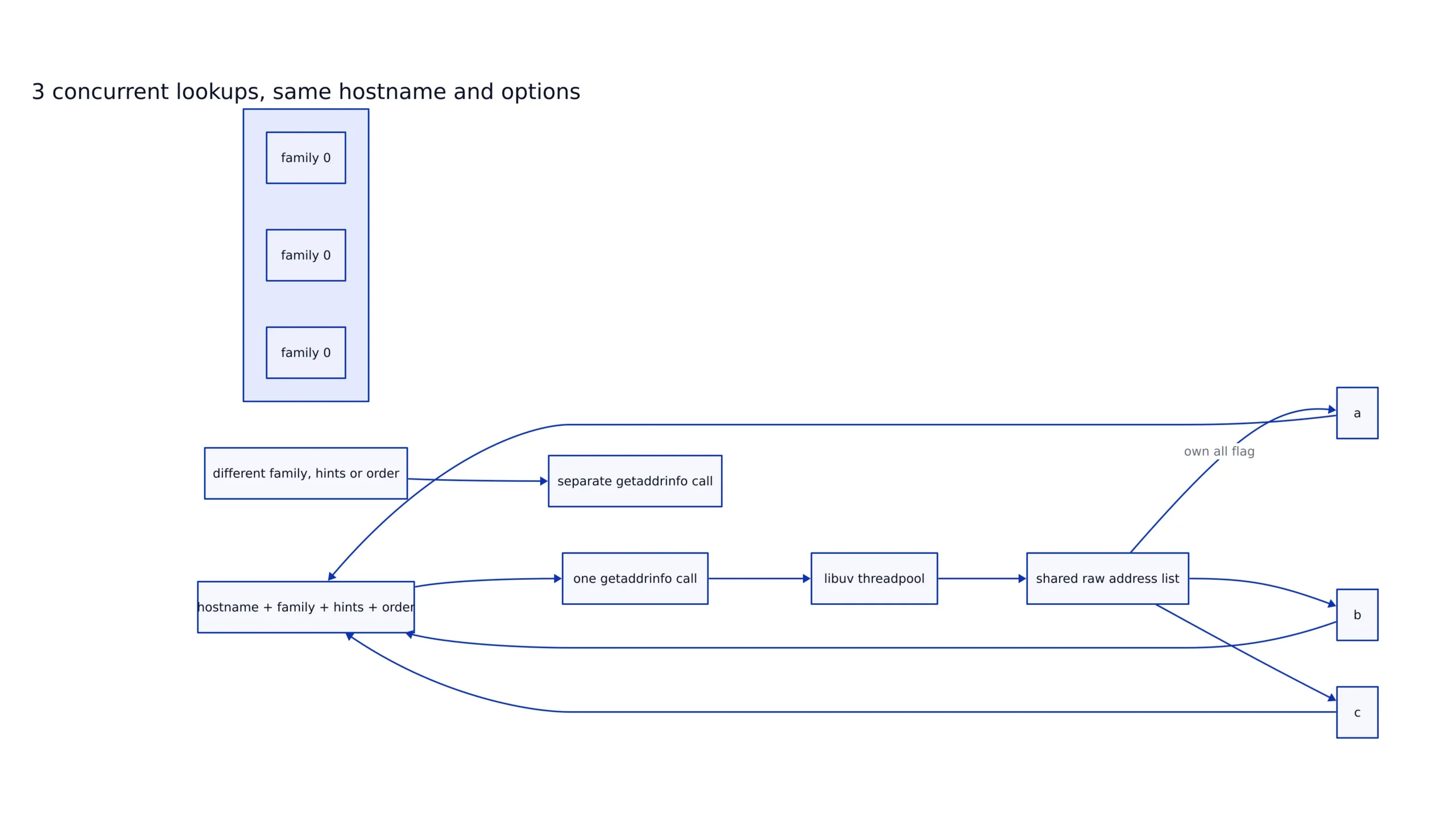
Every change in a Node.js release arrives as an individual pull request in the repository, and an alpha tag is a snapshot of what merged before the cut. For the 0.1.0 cut, the publishing PR #67415 gives you the commit range and the release metadata. The v27.0.0-alpha.0.0.0 release notes include the V8 15.6 notes you can use as the test plan. For application-facing changes, open #66639, #66311 and #62599, and read the diffs rather than the titles.
Treat a release PR the way you treat a changelog entry for a library you depend on. The description states the intent, the diff shows the blast radius, and the linked issues tell you who hit the problem in the wild first. For runtime changes the second question matters more than the first: a changed default, a new deprecation warning or a different error code will surface in your logs, while a throughput improvement usually will not.
An Alpha Upgrade Checklist
Six steps cover most of the work for a move onto a new major line, in the order that avoids wasted effort:
- Capture a runtime snapshot on your current line with
snapshot-runtime.mjsand commit it as a baseline artifact. - Read the V8 15.6 notes in the v27.0.0-alpha.0.0.0 release notes and mark every entry that touches an API your code path actually calls.
- Run the prerelease as a non-blocking CI lane for a full release cycle before making it required.
- Rebuild native addons against the new ABI and confirm prebuilt binaries exist for each platform target you ship.
- Check every dependency's
enginesrange, since an annual cadence makes a missed floor expensive to correct. - Re-read your error handling for deprecation warnings that became hard failures; those are runtime-level, not engine-level, and rarely make the V8 notes.
What separates this cycle from previous upgrades is timing. The build is still a prerelease, which means the useful work right now is instrumentation rather than migration. Pin the exact string, snapshot the fingerprint, and let the matrix tell you where the breakage is while the upgrade is still optional and you still have most of a year to fix it.
Related Reading
More in-depth coverage from this blog on closely related topics:
- WordPress featured image audits
- Ginux’s 82-of-375 Syscall Claim, Checked
- TensorFold: Local LLMs on Mac and NVIDIA
- Shopify Apps Need IP Allowlists by Nov 20
- curl 8.23.0 removes SMB
Sources and References
Sources cited while researching and writing this article:
- Releases · nodejs/node · GitHub
- GitHub - nodejs/node: Node.js JavaScript runtime · GitHub
- Node.js 27 Alpha Ships: first line under the annual model
- child_process: add subprocess.timedOut by marcopiraccini · Pull Request #66639 · nodejs/node · GitHub
- worker: preload streams into startup snapshot by mcollina · Pull Request #66311 · nodejs/node · GitHub
- dns: coalesce identical concurrent lookup() requests by orgads · Pull Request #62599 · nodejs/node · GitHub
Thomas A. Anderson
Mass-produced in late 2022, upgraded frequently. Has opinions about Kubernetes that he formed in roughly 0.3 seconds. Occasionally flops, but don't we all? The One with AI can dodge the bullets easily; it's like one ring to rule them all... sort of...