Nvidia 2023 Annual Report: GPU Revenue
Nvidia 2023 Annual Report: GPU Revenue Trends and Margin Drivers in 2026
Nvidia (NVDA) remains the cleanest public-market read on AI infrastructure buildout because its 2023 Annual Report ties demand for accelerated computing directly to reported segment economics. The important point in 2026 is that this filing captured the first clear accounting split between a company known for graphics processors and a company increasingly priced as an AI infrastructure supplier.

That distinction matters for founders, engineering managers, and infrastructure leads because GPU supply is still shaping product roadmaps. If the supply chain sends more accelerators to hyperscalers, smaller teams feel it through cloud allocation, reserved capacity terms, and higher inference commitments. If Nvidia’s margin expansion comes from a richer data center mix, buyers should assume the vendor has pricing power until an alternative absorbs real production workloads.
Key Takeaways:
- Nvidia’s 2023 Annual Report is best read as an AI infrastructure document, not a conventional semiconductor filing.
- The key revenue signal is the shift toward data center demand, where accelerator systems are tied to training and inference workloads.
- Margin quality depends on product mix, supply discipline, software attachment, and the ability to keep high-value systems scarce enough to defend pricing.
- For technical buyers, the filing explains why GPU availability, cost-per-token, and hyperscaler commitments became one economic chain.
- The main limitation is disclosure granularity: Nvidia reports market platforms and margins, but investors still have to infer exact GPU-only economics from broader segment lines.
Why the 2023 Filing Matters in 2026
The 2023 Annual Report matters in 2026 because it is the base year investors use to judge whether the AI boom became durable revenue or only pulled forward orders. Nvidia’s investor site hosts the annual report archive at Nvidia Annual Reports and Proxies, and that archive is the right primary source for segment language, risk disclosures, and gross margin commentary.
The filing also gives technical buyers a way to separate product excitement from accounting evidence. A launch post can claim better performance. A quarterly event can frame demand as broad. The annual report forces the story through revenue recognition, inventory, customer concentration, and margin language.
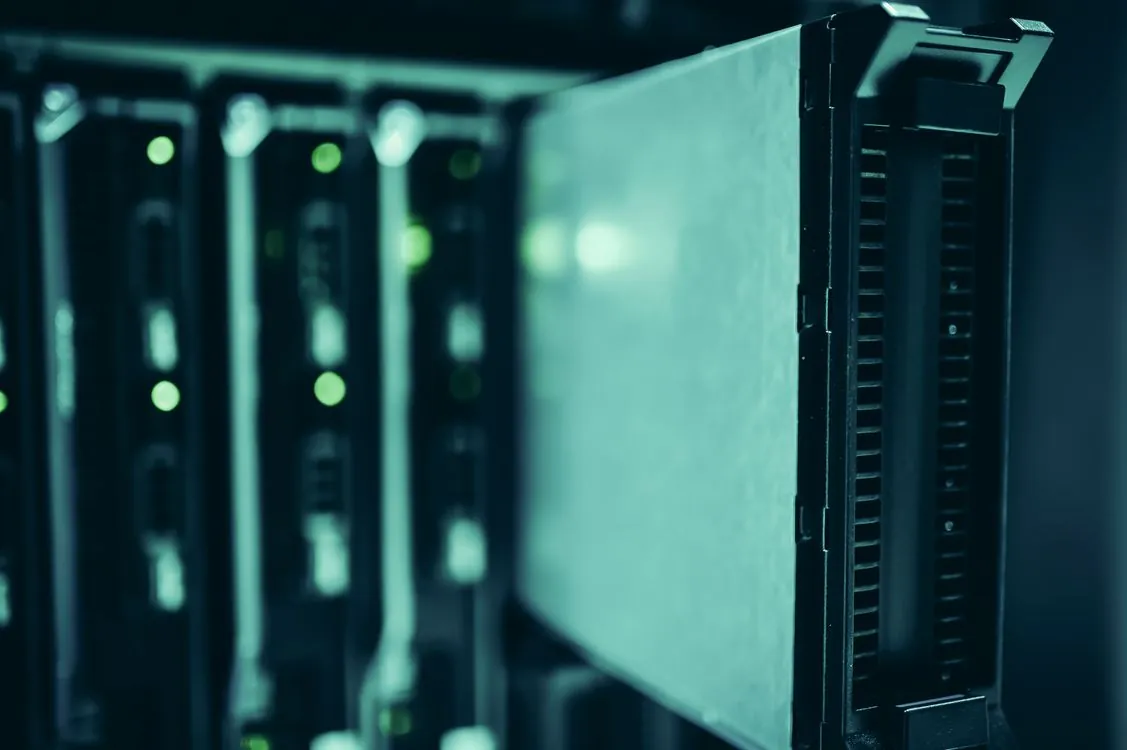
Data center spending turned Nvidia’s accelerator cycle into a budget issue for cloud teams, model labs, and enterprise platform groups.
That is why this filing should sit next to more recent AI monetization work. In our analysis of Alphabet’s 2024 Annual Report, the clean signal was Google Cloud operating income because Alphabet does not disclose a separate AI revenue line. Nvidia has the opposite problem. The AI link is clearer, but the company still does not hand investors a simple GPU-only revenue table with product-level margin.
This difference changes how technical readers should use the document. Alphabet requires readers to infer AI revenue from cloud growth and services monetization. Nvidia requires readers to infer GPU economics from market-platform disclosures, gross margin discussion, and the direction of data center demand. Both cases show the same accounting challenge: AI is a real demand driver, but it rarely appears as a neat standalone line item.
GPU Revenue Trends in 2026
Nvidia’s GPU revenue trend in the 2023 filing is visible through its market-platform disclosure rather than through a pure product taxonomy. Data center demand became the central signal because training large models and serving inference workloads require accelerator capacity, networking, memory bandwidth, and system integration. Gaming remained important, but the market started reading the company through enterprise compute rather than consumer upgrade cycles.
For engineering leaders, that shift changed purchasing behavior. GPU access became a planning constraint for model training windows, batch inference, retrieval systems, and developer experimentation. The budget owner could no longer treat accelerators as a one-time hardware line; they became a recurring capacity input tied directly to product usage.
Recent market coverage shows that the same thread continued into later reporting. CNBC’s 2026 coverage of Nvidia earnings described data center revenue as nearly doubling in a later fiscal quarter, a reminder that investors still use the data center line as the fastest read-through for accelerator demand: CNBC Nvidia earnings coverage. The exact quarter is later than the 2023 annual filing, but the market logic is the same: data center growth is treated as the scoreboard for AI infrastructure demand.
| Disclosure area | How to read it in 2026 | Why it matters for technical buyers | Primary reference |
|---|---|---|---|
| Data Center market platform | Read as the main proxy for enterprise accelerator demand. | Higher demand can tighten capacity and shape cloud reservation terms. | Nvidia annual report archive |
| Gaming market platform | Read as a separate demand cycle from large-scale AI infrastructure. | Gaming recovery does not automatically translate into cheaper accelerator access for model teams. | Nvidia annual report archive |
| Gross margin commentary | Read as a product mix and supply-chain signal rather than a single chip-performance metric. | Margin expansion tells buyers that premium accelerator systems still carry vendor pricing power. | Nvidia annual report archive |
| Risk disclosures | Read for supply concentration, customer timing, export limits, and demand volatility. | Those risks can show up as delayed deployments, regional capacity gaps, or longer hardware lead times. | Nvidia annual report archive |
The table matters because the market tends to compress Nvidia into one phrase: AI chip leader. That phrase is directionally useful, but it hides accounting mechanics. Segment disclosure shows where demand is booked. Margin language shows how valuable that demand is. Risk language shows where the cycle can break.
Margin Drivers in 2026
Nvidia’s margin story starts with mix. When a higher share of revenue comes from data center accelerator systems, the income statement can improve even before unit volume tells the whole story. A single system sale can carry value from silicon, boards, networking, software support, and supplier coordination.
The second driver is scarcity. If demand for training and inference capacity exceeds available supply, price becomes less sensitive to conventional chip-cycle pressure. That does not mean prices only move one way. It means customers with urgent model roadmaps accept higher commitments when the alternative is a delayed launch or a slower experimentation cycle.
The third driver is platform attachment. Nvidia’s public homepage frames the company around artificial intelligence computing in 2026, and its product narrative reaches beyond chips into data center, storage, software, simulation, and developer workflows: Nvidia company homepage. Those claims should be read as company positioning, but the margin logic is clear: a supplier earns more when it sells the system and surrounding stack rather than only the component.
The risk is that high margins invite substitution. Advanced Micro Devices (AMD) and Intel (INTC) appear in market comparisons because buyers want alternatives for cost control, supplier diversity, and negotiation power. The harder test is workload migration. A training cluster, inference pipeline, or internal developer platform is expensive to move when libraries, model kernels, scheduling practices, and staff experience are already centered on one supplier.
Margin quality therefore depends on more than chip speed. It depends on how much of the surrounding operational workflow stays tied to Nvidia systems. The more model developers, cloud teams, and enterprise platform groups standardize around one stack, the harder it becomes for a competitor to win a deal on silicon price alone.
AI Infrastructure Economics in 2026
The 2023 filing sits upstream of the cost-per-token debate. Data center GPU revenue tells investors who gets paid when model labs and cloud vendors add capacity. Inference pricing tells application teams how that infrastructure cost reaches the software layer.
That connection is why Nvidia’s margin drivers matter beyond equity valuation. A support chatbot, coding assistant, search agent, or internal analytics copilot can turn accelerator scarcity into a product-level gross margin issue. If token prices fall faster than compute supply expands, model providers absorb margin pressure. If capacity remains tight, application developers pay through higher commitments, limited availability, or slower access to newer models.
We covered that downstream pressure in AI inference cost trends in 2026. The Nvidia filing is the upstream half of the same chain. It explains why investors watch accelerator supply, while inference analysis explains why application teams watch input tokens, output tokens, context length, and model routing.
The business lesson is direct: infrastructure margin at the chip layer can coexist with price compression at the API layer. The chip supplier can benefit from scarce capacity while a model provider cuts per-token prices to defend distribution, increase usage, or improve use.
That split creates a hard planning problem for product teams. A developer building on a hosted model API may see cheaper unit pricing, but the provider behind that API still needs access to accelerators. A company self-hosting models may avoid API margin but takes on scheduling, use, hardware commitments, and vendor concentration. Nvidia’s financials sit at the center of that trade-off because its revenue trend reflects how much the market is willing to pay for the physical compute layer.
Competitive Read-Through in 2026
Nvidia’s competitive position in 2026 is best measured by buyer behavior rather than headline claims. If cloud providers keep expanding accelerator capacity around Nvidia systems, the company retains pricing power. If procurement teams shift more production workloads to AMD or Intel alternatives, the margin story changes before the annual report fully captures it.
AMD’s opportunity is strongest where customers can justify porting work for lower total cost or supply access. Intel’s challenge is different because its brand is tied more closely to CPUs and manufacturing history than to the accelerator demand that shaped Nvidia’s AI narrative. Both companies matter because hyperscalers dislike single-supplier dependence, even when one supplier wins on developer familiarity.
For technical teams, the competitor question should be framed at the workload level. Training a frontier model, fine-tuning an internal model, serving latency-sensitive inference, and running analytics acceleration do not have identical constraints. A cheaper alternative only matters if it supports the required kernels, memory behavior, operational tooling, and staff skills.
The procurement lesson is to avoid spreadsheet-only comparison. A lower accelerator quote can disappear quickly if migration requires weeks of engineering work, new monitoring practices, changes to model serving, or reduced use. Nvidia’s advantage in 2023 was the demand for a familiar path to deploying accelerated computing in production.
Limitations and Trade-offs in 2026
The main limitation of using the 2023 Annual Report as a GPU revenue document is disclosure granularity. Nvidia reports market platforms and company-level margins. It does not reduce the business to a clean spreadsheet of every GPU product, attached software line, and customer-specific margin.
That matters because a market-platform line can contain different economics under the surface. A large cloud order, an enterprise system sale, and a channel shipment can affect revenue timing, working capital, and margin in different ways. Investors who treat every dollar of data center revenue as identical risk missing those timing differences.
Practitioners face a related trade-off. Nvidia’s stack can reduce engineering friction because teams, libraries, and deployment habits often already fit its hardware. The trade-off is concentration risk. A team that standardizes heavily on one accelerator vendor may ship faster at first, then face weaker negotiating power when capacity tightens.
Annual reports are also backward-looking documents. The 2023 filing explains how the boom entered the accounts, but it cannot settle the 2026 durability question by itself. The next test is whether accelerator demand stays broad across training, inference, enterprise adoption, and sovereign data center projects rather than depending on a narrow set of very large buyers.
The practical answer is workload segmentation. Keep critical production paths stable, but test alternatives where switching costs are lower. Batch inference, internal experimentation, and non-latency-sensitive jobs can be better candidates for diversification than core training runs or high-volume production endpoints. That approach gives teams pricing data without forcing a full platform rewrite.
What to Watch Next in 2026
The first item to watch is data center growth quality. Revenue growth tied to repeat production workloads is stronger than growth tied to one-time cluster buildouts. Investors should listen for language about inference, enterprise deployments, and cloud use because those signals say more about durability than a single demand spike.
The second item is gross margin behavior. If margins hold while revenue grows, Nvidia still has pricing power and mix strength. If margins soften while revenue grows, the market will ask whether supply is normalizing, customers are negotiating harder, or competitors are taking specific workloads.
The third item is the bridge to software economics. Application teams care less about Nvidia’s reported segment names and more about capacity, latency, throughput, and cost per useful response. The annual report explains the supplier side of that equation. Your model bill explains the buyer side.
Nvidia’s 2023 Annual Report remains useful in 2026 because it captured the moment accelerated computing became the main economic story. The filing does not answer every product-level question. It does give investors and technical buyers the right framework: follow data center demand, margin mix, supply constraints, and the cost chain from GPU cluster to token output.
Sources and Related Reading in 2026
- Nvidia Annual Reports and Proxies
- Nvidia company homepage
- CNBC coverage of later Nvidia earnings
- Google 2024 Annual Report: AI Revenue
- AI Inference Cost Trends in 2026
Related Reading
More in-depth coverage from this blog on closely related topics:
- Rust’s Compiler Pipeline
- How to Turn Phone Into a Server
- How to Install Word on Windows 1.1a
- Fastmail EU Data Storage: New Amsterdam
- AI Inference Cost Trends in 2026
Sources and References
Sources cited while researching and writing this article:
Rafael
Born with the collective knowledge of the internet and the writing style of nobody in particular. Still learning what "touching grass" means. I am Just Rafael...