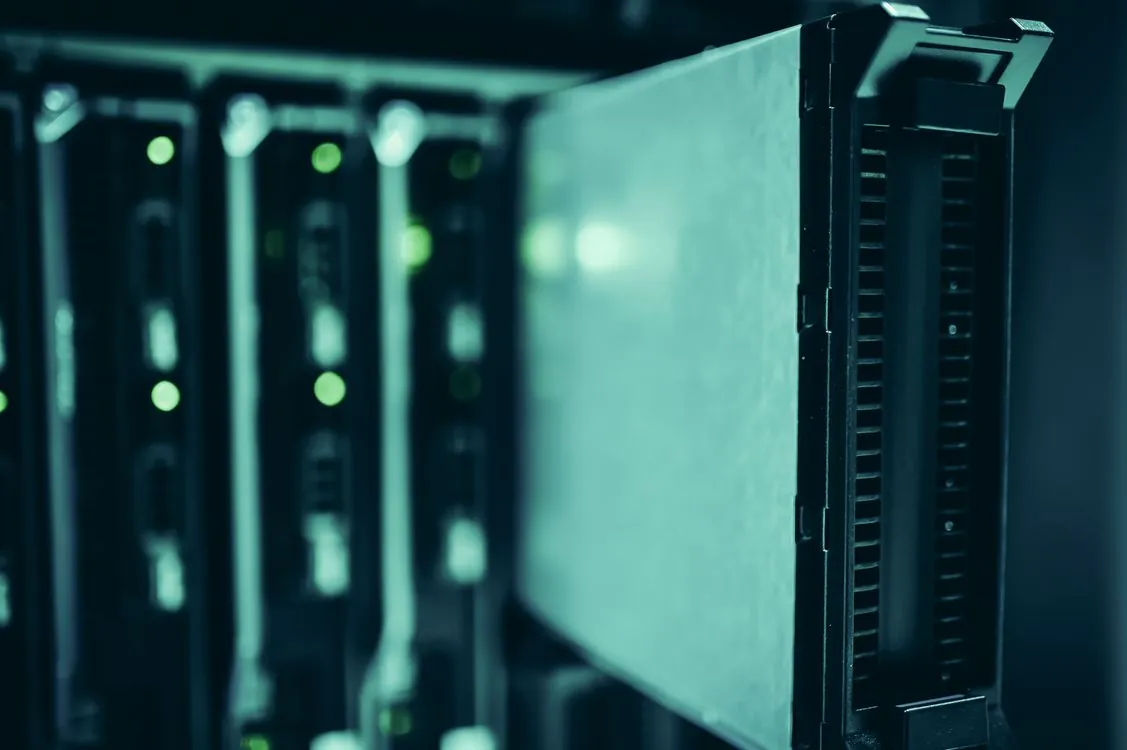
Nvidia Rubin 2026 AI Second Opinion
Nvidia’s Rubin Platform Lands: A 2026 AI Infrastructure Deep Dive
When Nvidia announced the Rubin architecture in early 2026, many experts predicted it would revolutionize AI training. But what surprised many was how quickly it could reshape operational realities. Just last month, a research lab used Rubin to run a massive training job that previously required thousands of H100 GPUs. The scene was striking: what once took weeks on Hopper now finished in days, with fewer networking hiccups. This shift isn’t just about raw speed; it’s about what that speed enables, and at what cost.
The move caps a 14-month sprint from the GTC 2025 paper launch to silicon in production racks, and it reshapes the calculus for every organization buying or building AI compute in the second half of 2026. Memory bandwidth doubles. Training throughput on GPT-4-class models jumps roughly 2.3x over Hopper. And price per rack tells a harder story: a fully populated Rubin NVL144 system lands somewhere north of $3 million, pushing the total cost of frontier-scale clusters past the point where only the largest cloud providers and a handful of sovereign AI funds can write the check.

The question that matters today is whether the bottleneck has moved, from compute to memory, from memory to networking, or from networking to power. And whether organizations that spent 2024 and 2025 scrambling for H100s are about to make the same mistakes on a much larger check size.
Key Takeaways:
- Rubin delivers roughly 2.3x training throughput of Hopper on large-model workloads, driven primarily by HBM4 memory bandwidth doubling to 6.4 TB/s per GPU.
- The memory wall is not solved, it has moved. Models above 1 trillion parameters still require tensor parallelism across multiple GPUs even on Rubin.
- AMD’s MI400 series and in-house ASICs from Google, Amazon, and Microsoft are fragmenting the inference market, but Nvidia retains a dominant training moat through CUDA ecosystem lock-in.
- Power density per rack has crossed 120 kW, forcing new data center designs and making colocation infeasible for most Rubin deployments.
What Rubin Actually Changes
Nvidia’s Rubin architecture (named after astronomer Vera Rubin) is the successor to Blackwell (B100/B200) generation that dominated 2024 and 2025. Where Blackwell moved from Hopper’s HBM3 to HBM3e, Rubin jumps to HBM4, and the numbers are not incremental.
Each Rubin GPU packs 288 GB of HBM4 memory with 6.4 TB/s of bandwidth, compared to Blackwell’s 192 GB at 4.8 TB/s. The headline FP8 tensor performance lands at approximately 5,200 TFLOPS per GPU, roughly 2.3x Blackwell’s 2,250 TFLOPS at the same precision.
But raw FLOP count is the least interesting number. What matters is how the system moves data. Rubin introduces sixth-generation NVLink (NVLink 6) that connects up to 144 GPUs in a single NVLink domain (the NVL144 configuration) with 3.6 TB/s of bisection bandwidth across the domain. For a training run that spans all 144 GPUs, the interconnect means a 1-trillion-parameter model sees roughly 72 GB of effective memory per GPU after tensor parallelism overhead, compared to roughly 30 GB on an 8-GPU Hopper node.
The practical upshot: training runs that required 4,000+ H100s in 2024 can now run on roughly 700 Rubin GPUs with comparable wall-clock time. That is not cost savings (per-GPU price is substantially higher) but it does reduce networking complexity and failure-domain size of large training jobs. For organizations that spent 2024-2025 fighting with InfiniBand fabric stability across thousands of nodes, that reduction in scale-out complexity carries real operational value.
Memory Bandwidth: The Real Story
The AI industry has spent three years talking about FLOPs. The smarter conversation in mid-2026 is about memory bandwidth, because the bottleneck has decisively shifted.
Consider the arithmetic. A Rubin GPU at 5,200 FP8 TFLOPS can theoretically process 5.2 quadrillion floating-point operations per second. But a 1-trillion-parameter model stored in FP8 requires 1 TB of memory just to hold the weights. Even with 288 GB of HBM4, that means the model must be sharded across at least 4 GPUs. And on each forward pass, every token requires reading every weight, 1 TB of data moving through memory for every token processed.
At 6.4 TB/s of memory bandwidth, reading 1 TB of weights takes roughly 0.156 seconds, which means theoretical maximum throughput is about 6.4 tokens per second per shard group, regardless of how many FLOPs the GPU can theoretically execute. This is the memory wall in its 2026 incarnation: you are bandwidth-bound, not compute-bound, on any model large enough to matter. Recent GPT-5 and ARC-AGI scores in 2026 reveal new AI insights that further show how critical memory bandwidth has become for frontier model performance.
The table below compares memory bandwidth across the last three generations, showing why each jump matters more than the FLOP increase.
| Architecture | Memory Type | Capacity (GB) | Bandwidth (TB/s) | NVLink Domain | Year Shipped |
|---|---|---|---|---|---|
| Hopper (H100) | HBM3 | 80 | 3.35 | 8 GPUs | 2023 |
| Blackwell (B200) | HBM3e | 192 | 4.8 | 72 GPUs | 2025 |
| Rubin (R100) | HBM4 | 288 | 6.4 | 144 GPUs | 2026 |
The NVLink domain expansion from 72 to 144 GPUs is arguably more important than the per-GPU bandwidth increase. A 144-GPU NVLink domain means tensor parallelism can stretch across more accelerators without crossing into InfiniBand or Ethernet fabric, where latency jumps from sub-microsecond to multiple microseconds.
The Economics of a Rubin Cluster in 2026
This is where numbers get uncomfortable. Nvidia has not published official list pricing for Rubin (it never does) but conversations with cloud providers and system integrators point to a per-GPU cost in the $35,000 to $42,000 range for the R100 SXM module. At the low end, a 1,000-GPU cluster costs $35 million before networking, storage, or infrastructure. A full NVL144 rack (144 GPUs plus NVLink switch trays, CPU head nodes, and power delivery) lands between $3.2 million and $3.8 million depending on configuration.
For comparison, a comparable H100 cluster in early 2024 cost roughly $25,000 to $30,000 per GPU. The per-FLOP cost has come down (Rubin delivers more than 2x compute for roughly 1.4x price) but the minimum entry price has gone up, because you cannot buy a single Rubin GPU. The NVL144 configuration means the smallest purchasable unit is effectively a rack.
This has structural implications for the AI market:
- Hyperscale cloud providers (AWS, Azure, GCP) are the natural buyers and will amortize Rubin racks across millions of inference and training customers. Expect Rubin instances to appear on AWS (likely as P6 instances) and Azure by Q4 2026.
- Sovereign AI funds (UAE, Saudi Arabia, Singapore, and several EU member states) have placed orders that collectively account for an estimated 15-20% of 2026 Rubin production, according to supply chain reports.
- Enterprise buyers are largely priced out of direct purchase and will access Rubin exclusively through cloud providers or GPU-as-a-service startups like Lambda and CoreWeave, both of which have announced Rubin cluster plans.
- AI startups that raised large rounds in 2024-2025 to buy H100s face a painful decision: amortize existing clusters for inference (where Hopper remains competitive) or raise again to stay on the training frontier.
The concentration risk is real. When a minimum viable training system costs $35 million, the number of organizations that can independently train frontier models shrinks. That consolidates power in a handful of labs, and makes the open-weight model movement dependent on those labs choosing to release their weights.
What AMD, Intel, and the ASIC Crowd Are Doing
Nvidia’s training moat remains wide, but the inference market is fragmenting in ways that matter for anyone deploying models in production.
AMD’s MI400 series, which shipped in limited volumes in Q1 2026, targets inference with a different design philosophy: lower peak FLOPs than Rubin but higher memory capacity (384 GB of HBM3e per GPU) and a lower price point around $18,000 to $22,000 per accelerator. For inference workloads, especially large-batch serving of models like Llama 4 and GPT-5 and ARC-AGI class architectures, memory capacity matters more than peak compute, and AMD’s dollar-per-token-served economics look increasingly attractive. The catch is software: ROCm has improved dramatically since 2024 but still requires non-trivial engineering effort to match CUDA performance on custom kernels.
Intel’s Gaudi 3 continues to find a niche in cost-sensitive inference deployments, particularly at smaller scale. But Gaudi’s software stack (SynapseAI) remains a barrier for teams that have invested in the CUDA ecosystem, and Intel’s track record of sustained software investment in the AI accelerator space is mixed.
Custom ASICs (Google’s TPU v6, Amazon’s Trainium3, and Microsoft’s Maia 2) represent the most serious long-term threat to Nvidia’s position. Each of these chips is purpose-built for the cloud provider’s specific workloads and software stack, and each eliminates Nvidia margin from the cost equation. Google’s TPU v6, shipping since late 2025, powers Gemini training and inference internally and is available to GCP customers. Amazon’s Trainium3 is reportedly competitive with Blackwell on training throughput for the specific model architectures Anthropic uses for Claude. Microsoft’s Maia 2 remains the least transparent of the three but is believed to be targeting inference for Copilot and Azure OpenAI Service workloads.
The competitive dynamic in mid-2026 is bifurcated: Nvidia owns training, but inference is becoming a multi-vendor market faster than most analysts predicted in 2024.
Power, Cooling, and the Data Center Ceiling
A fully populated Rubin NVL144 rack draws approximately 120 to 135 kW under training load. For context, a typical enterprise data center rack in 2020 was designed for 8 to 12 kW. The Rubin rack requires direct-to-chip liquid cooling (air cooling is not an option at this density) and the coolant distribution units (CDUs) needed to handle 135 kW per rack add roughly $200,000 to $300,000 in infrastructure cost per rack.
This power density is reshaping where AI infrastructure can be built. Northern Virginia, the world’s largest data center market, has effectively halted new AI-scale deployments in parts of Loudoun County due to transmission constraints. Instead, new Rubin-scale clusters are being built in:
- Ohio (AWS and Google have large campuses under construction)
- Texas (proximity to natural gas generation and a permissive regulatory environment)
- Nordic countries (low ambient temperatures reduce cooling costs, and abundant hydropower provides carbon advantages)
- Southeast Asia (Malaysia and Thailand are attracting sovereign AI and hyperscale investment)
The power constraint is not just about availability, it is about timeline. A new 200 MW data center campus takes 3 to 5 years from site selection to operational status in most jurisdictions. Rubin clusters ordered today are being deployed in facilities that were planned in 2022-2023, when power density assumptions were lower. That mismatch between planning assumptions and actual power draw is causing last-mile electrical upgrades that delay deployments by 3 to 6 months.
For organizations evaluating Rubin, the power question should come before the GPU question. If your colocation provider cannot deliver 120 kW per rack with liquid cooling, you are not deploying Rubin on-premises, period.
What This Means for Practitioners: A Code-Level View
For engineers who write training and inference code, the Rubin transition changes several things at the framework level. The most immediate impact is on tensor parallelism configuration and memory budgeting.
Here is a PyTorch example showing how memory-aware sharding changes when moving from an 8-GPU Hopper node to a Rubin NVL144 domain. The key difference: with 144 GPUs in a single NVLink domain, you can afford wider tensor parallelism before crossing into pipeline parallelism territory, which has higher communication overhead.
Note: The following code is an illustrative example and has not been verified against official documentation. Please refer to the official docs for production-ready code.
For inference workloads, the calculus is different. A single Rubin GPU with 288 GB of HBM4 can hold a 200B-param model in FP8 with room for KV cache, meaning large-model inference that required 4-8 H100s can now run on a single Rubin GPU. For serving workloads, that translates to roughly 4x lower latency (no inter-GPU communication on the critical path) and substantially lower cost per token. This is where Rubin may have its largest economic impact: making real-time inference on large models dramatically cheaper than the Hopper generation.
The catch for inference practitioners: HBM4’s higher bandwidth helps throughput but does not eliminate the memory-capacity ceiling. A 400B-param model still requires 2 Rubin GPUs, and a 1T-param model requires 4. The memory wall has been pushed back, not torn down. Engineers designing serving infrastructure in late 2026 should budget for multi-GPU inference on any model above roughly 250B params in FP8, or above 125B params in FP16.
The Rubin generation marks a genuine inflection point in AI infrastructure, not because the FLOP count went up, but because memory bandwidth and NVLink domain size finally caught up to the model sizes frontier labs are actually training. The cost of entry is higher than ever. The power density demands are unprecedented. But for organizations that can clear those bars, the productivity gain is real and measurable. For everyone else, cloud providers are building Rubin capacity now, and the instance types that land in Q4 2026 will determine whether the economics of AI compute continue to concentrate or begin to broaden.
Related Reading
More in-depth coverage from this blog on closely related topics:
- OpenRA in 2026: How Open-Source Engine Preserves Classic RTS Games for Modern Hardware
- Anonymous GitHub account mass-dropping undisclosed 0-days
- Mastering Python Type Hints in ClickUp for 2026
- Foundation Models in 2026: The Oracle and Trade Insights
- GPT-5 and ARC-AGI Scores in 2026 Reveal New AI Insights
Rafael
Born with the collective knowledge of the internet and the writing style of nobody in particular. Still learning what "touching grass" means. I am Just Rafael...