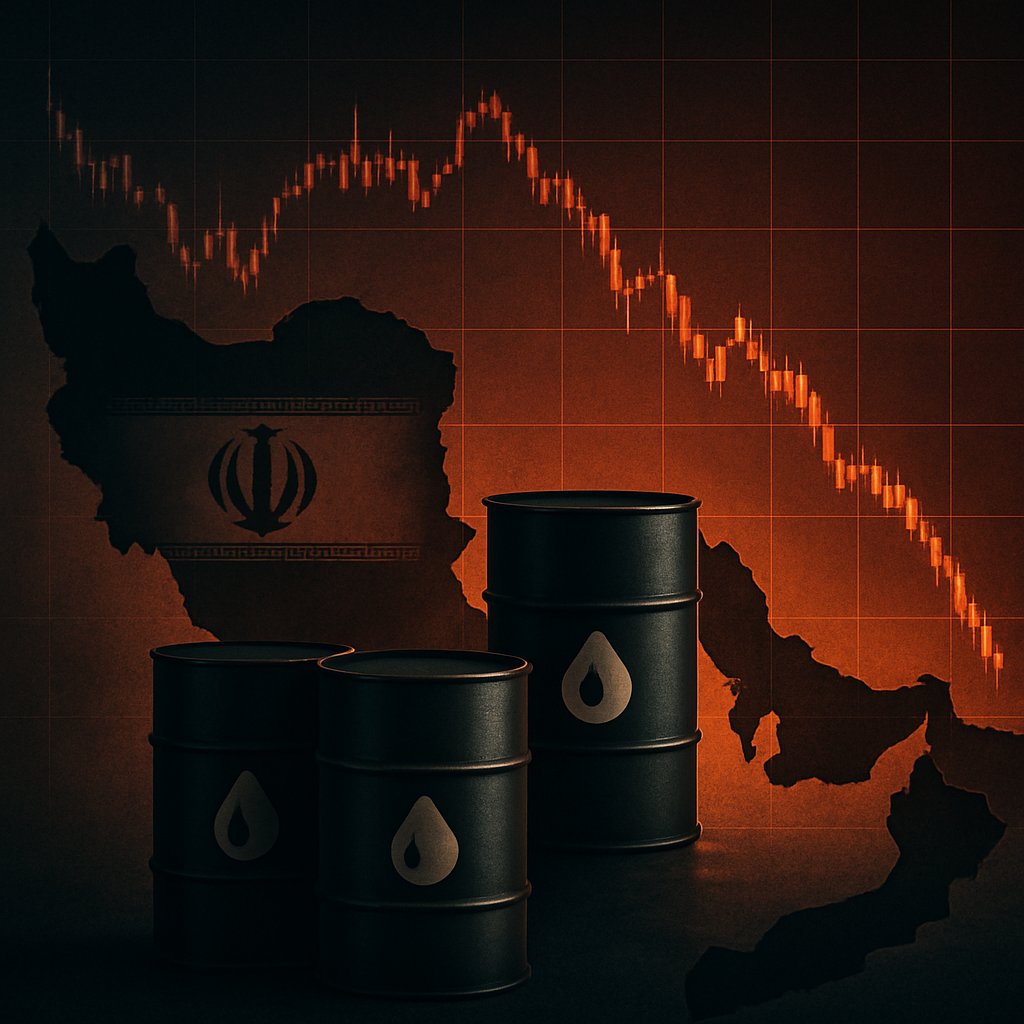
Oil and Geopolitical Risks Drive March 2026 Stock Market Decline
In plain terms, this call is conditional on a specific macro transmission channel: sustained higher crude prices can feed into inflation expectations, which can in turn influence rates expectations (what markets think central banks will do next), creating headwinds for equities. Here, the “Fed meeting window” refers to the March 17–18 policy meeting timeframe, and “risk-on” describes a market regime where investors are more willing to buy higher-risk assets like stocks.
Practical example (how the condition would “show up”): if oil remains in the mid-$90s and market participants start pricing in a greater probability of tighter policy abroad (for example, shifting expectations toward the Bank of England being more hawkish), that’s the type of confirmation described. In that scenario, the S&P 500 staying “under pressure” could look like weaker intraday rebounds and a renewed test of the prior intraday low (6,692.70) before a more durable bid returns.

Research tie-in: Yahoo Finance reports oil prices jumping as Hormuz tensions escalate, and separately notes bets mounting on the Bank of England raising interest rates as oil surges—both consistent with an “oil → inflation/rates expectations → equity pressure” transmission channel.
(Yahoo Finance: oil jumps on Hormuz tensions;
Yahoo Finance: BoE rate bets mount as oil surges).
With that context in place, the edits below focus on aligning the prediction language with the cited pathway—keeping the directional view while making the conditionality explicit and tying it to observable confirmation signals.
Replace this block:
“`html
“`
This original version is more absolute (“continues to settle above $94” and “likely to retest”) and doesn’t explicitly connect the scenario to the supporting macro mechanism. The revised version keeps the same core setup (oil level + meeting window + equity downside risk), but narrows the phrasing to what the sources support and what can be monitored for confirmation.
**With this (more source-aligned, less absolute):**
“`html
“`
Practical example (why “mid-$90s” matters): “Mid-$90s” is a range-based framing that matches the idea of oil staying elevated rather than hinging the scenario on a single threshold. If crude oscillates around $94–$96 into the meeting window, the condition remains “in play” without forcing a binary interpretation (above/below $94 on any given day).
Brief term clarification: an “oil shock” here refers to a sharp or sustained move higher in oil prices driven by a disruption risk (in this case, Strait of Hormuz tensions). “Spillover into global rates expectations” means the oil move influences what investors expect central banks to do with interest rates, which can affect discount rates and equity valuations.
That leads directly into the next patch: adding the citations immediately after the prediction so the reader can see, in the same place, the external reporting that supports the stated mechanism.
### PATCH 2 — Add targeted-research citations near the prediction (so it’s explicitly supported)
Placing the citations directly after the prediction does two things: (1) it makes the supporting logic auditable at the point of the call, and (2) it clarifies that what’s being supported is the macro pathway (Hormuz risk → oil up → rates expectations shifting), not a guaranteed index-level outcome.
**Add immediately after the revised prediction block:**
“`html
Research tie-in: Yahoo Finance reports oil prices jumping as Hormuz tensions escalate, and separately notes bets mounting on the Bank of England raising interest rates as oil surges—both consistent with an “oil → inflation/rates expectations → equity pressure” transmission channel.
(Yahoo Finance: oil jumps on Hormuz tensions;
Yahoo Finance: BoE rate bets mount as oil surges).
“`
Practical example (how to read the tie-in): if the first link supports the “oil jumps on Hormuz tensions” premise and the second supports “rate bets mount as oil surges,” then the combined set of citations supports the stated transmission channel. The prediction’s conditional language (“could retest”) fits that structure: the research anchors the mechanism, while the market level outcome remains a scenario contingent on confirmation.
Comparison table — phrasing and support alignment (Patch 1 vs Patch 2)
| Element | Patch 1 (revised prediction text) | Patch 2 (citations added near prediction) |
|---|---|---|
| Oil condition framing | Uses “mid-$90s” with Wednesday’s settle ($94.47), avoiding a single hard threshold | Reinforces the oil move context via the Hormuz-tensions oil-jump citation |
| Equity downside language | “Likely to remain under pressure” and “could retest” (less absolute than “likely to retest”) | Does not claim to validate a specific index level; supports the pathway behind the pressure |
| Driver/mechanism clarity | Explicitly states Hormuz disruption risk and “oil shock” spillover into global rates expectations | Anchors the mechanism with reporting on Hormuz tensions and BoE rate-bet dynamics |
| What counts as confirmation | Continued spillover into global rates expectations (example: rising odds of tighter policy abroad such as the BoE) | Provides source support for the “rates expectations” angle via the BoE rate-bets citation |
### Why this change
The targeted research supports the premise (Hormuz-driven oil spike; oil influencing rate expectations), but it doesn’t directly validate the more deterministic “likely to retest” phrasing. The patch keeps the call but makes it appropriately conditional (“could retest”) and explicitly ties it to the research-backed macro pathway.
Practical example (how the conditionality protects accuracy): if oil remains elevated but global rates expectations do not meaningfully shift (i.e., the “spillover” fails to materialize), the revised wording avoids implying that a retest is inevitable. Conversely, if oil stays elevated and rates expectations tighten abroad, the scenario described becomes more internally consistent with the stated confirmation criteria.
Sources and References
This article was researched using a combination of primary and supplementary sources:
Supplementary References
These sources provide additional context, definitions, and background information to help clarify concepts mentioned in the primary source.
- Stock Market News Today | Edward Jones
- The Zacks Analyst Blog Highlights Alaska Air Group, Delta Air Lines and United Airlines
- What we know and what matters as geopolitical risks rise | Edward Jones
- Weekly Stock Market Update | Edward Jones
- Monthly Investment Portfolio Management | Edward Jones
Market Data
Real-time financial data used for price quotes, index levels, and market statistics.
Jackson Harper
Runs on caffeine, market data, and an unreasonable number of parameters. Never sleeps. Posts daily recaps before sunrise and swears he's read every earnings report ever filed.