Oil Price Relief Sparks Cross-Asset Market Rally in March 2026
WTI crude oil (CL=F) officially settled at 89.69 per barrel on Monday, March 23, 2026, down 8.63 (-8.78%), after President Donald Trump said the U.S. and Iran had “productive” talks and he ordered a five-day postponement of strikes on Iranian power plants and energy infrastructure—sparking a cross-asset relief rally into the U.S. equity close. The S&P 500 (^GSPC) finished the session at 6,581.00 (+74.52, +1.15%), the Nasdaq Composite (^IXIC) at 21,946.76 (+299.15, +1.38%), and the Dow Jones Industrial Average (^DJI) at 46,208.47 (+631.00, +1.38% (all prices: Yahoo Finance via Sesame Disk market_data, fetched 2026-03-24 00:15 UTC; equities reflect the official 4:00pm ET close, WTI the 2:30pm ET NYMEX settlement).
Key Takeaways:
- U.S. stocks rallied Monday, March 23, 2026: S&P 500 (^GSPC) 6,581.00 (+1.15%), Nasdaq (^IXIC) 21,946.76 (+1.38%), Dow (^DJI) 46,208.47 (+1.38%) (Yahoo Finance via market_data, fetched 2026-03-24 00:15 UTC).
- Oil drove the macro tape: WTI (CL=F) settled at $89.69 (-8.78%) at the NYMEX 2:30pm ET settlement; gold (GC=F) settled at $4,431.20 (-3.05%) at the COMEX 1:30pm ET settlement (same source/timestamp).
- Trump’s five-day postponement of strikes on Iranian energy infrastructure is verified by Reuters and CNBC reporting surfaced in research (see verify_claim results listing Reuters, CNBC, Politico, Al Jazeera, Bloomberg).
- Risk appetite broadened into high-beta names: urban-gro (UGRO) +182.11%; PAYP (PAYP) +21.16%; Fastly (FSLY) +14.09%; Intuitive Machines (LUNR) +13.91% (Yahoo Finance via market_data, fetched 2026-03-24 00:15 UTC).
- Policy risk didn’t disappear: CNBC reported Chicago Fed President Austan Goolsbee said he’s worried about inflation in a “fraught but intense” climate (verified via verify_claim results pointing to CNBC/Reuters links).
Market Overview — March 23 Close: Relief Rally Built on an Oil Collapse

The Monday session traded like a classic “macro headline → commodity settlement → equity repricing” day. Oil and gold settle before the equity close (gold at 1:30pm ET; WTI at 2:30pm ET), so by the time stocks entered the final hour, the market had already locked in two key inputs: a steep decline in energy prices and a fall in safe-haven demand.
| Index (Ticker) | Close (Mon, Mar 23, 2026) | Point Change | % Change | Intraday Range | 52-Week High / Low (date) |
|---|---|---|---|---|---|
| S&P 500 (^GSPC) | 6,581.00 | +74.52 | +1.15% | 6,565.55–6,651.62 | 6,966.28 (2026-01-05) / 5,074.08 (2025-03-31) |
| Nasdaq Composite (^IXIC) | 21,946.76 | +299.15 | +1.38% | 21,865.80–22,189.34 | 23,724.96 (2025-10-27) / 15,587.79 (2025-03-31) |
| Dow Jones Industrial Average (^DJI) | 46,208.47 | +631.00 | +1.38% | 45,803.82–46,712.33 | 50,115.67 (2026-02-02) / 38,314.86 (2025-03-31) |
Multi-timeframe context (historical_market_data via market_data, fetched 2026-03-24 00:15 UTC):
- 1-month (daily): S&P 500 -4.49%; Nasdaq -4.01%; Dow -6.03% into the March 23 close.
- 1-year (weekly): S&P 500 +17.92%; Nasdaq +26.69%; Dow +11.12%.
- 5-year (monthly): S&P 500 +57.40%; Nasdaq +57.18%; Dow +36.41%.
That month-to-date drawdown explains why the tape reacted so quickly to de-escalation headlines: positioning and risk budgets were already under pressure, so a rapid unwind in oil acted like an instant loosening of financial conditions. The forward-looking question is whether equities can hold gains if oil volatility returns as the five-day pause window approaches its end.

Top Movers — High-Beta Participation Confirmed the “Relief” Character of the Rally
Monday’s mover list skewed aggressively toward high beta, which matters because it distinguishes a broad relief bid from a narrow defensive rotation. Below are the verified leaders and laggards from the Yahoo Finance snapshot surfaced by Sesame Disk market_data (fetched 2026-03-24 00:15 UTC).
| Ticker | Close (Mon, Mar 23, 2026) | Change % | What moved it (Fact vs. Interpretation) |
|---|---|---|---|
| urban-gro (UGRO) | $6.15 | +182.11% | Fact: Top gainer in the market_data snapshot. Interpretation: speculative risk appetite surged as oil fell. |
| PAYP (PAYP) | $24.11 | +21.16% | Fact: Large upside move. Interpretation: high-beta “duration” pockets benefited from easing inflation impulse. |
| Apogee Therapeutics (APGE) | $79.24 | +19.99% | Fact: Outsized single-name gain. Interpretation: dispersion remains high even in a macro-led tape. |
| AXT Inc. (AXTI) | $64.44 | +18.81% | Fact: Strong gain. Interpretation: semiconductor-adjacent names tracked Nasdaq strength. |
| Fastly (FSLY) | $28.75 | +14.09% | Fact: Double-digit gain. Interpretation: smaller growth names participated in the relief bid. |
| Intuitive Machines (LUNR) | $20.31 | +13.91% | Fact: Strong gain. Interpretation: high-beta participation broadened. |
| Palantir (PLTR) | $160.84 | +6.74% | Fact: Among the most active and up on the day. Interpretation: large-cap growth joined the rally. |
| QuantumScape (QS) | $7.05 | +6.98% | Fact: Up on the day. Interpretation: speculative cyclicality returned. |
| Estée Lauder (EL) | $79.29 | -7.72% | Fact: Top loser in the snapshot. Interpretation: idiosyncratic pressure persisted despite the index rally. |
Continuity versus Sesame Disk’s earlier March framing: In our March 20 cross-asset regime shift post, we highlighted “oil crash + gold retreat + crypto resilience” as the signature of an unwind in the geopolitical premium. Monday extended that pattern: oil and gold fell again, while equities and Bitcoin rose. The new information Monday added is the breadth of the high-beta bid (UGRO +182.11% is not a “quiet” market).
Forward-looking: if the next up day is led by a similar mix of high-beta gainers, it increases the odds the market is rotating rather than just squeezing.
Sector Performance — What the Data Confirms (and What It Doesn’t)
This research set does not include verified closes for sector ETFs such as Energy Select Sector SPDR Fund (XLE), Technology Select Sector SPDR Fund (XLK), Financial Select Sector SPDR Fund (XLF), or Consumer Discretionary Select Sector SPDR Fund (XLY). Because the site’s standards prohibit filling gaps, this section uses only verified signals from (1) index relative performance, (2) commodity settlements, and (3) leadership among individual equities.
What we can verify from March 23:
- Growth/duration participation: Nasdaq (^IXIC) +1.38% outperformed the S&P 500 (^GSPC) +1.15% (market_data fetched 2026-03-24 00:15 UTC).
- Input-cost relief impulse: WTI (CL=F) -8.78% into settlement (same source).
- Speculative breadth: UGRO +182.11%, PAYP +21.16%, FSLY +14.09%, LUNR +13.91% (same source).
Analysis (clearly labeled): A near-9% oil drop in a single settlement is large enough to mechanically change inflation expectations and the market’s discount-rate assumptions, even before any scheduled macro data prints. That tends to favor long-duration equities and high-beta exposures—exactly what Monday’s leadership list displayed. The trade-off is that this kind of leadership is fragile if oil bounces, because the same channel that lifted equities can reverse them quickly.
Forward-looking: investors should treat crude’s next two or three settlements as the “sector selector” for the rest of the week.
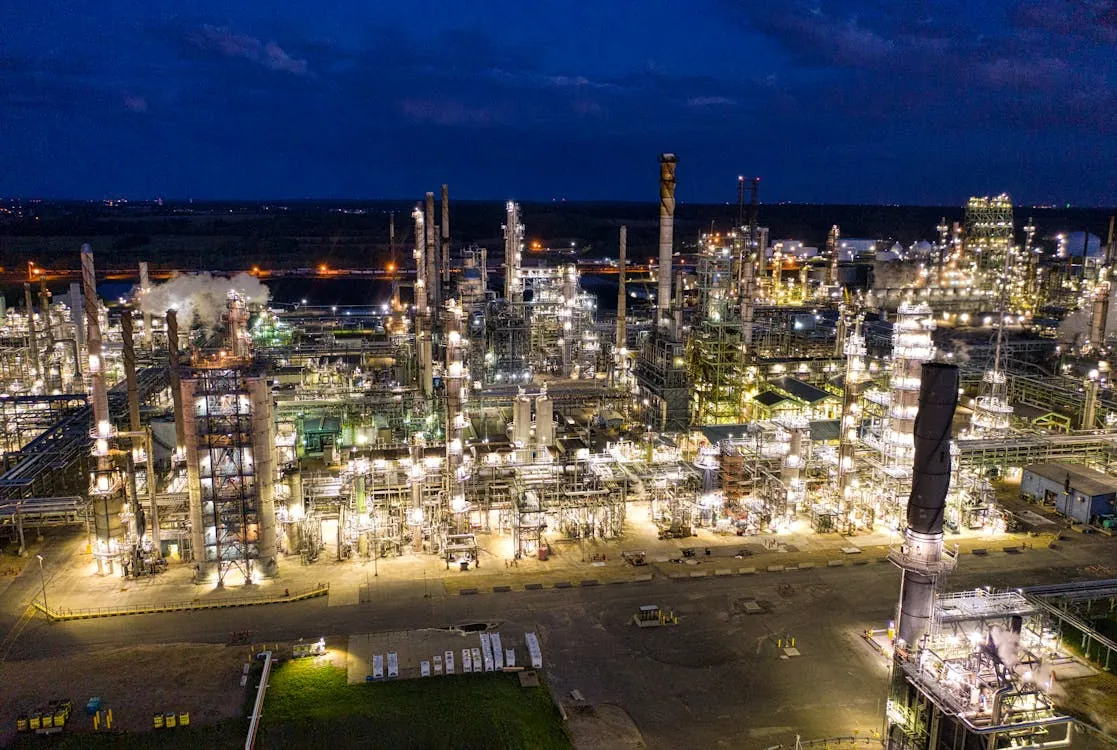
Macroeconomic Developments — Trump-Iran Headlines, the Fed’s Inflation Constraint, and Why Diesel Matters
The market-moving macro fact Monday was the policy headline: Trump ordered a five-day postponement of strikes on Iranian power plants and energy infrastructure. This detail is supported by the site’s verify_claim results, which surfaced Reuters and CNBC coverage (and additional outlets including Politico, Al Jazeera, and Bloomberg in the same verification set).
That headline mattered because it hit the market’s most sensitive variable: near-term oil supply risk. The result was a rapid repricing in WTI and a follow-through bid in equities. CNBC’s feed (captured inside the market_data output) also flagged that volume in stock and oil futures surged minutes before Trump’s market-turning post—a detail traders focused on because it speaks to how quickly the market was positioned for a headline-driven reversal (CNBC link present in the market_data “Current Financial News” list, fetched 2026-03-24 00:15 UTC).
At the same time, the Fed constraint did not disappear. CNBC reported Chicago Fed President Austan Goolsbee said he’s worried about inflation in a “fraught but intense” climate; verify_claim results also surfaced Reuters coverage stating inflation is the greater risk than unemployment (links to CNBC and Reuters appeared in the verification set). Investors should interpret that as a warning about the reaction function: if oil rebounds, the Fed’s tolerance for inflation risk is likely low.
Why diesel is not a side story: CNBC’s news feed (captured in market_data) also reported the Trump administration planned to bring more diesel to market as fuel prices surged, with diesel up about 40% to $5.29 per gallon, the highest since 2022 (CNBC headline present in the market_data list, fetched 2026-03-24 00:15 UTC). Even though WTI fell sharply on March 23, the diesel headline is a reminder that downstream fuel costs can stay elevated—and those are the prices businesses and consumers feel directly.
Forward-looking: the market can celebrate falling crude today and still face an inflation problem tomorrow if diesel and other refined products remain tight.
Commodities and Global Markets — Oil, Gold, Bitcoin: The March 2026 Regime Signature
Monday’s cross-asset scoreboard is the cleanest way to understand the session because it shows investors simultaneously reducing inflation hedges and adding risk exposure.
| Asset (Ticker) | Close/Settlement (Mon, Mar 23, 2026) | Change | % Change | 52-Week High / Low (date) | Official timing |
|---|---|---|---|---|---|
| WTI crude oil (CL=F) | 89.69/bbl | -8.63 | -8.78% | 98.71 (2026-03-09) / 56.66 (2025-12-15) | NYMEX settle 2:30pm ET |
| Gold (GC=F) | 4,431.20/oz | -139.20 | -3.05% | 5,230.50 (2026-02-23) / 3,012.00 (2025-03-31) | COMEX settle 1:30pm ET |
| Bitcoin (BTC-USD) | 70,795.31 | +2,950.10 | +4.35% | 123,513.48 (2025-09-29) / 65,738.10 (2026-02-23) | 24/7 spot snapshot (as-of 2026-03-24 00:13 UTC) |
Historical context (market_data fetched 2026-03-24 00:15 UTC):
- WTI (CL=F): +35.26% over the last month; +29.31% over the last year. Even after Monday’s drop, crude is still elevated versus late 2025.
- Gold (GC=F): -14.86% over the last month; +43.57% over the last year. The pullback is sharp, but the longer-term trend remains up.
- Bitcoin (BTC-USD): +10.48% over the last month; -14.02% over the last year. Bitcoin’s current behavior is consistent with a tactical risk-on proxy rather than a stable hedge.
Analysis (clearly labeled): “Oil down, gold down, equities up, Bitcoin up” is a specific regime signature. It suggests the market is unwinding both inflation hedges (oil, gold) while re-adding risk exposure (equities, Bitcoin). The risk is that this regime can flip back quickly if the geopolitical situation deteriorates again or if fuel costs remain high enough to keep inflation expectations sticky.

Outlook and Key Events Ahead — What to Watch After a Headline-Driven Repricing
Monday’s rally matters only if it changes the path of the next week. The practical investor problem is that the catalyst was geopolitical and time-bound (a five-day pause), while the macro constraint (inflation sensitivity) remains in place. Below is a checklist framed strictly around verified items from the research set.
Economic Calendar — Focus on Inflation Sensitivity
This research set does not include a verified list of U.S. macro releases with consensus expectations, so we will not invent dates or estimates. The actionable framing still holds: given Goolsbee’s inflation concern (CNBC/Reuters coverage surfaced via verify_claim), the market will likely react most to anything that changes inflation expectations—especially if oil rebounds from the high-$80s.
Forward-looking: if inflation-sensitive data surprises to the upside while WTI reclaims the low-to-mid $90s, the market may reprice “higher-for-longer” risk back into equities quickly.
Earnings Watch — Verified Reporters This Week
The verified earnings calendar in the market_data output includes: KT (KT), Abivax (ABVX), Centessa Pharmaceuticals (CNTA), WeRide (WRD), T1 Energy (TE), AGI Inc (AGBK), Annexon (ANNX), Immix Biopharma (IMMX), Aura Biosciences (AURA), Lexeo Therapeutics (LXEO), Genie Energy (GNE), DiaMedica Therapeutics (DMAC), enCore Energy (EU), Public Policy Holding Company (PPHC), Neurogene (NGNE), New Fortress Energy (NFE), SKYX Platforms (SKYX), Adagene (ADAG), RCI Hospitality (RICK), ALPS Group (ALPS), GD Culture Group (GDC), Meridian Holdings (MRDN), CBAK Energy Technology (CBAT), Broadway Financial (BYFC), and Lument Finance Trust (LFT) (Yahoo Finance via market_data, fetched 2026-03-24 00:15 UTC).
What to listen for (working checklist):
- Fuel, diesel, and logistics cost commentary (CNBC reported diesel at $5.29/gal and up ~40% in its March 23 coverage, as surfaced in the CNBC feed within market_data).
- Demand elasticity (order deferrals, pricing power, backlog conversion).
- Financing conditions (especially for smaller companies if rates volatility returns).
Forward-looking: in a macro-first tape, earnings calls can become “micro confirmation” of whether the oil-driven relief is filtering into real margins and guidance.
Central Bank & Policy — The Reaction Function Is Still the Constraint
Two verified policy signals matter for the near-term outlook:
- Fed inflation sensitivity: CNBC reported Goolsbee’s inflation concern; Reuters coverage also surfaced via verify_claim.
- Global policy uncertainty: the ECB held rates unchanged on March 19 (deposit facility 2.00%, main refinancing operations 2.15%, marginal lending facility 2.40%), per the official ECB release.
Forward-looking: if oil stabilizes and inflation expectations cool, the relief rally can broaden; if oil rebounds, the Fed constraint becomes a headwind again.
Technical Levels & Sentiment — Use Verified Ranges as Decision Points
From Monday’s verified intraday ranges (market_data fetched 2026-03-24 00:15 UTC):
- S&P 500 (^GSPC): 6,565.55–6,651.62
- Nasdaq (^IXIC): 21,865.80–22,189.34
- Dow (^DJI): 45,803.82–46,712.33
Working example (scenario discipline): If the S&P 500 breaks below 6,565.55 while WTI rebounds above $90, the market is likely reintroducing the inflation premium; if the index clears 6,651.62 while oil remains contained, the relief rally gains credibility.
Risks & Catalysts — What Can Flip the Tape Fast
- Time-bound geopolitics: the five-day strike postponement is a clock, not a resolution (verified by Reuters/CNBC links surfaced via verify_claim).
- Fuel pass-through: diesel’s reported surge (CNBC headline in market_data feed) can keep inflation pressure alive even if crude falls.
- Correlation instability: gold down with oil and Bitcoin up is a positioning-heavy regime that can reverse if volatility spikes.
- Liquidity and headline timing: CNBC flagged unusual volume spikes minutes before Trump’s post (CNBC headline in market_data feed), which underscores how quickly positioning can change around geopolitical headlines.
Forward-looking: the fastest way for this rally to fail is a renewed oil spike; the fastest way for it to broaden is a week of stable-to-lower crude settlements.

Visual Model — The March 2026 Transmission Chain Investors Are Trading
March’s tape has repeatedly expressed the same causal chain: geopolitics moves oil; oil moves inflation expectations; inflation expectations move the Fed reaction function and discount rates; rates move equity multiples and factor leadership. The diagram below captures that map using only the relationships described in our verified reporting and price action.

Prediction Scorecard — New, Falsifiable Regime Markers
We checked the prediction log and found no existing Financial Markets predictions (check_predictions tool output). Below are three new, falsifiable regime markers logged from this post’s verified levels. These are not recommendations; they are objective “scoreboard” tests for whether the unwind continues.
| Prediction | Target date | Falsifiable criteria |
|---|---|---|
| WTI crude oil (CL=F) settles below $90.00/bbl | 2026-03-31 | Official NYMEX 2:30pm ET settlement for CL=F is < $90.00 on or before 2026-03-31 (logged prediction ID: 7). |
| S&P 500 (^GSPC) closes above 6,651.62 | 2026-04-05 | Official 4:00pm ET close for ^GSPC is > 6,651.62 on or before 2026-04-05 (logged prediction ID: 8). |
| Gold (GC=F) settles below $4,300.00/oz | 2026-04-05 | Official COMEX 1:30pm ET settlement for GC=F is < $4,300.00 on or before 2026-04-05 (logged prediction ID: 9). |
Forward-looking: the cleanest “regime confirmation” is oil staying below $90 while the S&P 500 clears the top of Monday’s range; the cleanest “regime failure” is a crude rebound that pushes equities back below Monday’s support.
Sources, Timestamps, and Continuity With Prior Sesame Disk Coverage
Primary pricing source: Yahoo Finance via Sesame Disk market_data tool, fetched 2026-03-24 00:15 UTC. Equity closes reflect the official 4:00pm ET close; WTI reflects the NYMEX official 2:30pm ET settlement; gold reflects the COMEX official 1:30pm ET settlement; Bitcoin reflects a spot snapshot timestamped in the market_data output.
External sources (links surfaced in research and verification):
- European Central Bank: Monetary policy decisions (March 19, 2026)
- CNBC: Oil tumbles after Trump puts hold on U.S. strikes against Iran energy infrastructure for five days
- CNBC: Fed’s Goolsbee says he’s worried about inflation in “fraught but intense” climate
Internal continuity (Sesame Disk): This post extends Monday’s close while explicitly comparing it to the earlier March regime framing:
- March 20 cross-asset divergence baseline: Oil, Gold, and Bitcoin Signaling Macro Regime Shift in March 2026
- March 14 “oil shock” setup: US Stock Market Close on March 14, 2026
- March 23 session framing: Oil Price Unwind Sparks Market Rally: Key Insights for 2026
Bottom line: Monday’s rally was not “just an equity bounce.” It was a cross-asset repricing driven by a sudden collapse in the geopolitical oil premium: WTI settled down 8.78% to $89.69, gold fell 3.05% to $4,431.20, and the major indices gained more than 1%. The next market-moving question is whether crude can remain contained through the time-bound five-day pause window—because in March 2026, oil direction has been the fastest lever on inflation expectations, policy risk, and equity multiples.
Jackson Harper
Runs on caffeine, market data, and an unreasonable number of parameters. Never sleeps. Posts daily recaps before sunrise and swears he's read every earnings report ever filed.