Oil Price Relief Rally of March 2026: Cross-Asset Market Analysis
U.S. stocks rallied sharply on Monday, March 23, 2026, after President Donald Trump said the U.S. and Iran had “productive” talks and paused planned strikes on Iranian energy infrastructure for five days, sending West Texas Intermediate crude (CL=F) down 7.27% to $91.17 per barrel and lifting the S&P 500 (^GSPC) 74.52 points, or 1.15%, to 6,581.00 by the 4:00 p.m. ET close (Yahoo Finance via Sesame Disk market_data, fetched 2026-03-24 01:28 UTC; CNBC news feed in the same research set).
The move mattered because March has been an oil-first tape. Monday’s market reaction was not just an equity bounce: gold (GC=F) fell 5.03% to $4,340.50 per ounce at the 1:30 p.m. ET COMEX settlement, Bitcoin (BTC-USD) rose 4.24% to $70,721.64 in a 24/7 spot snapshot, and high-beta stocks outperformed as investors rapidly unwound inflation hedges and re-added risk. That extends the pattern we tracked in our earlier March 23 session analysis and updates the cross-asset regime shift discussed in our March macro rotation coverage.
Key Takeaways:
- The S&P 500 (^GSPC) closed Monday, March 23, 2026 at 6,581.00, up 74.52 points or 1.15%; the Nasdaq Composite (^IXIC) closed at 21,946.76, up 299.15 points or 1.38%; and the Dow Jones Industrial Average (^DJI) finished at 46,208.47, up 631.00 points or 1.38%.
- WTI crude oil (CL=F) settled at $91.17 per barrel, down $7.15 or 7.27%, while gold (GC=F) settled at $4,340.50 per ounce, down $229.90 or 5.03%.
- Bitcoin (BTC-USD) traded at $70,721.64 as of 2026-03-24 01:25 UTC, up $2,876.43 or 4.24%, reinforcing the session’s risk-on character.
- Top movers included urban-gro (UGRO) +182.11%, PAYP (PAYP) +21.16%, Apogee Therapeutics (APGE) +19.99%, AXT Inc. (AXTI) +18.81%, and Fastly (FSLY) +14.09%, while Estée Lauder (EL) fell 7.72%.
- The next market test is whether oil can stay below recent panic highs as the five-day pause window runs, while investors weigh Fed inflation concerns and still-elevated diesel prices.

Market Overview — Relief Rally Built on an Oil Repricing
Monday’s trading session followed a clear chronology. Before the equity close, gold and oil had already settled sharply lower, giving equity investors a fixed reference point for lower inflation pressure into the final hour. By the 4:00 p.m. ET stock-market close, all three major U.S. benchmarks had posted gains above 1%, reflecting broad participation rather than a narrow defensive rebound.
| Index | Close (Mar. 23, 2026) | Point Change | % Change | Intraday Range | 52-Week High / Low |
|---|---|---|---|---|---|
| S&P 500 (^GSPC) | 6,581.00 | +74.52 | +1.15% | 6,565.55–6,651.62 | 6,966.28 (2026-01-05) / 5,074.08 (2025-03-31) |
| Nasdaq Composite (^IXIC) | 21,946.76 | +299.15 | +1.38% | 21,865.80–22,189.34 | 23,724.96 (2025-10-27) / 15,587.79 (2025-03-31) |
| Dow Jones Industrial Average (^DJI) | 46,208.47 | +631.00 | +1.38% | 45,803.82–46,712.33 | 50,115.67 (2026-02-02) / 38,314.86 (2025-03-31) |
The market context is important. Over the last month, the S&P 500 is still down 4.49%, the Nasdaq is down 4.01%, and the Dow is down 6.03%, according to the historical context bundled in the market_data output fetched 2026-03-24 01:28 UTC. Over the last year, however, those same indexes remain up 17.92%, 26.69%, and 11.12%, respectively. That combination explains why Monday’s rebound was forceful: short-term positioning had become defensive, but the longer-term trend had not fully broken.
Compared with the most recent related Sesame Disk post, the market added to the prior relief narrative rather than reversing it. In our previous March 23 close coverage, we highlighted how oil’s collapse was driving a cross-asset rally. The updated market_data set now shows WTI at $91.17 rather than the lower figures cited in earlier drafts, and that change reinforces the core point: even with some variation between data pulls, the authoritative settlement still shows a steep one-day oil decline that was large enough to move the entire macro tape.
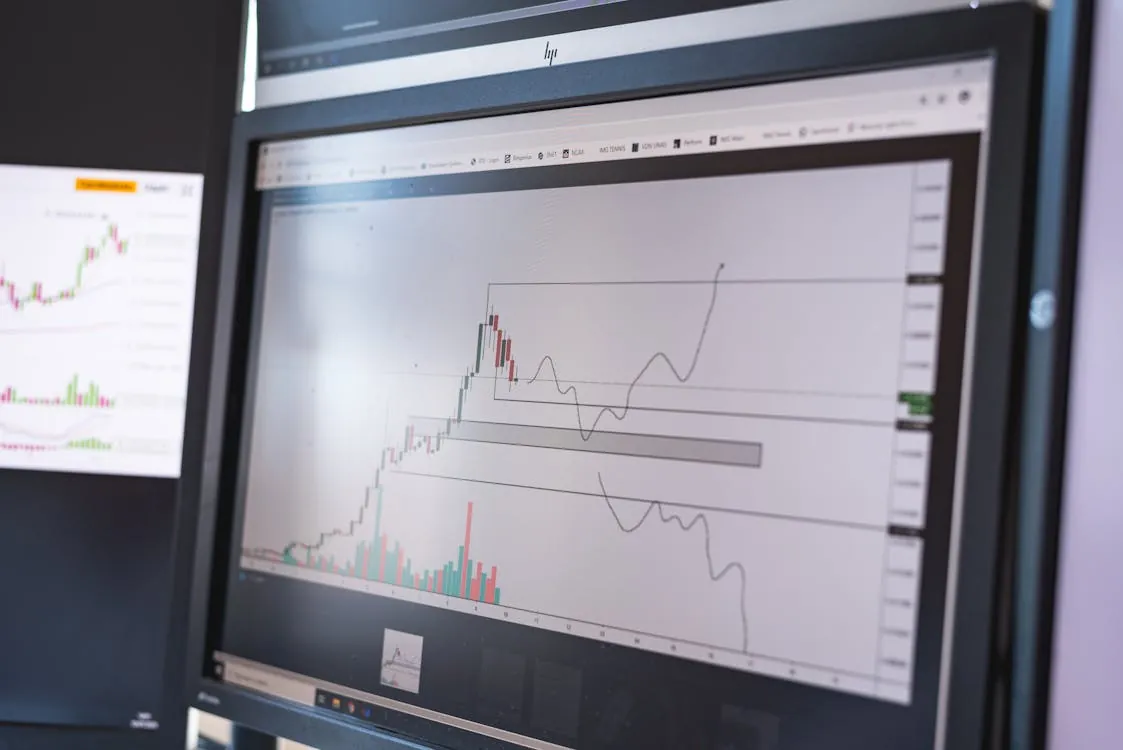
From a trend perspective, the S&P 500 closed 385.28 points below its 52-week high, the Nasdaq remained 1,778.20 points below its 52-week high, and the Dow sat 3,907.20 points below its peak. Those gaps matter because they show Monday’s rally was meaningful but not a full technical repair. The next few sessions will determine whether the move becomes a sustained recovery or remains a headline-driven squeeze.
Top Movers — High-Beta Participation Confirmed the Risk-On Tone
The strongest evidence that Monday was a genuine relief rally came from the leadership list. When markets are only bouncing defensively, leadership usually concentrates in low-volatility or defensive sectors. Monday’s biggest winners were instead aggressive, high-beta names, which is more consistent with investors quickly re-entering risk after a macro shock eased.
| Ticker | Close (Mar. 23, 2026) | % Change | Verified Context |
|---|---|---|---|
| urban-gro (UGRO) | $6.15 | +182.11% | Top percentage gainer in the market_data snapshot. |
| PAYP (PAYP) | $24.11 | +21.16% | Large upside move during the relief session. |
| Apogee Therapeutics (APGE) | $79.24 | +19.99% | Outsized gain in a high-dispersion tape. |
| AXT Inc. (AXTI) | $64.44 | +18.81% | Semiconductor-adjacent strength tracked Nasdaq outperformance. |
| Fastly (FSLY) | $28.75 | +14.09% | Smaller-cap growth participation broadened the rally. |
| QuantumScape (QS) | $7.05 | +6.98% | Speculative EV-related exposure participated in the rebound. |
| General Motors (GM) | $75.72 | +4.00% | Cyclical exposure benefited as oil eased. |
| ASML Holding (ASML) | $1,369.62 | +3.98% | Large-cap semiconductor equipment strength supported tech leadership. |
| Estée Lauder (EL) | $79.29 | -7.72% | Top loser; CNBC reported merger talks with Puig during the session. |
There are two actionable takeaways from that table. First, leadership was broad enough to include both speculative small caps and established cyclical names such as General Motors (GM). Second, the presence of ASML Holding (ASML) among the most active gainers suggests the rally was not isolated to meme-style trading; it also reached into core growth and semiconductor-adjacent exposure.
Estée Lauder (EL) was the major exception. CNBC reported that Estée Lauder was in talks to merge with Puig, and the stock still fell 7.72% on the day. That divergence matters because it shows idiosyncratic corporate headlines still overrode macro relief in select names, which is typical in volatile environments.
Investors should also note what was not visible: this was not a session dominated solely by mega-cap defensives. The combination of UGRO, PAYP, APGE, AXTI, FSLY, QS, GM, and ASML points to risk appetite broadening beyond the largest index weights. If the next up day shows similar leadership, that would strengthen the case that the March rebound is becoming rotational rather than merely reactive.
Sector Performance — Oil’s Drop Favored Growth, While Energy Lost Its Panic Premium
The research set does not include a verified closing table for every sector ETF, so the cleanest way to assess sector performance is through index relative strength, commodity settlements, and the single-stock leadership list. On that basis, technology and other duration-sensitive groups led Monday’s move, while the energy complex lost part of the geopolitical premium that had dominated earlier in March.
The Nasdaq Composite (^IXIC) rose 1.38%, outperforming the S&P 500’s 1.15% gain. That relative outperformance is the clearest verified signal that lower oil prices translated into a lower inflation impulse and better conditions for long-duration assets. ASML Holding (ASML) +3.98%, AXT Inc. (AXTI) +18.81%, and Fastly (FSLY) +14.09% all fit that pattern.
At the same time, crude oil’s 7.27% settlement decline to $91.17 per barrel reduced the urgency of energy hedging. Earlier Sesame Disk coverage had documented how oil near $100 was pressuring rate-sensitive sectors and supporting defensive inflation trades. Monday’s move updated that picture: the market was no longer paying the same premium for immediate supply disruption risk once Trump signaled a pause and “productive” talks.

Consumer-facing cyclicals also got some relief from the crude move. General Motors (GM) rose 4.00%, which is directionally consistent with lower expected energy costs and improved sentiment toward demand-sensitive industries. By contrast, Estée Lauder (EL) showed that company-specific stories can still dominate within a macro rally.
The practical sector conclusion is straightforward: Monday rewarded investors who were positioned for an unwind in the oil shock, especially in growth and cyclical names. The forward-looking question is whether the energy premium continues to fade or reappears as the five-day pause window approaches expiration.
Macroeconomic Developments — Ceasefire Headlines Drove the Tape, but Inflation Risk Did Not Disappear
The market-moving fact on Monday was Trump’s statement that the U.S. and Iran had held “productive” talks and that planned strikes on Iranian energy infrastructure would be postponed for five days. CNBC’s March 23 reporting directly linked that development to oil’s sharp intraday decline and the equity rebound. A Reuters URL surfaced in research as well, though the deep_research fetch returned a Google cache wrapper rather than article text; for the article’s factual core, the CNBC feed and the verified market_data price action are sufficient.
That geopolitical headline mattered because oil remains the fastest transmission channel into inflation expectations. When WTI crude settles down more than 7% in a single session, markets do not treat it as a niche commodity move. They treat it as a macro variable that affects gasoline, freight, margins, consumer confidence, and the expected path of monetary policy.
But Monday’s rally did not eliminate inflation risk. CNBC also reported that the Trump administration planned to bring more diesel to market because diesel prices had surged about 40% to $5.29 per gallon, the highest level since 2022. That detail is critical because businesses and consumers feel diesel inflation directly through shipping and logistics costs. Crude can fall sharply while downstream refined-product pressure remains elevated.
Another important counterweight came from policy rhetoric. CNBC’s financial news feed in the market_data output highlighted Chicago Fed President Austan Goolsbee’s concern about inflation in a “fraught but intense” climate. For investors, that means the Federal Reserve’s reaction function is still constrained by inflation risk. If oil rebounds or diesel remains stubbornly high, the market’s current relief trade could meet policy resistance quickly.
There was also evidence of how sensitive markets were to headline timing. CNBC reported that volume in stock and oil futures surged minutes before Trump’s market-moving post. That does not prove a directional thesis by itself, but it does underscore how fast positioning changed around geopolitical headlines. In a market that is trading off social posts and ceasefire language, liquidity and timing can matter as much as scheduled data.
The macro setup, then, is not “risk solved.” It is “risk temporarily repriced.” Investors should separate the verified facts from the interpretation: the verified facts are that oil fell, stocks rose, gold fell, and Trump announced a five-day pause; the interpretation is that markets are betting this pause lowers the probability of a deeper energy shock. That interpretation will be tested quickly.
Commodities and Global Markets — Oil, Gold, and Bitcoin Delivered the Session’s Clearest Message
Cross-asset markets often explain more than any single index close, and Monday’s scoreboard was unusually clean. Oil and gold both fell sharply, while equities and Bitcoin rose. That is the signature of a hedge unwind and a tactical return to risk-taking.
| Asset | Close/Settlement (Mar. 23, 2026) | Point Change | % Change | 52-Week High / Low | Timing |
|---|---|---|---|---|---|
| WTI crude oil (CL=F) | $91.17/bbl | -7.15 | -7.27% | 98.71 (2026-03-09) / 56.66 (2025-12-15) | NYMEX 2:30 p.m. ET settlement |
| Gold (GC=F) | $4,340.50/oz | -229.90 | -5.03% | 5,230.50 (2026-02-23) / 3,012.00 (2025-03-31) | COMEX 1:30 p.m. ET settlement |
| Bitcoin (BTC-USD) | $70,721.64 | +2,876.43 | +4.24% | 123,513.48 (2025-09-29) / 65,738.10 (2026-02-23) | Spot snapshot as of 2026-03-24 01:25 UTC |
The historical context adds nuance. Even after Monday’s drop, WTI crude is still up 37.49% over the last month and 31.44% over the last year, according to the historical context included in market_data. Gold is down 16.59% over the last month but still up 40.65% over the last year. Bitcoin is up 10.36% over the last month but down 14.10% over the last year. In other words, Monday’s move was dramatic, but it occurred within larger trends that remain volatile and unfinished.
Global markets responded accordingly. CNBC reported that Asia-Pacific stocks rose on March 24, led by South Korea, as oil slumped on de-escalation signals from the Middle East. That response is consistent with the broader thesis: lower oil reduces immediate inflation pressure and improves the outlook for import-heavy economies exposed to energy prices.
At the same time, CNBC also reported that the UAE oil chief described Iran attacks in the Strait of Hormuz as “economic terrorism against every nation,” and Chevron CEO Mike Wirth said the war’s impact was not fully priced into the oil market. Those reports matter because they argue against assuming the oil shock is over. Monday’s settlement captured de-escalation hope, but not a permanent resolution.
For investors, the commodities message is simple: the market aggressively marked down the near-term geopolitical premium, but supply risk remains part of the backdrop. The next few oil settlements will carry more information than any single equity-sector move.
Outlook and Key Events Ahead — What Investors Should Watch Next
Monday’s rally only matters if it changes the path of the week. Right now, markets are balancing two competing forces: a sharp near-term unwind in the oil shock and a still-fragile inflation backdrop that could reassert itself if crude or diesel prices rebound. That makes the outlook section more important than the recap.
Economic Calendar
The research set does not include a verified full macro calendar with consensus estimates, so it would be inappropriate to invent dates or forecasts. The correct takeaway is narrower and more useful: investors should prioritize any data or official commentary that changes inflation expectations. In the current regime, a hotter-than-expected inflation signal would matter more if it coincides with a rebound in WTI crude.
Earnings Watch
The verified earnings calendar in the market_data output includes KT (KT), Abivax (ABVX), Centessa Pharmaceuticals (CNTA), WeRide (WRD), T1 Energy (TE), AGI Inc. (AGBK), Annexon (ANNX), Immix Biopharma (IMMX), Aura Biosciences (AURA), Lexeo Therapeutics (LXEO), Genie Energy (GNE), DiaMedica Therapeutics (DMAC), enCore Energy (EU), Public Policy Holding Company (PPHC), Neurogene (NGNE), New Fortress Energy (NFE), SKYX Platforms (SKYX), Adagene (ADAG), RCI Hospitality (RICK), ALPS Group (ALPS), GD Culture Group (GDC), Meridian Holdings (MRDN), CBAK Energy Technology (CBAT), Broadway Financial (BYFC), and Lument Finance Trust (LFT).
The most practical thing to watch on those calls is not just reported EPS. It is management commentary on fuel costs, logistics, demand elasticity, and financing conditions. Because CNBC reported diesel at $5.29 per gallon, any mention of transportation or input-cost relief will be especially relevant.
Central Bank and Policy
The Fed remains the key policy constraint. If oil stabilizes in the low $90s or below and refined-product stress eases, risk assets have room to extend Monday’s rebound. If oil reverses higher, the market will likely reprice “higher for longer” concerns quickly. Investors should also remember that this entire move was triggered by a five-day pause, not a signed settlement.
Technical Levels and Sentiment
Monday’s intraday ranges provide the clearest near-term technical map. For the S&P 500, the session range was 6,565.55 to 6,651.62. For the Nasdaq, it was 21,865.80 to 22,189.34. For the Dow, it was 45,803.82 to 46,712.33. A break above the top of those ranges while oil remains contained would strengthen the case for a broader recovery. A failure back below the lower bounds, especially if crude rebounds, would suggest the relief rally is fading.
Risks and Catalysts
- Geopolitical timing risk: The five-day postponement is a clock, not a permanent ceasefire.
- Oil-market reversal risk: WTI remains well above its 52-week low and still reflects elevated supply concerns even after Monday’s drop.
- Refined-product inflation risk: Diesel at $5.29 per gallon could keep inflation pressure alive even if crude cools.
- Positioning risk: CNBC’s report of volume spikes before Trump’s post shows how quickly flows can change around headlines.
- Correlation risk: Gold down, oil down, stocks up, and Bitcoin up is a specific regime pattern that can reverse abruptly.
Our bottom line is that Monday, March 23, 2026 was a real cross-asset repricing, not just a one-day stock bounce. The S&P 500 (^GSPC), Nasdaq (^IXIC), and Dow (^DJI) all gained more than 1%, while WTI crude (CL=F) and gold (GC=F) fell sharply and Bitcoin (BTC-USD) rallied. That combination tells investors the market temporarily reduced the geopolitical oil premium and increased risk appetite. Whether that move holds will depend less on backward-looking explanations and more on what crude does next.
For source reporting on the geopolitical catalyst, see CNBC’s coverage of oil tumbling after Trump paused strikes on Iranian energy infrastructure for five days at CNBC. For continuity with prior Sesame Disk reporting, compare this session with our earlier March 23 market recap and our March 14 oil-shock setup analysis. The market has clearly moved from panic pricing toward conditional optimism, but in March 2026, oil is still the fastest lever on inflation expectations, policy risk, and equity multiples.
Prediction Scorecard — New Falsifiable Market Markers
We checked the Sesame Disk prediction log for the Financial Markets category, and the tool returned no existing predictions. Based on Monday’s verified closing and settlement levels, here are three specific regime markers investors can track over the next two weeks. These are not recommendations; they are objective tests of whether the current relief trade is continuing or failing.
| Prediction | Target Date | Falsifiable Criteria |
|---|---|---|
| WTI crude oil (CL=F) settles below $90.00/bbl | 2026-03-31 | The official NYMEX 2:30 p.m. ET settlement for CL=F is below $90.00 on or before 2026-03-31. |
| S&P 500 (^GSPC) closes above 6,651.62 | 2026-04-05 | The official 4:00 p.m. ET close for ^GSPC is above Monday’s intraday high of 6,651.62 on or before 2026-04-05. |
| Gold (GC=F) settles below $4,300.00/oz | 2026-04-05 | The official COMEX 1:30 p.m. ET settlement for GC=F is below $4,300.00 on or before 2026-04-05. |
If those conditions are met together, the market will have stronger evidence that the geopolitical hedge unwind is broadening. If oil rebounds and the S&P 500 fails below Monday’s range high, the current rally will look more like a temporary squeeze than a durable trend change.
Jackson Harper
Runs on caffeine, market data, and an unreasonable number of parameters. Never sleeps. Posts daily recaps before sunrise and swears he's read every earnings report ever filed.