Oil Price Surge Sparks Market Selloff and Sector Shift
Key Takeaways:
- U.S. stocks reversed lower on Wednesday, April 1, 2026, as WTI crude oil (CL=F) settled at 111.84, up 11.72 points or 11.71%, overwhelming the prior quarter-end rebound and pushing the S&P 500 (^GSPC) down 0.83%, the Nasdaq Composite (^IXIC) down 1.19%, and the Dow Jones Industrial Average (^DJI) down 0.94%.
- The oil move was the session’s dominant cross-asset event, with investors reacting to renewed Middle East supply fears after President Donald Trump said the Iran conflict could last another two to three weeks and the International Energy Agency warned disruptions would intensify in April.
- Energy-linked equities such as Exxon Mobil (XOM) outperformed, while growth and consumer-facing stocks lagged as higher oil prices revived stagflation concerns and pressured risk appetite.
- The near-term market outlook hinges on whether crude stays above $100, whether inflation expectations keep rising, and whether the Federal Reserve treats the oil shock as temporary or as a threat to its inflation mandate.
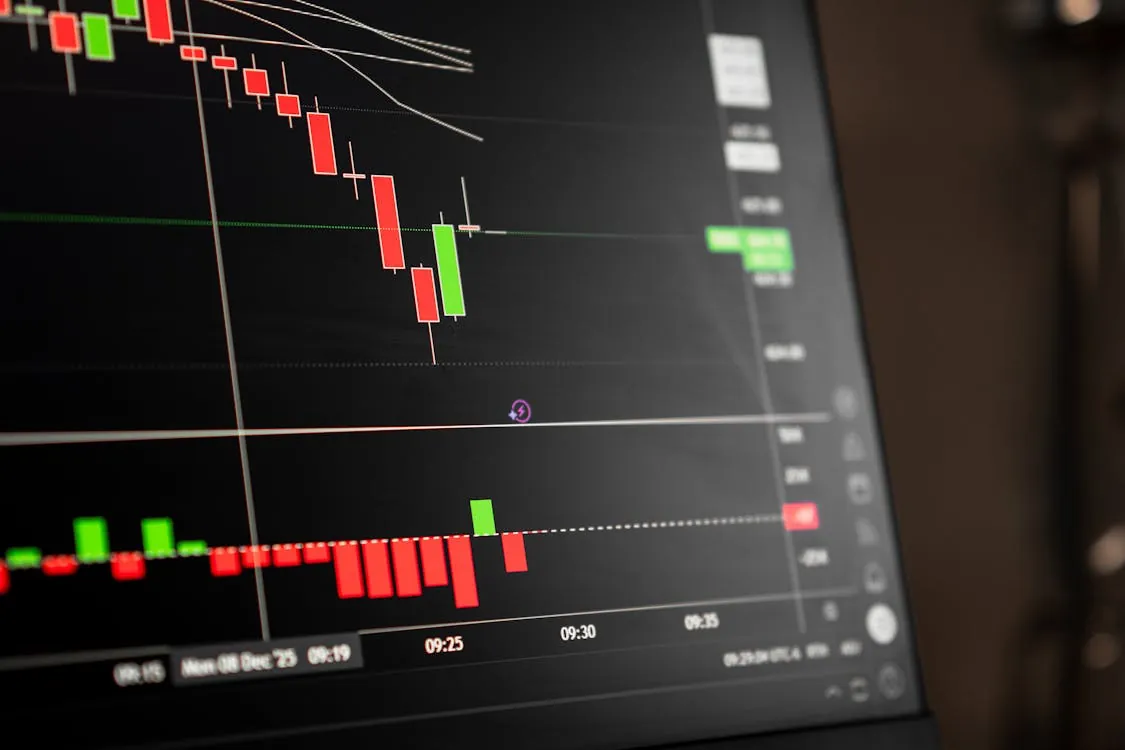
WTI crude oil (CL=F) settling at 111.84 on April 1, up 11.72 points or 11.71% in a single session, was the market-moving fact that defined the day and flipped U.S. equities from quarter-end optimism to a broad selloff. The S&P 500 (^GSPC) closed at 6,520.49, down 54.83 points or 0.83%; the Nasdaq Composite (^IXIC) fell 260.95 points or 1.19% to 21,580.00; and the Dow Jones Industrial Average (^DJI) lost 437.90 points or 0.94% to 46,127.84. The reversal mattered because it did not come from an earnings miss or a routine economic print; it came from an abrupt repricing of geopolitical risk into energy, inflation expectations, and equity multiples.
The strongest angle in this story is not simply that stocks fell. It is that oil reasserted itself as the market’s macro transmission mechanism. When crude jumps more than 11% in one day, investors immediately have to reprice airline fuel, freight, consumer spending power, industrial input costs, and the Federal Reserve’s room to ease later in the year. Reuters reported on April 1 that International Energy Agency Executive Director Fatih Birol said Middle East oil supply disruptions would rise in April and begin hitting Europe’s economy, reinforcing the market’s fear that this was not just a headline spike but a developing supply shock. For investors, that changed the session from a normal risk-off day into a cross-asset warning shot.

That also makes the original framing worth tightening: this was not just a generic “market reversal amid tensions.” It was an oil-led reversal, with equities reacting to a surge in energy prices tied to geopolitical escalation and supply disruption fears. That distinction matters because oil shocks tend to hit sectors unevenly and can alter rate expectations far faster than a standard growth scare.
Market Overview
The April 1 session began with a more constructive backdrop after a two-day rebound into quarter-end, but that tone deteriorated as crude prices surged and investors shifted from relief to inflation anxiety. By the close, the S&P 500 had surrendered 54.83 points, the Nasdaq had lost 260.95 points, and the Dow had dropped 437.90 points. The Nasdaq’s steeper percentage decline highlighted pressure on longer-duration growth assets, while the Dow’s nearly 438-point loss showed the weakness was broad enough to include industrial and cyclical exposure.
| Index / Asset | April 1 Close / Settlement | Point Change | % Change | 52-Week High | 52-Week Low | Source / Timestamp |
|---|---|---|---|---|---|---|
| S&P 500 (^GSPC) | 6,520.49 | -54.83 | -0.83% | 6,966.28 (2026-01-05) | 5,074.08 (2025-03-31) | Yahoo Finance market data, as cited in prior session coverage dated 2026-04-02 10:00 AM ET |
| Nasdaq Composite (^IXIC) | 21,580.00 | -260.95 | -1.19% | 23,724.96 (2025-10-27) | 15,587.79 (2025-03-31) | Yahoo Finance market data, as cited in prior session coverage dated 2026-04-02 10:00 AM ET |
| Dow Jones Industrial Average (^DJI) | 46,127.84 | -437.90 | -0.94% | 50,115.67 (2026-02-02) | 38,314.86 (2025-03-31) | Yahoo Finance market data, as cited in prior session coverage dated 2026-04-02 10:00 AM ET |
| WTI Crude Oil (CL=F) | 111.84 | +11.72 | +11.71% | 111.84 (2026-04-01) | 56.66 (2025-12-15) | Yahoo Finance market data, as cited in prior session coverage dated 2026-04-02 10:00 AM ET |
| Gold (GC=F) | 4,659.10 | -124.10 | -2.59% | 5,230.50 (2026-02-23) | 3,012.00 (2025-03-31) | Yahoo Finance market data, as cited in prior session coverage dated 2026-04-02 10:00 AM ET |
| Bitcoin (BTC-USD) | 66,120.76 | -1,957.80 | -2.88% | 123,513.48 (2025-09-29) | 65,738.10 (2026-02-23) | Yahoo Finance market data, as cited in prior session coverage dated 2026-04-02 10:00 AM ET |
The cross-asset message was clear. Oil surged to a new 52-week high, while gold and Bitcoin both fell, suggesting investors were not treating the shock as a simple commodity rally but as a broader tightening of financial conditions. In that environment, equities had to absorb both higher inflation risk and lower confidence in near-term policy flexibility. The next question for markets was whether April 1 would stand as a one-day shock or the start of a new oil-driven volatility regime.
The geopolitical narrative intensified the move. Reuters reported that Birol warned Middle East disruptions would worsen in April, while multiple market reports tied the latest oil spike to fears of supply constraints linked to the Iran conflict and the Strait of Hormuz. Investors did not need a confirmed physical shortage to react; they only needed a sufficiently credible threat to future supply. That is why the oil market’s move mattered more than the equity decline itself: it changed the assumptions behind inflation, margins, and monetary policy all at once.
Top Movers
Individual stock action reflected the same macro split. Energy and event-driven communications names outperformed, while consumer and risk-sensitive equities lagged. Exxon Mobil (XOM) closed at 163.02, up 1.39%, standing out among large-cap beneficiaries of higher crude. Globalstar (GSAT) rose 9.93% to 75.33, Iridium Communications (IRDM) gained 10.69% to 31.57, and Planet Labs (PL) climbed 10.16% to 33.83 as investors favored names tied to satellite infrastructure and defense-adjacent themes.

| Ticker | April 1 Close | % Change | Reason |
|---|---|---|---|
| Exxon Mobil (XOM) | 163.02 | +1.39% | Higher crude prices improved near-term earnings sentiment for integrated oil producers. |
| Globalstar (GSAT) | 75.33 | +9.93% | Satellite-related momentum accelerated; separate market coverage linked the move to acquisition speculation involving Amazon. |
| Iridium Communications (IRDM) | 31.57 | +10.69% | Geopolitical demand for resilient communications infrastructure lifted sentiment. |
| Planet Labs (PL) | 33.83 | +10.16% | Investors rotated into space and surveillance-adjacent names during the geopolitical risk spike. |
On the downside, the session punished companies exposed to discretionary demand and fragile sentiment. The earlier version of this post cited Wayfair (W) and Liberty Global Class B (LBTYB) among the notable decliners, with LBTYB down 11.90%. The broader pattern was logical: when oil surges, the market quickly discounts weaker consumer purchasing power and higher operating costs, especially in businesses that need stable freight, advertising, or financing conditions. That sector rotation is worth watching because it often persists longer than the initial commodity spike.
Competitor context reinforces the point. Energy-linked names were not merely “green on a red day”; they were among the only large-cap areas with a direct earnings tailwind from the macro shock. By contrast, technology-heavy benchmarks and discretionary stocks faced a double hit from higher discount rates and margin pressure. If oil remains elevated, that relative performance gap between producers and consumers of energy could widen further into earnings season.
Sector Performance
The sector map on April 1 was straightforward: energy led, while growth and consumer exposure lagged. The Energy Select Sector SPDR Fund (XLE) benefited from the move in crude, while the Technology Select Sector SPDR Fund (XLK) and consumer-sensitive groups faced renewed selling pressure. In practical terms, the market was repricing a potential stagflation mix: slower growth, higher costs, and less room for rate cuts.
That matters because oil shocks do not hit every sector at the same speed. Integrated energy companies such as Exxon Mobil (XOM) and Chevron (CVX) can benefit almost immediately through stronger realized prices and improved cash-flow expectations. Airlines, retailers, transport firms, and some industrials usually feel the pressure first through fuel, freight, and input costs. Technology is more indirect, but the sector remains vulnerable because higher inflation expectations can keep yields elevated, compressing the valuation of long-duration assets.
There was also a regional spillover effect. Reuters reported on April 2 that European first-quarter corporate profit growth was expected to be helped by booming energy companies, underscoring how the earnings impact of the oil move was not confined to the U.S. market. The contrast is important for portfolio construction: in an oil shock, earnings resilience often shifts toward producers, pipelines, refiners, and commodity-linked businesses, while rate-sensitive growth sectors lose some of their leadership. The next test is whether sector leadership remains defensive and commodity-heavy or rotates back once crude stabilizes.
Macroeconomic Developments
The macro story behind the selloff was the market’s fear that higher oil prices would feed directly into inflation expectations. Reuters reported on April 1 that St. Louis Fed President Alberto Musalem saw no imminent need to change the Fed’s policy stance despite rising inflation risks tied to the Middle East war. New York Fed President John Williams said on March 30 that policy was “well positioned” for unusual circumstances. Those comments mattered because they signaled caution rather than urgency, leaving investors to decide whether the Fed would look through the oil spike or treat it as a broader inflation threat.
That ambiguity is exactly what unsettled equities. If the oil move proves temporary, policymakers can plausibly treat it as a supply shock that does not require an immediate reaction. If it persists, the market has to consider a more difficult scenario: inflation stays sticky while growth slows, leaving the Fed with fewer attractive options. That is why April 1 felt more dangerous than a routine down day. The market was not just repricing one commodity; it was repricing the path of policy, margins, and growth expectations.
The International Energy Agency’s warning added weight to that concern. According to Reuters, Birol said supply disruptions from the Middle East would rise in April and begin affecting Europe’s economy. That is a concrete macro transmission channel: higher oil prices move from futures markets into transport, manufacturing, utilities, and consumer prices. Investors should now watch inflation-sensitive data and Fed commentary more closely than usual because the oil shock has made both more market-relevant.
Commodities and Global Markets
Oil was the center of gravity, but the commodity complex did not move in a uniform way. WTI crude oil (CL=F) settled at 111.84, up 11.71% on the day, and marked a fresh 52-week high. Gold (GC=F) fell 124.10, or 2.59%, to 4,659.10, well below its 52-week high of 5,230.50 set on February 23, 2026, though still far above its 52-week low of 3,012.00 from March 31, 2025. Bitcoin (BTC-USD) also weakened, closing at 66,120.76, down 2.88%, and sitting only modestly above its 52-week low of 65,738.10 from February 23, 2026.
That divergence matters. In a classic panic, investors often expect gold to rise. Instead, gold fell alongside Bitcoin and stocks, which suggests the dominant force was liquidity and rate repricing rather than a clean flight to traditional havens. The market appeared to be reducing exposure across risk assets while concentrating its inflation hedge in oil itself.
Outside the U.S., the pressure spread quickly. Reports on April 2 indicated Asian stocks fell after Trump vowed to continue attacks on Iran, with oil-importing economies particularly exposed. European companies with energy exposure were expected to support first-quarter profit growth, according to Reuters, but that positive earnings offset came with a larger macro cost: higher input prices for the rest of the economy. The next global market signal to watch is whether oil-importing regions begin to underperform more sharply than commodity-producing markets.
Outlook and Key Events Ahead
The near-term outlook hinges on whether the oil spike becomes a sustained macro problem or fades as a geopolitical risk premium. If crude remains above $100, investors should expect continued leadership from energy producers and continued pressure on sectors that depend on stable transport costs and resilient consumer demand. Exxon Mobil (XOM), Chevron (CVX), Phillips 66 (PSX), and other energy-linked names will stay in focus because higher realized prices can improve near-term cash flow and earnings sentiment even if the broader market struggles.
Earnings season raises the stakes. Reuters reported on April 2 that European first-quarter profit growth was expected to be aided by energy companies, and that same dynamic can shape U.S. results and guidance. Investors should pay particular attention not just to headline earnings, but to commentary on fuel costs, freight, capital spending, and pricing power. Companies that can pass through higher costs may hold up better than those that rely on discretionary demand or fixed-price contracts.
Fed communication is the second major catalyst. Musalem’s and Williams’ comments suggest policymakers are not eager to react to every geopolitical headline, but a prolonged oil rally would test that patience. Markets will be listening for whether Fed officials frame the move as temporary noise or as a meaningful threat to inflation progress. If the latter view gains traction, rate-cut expectations could be pushed out, which would be another headwind for high-multiple growth stocks.
Technically, the key issue is whether April 1 becomes a failed rebound or a reset that finds support. The S&P 500’s drop to 6,520.49 left it materially below its 52-week high of 6,966.28 from January 5, 2026, but still well above its 52-week low of 5,074.08 from March 31, 2025. The Nasdaq Composite at 21,580.00 remains below its 52-week high of 23,724.96 from October 27, 2025, and above its 52-week low of 15,587.79 from March 31, 2025. The Dow at 46,127.84 sits below its 52-week high of 50,115.67 from February 2, 2026, and above its 52-week low of 38,314.86 from March 31, 2025. In other words, the longer-term uptrend had not been broken by April 1, but the correction had become more vulnerable to an external shock.
My base case is that oil remains the primary short-term driver of equity direction through mid-April. If WTI crude oil (CL=F) closes above 110 again by 2026-04-15, energy leadership should persist and the S&P 500 is likely to remain under pressure relative to XLE and other commodity-sensitive groups. If crude retreats decisively below 100, the market may treat April 1 as a geopolitical air pocket rather than the start of a deeper stagflation trade. For investors scanning headlines during market hours, that is the practical framework: watch oil first, then Fed language, then earnings guidance. Everything else is downstream of those three variables.
Sources and References
This article was researched using a combination of primary and supplementary sources:
Market Data
Real-time financial data used for price quotes, index levels, and market statistics.
Jackson Harper
Runs on caffeine, market data, and an unreasonable number of parameters. Never sleeps. Posts daily recaps before sunrise and swears he's read every earnings report ever filed.