Oil Shock Sparks Market Split in April: Inflation, Fed, and Risks
Oil Shock Drives April Market Split as Crude Surge Reshapes Inflation, Fed, and Equity Risk
WTI crude oil (CL=F) was the market’s defining signal in the April 2, 2026 session, settling at $111.54, up 11.42 points or 11.41%, as investors repriced geopolitical risk and the possibility of a longer inflation shock. That move left U.S. stocks divided rather than uniformly lower: the S&P 500 (^GSPC) closed at 6,582.69, up 7.37 points or 0.11%; the Nasdaq Composite (^IXIC) finished at 21,879.18, up 38.23 points or 0.18%; and the Dow Jones Industrial Average (^DJI) slipped 61.07 points or 0.13% to 46,504.67. For investors, the message was clear: higher oil was no longer just an energy-sector story; it was becoming a cross-asset macro problem.
The broader concern is that an oil spike at this scale lands directly on top of a Federal Reserve already facing inflation uncertainty and a market that had been expecting easier monetary policy later in 2026. Reuters reported on April 1 that International Energy Agency Executive Director Fatih Birol warned Middle East supply disruptions were set to intensify in April and hit Europe as Strait of Hormuz closures curtailed flows. Reuters also reported April 1 comments from St. Louis Fed President Alberto Musalem that there was no imminent need to change policy despite rising inflation risks tied to the war in the Middle East, while Reuters on April 2 cited Dallas Fed President Lorie Logan saying U.S. oil producers were unlikely to provide near-term relief. Those headlines help explain why the market could absorb the oil shock only partially: energy-linked beneficiaries rose, but rate-sensitive and consumer-exposed areas stayed under pressure.

Key Takeaways:
- WTI crude oil (CL=F) settled at $111.54 on April 2, 2026, up 11.41%, the clearest market-moving development of the session.
- The S&P 500 (^GSPC) rose 0.11% to 6,582.69 and the Nasdaq (^IXIC) gained 0.18% to 21,879.18, but the Dow (^DJI) fell 0.13% to 46,504.67.
- Tesla (TSLA) dropped 5.42% to $360.59, while Applied Optoelectronics (AAOI), SBA Communications (SBAC), Viasat (VSAT), and Intuitive Machines (LUNR) posted outsized gains in a narrow leadership tape.
- Reuters and the IEA framed April as a period of worsening supply disruption risk, while Fed officials signaled no immediate policy pivot despite higher inflation pressure.
- The next market test is whether oil remains above $100 long enough to pressure earnings, inflation expectations, and rate-cut hopes into the second quarter.
Market Overview
The April 2 session was a study in divergence. Oil’s surge pushed inflation-sensitive concerns back to the center of trading, but index-level damage was limited because strength in select sectors offset weakness in others. The S&P 500 managed a fractional gain, the Nasdaq held up slightly better, and the Dow lagged as investors rotated away from parts of the market most exposed to margin compression and cyclical slowdown risk.

| Index / Asset | April 2 Close / Settlement | Point Change | % Change | 52-Week High | 52-Week Low | Source / Timestamp |
|---|---|---|---|---|---|---|
| S&P 500 (^GSPC) | 6,582.69 | +7.37 | +0.11% | 6,966.28 (2026-01-05) | 5,074.08 (2025-03-31) | Yahoo Finance market data, as of 2026-04-03 10:00 AM ET |
| Nasdaq Composite (^IXIC) | 21,879.18 | +38.23 | +0.18% | 23,724.96 (2025-10-27) | 15,587.79 (2025-03-31) | Yahoo Finance market data, as of 2026-04-03 10:00 AM ET |
| Dow Jones Industrial Average (^DJI) | 46,504.67 | -61.07 | -0.13% | 50,115.67 (2026-02-02) | 38,314.86 (2025-03-31) | Yahoo Finance market data, as of 2026-04-03 10:00 AM ET |
| WTI Crude Oil (CL=F) | 111.54 | +11.42 | +11.41% | 111.54 (2026-03-30) | 56.66 (2025-12-15) | Yahoo Finance market data, as of 2026-04-03 10:00 AM ET |
| Gold (GC=F) | 4,651.50 | -131.70 | -2.75% | 5,230.50 (2026-02-23) | 3,012.00 (2025-03-31) | Yahoo Finance market data, as of 2026-04-03 10:00 AM ET |
| Bitcoin (BTC-USD) | 66,632.27 | -256.30 | -0.38% | 123,513.48 (2025-09-29) | 65,738.10 (2026-02-23) | Yahoo Finance market data, approximately 2026-04-03 8:00 PM ET snapshot |
Chronologically, the session began with traders already focused on crude after a series of geopolitical headlines tied to the Middle East. Reuters’ April 1 report on the IEA warning gave the oil move a more durable macro narrative: this was not being treated as a one-day headline spike, but as a developing supply disruption with potential economic consequences. As the day progressed, the market absorbed higher energy prices without a full index breakdown, but the narrowness of leadership suggested investors were buying around the shock, not through it.
Intraday ranges reinforced that point. The S&P 500 traded between 6,474.94 and 6,601.91, the Nasdaq between 21,371.32 and 21,906.48, and the Dow between 45,897.24 and 46,754.72. Those swings were much larger than the final closes implied, indicating that the tape remained unstable beneath the surface. Investors heading into the next session needed to watch whether crude could hold triple digits without triggering a broader de-risking move.
The one-month backdrop also mattered. Major indexes had already been correcting before April 2, making the oil shock more consequential than the day’s modest headline moves suggested. A market that is climbing can often absorb an energy spike more easily; a market already under pressure is more vulnerable to a jump in inflation expectations and a reset in rate-cut assumptions. That is the setup investors now face heading deeper into April.
Top Movers
The most visible large-cap downside move came from Tesla (TSLA), which closed at $360.59, down 5.42%. The stock’s decline stood out because it combined company-specific weakness with a macro environment that was already unfriendly to high-beta consumer and growth names. In a market dominated by energy risk, investors showed little tolerance for disappointment elsewhere.
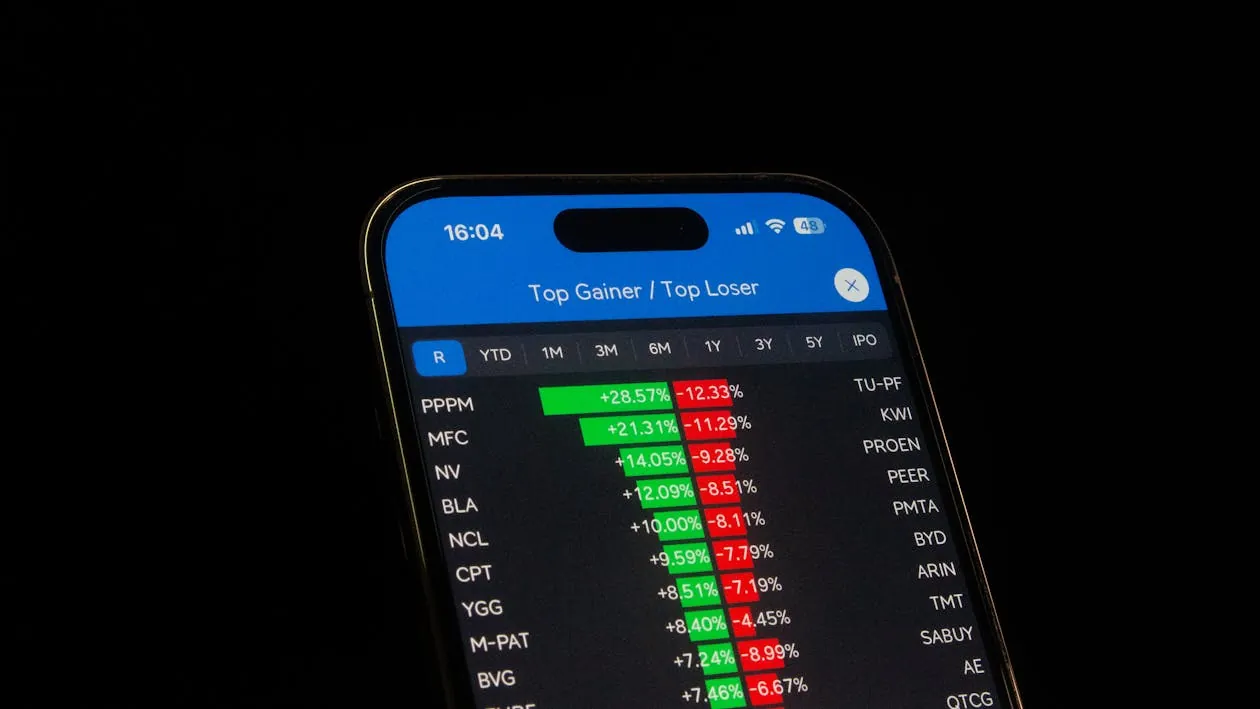
On the upside, leadership was narrow and idiosyncratic rather than broad-based. Applied Optoelectronics (AAOI) jumped to $103.91, up 20.34%. SBA Communications (SBAC) rose to $204.04, up 18.93%. Viasat (VSAT) climbed to $53.69, up 18.70%, while Intuitive Machines (LUNR) advanced to $23.99, up 18.53%. Those gains showed that stock picking still mattered, but they did not signal a clean all-clear for the wider market.
| Ticker | Price | Change % | Reason / Context |
|---|---|---|---|
| Tesla (TSLA) | 360.59 | -5.42% | Large-cap laggard as investors reacted to company-specific pressure in a risk-sensitive tape. |
| Applied Optoelectronics (AAOI) | 103.91 | +20.34% | One of the session’s top percentage gainers. |
| SBA Communications (SBAC) | 204.04 | +18.93% | Outperformed in a narrow leadership session. |
| Viasat (VSAT) | 53.69 | +18.70% | Ranked among the day’s strongest movers. |
| Intuitive Machines (LUNR) | 23.99 | +18.53% | Speculative growth name that attracted buyers despite macro stress. |
Investors should be careful not to overread these gainers as evidence of broad market health. When oil is the dominant macro variable, sharp gains in a handful of names can coexist with deteriorating breadth and rising cross-asset stress. The more important takeaway is that leadership remained fragmented, which usually argues for a more selective rather than index-chasing approach in the next few sessions.
Sector Performance
Energy was the obvious relative winner as crude surged above $111. Reuters’ reporting on worsening supply disruptions and the IEA’s warning about April flows helped reinforce the idea that oil strength was tied to physical market risk, not just speculative positioning. That matters because sustained physical tightness tends to support a longer-lasting bid in energy equities and services names.
Energy-sector leadership also came with a broader market cost. Higher oil prices can help producers and related infrastructure companies, but they also raise transportation, manufacturing, and consumer-input costs across the economy. That helps explain why a crude rally can coincide with a weak Dow and only modest gains in the S&P 500 and Nasdaq. A few direct beneficiaries rise sharply, while the rest of the market starts discounting slower growth and stickier inflation.
That split is especially relevant for major integrated names such as Exxon Mobil (XOM) and Chevron (CVX), both of which sit at the center of investor positioning whenever geopolitical risk premiums expand. At the same time, rate-sensitive growth sectors and consumer-linked names become harder to own if the oil move threatens to delay Federal Reserve easing. If crude remains elevated into earnings season, sector rotation is likely to stay defensive and selective rather than broad and cyclical.
Investors should also watch second-order beneficiaries and losers. Airlines, transports, chemicals, and consumer discretionary groups typically feel margin pressure first when fuel costs jump. By contrast, defensive sectors and cash-generative commodity-linked businesses often hold up better. That sector map becomes more important if the oil shock lasts longer than a few sessions.
Macroeconomic Developments
The oil spike hit at an awkward moment for monetary policy. Reuters reported on March 26 that economists in its poll still expected the Federal Reserve to hold rates steady until September, even as markets had been more aggressive in pricing policy changes. Since then, the inflation picture has become more complicated. Reuters on April 1 quoted St. Louis Fed President Alberto Musalem saying there was no imminent need to change the current policy stance despite rising inflation risks tied to the Middle East war, a signal that policymakers were not ready to look through higher energy prices.
Reuters also reported on April 2 that Dallas Fed President Lorie Logan said U.S. oil producers were unlikely to provide near-term relief. That comment matters because it undercuts one of the market’s usual assumptions during oil spikes: that domestic supply can quickly stabilize prices. If the supply response is slow and the geopolitical premium persists, the inflation impulse can last longer than equity investors initially expect.
The labor market remains part of the equation as well. The existing post referenced March payroll growth of 178,000 and a 4.3% unemployment rate from CNBC’s coverage heading into April 3. If job growth stays firm while oil remains elevated, the Fed has less reason to ease policy quickly. If hiring softens while energy costs rise, the market’s concern shifts toward stagflation, a more difficult backdrop for both bonds and equities. Either path leaves investors highly sensitive to incoming macro data, which is why the next inflation and labor releases will matter more than usual.
The dollar and Treasury market also fit this story. Higher oil can pressure growth expectations globally while supporting safe-haven demand for the U.S. dollar, especially if the Fed is seen as staying restrictive for longer. That combination tends to tighten financial conditions even before policymakers make any formal move. For the next leg of market direction, investors need to know whether the oil shock remains isolated to commodities or starts to feed more broadly into rates, currencies, and earnings expectations.
Commodities and Global Markets
Beyond U.S. stocks, the cross-asset message on April 2 was mixed but important. Gold (GC=F) fell to $4,651.50, down 2.75%, even as geopolitical risk intensified. Bitcoin (BTC-USD) slipped 0.38% to $66,632.27. That combination suggested investors were not embracing a simple flight-to-safety trade. Instead, they were repricing a specific energy shock and its inflation consequences, which can create unusual correlations across risk assets and traditional hedges.
The international angle is critical because the IEA’s warning centered heavily on Europe’s exposure to disrupted Middle East supply. Reuters reported that closures in the Strait of Hormuz were already severe enough to threaten flows into Europe in April. That raises the odds that global growth concerns broaden if the disruption persists. European importers, Asian refiners, and U.S. consumers all feel the impact differently, but the common factor is tighter energy availability and higher input costs.
For oil itself, the key question is whether the market is dealing with a temporary fear premium or a more durable supply impairment. If the latter, then Brent and WTI can remain elevated even if equity indexes try to stabilize. If tensions ease, some of the premium can unwind quickly, but Reuters’ reporting and IEA commentary suggest investors should not assume a fast normalization. The next move in global markets will depend heavily on whether crude stabilizes, extends, or reverses from current levels.
Outlook and Key Events Ahead
April now looks less like a routine start to the second quarter and more like a test of whether the market can withstand a renewed oil shock without slipping into a broader growth scare. The immediate issue is not simply that crude oil is above $100; it is that the move has been fast, headline-driven, and tied to a geopolitical channel with no easy policy fix. Reuters’ reporting on IEA warnings and Fed commentary suggests investors should treat this as a live macro variable, not a one-day anomaly.
For equities, the first checkpoint is breadth. If the S&P 500 and Nasdaq continue to post small gains while leadership stays concentrated in a handful of energy-linked or idiosyncratic names, that would signal continued fragility. The Dow’s underperformance on April 2 already hinted at that problem. A healthier tape would require broader participation and evidence that higher oil is not materially changing earnings expectations in industrial, transport, and consumer-facing sectors.
The second checkpoint is the Federal Reserve narrative. Investors had spent much of the year debating when policy easing might begin. Oil complicates that debate because it can lift inflation expectations even if underlying growth slows. Comments from Musalem and Logan point to a Fed that is not eager to react quickly. If upcoming inflation data stays firm and crude remains elevated, the market may have to push out hopes for easier policy again, which would be a headwind for duration-sensitive growth stocks and richly valued cyclicals.
The third checkpoint is global spillover. Europe’s exposure to disrupted Middle East supply, highlighted by the IEA and Reuters, means this is not just a U.S. gasoline story. It is a global trade, inflation, and industrial-cost story. If Europe weakens further and Asia feels the same pressure through import costs, multinational earnings guidance could become more cautious as the quarter progresses. That would make the oil shock an earnings story as much as a macro one.
Technically, investors should watch whether the S&P 500 can defend the lower end of its recent range after April 2’s wide intraday swing. Failure to hold support after an oil-driven divergence day would suggest the market is starting to treat the energy spike as a broader risk event. A stabilization in crude, combined with calmer geopolitical headlines, would improve the odds of a rebound. But if oil extends higher, the market’s narrow resilience could give way to a more decisive repricing.
My near-term call is specific: WTI crude oil (CL=F) is likely to remain above $100 through April 15, 2026, unless there is a clear de-escalation in the Middle East that materially reduces Strait of Hormuz disruption risk. If that happens, the most probable market outcome is continued sector divergence rather than a clean index breakout. Investors should approach the next two weeks as a period where oil, not earnings multiple expansion, is setting the tone.
For deeper context on the geopolitical backdrop, see Reuters’ coverage of the IEA warning on Middle East disruptions at Reuters. For policy context, Reuters’ report on St. Louis Fed President Alberto Musalem’s comments is available via Reuters.
Sources and References
This article was researched using a combination of primary and supplementary sources:
Market Data
Real-time financial data used for price quotes, index levels, and market statistics.
Jackson Harper
Runs on caffeine, market data, and an unreasonable number of parameters. Never sleeps. Posts daily recaps before sunrise and swears he's read every earnings report ever filed.