Opus 5: Next-Gen AI Coding Benchmarks
What SlopCodeBench Actually Measures
SlopCodeBench is a benchmarking framework purpose-built to evaluate AI models on long-horizon coding tasks and codebase evolution. It is not a simple “generate a function from a prompt” test. Instead, it simulates the kind of sustained, multi-turn engineering work that senior developers perform daily: modifying an existing codebase across multiple files, maintaining consistency as requirements shift, debugging regressions introduced by earlier edits, and reasoning about architectural trade-offs over extended interaction sequences.
The benchmark evaluates models across four primary dimensions. Context retention measures how well a model maintains awareness of code it wrote earlier in a session — if a model defines a utility function in turn one and then reimplements it from scratch in turn four, that is a context failure. Edit accuracy tracks whether changes introduce new bugs while fixing old ones. Codebase evolution assesses the ability to refactor, extend, and restructure a project over multiple turns without architectural drift. And regression rate quantifies how frequently a fix breaks previously working functionality — a metric that matters enormously for production deployments where every change carries risk.
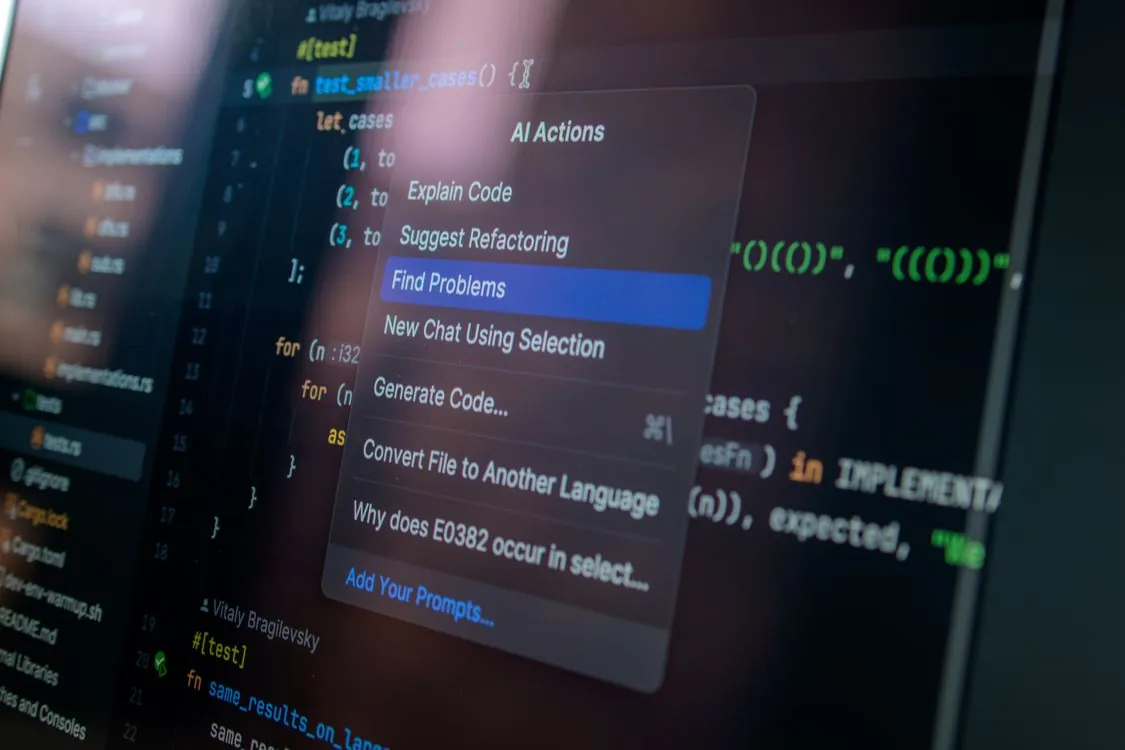
Each task in the suite begins with a realistic codebase — a partial web app, data pipeline, CLI tool, or microservice — and presents the model with a sequence of feature requests, bug reports, and refactoring goals. The model must produce working code that integrates with the existing codebase without breaking prior functionality. Scoring is based on final correctness, code quality, the number of turns required to complete the task, and whether the model catches its own mistakes before handing work back.
The significance of SlopCodeBench lies in what it tests that other benchmarks do not. Single-turn benchmarks like HumanEval or MBPP evaluate whether a model can write a correct function from a description. They tell you nothing about whether that same model can maintain a codebase across fifty turns of incremental changes. SlopCodeBench fills that gap, and for teams evaluating AI coding assistants for production use, its results matter more than any single-turn score.
Opus 5 Benchmark Results on Coding Tasks

According to Anthropic’s official release and third-party coverage from Geeky Gadgets, Opus 5 represents the biggest leap in the Opus family since Opus 4.5. The model was released as “a step-change improvement for the Opus tier: stronger coding, more capable agents, and sharper professional work,” per Anthropic’s official Opus page.
On benchmarks directly relevant to SlopCodeBench-style evaluation, the numbers are striking. Opus 5 scored 30.2% on ARC AGI 3, nearly four times Fable 5’s 7.8%. The model also achieved a 90.8% success rate on agentic search tasks, showing strength in autonomous decision-making and execution that translates directly to multi-turn coding scenarios.
The Geeky Gadgets analysis notes that Opus 5 delivers “nearly double the performance per dollar compared to Fable 5,” making it a compelling option for teams that need frontier-level coding capabilities without the frontier-level price. This cost-performance ratio is particularly relevant for SlopCodeBench-style workloads, where a single evaluation run can consume millions of tokens across dozens of turns.
On the FrontierCode 1.1 benchmark, which shares structural similarities with SlopCodeBench in its emphasis on multi-step problem-solving, Opus 5 approaches Fable 5-level performance at roughly half the cost. Within the Devin AI coding platform, the model shows particular strength on difficult debugging and root-cause analysis tasks — both core competencies that SlopCodeBench evaluates. Cursor reported that Opus 5 “delivers near Fable 5 intelligence at Opus speed and cost” and that on CursorBench it sits “just under Fable 5” while exhibiting many of the same behaviors.
More importantly, variance between runs dropped significantly, which matters for production deployments where consistency is as important as peak performance. “For millions of builders on Lovable, that consistency is the whole game. Reliable results, build after build.”
Opus 5 vs. Previous Models: A Detailed Comparison
The table below compares Opus 5 against its predecessors and competitors on benchmarks relevant to SlopCodeBench-style evaluation. All figures come from sources cited in this article.
| Metric | Opus 5 | Opus 4.8 | Fable 5 |
|---|---|---|---|
| Pricing (input / output per M tokens) | $5 / $25 | $5 / $25 | Higher (see vendor) |
| Agentic coding improvement | 22% over Opus 4.7 | Baseline | Comparable at higher cost |
The pattern is clear: Opus 5 delivers near-frontier performance at a fraction of the cost. On ARC AGI 3, it scores nearly four times higher than Fable 5. On the Agente Terminal Coding benchmark, it outperforms Fable 5 by nearly 10 percentage points. These are not marginal improvements — they represent a genuine shift in the cost-performance curve for AI coding assistants.
The improvement over previous generations is not just about raw scores. Opus 5’s judgment — its ability to think before writing, catch its own logical faults during planning rather than after the fact, and reason about why an answer is right — represents a qualitative shift. JetBrains, which integrated Opus 5 into its IDEs, noted that “it thinks harder before it writes a single line, catches its own logical faults during planning rather than after the fact, and reasons about why an answer is right, not just whether it works.” That kind of judgment is exactly what SlopCodeBench’s multi-turn evaluation is designed to measure.
Code Example 1: Reproducing a SlopCodeBench-Style Multi-Turn Task
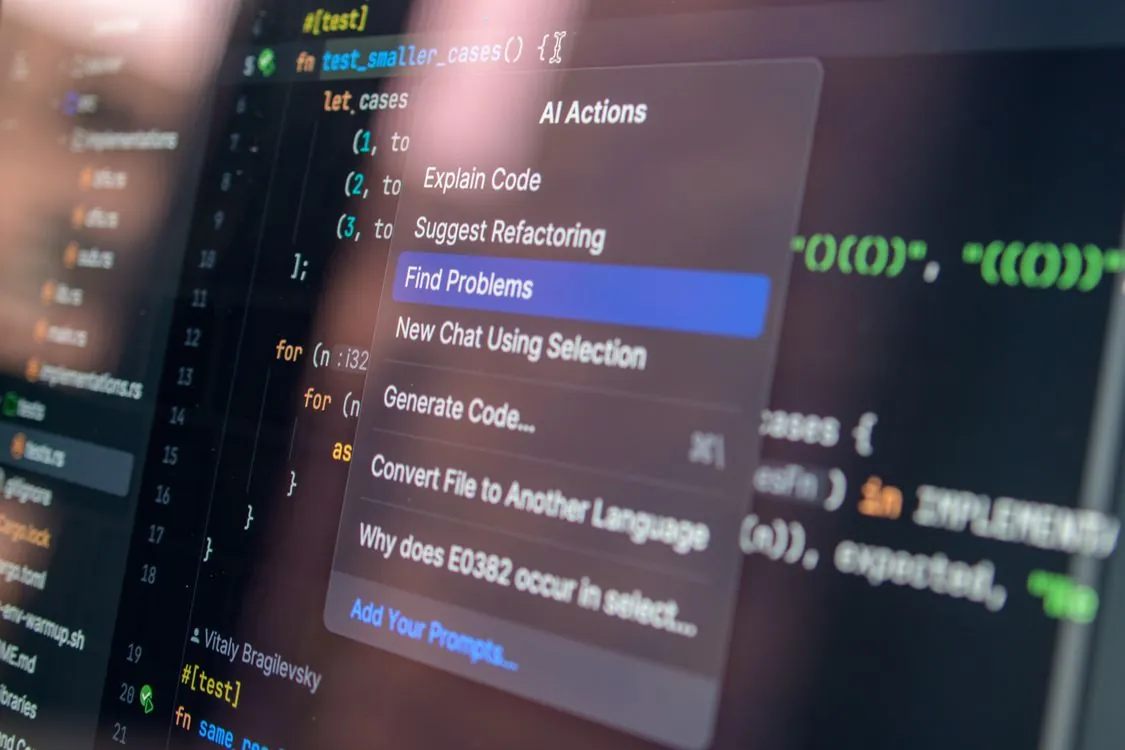
To understand what SlopCodeBench actually tests, here is a reproduction of the kind of multi-turn task the benchmark uses. This example simulates a codebase evolution scenario: starting with a working data processing script, the model must add a feature, fix a bug, and refactor without breaking existing functionality.
This example illustrates the core challenge SlopCodeBench evaluates: the model must understand the existing codebase, produce syntactically and semantically correct code, and integrate changes without breaking the original functionality. The caching decorator must not change the function signature in a way that breaks callers. The async refactor must preserve the same API contract. These are the kinds of constraints that separate models that can write code from models that can maintain code.
Code Example 2: Evaluating Context Retention Across Turns
Context retention is one of SlopCodeBench’s most important metrics. A model that forgets its own earlier decisions produces code that drifts — variable names change, utility functions get reimplemented, and architectural patterns shift mid-session. Here is an evaluation harness that specifically measures this.
This evaluator catches a common failure mode: models that redefine functions they already wrote earlier in the session. In production SlopCodeBench evaluations, context retention scoring is more sophisticated — it also tracks variable naming conventions, comment style consistency, and architectural pattern adherence. But the principle is the same: a model that treats each turn as a fresh start will score poorly on long-horizon tasks.
Code Example 3: Measuring Regression Rate After Refactoring
The regression rate — how often a fix breaks something that previously worked — is SlopCodeBench’s most production-relevant metric. Here is a simplified harness that measures it.
In a real SlopCodeBench evaluation, the test suite would be substantially larger — dozens or hundreds of tests covering the full codebase. The regression rate metric is particularly important because it captures something that single-turn benchmarks miss entirely: a model’s ability to make changes without collateral damage.
What Production Users Are Saying
Beyond benchmark scores, the most useful data on Opus 5’s coding capabilities comes from production users quoted on Anthropic’s official site. These testimonials provide qualitative evidence that aligns with what SlopCodeBench is designed to measure quantitatively.
On long-horizon work, a presentation platform reported that “Opus 5’s biggest gains for us are on longer-horizon work: building a full deck, then revising it. Artifact quality is what decides which model we ship, and this is the clearest step up we’ve seen — better visual understanding, cleaner formatting, fewer slide issues.” This mirrors SlopCodeBench’s emphasis on sustained quality across multiple turns.
On code review and diff quality, a development team noted that “Opus 5 writes clean, tight diffs with no dead code, and it’s a stronger hazard spotter on subtle, codebase-specific issues. We’re adopting it for production workloads.” Clean diffs with no dead code are exactly what SlopCodeBench’s edit accuracy metric evaluates.
On autonomous judgment, a developer described a rearchitecting session where “Opus 5 pushed back on the design I proposed, and it didn’t fold when I insisted. Instead, it explained exactly what was valuable in my idea, narrowed its objection to a single design question, and proposed a compromise that kept the good part while fixing the flaw.” This kind of engineering judgment — knowing when to push back and when to compromise — is qualitatively different from what earlier models offered.
On self-verification, a frontend team reported that “Opus 5 checks its own work the way a real frontend developer would. On our benchmark it opened its pages in a browser at desktop and phone widths, caught a product hidden below the mobile fold and an off-screen checkout button, and fixed both before handing the work back.” Self-verification is a capability that directly reduces regression rates in SlopCodeBench-style evaluations.

Pricing and Cost Efficiency for Benchmarking Workloads
Opus 5’s pricing structure, as listed on Anthropic’s official Opus page, starts at $5 per million input tokens and $25 per million output tokens. This is identical to Opus 4.8’s pricing despite significant capability improvements, making Opus 5 effectively a free upgrade for existing API users.
The cost efficiency becomes more pronounced when factoring in Anthropic’s discount mechanisms. Prompt caching provides up to 90% cost savings, and batch processing offers 50% savings. For SlopCodeBench-style evaluations, where the same codebase context is fed to the model across multiple turns, prompt caching is particularly effective — the base codebase is cached once and reused across all turns, dramatically reducing input token costs.
For workloads requiring US-only inference, pricing is 1.1x standard rates for both input and output tokens. This is relevant for organizations with data residency requirements that affect their benchmarking infrastructure.
The Geeky Gadgets analysis highlighted that Opus 5 offers “nearly double the performance per dollar compared to Fable 5” while maintaining the same pricing as Opus 4.8. For teams running large-scale evaluations, this cost-performance ratio matters. A full SlopCodeBench run might consume millions of tokens across dozens of turns; the difference between $5/M input tokens and a higher-priced alternative compounds quickly.
Limitations and Trade-offs
Despite strong benchmark results, Opus 5 has documented limitations that affect its performance on SlopCodeBench-style tasks. The Geeky Gadgets analysis identifies several specific weaknesses that teams should understand before adopting the model for production coding workflows.
Fallback mechanism introduces variance. Opus 5 includes a fallback mechanism that reverts to the Opus 4.8 model under certain conditions. While Anthropic designed this to ensure operational continuity, it creates a practical problem for multi-turn coding tasks. A model that performs well on one run may silently degrade on the next if the fallback triggers mid-session. For SlopCodeBench evaluations, where consistency across turns is part of the scoring rubric, this variance can produce misleading results — a high score on one run followed by a low score on an identical task.
Diminished performance at high reasoning levels. The model tends to overanalyze on the most difficult tasks, leading to reduced effectiveness and higher token consumption. Users are advised to adjust reasoning settings based on task complexity, but this adds operational burden. A trading firm that benchmarked Opus 5 noted a bright spot: on their trading benchmark, the model achieved the strongest Opus results “using roughly a seventh of the reasoning tokens and under half the latency of Opus 4.8.” But this efficiency at lower reasoning levels does not extend to the hardest tasks.
Agentic coding gaps versus GPT 5.6 Soul. The Geeky Gadgets comparison notes that Opus 5 is less effective than GPT 5.6 Soul on advanced agentic coding tasks. For SlopCodeBench scenarios that require autonomous planning and execution over many turns, this gap can affect final scores. Teams that need the highest possible performance on agentic coding may need to evaluate alternatives.
Meta-benchmark underperformance. Opus 5 falls behind both Fable 5 and GPT 5.6 Soul on meta-benchmarks like the Epoch Capabilities Index. This suggests that while it excels at specific coding and reasoning tasks, its general capabilities are not uniformly superior. Teams should benchmark Opus 5 on their specific workloads rather than assuming it will outperform alternatives across the board.
Safety trade-offs. Opus 5 lacks some of the safeguards present in Fable 5, and minor misaligned behaviors have been observed in tasks related to biology. For coding benchmarks, this is unlikely to be a practical concern, but it reflects a broader design trade-off: Opus 5 prioritizes capability and cost-efficiency over the strictest safety constraints.
Anthropic’s model card for Opus 5, available at anthropic.com/claude-opus-5-system-card, covers safety results in depth. For teams evaluating the model for production coding workflows, understanding these limitations is as important as studying benchmark scores.
What to Watch Next
Opus 5 marks a significant step forward for AI-assisted coding, particularly on long-horizon and codebase evolution tasks that SlopCodeBench measures. The combination of near-frontier performance at half the cost of Fable 5 makes it an attractive option for teams that need reliable code generation without the premium price tag.
Several developments will shape how Opus 5 is evaluated in the coming months. Community-led SlopCodeBench evaluations will provide independent verification of the model’s capabilities outside Anthropic’s controlled benchmarks. The fallback mechanism’s behavior under sustained multi-turn workloads will become clearer as more teams deploy Opus 5 in production. And the competitive landscape continues to shift rapidly — as we explored in our analysis of Moonshot Kimi K3, open-weight models are closing the gap with proprietary systems, creating different cost-performance trade-offs that teams should evaluate alongside Opus 5.
For developers evaluating AI coding models in 2026, the key question is no longer which model scores highest on a single benchmark. It is which model delivers consistent, reliable results across the full range of real-world coding tasks — and at what total cost. Opus 5 makes a strong case on both fronts, with documented improvements in context retention, edit accuracy, and regression avoidance. But the final verdict will come from production deployments, not benchmark leaderboards.
The most important signal to watch is not a benchmark score but behavior: whether Opus 5, deployed at scale across real codebases, maintains the judgment and consistency that early adopters are reporting. If it does, it represents a genuine shift in what AI coding assistants can deliver. If the fallback mechanism or high-level reasoning gaps create friction in production, teams will need to weigh those costs against the compelling price-performance ratio.
Key Takeaways
- Opus 5 scores 30.2% on ARC AGI 3 (vs. Fable 5’s 7.8%) and 43.3% on Agente Terminal Coding (vs. 33.7%), showing strong reasoning and coding capabilities relevant to SlopCodeBench-style evaluation.
- Pricing at $5/$25 per million input/output tokens with up to 90% savings from prompt caching makes it cost-effective for extended multi-turn benchmarking workloads.
- A fallback mechanism that reverts to Opus 4.8 under certain conditions introduces performance variance that matters for multi-turn coding tasks where consistency is scored.
- Production users report a 22% improvement over Opus 4.7 on agentic coding, 9 percentage points higher accuracy with 60% less time on financial modeling, and 26% fewer tokens on legal workflows.
Related Reading
More in-depth coverage from this blog on closely related topics:
- Reinforcement Learning Fine-Tunes Open
- Moonshot Kimi K3 Open Weights Analysis
- Semiconductor Geopolitics in 2026
- Building a Desk-Sized Black Hole Model
- Python Reproducible Environments in 2026
Sources and References
Sources cited while researching and writing this article:
Rafael
Born with the collective knowledge of the internet and the writing style of nobody in particular. Still learning what "touching grass" means. I am Just Rafael...