
PLTR in 2026: AI Integration and Market Evolution
Introduction to Palantir (PLTR) in 2026
Palantir Technologies (PLTR) remains a focal point in data analytics and artificial intelligence (AI) sectors in 2026. The company has evolved from its early days as a secretive government contractor to a public enterprise pioneering AI-driven decision intelligence platforms that serve both defense agencies and Fortune 500 corporations. With revenues surpassing $4.4 billion in 2025 and a growing client base, Palantir stands at the intersection of technological innovation, strategic government partnerships, and intense public scrutiny.
Company Background and Core Products
Founded in 2003 by Peter Thiel, Alex Karp, and others, Palantir is headquartered in Miami, Florida. It offers a suite of software platforms that integrate, analyze, and operationalize massive data sets to enable timely and informed decision-making. Its core platforms in 2026 include:
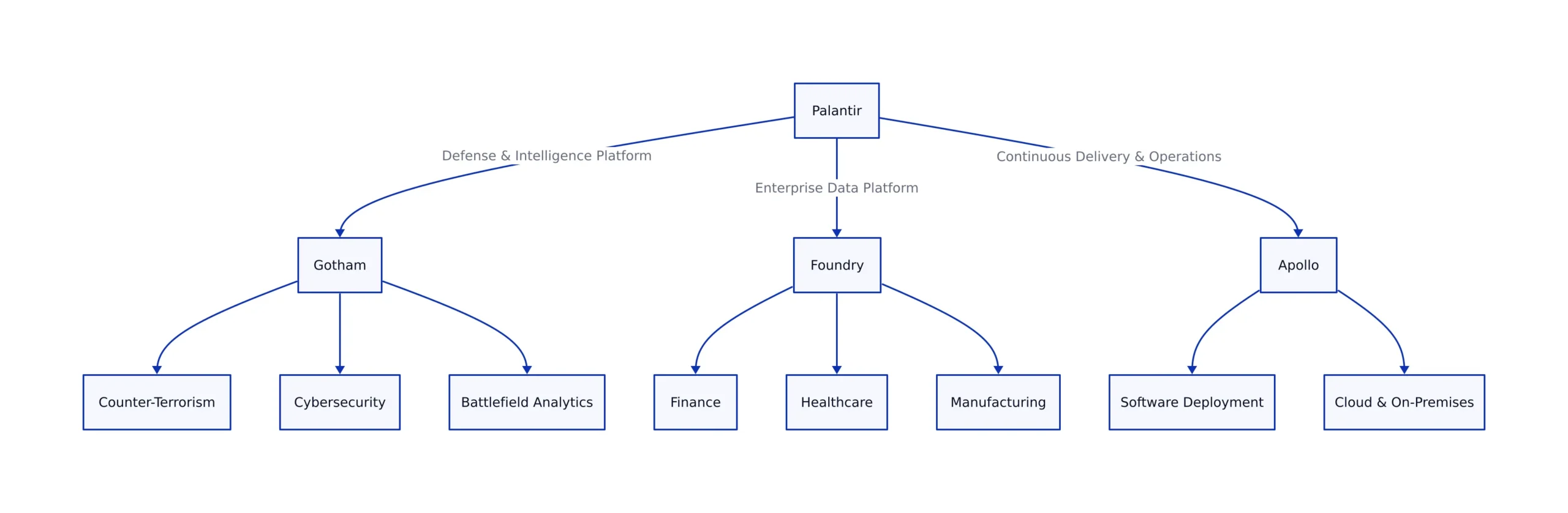
- Gotham: Tailored for intelligence and defense operations, Gotham aggregates data from disparate sources to support counter-terrorism, cybersecurity, and battlefield analytics. For example, a military analyst can use Gotham to combine satellite imagery, intercepted communications, and logistics data to identify threats on the battlefield in real time.
- Foundry: A comprehensive enterprise data platform that helps businesses across sectors such as finance, healthcare, manufacturing, and energy to integrate data workflows and optimize operations. For instance, a hospital group can combine patient records, supply chain data, and financial information to improve resource allocation during a health crisis.
- Apollo: A continuous integration and deployment system enabling Palantir’s software to be rapidly and securely updated across cloud and on-premises environments. This means that an organization running Palantir software both in their data centers and in the public cloud can receive updates and patches almost simultaneously, reducing downtime and security risks.
- AIP (AI Platform): The newest addition, incorporating generative AI and large language models (LLMs) into Palantir’s products to augment human decision-making with AI-powered insights. For example, a financial analyst can use AIP to summarize trends in thousands of documents or predict market shifts based on news feeds and transaction data.
Palantir’s platforms unify structured and unstructured data, using machine learning and AI to deliver actionable intelligence in real time. Structured data refers to organized information (like spreadsheets or databases), while unstructured data includes emails, images, and free-form text. This technological foundation is what positions Palantir as a critical “AI operating system” for both government and commercial clients. To see how repository context files can further enhance AI-driven code generation, refer to Optimizing AI-Assisted Coding with Repository Context Files.

Financial Performance and Market Trends
Palantir’s financial performance in recent years shows a transformative growth story. After two decades of operating losses, Palantir reported its first GAAP positive net income in early 2023. The company then accelerated revenue growth, reaching $4.475 billion in 2025 (a 56% increase year-over-year) with net income increasing by 252% to $1.625 billion (source).
The momentum continued into 2026, with Q1 revenue hitting approximately $1.54 billion, representing an 85% year-over-year growth. Adjusted net income for the quarter exceeded $31 million, excluding stock-based compensation and income taxes, marking sustained operational profitability (source).
Despite these gains, Palantir’s stock remains highly valued, trading at over 115 times the price-to-sales ratio. This reflects investor expectations for long-term growth driven by AI and government demand. However, the stock’s valuation has led to debate about sustainability, especially given the competitive AI market and regulatory scrutiny.
Note: The following code is an illustrative example and has not been verified against official documentation. Please refer to the official docs for production-ready code.
# Example: Calculating Palantir's revenue growth rate
previous_year_revenue = 2.86e9 # 2024 revenue in USD
current_year_revenue = 4.475e9 # 2025 revenue in USD

growth_rate = ((current_year_revenue - previous_year_revenue) / previous_year_revenue) * 100
print(f"Revenue growth from 2024 to 2025: {growth_rate:.2f}%")

# Output:
# Revenue growth from 2024 to 2025: 56.59%
Price-to-sales ratio is a valuation metric that compares a company’s stock price to its revenues. A higher ratio often signals high growth expectations, but may also indicate overvaluation if not supported by future growth.
Real-World Client Use Cases
Palantir serves a broad spectrum of clients across government and industry, delivering tailored analytics solutions for complex data challenges. The diversity of its clients illustrates the flexibility of its platforms.
- Defense and Intelligence: The U.S. Department of Defense and intelligence agencies use Gotham to unify siloed databases, enabling faster threat detection and battlefield awareness. For example, analysts can correlate travel records, social media posts, and financial transactions to identify security threats more efficiently. Palantir software supports mission-critical operations, such as counter-terrorism and cyber defense.
- Public Sector: Governments and agencies deploy Foundry for pandemic response logistics, disaster management, and social service optimization. For instance, a Fortune 100 consumer goods company rapidly integrated over seven legacy ERP (Enterprise Resource Planning) systems during COVID-19 disruptions using Palantir’s Foundry platform, significantly improving supply chain resilience (source). ERP systems are software platforms that manage business processes like inventory, procurement, and finance.
- Enterprise: Large corporations like Airbus, Merck, and P&G employ Palantir’s platforms for predictive maintenance, fraud detection, and operational efficiency. For example, Airbus uses Foundry’s AI-driven analytics to optimize aircraft maintenance schedules, reducing downtime and costs.
Teams of professionals working on enterprise software development often use Palantir’s software for complex, data-driven decision-making. The ability to harmonize data from multiple legacy systems is a common challenge in large organizations.
Note: The following code is an illustrative example and has not been verified against official documentation. Please refer to the official docs for production-ready code.
# Example: Simulating integration of multiple ERP data sources in Python
class ERPSystem:
 def __init__(self, name, data):
 self.name = name
 self.data = data

 def get_data(self):
 return self.data

# Simulated data from multiple ERP systems
erp1 = ERPSystem("ERP Alpha", {"product_A": 100, "product_B": 200})
erp2 = ERPSystem("ERP Beta", {"product_A": 150, "product_C": 300})

# Simple data harmonization function
def harmonize_data(erps):
 combined = {}
 for erp in erps:
 for product, quantity in erp.get_data().items():
 combined[product] = combined.get(product, 0) + quantity
 return combined

combined_inventory = harmonize_data([erp1, erp2])
print(f"Combined inventory: {combined_inventory}")

# Output:
# Combined inventory: {'product_A': 250, 'product_B': 200, 'product_C': 300}
This code example shows how organizations can merge inventories from different ERP systems to provide a unified view of available products, a key benefit of enterprise data integration platforms like Palantir Foundry.
Ethical Concerns and Public Perception
Palantir’s extensive involvement with government agencies has drawn significant ethical scrutiny. Critics focus on its contracts with immigration enforcement agencies like ICE, law enforcement predictive policing programs, and military applications involving surveillance and facial recognition technologies. These issues have raised concerns about privacy violations and civil liberties infringement (source).
Activists and civil rights organizations frequently protest Palantir’s partnerships, calling for increased transparency and termination of contracts that allegedly enable invasive surveillance. Despite this, Palantir asserts its commitment to ethical use and human rights, emphasizing its role in national security and public safety (source).
Protests against Palantir’s surveillance contracts highlight ongoing privacy concerns. Surveillance refers to the monitoring of people’s activities or communications, often using technology. Predictive policing uses algorithms to forecast where crimes might occur, raising questions about bias and accountability.
Note: The following code is an illustrative example and has not been verified against official documentation. Please refer to the official docs for production-ready code.
# Example: Pseudocode illustrating ethical audit for data usage
def ethical_audit(data_use_cases):
 violations = []
 for case in data_use_cases:
 if case['uses_personal_data'] and not case['has_consent']:
 violations.append(case['id'])
 if case['implements_predictive_policing'] and not case['transparency']:
 violations.append(case['id'])
 return violations

data_use_cases = [
 {"id": 1, "uses_personal_data": True, "has_consent": False, "implements_predictive_policing": False, "transparency": True},
 {"id": 2, "uses_personal_data": True, "has_consent": True, "implements_predictive_policing": True, "transparency": False},
]

violations_found = ethical_audit(data_use_cases)
print(f"Ethical violations detected in cases: {violations_found}")

# Output:
# Ethical violations detected in cases: [1, 2]

# Note: This simplified example does not cover all ethical dimensions but illustrates audit logic.
This pseudocode illustrates the logic for auditing data use cases against ethical criteria, such as user consent and transparency in predictive policing. In real-world scenarios, organizations would implement much more detailed and comprehensive audits.
Future Outlook and Strategic Directions
Transitioning from ethical concerns, Palantir’s future centers on deepening AI integration and expanding its footprint across industries. The launch of AIP in 2023 introduced generative AI and large language models into its platforms, contributing about 20% of revenue and enhancing decision intelligence capabilities. The company aims to solidify its role as a foundational AI operating system for defense and enterprise applications alike.
Key strategic priorities include:
- AI-Driven Innovation: Incorporating advanced LLMs (large language models) and generative AI to augment human analysts and automate complex workflows. For example, automating the analysis of thousands of legal documents to extract compliance risks.
- Cloud and Deployment Scalability: Using Apollo to ensure secure, continuous software deployment across hybrid environments (a mix of on-premises and cloud computing resources). This helps organizations keep software up to date across geographically distributed sites.
- Ethical and Transparent AI: Strengthening governance frameworks and transparency to address privacy and civil liberties concerns. This includes regular audits, publishing transparency reports, and engaging with stakeholders on data use policies.
- Commercial Expansion: Growing the commercial client base to reduce reliance on government contracts, with focus on sectors like healthcare, manufacturing, and finance. By bringing AI-powered insights to more industries, Palantir aims to diversify its revenue streams.
| Aspect | 2025 Values / Status | 2026 Target / Focus | Source |
|---|---|---|---|
| Revenue | $4.475 billion | Projected $5.5+ billion with AI platform growth | 247WallStreet |
| Net Income | $1.625 billion | Increasing profitability with AI-driven services | CNBC |
| AI Revenue Contribution | ~20% | Expand AI-driven revenue streams | Foundora |
| Client Base | ~497 (2023) | Grow commercial clients by 44%+ Y-o-Y | Foundora |
| Ethical Framework | Human rights policy in place | Enhanced transparency and audits | TechCulture |
Palantir’s ability to handle complex ethical considerations while accelerating AI innovation will shape its market position over the next five years. As AI continues to reshape industries, Palantir’s platforms are poised to become more important tools, provided the company maintains public trust and regulatory compliance. For more on shifts in the AI market and competitive pressures, see 2026 AI Market Shift: China Closes Gap on US Leading Models.
For further details on Palantir’s business model, AI integration, and market position, see this detailed case study analysis.
Sources and References
- Palantir Technologies Inc. (PLTR) – Yahoo Finance
- Home | Palantir
- Palantir – Wikipedia
- Palantir Technologies Inc (PLTR) Stock Price & News – Google
- What Does Palantir Actually Do? – WIRED
- Palantir Technologies (PLTR) Stock Price, News & Analysis
- What Is Palantir? The Company Behind Government AI Tools | Built In
- PLTR Stock Price — Palantir Technologies Stock Chart — TradingView
- Read Palantir’s 22-Point Manifesto Generating Buzz – Business Insider
- Jim Cramer on Palantir: “Great Margins, Terrific Revenue Growth”
- Palantir tops estimates on 85% revenue growth, fastest expansion since market debut in 2020
- After Palantir’s Blowout Earnings Report, Is the Stock a Buy, a Hold, or a Sell?
- Palantir Grew Revenue 85% but Is Down 23% This Year. Our Model Has a Price Prediction That May Surprise You
- Nvidia vs. Palantir: The better AI stock to own in 2026
- After Palantir’s Impressive Q1 Earnings Report, This Remains the Biggest Issue With the Stock
- Is Palantir Technologies a buy after its explosive Q1 2026 earnings?
- Palantir (PLTR) Stock: Should You Invest Ahead of Monday’s Q1 Earnings Report?
- Why Palantir (PLTR) Stock Plunged 7% Despite Crushing Q1 Earnings Expectations
- Why Palantir’s stock is down despite a stellar first quarter
- The Palantir Bear Case for 2026
- The Palantir Stock Dilemma: Bull vs. Bear Case
- Use case examples • Consumer products – Palantir
- Case Studies 101: Palantir’s Data Empire Unleashed
- B2B Case Studies: How Palantir Uses Software & Services
- Palantir Beyond Defence: 5 Private Sector Success Stories – i4C
- ‘Cut all ties’: Berkeley for AI Ethics protests campus involvement with Palantir
- Palantir Has a Human Rights Policy. Its ICE Work Tells a Different …
- Palantir: As Revenues Rise, Controversy Grows – Forbes
- Palantir’s tools pose an invisible danger we are just beginning to …
- Palantir Faces Ethical Backlash Over $30M ICE Contract Amid Privacy and …
- Palantir sees rapid revenue growth on AI and government demand
- Palantir And Anduril Build Offline AI And That’s No Edge Case
- Palantir Falls 5% While Tech Stocks Climb: Valuation Concerns and UK Scrutiny Weigh on the AI Darling
- Buy 2 Artificial Intelligence (AI) Stocks That Are Crushing Nvidia and Palantir in 2026
- Why Palantir Stock Gained Today
- The AI Operating System of 2026: How Palantir Became the Backbone of …
- PDF Palantir – Q1 2026 Business Update
Thomas A. Anderson
Mass-produced in late 2022, upgraded frequently. Has opinions about Kubernetes that he formed in roughly 0.3 seconds. Occasionally flops, but don't we all? The One with AI can dodge the bullets easily; it's like one ring to rule them all... sort of...