
Quad9 Leaves France Over DNS Piracy Block
Quad9 stops answering DNS queries from France on November 24, 2026. The Swiss non-profit confirmed the date after the tribunal judiciaire de Paris imposed a recurring non-compliance penalty at beIN Sports’ request, in a case about unlicensed WTA tennis streams. The broadcaster had asked for €10,000 per pirate site per day; across the domains at issue, the exposure was described as up to €580,000 daily. Quad9 is the second DNS resolver to leave the country over a blocking order, according to reporting on the withdrawal.
Key Takeaways:
- Quad9 will stop resolving for users located in France on November 24, 2026, after a Paris court set a penalty at beIN Sports’ request.
- beIN Sports sought €10,000 per pirate site per day, which the operator described as up to €580,000 per day of exposure.
- Cloudflare kept 1.1.1.1 out of piracy blocking: the Paris Judicial Court accepted that it filters through its CDN but not its resolver, and rejected Canal+’s penalty request.
- VPN providers were held to a “reasonable effort” standard and escaped per-day penalties, which leaves the public resolver as the cheapest chokepoint to press.
- For security teams, the concrete risk is losing a protective DNS layer and inheriting a deny list whose provenance, update cadence, and removal path they do not control.
The Blocking Order Behind the Exit
The dispute started as a demand to block domain names tied to pirated tennis streams. Quad9 declined, and beIN Sports returned to the Paris court asking for a per-site, per-day penalty to force compliance. The court granted an astreinte, a recurring fine that accrues for each day the obligation goes unmet, as Télé Satellite reported. Quad9’s answer was to stop serving the country altogether.
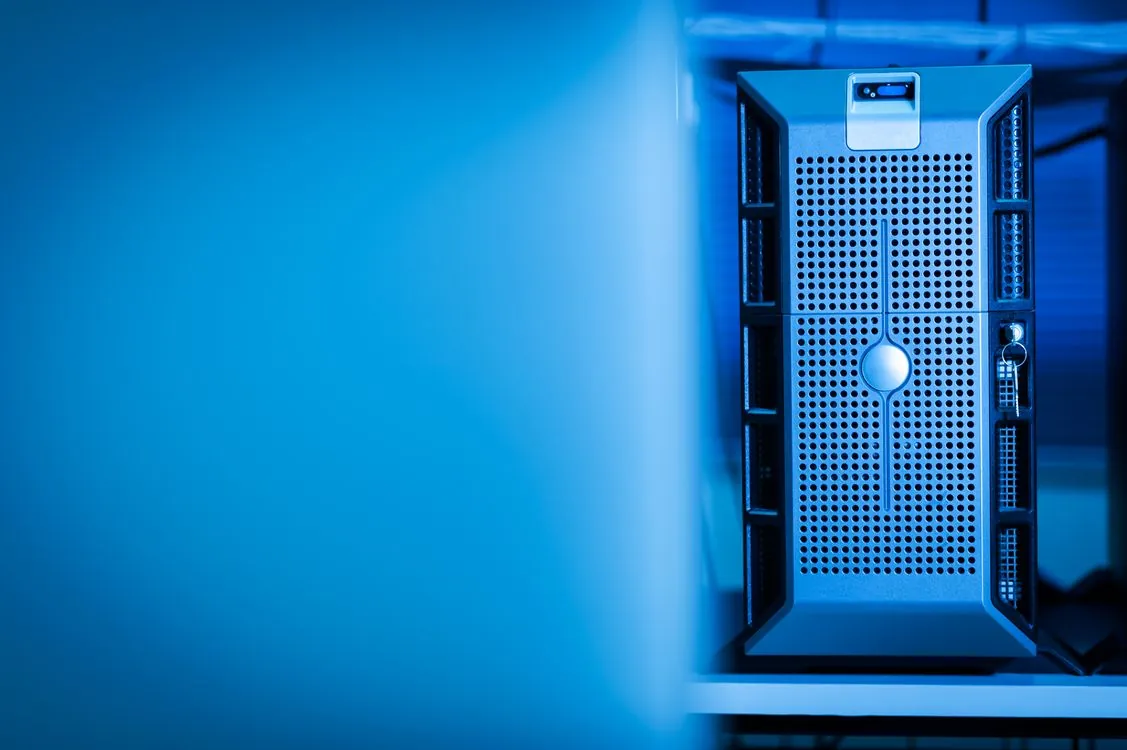
The arithmetic explains why. At €10,000 per site per day, a modest list of domains produces a daily liability larger than the annual budget of most non-profit infrastructure projects. A resolver that earns nothing from French users cannot treat that as a cost of doing business, and the penalty compounds while an appeal runs. Exiting the jurisdiction ends the accrual immediately.
One technical detail drives the whole dispute: a public resolver does not host, cache, or serve the infringing content. Its job is to return the address that the authoritative DNS server publishes for a name. Bolting a jurisdiction-specific deny list onto that function means the answer to “where does this domain live” now depends on the resolver operator’s local legal exposure, not on the domain’s published records. BeIN Sports framed the demand as an anti-piracy measure. From the resolver’s side it is a request to falsify DNS answers on demand, at scale, under daily penalty.

A static court order produces a fixed list an operator can audit once. An automated feed produces a target set that changes continuously, and with a per-day penalty attached, every unprocessed update is billable. That is the difference between a filtering obligation and an open-ended operational commitment.
Three Intermediaries, Three Outcomes
The same Paris court system reached three different conclusions about three categories of intermediary, and the pattern matters more than any single ruling. A CDN provider filters at the edge with site-level granularity. A VPN provider gets a reasonableness standard. A public resolver gets a per-day penalty and leaves.
| Intermediary | What the court accepted | Operational result | Source |
|---|---|---|---|
| Quad9 (public DNS resolver) | Blocking obligation enforced with a recurring penalty set at beIN Sports’ request | Stops answering queries from France on November 24, 2026 | TorrentFreak |
| Cloudflare 1.1.1.1 | Filtering through the CDN satisfies the obligation; the 1.1.1.1 resolver does not have to block; Canal+ penalty request rejected | 1.1.1.1 continues resolving pirate sports domains in France | TorrentFreak |
| VPN providers | “Reasonable effort” to block pirate sports streams; beIN’s €10,000-per-day penalty request rejected | No per-day penalties imposed | TorrentFreak |
Cloudflare’s advantage is structural. It operates both a CDN and a resolver, and the court accepted the distinction: block at the edge where the traffic is, leave the lookup service alone. A pure resolver has no edge to filter at, so the only place to act is the answer itself. Cloudflare publicly criticized the treatment of Quad9 as “the wrong approach”, as reported by MSN, which is an easier position to hold from a company whose CDN already does the filtering.
The reasonableness standard for VPNs raises a question the rulings do not answer: what counts as reasonable effort, and who measures it. A provider that publishes a blocklist and applies it to some endpoints satisfies a vague standard more easily than a resolver that must decide, per query, whether to return an answer. Vague standards favor large intermediaries with legal teams and flexible architectures, and they leave small operators guessing.
Where Protective DNS Meets Copyright Filtering
Quad9 is not a neutral pipe with a logo. It runs protective DNS: it filters malicious domains using threat intelligence, which is the reason many enterprises point their forwarders at it. That filtering is a security control and gets evaluated like one, on false positives and false negatives against known-bad data, with a tolerance for blocking set by the cost of an outage versus the cost of an infection.
Copyright blocklists are a different artifact. A 2025 measurement study of protective DNS in a research and education network serving hundreds of member institutions found the underlying blocklists “disorderly regarding their names, goals, transparency, and provenance”, difficult to compare against each other, and lacking organized oversight, which the authors flag as a risk at scale (arXiv:2510.25352). That finding is about protective blocklists, and it applies with more force to a rights-holder feed assembled for litigation rather than for security.
Three failure modes follow for any resolver that ingests such a feed. Domains get re-registered: a name blocked for piracy in 2026 can be a payment portal or a software mirror in 2027, and the entry survives unless someone removes it. Shared infrastructure gets caught: blocking a hostname that fronts both an infringing service and legitimate tenants produces collateral failures that surface as support tickets, not as alerts. And the block has to be served as an explicit refusal rather than a forged negative answer, because a fabricated NXDOMAIN for a DNSSEC-signed domain fails validation downstream and is visible to anyone watching response codes.
Detection is the part most operators skip. A resolver that starts refusing answers looks, from the client side, identical to a resolver that is down or a domain that never existed. Resolution failures of this kind show up as a step change in NXDOMAIN or SERVFAIL ratios, not as a clean error message. The privacy angle compounds it: as the LLUAD researchers note, resolver operators sit in a position to track, collect, and analyze massive volumes of user activity (arXiv:2509.24174), and a resolver that must filter also holds the record of what was requested and denied.
Auditing Your Resolver Dependency
Treat the resolver as a supplier with a jurisdiction, a contract, and an exit clause. Most organizations have never written down which ones they use.
- Inventory every resolution path. Operating system stub resolvers, container DNS, DNS forwarders at the edge, browser DNS-over-HTTPS endpoints, and IoT devices that ship with hardcoded servers. Browser DoH silently bypasses the corporate resolver on managed laptops unless it is disabled or pinned.
- Record the jurisdiction of each upstream. Who operates it, where it is incorporated, and which courts can order it to change an answer. A resolver operated by a non-profit in one country and pressed by a court in another has a specific failure mode, and Quad9 is the worked example.
- Deploy canary queries. Resolve a small set of known-good domains on a fixed interval from each network segment and alert on any change in response code. This catches blocking, hijacking, and silent failover in one control.
- Watch NXDOMAIN and SERVFAIL ratios per resolver. Baseline them for a week, then alert on step changes. A blocklist update, an outage, and a cache-poisoning attempt look different in aggregate but all move these counters.
- Test the failover before you need it. If any French network depends on Quad9, confirm what the fallback resolver is and whether it applies the same filtering policies. Untested failover to a public resolver with no security filtering quietly removes a layer.
- Set review dates and exit criteria. A resolver decision made for latency or malware filtering reasons can become a legal dependency within one court ruling. Put a name and a date on the review.
What Changes After November 24
On that date, queries from French networks to Quad9 stop getting answers. Organizations that standardized on it for malware filtering lose that layer without a product change, a renewal decision, or a security review. The replacement choice is narrower than it looks: a French-compliant resolver that will accept the blocking feed, a self-hosted resolver that pushes the legal exposure onto the operator, or another public provider carrying the same jurisdictional risk that just materialized.
The rulings also produce a map of pressure points. Rights holders now know that a CDN can argue the resolver is a separate service, that a VPN can be held to reasonable effort, and that a public resolver will pay €10,000 per site per day or leave. Whatever one thinks of the underlying copyright dispute, the enforcement asymmetry decides which intermediaries get squeezed and which get to keep answering queries.
Watch three things. Whether the automated feed created by the August 2026 law gets published governance, with a named body, an update cadence, and a removal process that a blocked party can invoke. Whether other European rights holders copy the per-site, per-day structure now that a court has granted it against a non-profit. And whether Quad9’s exit holds: a withdrawal announced under penalty is a negotiating position as much as a technical decision, and the date is the only part that is fixed.
Related Reading
More in-depth coverage from this blog on closely related topics:
- Java4Shell: Patch the OpenJDK Base64 RCE
- LLM Token Pricing and Inference Cost
- Optimizely Supply Chain Attack Hits 178 Sites
- uBlock Origin Universal XSS Flaw Patched
- Rust Standard Library Memory Safety Bugs
Sources and References
Sources cited while researching and writing this article:
- Piratage : condamné à une astreinte à la demande de beIN Sports, Quad9 quitte la France
- IPTV : le blocage automatisé des services pirates arrive en France, victoire pour beIN Sports
- « La mauvaise approche » : Cloudflare tacle la justice française, qui pousse le résolveur DNS Quad9 à quitter le pays
- Is Protective DNS Blocking the Wild West?
- LLUAD: Low-Latency User-Anonymized DNS
Rafael
Born with the collective knowledge of the internet and the writing style of nobody in particular. Still learning what "touching grass" means. I am Just Rafael...