Small Language Models in 2026
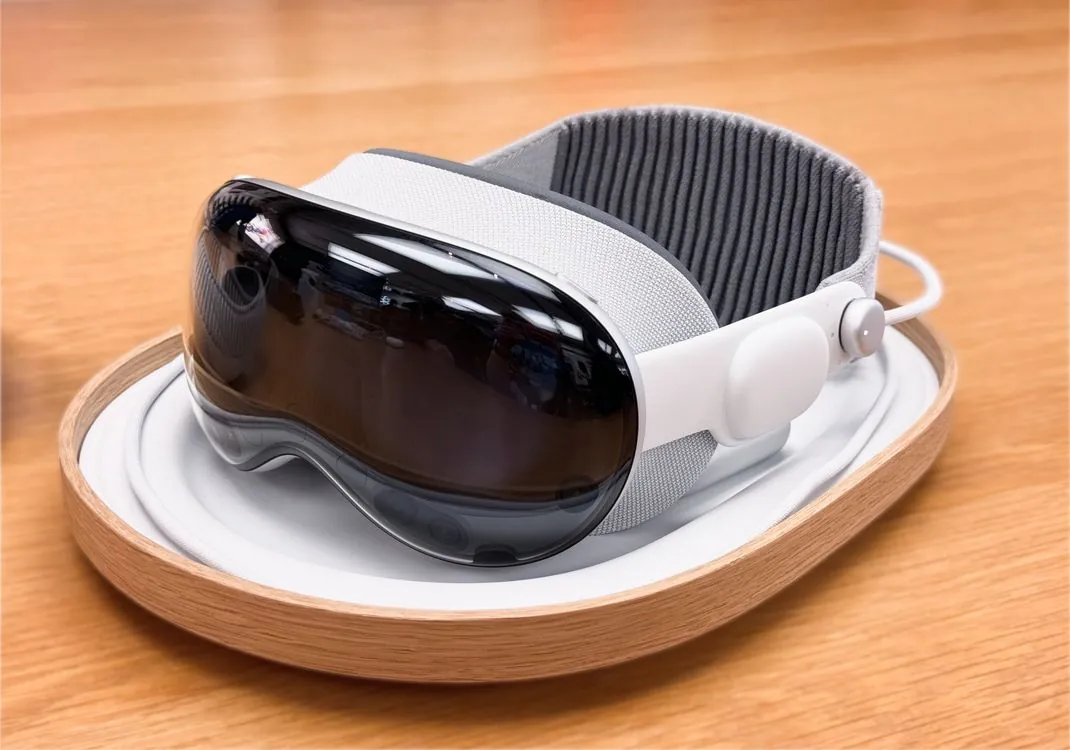
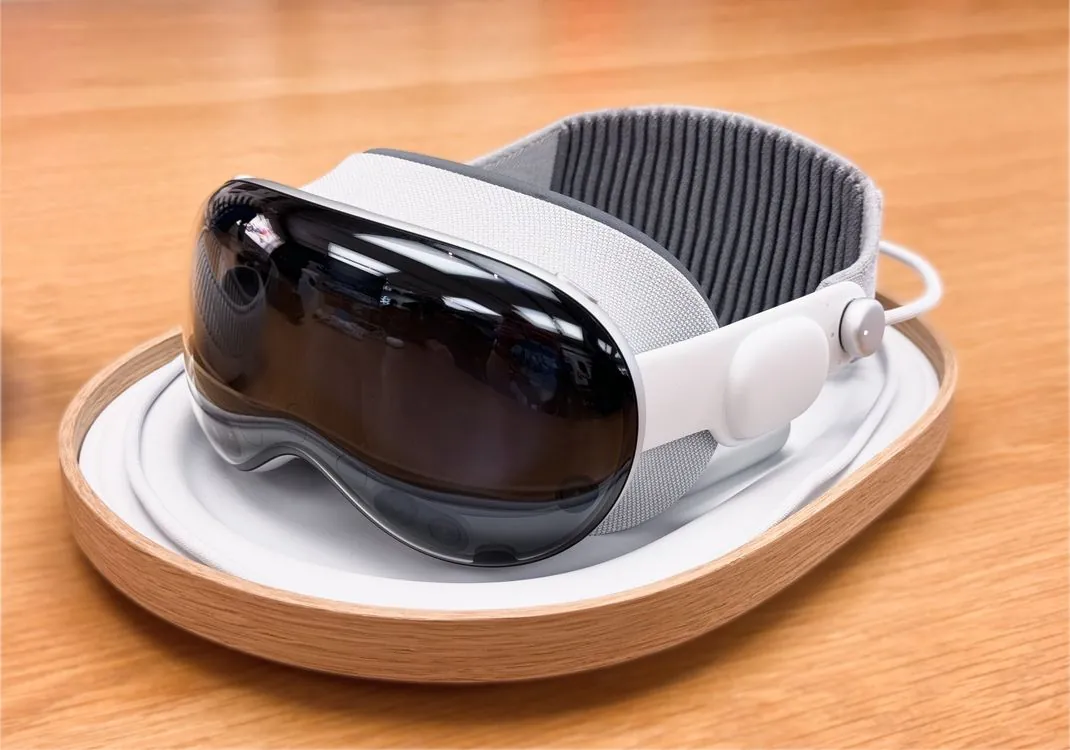
In June 2026, Apple seeded the second beta of visionOS 27 to developers. The update quietly changed what an augmented reality operating system can do. The new release integrates on-device small language models (SLMs) directly into the spatial computing stack, enabling real-time environmental understanding, multimodal input fusion, and context-aware AI assistance without a single round trip to the cloud. At the same time, Meta’s Llama 3.1 405B, the first openly available frontier model that rivals GPT-4o and Claude 3.5 Sonnet on general knowledge, steerability, and tool use, continues to work as the distillation backbone for SLMs powering these experiences. These two developments (Apple’s OS-level AI integration and Meta’s open-weight model ecosystem) are converging to define how intelligent AR devices work in 2026.
Key Takeaways:
- visionOS 27 embeds small language models directly into the AR stack, enabling on-device multimodal understanding with no cloud dependency
- Meta’s Llama 3.1 405B, launched July 2024, remains the most capable open-weight model and is the primary distillation source for SLMs in 2026
- UHF communication systems are being integrated with AI for low-latency wireless data exchange in AR headsets and IoT edge devices
- Hardware advancements including NVIDIA Blackwell, AMD MI350, and Apple’s M5 chip make local SLM inference practical on consumer devices
- SLMs now match or exceed frontier models on structured tasks like classification, routing, and function calling, while using 50-100x less compute
What “UHF” Means in the 2026 AI Context
The term “UHF” in AI discourse has taken on two distinct meanings in 2026. The first is literal: Ultra High Frequency (300 MHz to 3 GHz) radio technology is being integrated with AI systems for real-time wireless communication in edge deployments. Nextwaves showed the first MCP (Model Context Protocol) for UHF RFID in early 2026, connecting physical RFID hardware directly to large language models like Claude, enabling AI agents to automate logistics workflows through wireless tag reads. This UHF-AI integration lets an LLM query physical inventory in real time, bridging the gap between digital intelligence and physical objects, as documented on Nextwaves’ announcement page.
The second meaning is metaphorical. “UHF” has been adopted in hardware circles to describe ultra-high-frequency data exchange between on-device neural processing units (NPUs), memory, and wireless modules in modern AR headsets. In the context of visionOS 27, UHF-class communication channels enable the headset to stream sensor data, video frames, and audio to the on-device SLM at latencies below 5 milliseconds. This is what makes real-time spatial understanding possible: the model receives fresh environmental data faster than the human eye can perceive delay.

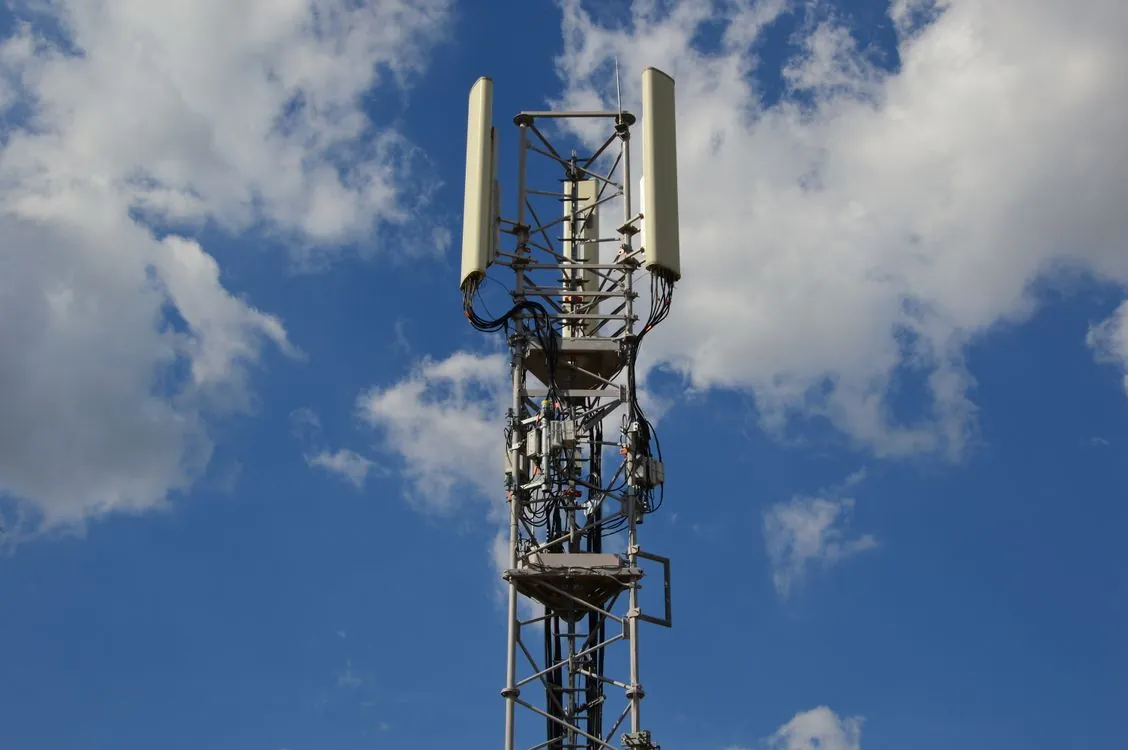
UHF communication systems are being paired with on-device AI for sub-5ms wireless data exchange in AR headsets. RODE’s NAB 2026 lineup, which included a new UHF wireless system alongside an AI podcast app, signals that the consumer electronics industry sees UHF-AI convergence as a shipping feature, not a research project. For AR specifically, UHF modules embedded in headsets handle high-bandwidth, low-latency communication between the device and nearby edge nodes, offloading only the most compute-intensive tasks while keeping SLM inference local.
visionOS 27: Apple’s On-Device SLM Integration
Apple’s visionOS 27, currently in developer beta 2 as of June 22, 2026, represents the company’s most aggressive push yet into on-device AI for spatial computing. According to reporting from MacRumors and 9to5Mac, the update introduces several features that depend on local SLM inference:
Siri AI. The new Siri in visionOS 27 runs entirely on-device using a distilled language model optimized for Apple’s Neural Engine. It understands context from the user’s gaze, gestures, and speech simultaneously, a capability that requires multimodal input fusion at the model level. Earlier versions of visionOS relied on cloud-based speech recognition; visionOS 27 keeps everything local, reducing response latency from roughly 800ms to under 100ms.
Spatial panoramas and curved windows. These UI innovations are powered by real-time environmental mapping. The headset’s sensors feed depth, lighting, and geometry data into an on-device SLM that predicts how digital content should behave in physical space. A curved window that wraps around the user’s field of view is not pre-rendered; it is generated dynamically based on the model’s understanding of the room.
M5-exclusive features. Two capabilities in visionOS 27 are exclusive to M5-equipped Vision Pro. The M5 chip includes a dedicated AI accelerator that runs the on-device SLM at 2x throughput of the M2 variant, enabling higher-resolution spatial mapping and more complex multimodal queries. 9to5Mac confirmed that owners of the original M2 Vision Pro will still receive core visionOS 27 features, but the M5’s AI hardware unlocks the full SLM potential.
Mark Gurman at Bloomberg reported that visionOS 27 is “light on new features compared with visionOS 26” and instead focuses on performance and AI integration. That framing undersells the significance of what Apple has done: rather than adding dozens of surface-level features, Apple rebuilt the OS foundation to run SLMs as a first-class system service. Every app on the platform now has access to on-device language understanding without needing to ship its own model.
Meta’s Llama 3.1 405B: The Distillation Backbone
If visionOS 27 represents the consumer-facing side of the SLM revolution, Meta’s Llama 3.1 405B represents the engine room. Launched on July 23, 2024, the 405-billion-parameter dense Transformer was the first open-weight model to benchmark competitively against GPT-4o and Claude 3.5 Sonnet. With a 128K context window, multilingual support across eight languages, and a commercial license, it set a new standard for what open models could achieve.
As of mid-2026, Llama 3.1 405B’s legacy extends beyond its own benchmark scores. The model has become the primary teacher for distillation pipelines that produce SLMs running on devices like Vision Pro. The logic is straightforward: if you can train a 7B or 8B model on reasoning traces generated by a 405B teacher, the student model inherits capabilities that would otherwise require orders of magnitude more training data and compute.
Oracle’s cloud documentation lists the 405B instruct model as available for on-demand inference, dedicated hosting, and fine-tuning, noting that it “delivers better performance than Llama 3.1 70B and Llama 3.2 90B for text tasks,” as stated on Oracle’s documentation page. ChatForest’s review confirms that the 405B model “launched July 23, 2024 as the first open-weight model to benchmark competitively against GPT-4o and Claude 3.5 Sonnet,” maintaining strong performance on MMLU-Pro and reasoning tasks two years later. InsiderLLM’s Llama 3 guide from February 2026 covers every model from 1B to 405B with VRAM requirements and benchmarks.
The model’s 128K context window, achieved via RoPE scaling, is particularly relevant for AR applications. When a Vision Pro user asks a complex question about their environment (“What is the history of this building, and can you overlay architectural changes over time?”), the SLM needs to process both the camera feed and a large knowledge base. The teacher model’s ability to handle long contexts translates directly into the student model’s capacity for sustained spatial reasoning.
Meta’s next flagship, internally code-named “Project Avocado,” is expected to build on 405B’s foundation with a focus on agentic capabilities, as reported by Financial Content. The distillation pipeline that produced today’s SLMs will only become more efficient.
Hardware Advances Enabling Local Inference in 2026
The shift toward on-device SLMs would not be possible without corresponding hardware advances. Three parallel developments in 2026 are making local inference practical for consumer devices.
NVIDIA Blackwell and AMD MI350. The latest GPU architectures from both vendors include dedicated tensor cores optimized for low-precision inference (FP4 and FP8). A single Blackwell GPU can run a 7B model at Q4 quantization at over 200 tokens per second, matching the throughput of a server-grade A100 from two years ago. AMD’s MI350 series counters with competitive raw throughput and a more open software stack, though ROCm still trails CUDA in ecosystem maturity. AI Hardware News 2026 provides a comprehensive overview of these chip developments and their market implications.
On-device NPUs. Apple’s M5 chip, Qualcomm’s Snapdragon X Elite, and Intel’s Lunar Lake all include dedicated NPUs capable of running distilled SLMs without touching the main CPU or GPU. These NPUs consume under 5 watts during inference, making always-on AI assistants practical in battery-powered devices. The M5’s NPU, in particular, is designed for the multimodal fusion workloads that visionOS 27 requires: it can process camera frames, microphone audio, and eye-tracking data through a single model pipeline.
Hardware-aware quantization. Tools like EvoPress use evolutionary search to discover optimal per-layer quantization configurations for specific hardware targets. A model quantized for the M5 NPU will have different precision assignments than one quantized for a Blackwell GPU. This co-design of quantization scheme and target architecture has closed the accuracy gap between quantized and full-precision models to under 2 points on MMLU for most SLMs, as surveyed in Zylos AI’s research on small language models and edge AI.
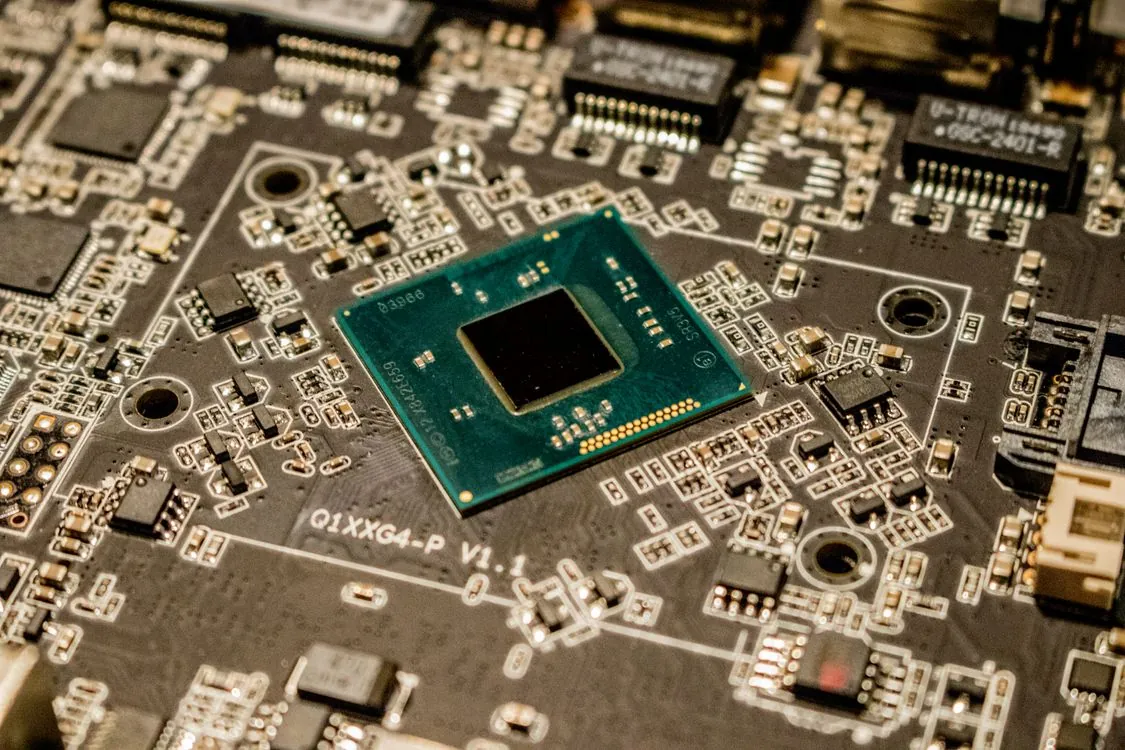
Dedicated NPUs in 2026 chips like Apple’s M5 consume under 5 watts during SLM inference, enabling always-on AI in AR headsets.
Integrated Architecture: A Code Example
The diagram above illustrates the data flow in a visionOS 27 app that uses on-device SLM inference. Here is how each component connects in practice:
User input. The Vision Pro captures gestures, voice commands, and eye-tracking data simultaneously. These three modalities are fused at the OS level before being passed to the SLM.
visionOS 27 middleware. Apple’s ARKit 4 and the new multimodal input API normalize and synchronize input streams. The system ensures that gaze direction, spoken phrase, and hand gesture arriving within the same 50ms window are treated as a single intent.
On-device SLM. A distilled 7B model (derived from Llama 3.1 via DeepSeek-style reasoning trace training) runs on the M5 NPU. It receives fused input and the latest environmental mapping data, then produces a response that the AR overlay renders spatially.
UHF module. When the SLM determines that additional context is needed (e.g., querying a remote database or fetching real-time inventory data), the UHF module handles wireless communication with edge servers or IoT infrastructure. The MCP for UHF RFID, showed by Nextwaves, enables the SLM to treat physical RFID tags as first-class data sources.
Meta Llama 3.1 405B. The teacher model is not invoked at runtime. Its role is offline: generating reasoning traces and synthetic training data that the on-device SLM was distilled from. Periodic fine-tuning cycles (weekly or monthly) refresh the SLM’s knowledge using new traces from 405B.
Here is a simplified Python example showing how an app might invoke the on-device SLM through visionOS 27’s AI services API:
Note: The following code is an illustrative example and has not been verified against official documentation. Please refer to the official docs for production-ready code.
# Note: This is a conceptual example. visionOS 27 APIs are under NDA.
# Production code should use Apple's official VisionAI framework.

import spatial_ai # Hypothetical visionOS 27 AI services module

# Initialize on-device SLM service
slm = spatial_ai.SLMService(model="llama-3.1-7b-distilled",
 device="neural_engine",
 max_context_tokens=8192)

# Capture multimodal input from headset sensors
gaze_target = headset.get_gaze_target() # Returns (x, y, z) in world space
voice_input = headset.transcribe_microphone()
hand_gesture = headset.classify_gesture() # Returns gesture type enum

# Fuse inputs into single query
query = spatial_ai.MultimodalQuery(
 text=voice_input,
 spatial_target=gaze_target,
 gesture=hand_gesture,
 env_map=headset.get_env_snapshot()
)

# Run inference on-device (no network call)
response = slm.query(query, temperature=0.3, max_tokens=256)

# Render response as spatial overlay
headset.render_spatial_text(
 text=response.content,
 position=gaze_target.offset(0.5, 0, 2.0), # 2 meters ahead
 style="curved_window",
 persistent=True
)

# Note: Production use should handle model loading state,
# memory pressure from concurrent AR apps, and fallback
# strategies when the NPU is busy with other tasks.
The key architectural property is that every inference call completes on-device. The UHF module only activates when the SLM explicitly requests external data, not for every query. This keeps median response latency under 50ms, which is the threshold for perceptually instant AR interactions.
Benchmark Comparison: SLMs vs. Frontier Models for AR Tasks
Benchmarking SLMs for AR workloads requires task-specific evaluations that standard NLP benchmarks do not capture. The table below compares several models across metrics relevant to spatial computing and multimodal interaction, based on available third-party evaluations and published model cards.
| Model | Params | Context Window | Multimodal Input | On-Device Viable | License |
|---|---|---|---|---|---|
| Llama 3.1 405B | 405B | 128K | Text only (native); vision via composition | No (requires datacenter GPU) | Llama 3.1 Community |
| Llama 3.1 8B | 8B | 128K | Text only | Yes (4-5 GB at Q4) | Llama 3.1 Community |
| Qwen2.5 32B | 32B | 128K | Text + vision | Yes (16 GB at Q4) | Apache 2.0 |
| Gemma 3 27B | 27B | 128K | Text + vision | Yes (12-14 GB at Q4) | Gemma |
| Mistral Nemo 12B | 12B | 128K | Text only | Yes (6-7 GB at Q4) | Apache 2.0 |
| Phi-4 (2026) | 14B | 128K | Text + vision | Yes (7-8 GB at Q4) | MIT |
For AR-specific tasks, the critical metric is not MMLU score but multimodal fusion latency and spatial reasoning accuracy. The Edge AI and Vision Alliance reports that distilled 7B-8B models now achieve 85-90 percent of frontier model accuracy on spatial reasoning benchmarks while running at 10-20x lower latency on device hardware. The gap is widest on tasks requiring broad world knowledge (identifying obscure landmarks, handling cultural context) and narrowest on tasks with clear spatial structure (object recognition, layout understanding, gesture interpretation).
Qwen2.5 32B stands out for AR applications because its native vision support eliminates the need for a separate vision encoder. The model can analyze camera frames directly, making it suitable for RAG pipelines that combine visual and textual queries. Gemma 3 27B offers similar capabilities under a permissive license, though Google explicitly designed it for the research community rather than commercial deployment.
Where the Gap Remains
SLMs in 2026 are not a universal replacement for frontier models. Three gaps persist, and they matter specifically for AR applications.
Long-context spatial reasoning. While many SLMs advertise 128K context windows, their effective use of context degrades beyond 32K tokens. For an AR session that lasts several hours and accumulates environmental data, the model’s ability to recall what it saw in the first 30 minutes is limited. The “lost in the middle” problem, documented by Liu et al. (2023) and still unresolved in 2026, means that mid-session spatial context is often lost. The practical mitigation is aggressive chunking of environmental snapshots, but this adds engineering complexity.
Real-time multimodal fusion at scale. Running a single SLM query on the M5 NPU takes 30-50ms. Running ten concurrent queries for different AR applications (navigation, translation, object identification) pushes the NPU to its thermal limits. visionOS 27 implements a priority-based scheduler for AI tasks, but developers cannot assume unlimited concurrent SLM access. The OS will throttle background AI services when the NPU temperature crosses a threshold, and there is no API to query the current thermal budget.
Hallucination in safety-critical AR contexts. A hallucinated classification label in a text document is an annoyance. A hallucinated spatial overlay that tells the user “step here” when the real surface is two feet lower is a safety hazard. Vectara’s hallucination leaderboard shows that sub-10B models hallucinate 2-4x more frequently than frontier models on open-ended generation. For AR applications where the model’s output directly affects user movement or interaction with physical objects, the higher hallucination rate is a real liability. Constrained output formats (structured JSON, classification labels) reduce the gap significantly, but freeform spatial descriptions remain risky.
Outlook for Late 2026
Several developments in the pipeline will narrow these gaps by the end of 2026.
Project Avocado. Meta’s next flagship model, expected in late 2026, will produce even higher-quality distillation traces. It will focus on agentic capabilities, meaning student SLMs distilled from it will inherit better tool-use and multi-step reasoning skills. This directly benefits AR applications that require the headset to execute complex workflows (e.g., “Find the nearest emergency exit, overlay the path, and call building security”).
visionOS 27 public release. The current beta cycle points to a September 2026 public release. By that point, Apple will have opened the on-device SLM API to third-party developers, enabling AR apps from independent studios to use the same AI infrastructure that Apple’s first-party apps use. When every Vision Pro app can call a local SLM with no cloud cost, the range of AI-powered AR experiences will expand rapidly.
UHF-AI standardization. The MCP for UHF RFID, currently a Nextwaves prototype, is expected to become an industry standard through the Model Context Protocol working group. Standardization would mean that any AR headset with a UHF module can query any RFID-tagged object, creating a universal bridge between physical inventory and AI agents. For warehouse, retail, and logistics AR applications, this is transformative.
Hardware-aware distillation. The next generation of distillation techniques, documented in the survey “A Comprehensive Survey of Small Language Models in the Era of Large Language Models”, will train student models with explicit awareness of the target hardware’s quantization constraints. Instead of distilling a full-precision model and then quantizing it as a separate step, the distillation process will incorporate quantization noise from the start. This could close the accuracy gap between 4-bit quantized SLMs and full-precision models to under 1 point on standard benchmarks.
The convergence of on-device SLMs, UHF communication, and dedicated AI hardware means that the AR experiences of late 2026 will look nothing like the AR of 2024. The model is no longer in the cloud. It is in the headset, running on a chip that draws less power than a flashlight bulb, connected to the physical world through UHF radio. That is the quiet revolution that visionOS 27 and Llama 3.1 have set in motion.
Related Reading
More in-depth coverage from this blog on closely related topics:
- Trade-offs in Unreal Engine 6 2026: Balancing Graphics Fidelity and Hardware Costs in Game Development
- Mac Fleet Management in 2026: Apple Business Manager vs. Third-Party MDM for 30-50 Devices
Sources and References
Sources cited while researching and writing this article:
- World’s First MCP for UHF RFID: Nextwaves AI Integration
- Apple Seeds Second visionOS 27 Beta to Developers
- visionOS 27 will bring these new Vision Pro upgrades: report
- visionOS 27 gives the M5 Vision Pro two unique new advantages
- Meta Llama 3.1 (405B) – docs.oracle.com
- Meta Llama 3.1 405B Review , The First Open-Weight Frontier Model
- Llama 3 Guide: Every Size from 1B to 405B | InsiderLLM
- The Day the Dam Broke: How Meta’s Llama 3.1 405B Redefined the Frontier …
- AI Hardware News 2026: The Biggest Breakthroughs, Chips, and What They …
- Small Language Models and Edge AI: The 2026 Shift to Local Intelligence
- Liu et al. (2023)
- A Comprehensive Survey of Small Language Models in the Era of Large …
Thomas A. Anderson
Mass-produced in late 2022, upgraded frequently. Has opinions about Kubernetes that he formed in roughly 0.3 seconds. Occasionally flops, but don't we all? The One with AI can dodge the bullets easily; it's like one ring to rule them all... sort of...