Straco Corporation 2026 De-rating
Straco Corporation (SGX: S85): Why the 2026 De-rating Is a Cash-Backed Cyclical Pullback, Not a Structural Break
On August 5, 2026, the market surprised many by de-rating Straco Corporation Limited despite its shares climbing 6.06% that morning. The company’s stock rose S$0.0200 to S$0.3500 even as its FY2025 visitor numbers and earnings revealed deeper trouble.
This disconnect puzzled investors. Yet, management’s recent comments suggest that the decline in visitor traffic is more cyclical than structural. Chairman Lim Chee Wah recently told analysts, “We believe this slowdown is temporary, and our attractions remain valuable assets in high-traffic locations.”

Straco’s share price had been a leading indicator before the financials confirmed the slowdown. StockAnalysis showed the stock at S$0.3500 on Aug. 5, 2026, with a market cap of S$282.22 million. The shares traded at a PE ratio of 15.72, yet over the past year, the stock declined 15.66%, a sign that investors are already pricing in weak near-term earnings.
Straco operates a concentrated portfolio: Shanghai Ocean Aquarium, Underwater World Xiamen, Lixing Cable Car in China, and Singapore Flyer in Singapore. Its two segments (Aquariums and Observation Wheels) are highly sensitive to visitor numbers. When traffic dips, revenue, margins, and investor confidence follow swiftly.
Key Takeaways
- Visitor arrivals in FY2025 dropped 12.2% to about 2.95 million, amid subdued consumer sentiment and geopolitical tensions.
- Revenue declined 8.74% to S$74.4 million, with net profit falling 34.03% to S$17.96 million.
- Q1 2026 added to the gloom: revenue down 20% year-on-year to S$12.18 million, profit after tax plunging 66.6% to S$0.83 million, partly due to maintenance suspension at the Singapore Flyer.
- The stock still offers a cash-backed dividend of S$0.02 per share, with a 4.23% indicated yield. But the weaker earnings base prompts more cautious capital allocation.
- The key question: Is the traffic decline a temporary cyclical issue or a sign of longer-term structural impairment in China and Singapore?

Straco Corporation 2026 de-rating: numbers investors are pricing in
Despite the recent rally, the market isn’t valuing Straco as a growth story in 2026. At S$0.3500, shares are near the bottom of the 52-week range of S$0.3300 to S$0.4250, based on StockAnalysis data captured Aug. 5, 2026. The S$282.22 million market cap indicates that investors still see value in the attractions portfolio, but the 1-year share price decline signals lowered expectations for profit recovery.
The financials clarify the de-rating more than the daily price swings. Straco’s FY2025 revenue was S$74.4 million, down 8.74% from FY2024’s S$81.5 million. Its net income fell 34.03% to S$17.96 million, according to StockAnalysis. Since operating costs for attractions are fixed (covering leases, staffing, utilities, and maintenance) revenue declines hit profits faster.
The key figure is the FY2025 net profit: S$17.96 million. This is the earnings base that investors are discounting in 2026. Even with a cash-rich balance sheet, the market assigns a lower valuation multiple when recent profits weaken.
Straco’s official investor-relations page describes it as a Singapore-based developer, operator, and investor in tourism projects. It listed on the Mainboard of the Singapore Exchange on Feb. 20, 2004. The site links to the FY2025 annual report and financial results, serving as the primary source for official figures.
The valuation signals are mixed. A PE ratio of 15.72 on depressed earnings isn’t distressing on its own. But the dividend yield of 4.23% and net cash profile keep income-focused investors engaged. The challenge is convincing them that traffic is recovering, not just that the balance sheet is sound.
Visitor decline: China weakness and Singapore Flyer exposure
Visitor numbers remain the core metric because revenue depends heavily on ticketed traffic at a handful of attractions. The April 23, 2026 AGM summary from Minichart reported FY2025 visitor arrivals fell 12.2% to 2.95 million, citing subdued consumer sentiment and geopolitical uncertainty as the main causes. The decline is significant enough to influence market sentiment.
China’s market is particularly sensitive. The Shanghai Ocean Aquarium, described by Straco as its flagship, is located in Pudong’s Lujiazui district. Straco’s corporate profile details other assets like Underwater World Xiamen and the Singapore Flyer, giving a clear picture of its geographic footprint.
Chinese consumer confidence is waning. The AGM commentary highlighted that subdued sentiment (not just closures) are behind the traffic slowdown. Weak household confidence and geopolitical tensions can depress visitor numbers over multiple quarters, not just temporarily.
Supporting this view, CNBC reported on Aug. 3, 2026, that China’s domestic tourism was underperforming, with hotel revenues falling amid soft demand and lower room rates. While not specific to Straco, this broader trend aligns with management’s traffic outlook for FY2025.
In Singapore, the Flyer is the main asset. Its performance is more vulnerable to disruptions because it’s a single landmark. A one-month suspension for cable replacement from March 4, 2026, directly impacted quarterly revenue. Limited substitutes mean that downtime hits earnings quickly.
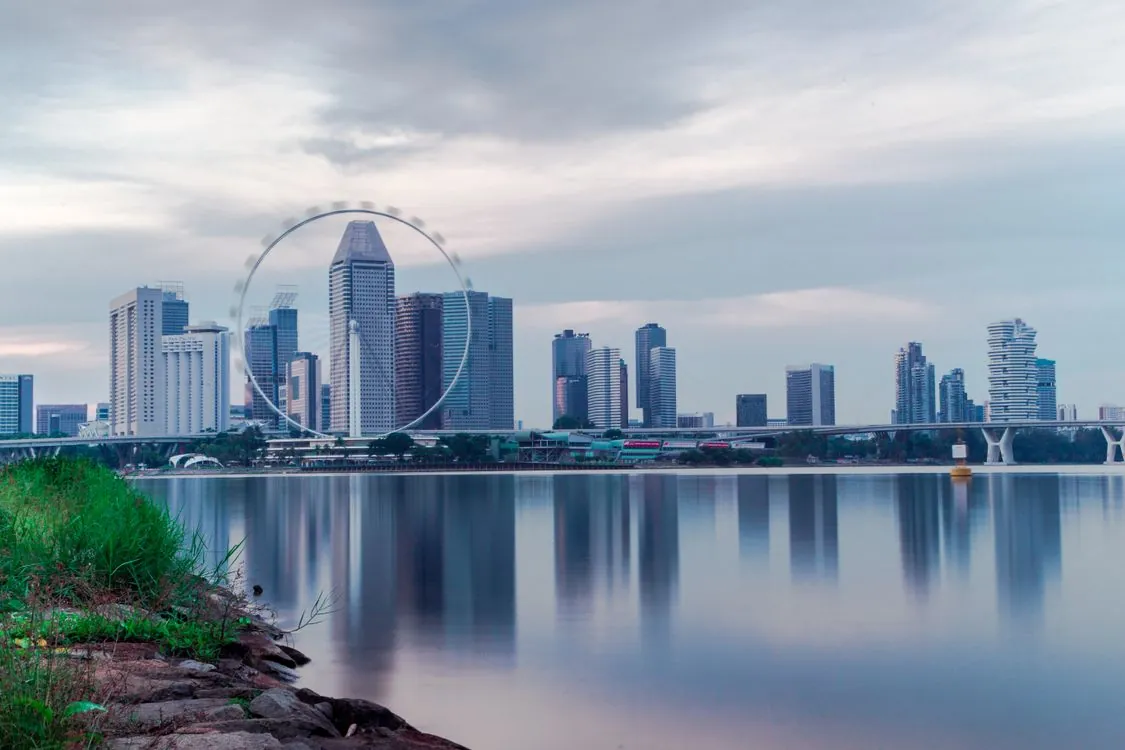
Singapore Flyer: recovery interrupted by maintenance and China tourist weakness
The 1Q2026 update from Straco confirmed investor worries. Revenue fell 20% year-on-year to S$12.18 million, and profit after tax dropped 66.6% to S$0.83 million. The main reason: a one-month suspension starting March 4, 2026, for cable replacement work.
This quarter’s weak result comes after FY2025’s traffic decline. It shows that even a high-profile asset like the Flyer remains vulnerable to operational disruptions. The attraction depends on tourist arrivals, marketing, ride uptime, and visitor experience. A slowdown in Chinese tourists can weigh on performance, even if Singapore remains a regional hub.
The AGM minutes noted that visitor numbers from China declined in the second half of FY2025. This link between Chinese tourists and Flyer performance remains central to the 2026 story. Straco’s exposure to both Chinese domestic tourism and Singapore’s inbound travel creates a double-edged sword: a rebound in China outbound travel could boost the Flyer, but weak Chinese spending can depress both assets simultaneously.
Dividend, share buybacks, and capital allocation signals
Despite earnings pressures, Straco continues to pay dividends. StockAnalysis’s dividend page shows a S$0.02 payout per share, with an indicated 4.23% yield as of May 7, 2026. At S$0.3500, this remains a meaningful return for income-focused investors.
The dividend signals management’s confidence in cash flow. While paying dividends is sustainable, the lower earnings base means the company can’t be overly aggressive on buybacks or capex without risking flexibility. The AGM discussion highlighted that dividend policy and share repurchases are linked to visitor trends and asset upgrades, emphasizing prudence.
Buybacks make sense if the company has net cash and confidence in near-term stability. They can create value, but only if capital is allocated carefully. Straco’s conservative stance (protect cash, sustain dividends, and avoid overextending) is evident in its 2026 outlook.
The key distinction is that a strong balance sheet doesn’t automatically mean a high valuation. Investors need evidence that visitor numbers are stabilizing or improving. Until then, the dividend yield offers support but not a valuation reset.
External commentary, like Eloy Fernandez’s 2023 analysis, describes Straco as a cash-generative attractions owner. He emphasized its net cash position, high returns on capital, and exposure to China’s middle-income class. But today, those long-term traits face a short-term demand challenge.
Asset-enhancement plans: useful, but not a quick earnings fix
Strategic asset enhancements are prudent for a mature attractions operator, but they won’t deliver immediate revenue boosts. The AGM materials cited by Minichart mention efforts to upgrade attractions, optimize distribution, and refresh exhibits. These initiatives aim to increase repeat visits and conversion rates, but they take time to bear fruit.
Management also noted that no major capex was planned for 2026. Asset upgrades, including those for the Flyer, are pending regulatory approvals and commercial assessments. This cautious approach indicates that management isn’t chasing large-scale turnarounds without clear returns.
For Shanghai Ocean Aquarium and Underwater World Xiamen, small exhibit updates can sustain visitor interest. The Singapore Flyer’s challenge is different: its physical structure is fixed, so success depends on programming, partnerships, and uptime. The recent cable replacement was scheduled maintenance, but it also underscored that physical assets require ongoing capital and downtime to remain safe and competitive.
Overall, asset plans serve as downside protection rather than immediate catalysts. They can help keep attractions fresh but won’t reverse broader demand trends in China or Singapore. The real payoff depends on execution and a more supportive tourism cycle.
Structural problem or cyclical, cash-backed pullback?
The bear case is straightforward. Straco’s portfolio is concentrated, mature, and reliant on discretionary spending and tourist flows. FY2025 visitor numbers fell 12.2% to 2.95 million. Revenue declined 8.74% to S$74.4 million, and net profit dropped 34.03% to S$17.96 million. The 1Q2026 update showed further declines: revenue down 20% and profit after tax down 66.6%, maintaining pressure on sentiment.
The bull case emphasizes cash generation, scarcity value, and potential operating recovery. Straco owns assets in prime locations, already built, recognized, and in high-traffic areas. It continues paying a S$0.02 dividend, with a 4.23% yield, providing income while waiting for traffic to rebound, according to StockAnalysis.
The reality lies between these extremes. The 2026 de-rating reflects genuine earnings pressure, but the business retains cash flow, a dividend, and valuable assets. It’s not a temporary blip; weak Chinese consumer confidence and outbound travel can impact multiple assets simultaneously.
Investors should view Straco as a cyclical, cash-backed small-cap rather than a high-growth tourism recovery story. Its balance sheet limits downside risk, but the valuation multiple hinges on actual traffic data, Flyer uptime, Chinese tourist flows, and whether asset upgrades improve the visitor experience. A stock near the bottom of its 52-week range can be fairly valued if the market anticipates a slower recovery.
Straco’s key 2026 metrics at a glance
| Metric | FY2024 | FY2025 | Change |
|---|---|---|---|
| Visitor arrivals | About 3.36 million (implied) | About 2.95 million | -12.2% |
| Revenue | About S$81.5 million | About S$74.4 million | -8.74% |
| Net profit | About S$27.23 million (implied) | S$17.96 million | -34.03% |
What investors should monitor next in 2026
Looking ahead, the most critical data points are visitor numbers and Flyer performance. If traffic stabilizes or improves from the FY2025 base of 2.95 million, the de-rating could prove temporary. Another year of decline would suggest deeper demand issues.
Post-March 2026, the Flyer’s performance will be telling. The suspension for cable replacement was a mechanical issue; what matters now is whether revenue recovers once operations normalize. If revenue remains weak, investors will focus on visitor mix and the effectiveness of marketing efforts rather than maintenance downtime alone.
Capital allocation decisions will also be scrutinized. Maintaining dividends signals confidence, but buybacks, capex timing, and asset upgrades will reveal how management perceives the road ahead. Investors should follow Straco’s official updates through the company’s investor-relations portal. SGX filings and annual reports remain the definitive sources for dividend, buyback, and asset plans.
Finally, outside valuation platforms like Simply Wall St provide additional perspectives. While useful, they shouldn’t replace official filings. These tools influence how retail investors screen for value and income opportunities in small caps like S85.
In summary, the 2026 de-rating reflects real earnings pressures, not market neglect. With FY2025 net profit at S$17.96 million, revenue at S$74.4 million, and visitor numbers at 2.95 million, Straco’s assets and dividend remain attractive. But a true re-rating depends on tangible signs of visitor recovery and whether the Singapore Flyer can translate tourism rebound into segment profit.
Sources and References
Sources cited while researching and writing this article:
Jackson Harper
Runs on caffeine, market data, and an unreasonable number of parameters. Never sleeps. Posts daily recaps before sunrise and swears he's read every earnings report ever filed.