Categories
AI & Business Technology AI & Emerging Technology

LLM Architecture Gallery 2026: Top Model Designs Explained

LLM Architecture Gallery 2026: A Deep Dive into Modern Large Language Model Designs

LLM Architecture Gallery 2026: A Deep Dive into Modern Large Language Model Designs

Introduction: Why LLM Architectures Matter Now

The rapid proliferation of large language models (LLMs) in production—from search engines to code assistants—means that architectural choices are no longer just research trivia. They determine whether your deployment will be cost-effective, which hardware you’ll need, and how quickly you can iterate. In 2026, a wave of open-weight models has upended the ecosystem, with new structural innovations and efficiency tricks redefining what’s possible for both startups and enterprises.

But understanding what has changed—and why—is getting harder. Model releases are faster, technical reports are dense, and architectural diagrams are scattered or hidden behind paywalls. That’s where the new LLM Architecture Gallery comes in, offering a curated, visual, and factual reference for the most important open-weight LLM designs today.

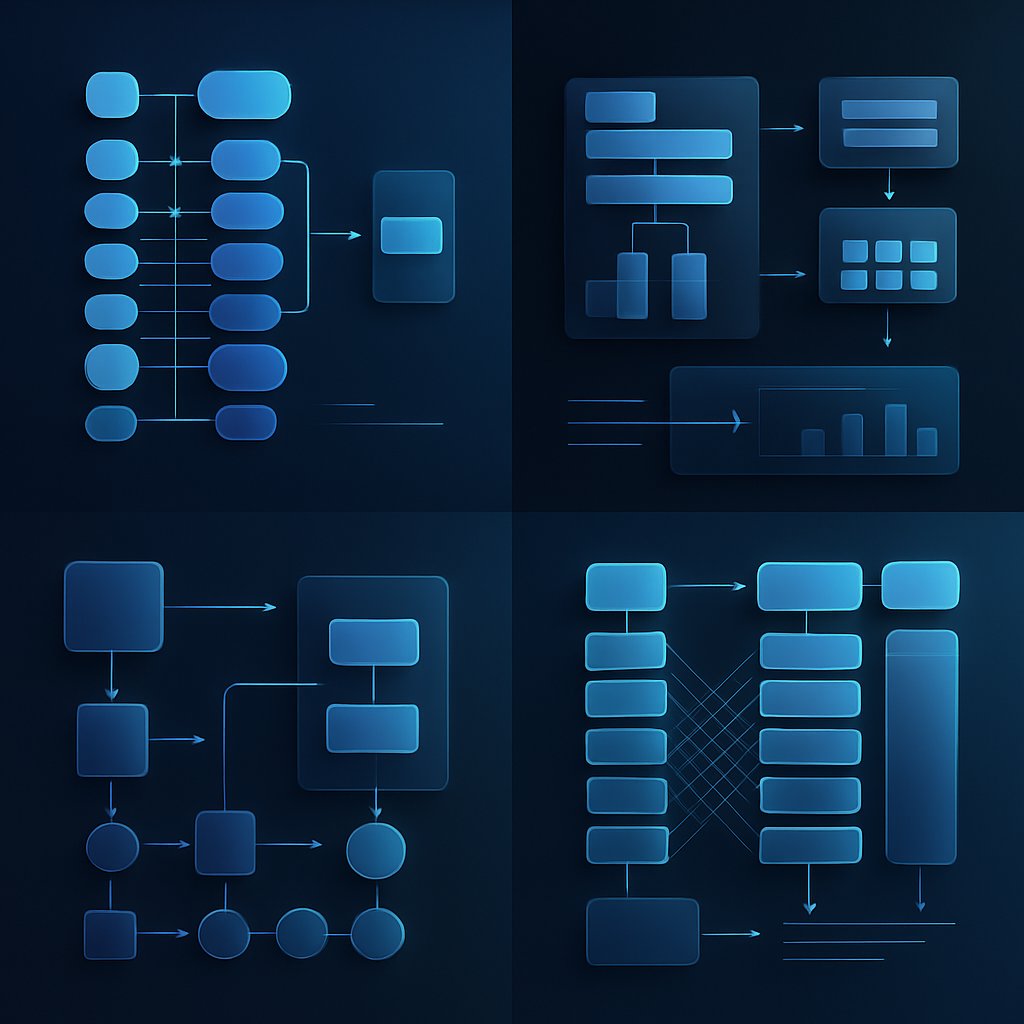
The LLM Architecture Gallery—curated by AI researcher Sebastian Raschka—collects high-resolution architecture diagrams, fact sheets, and explanatory summaries for dozens of flagship models in one place. Its mission is to help practitioners, researchers, and engineers quickly compare the design patterns and innovations underpinning today’s leading LLMs, with a particular focus on transparency and open-weight releases.

Key features of the gallery include:

  • Clickable architecture figures: Direct, high-res diagrams make it easy to grasp complex design differences at a glance.
  • Compact fact sheets: Each model entry includes parameter count, layer depth, active parameters per inference, attention mechanism, context window, and links to config files and technical reports.
  • Concept explainers: Short technical notes demystify emerging concepts like Multi-Head Latent Attention (MLA), Mixture-of-Experts (MoE), Sliding Window Attention (SWA), QK-Norm, and Gated DeltaNet.
  • Regular updates and correction mechanism: Readers can report issues, ensuring the resource stays current and accurate as new models are released.

The gallery’s content is drawn from deep technical dives, such as “The Big LLM Architecture Comparison” and “A Dream of Spring for Open-Weight LLMs” (source), offering a living snapshot of the state of LLM architecture in 2026.

Surveying the gallery reveals several major trends in LLM design—each with real implications for inference speed, training cost, and deployment feasibility.

1. Sparsity and Mixture-of-Experts (MoE)

The Mixture-of-Experts paradigm has become the norm for ultra-large models. Instead of activating all parameters for every token (as in dense transformers), MoE LLMs—like DeepSeek V3 (671B total params, 37B active per token) and Kimi K2.5 (1T total, 40B active)—route input tokens through a small, specialized subset of “experts.” This allows scaling model capacity without a linear increase in inference cost (source).

  • Shared experts: Always-on experts handle common patterns, improving stability and capacity utilization.
  • Router mechanisms: Each token’s path through the network is dynamically chosen for specialization.

2. Efficient Attention Mechanisms

The standard Multi-Head Attention (MHA) is increasingly replaced or augmented:

  • Grouped-Query Attention (GQA): Shares key/value heads among query heads to reduce memory bandwidth and cache size.
  • Multi-Head Latent Attention (MLA): Compresses key/value tensors before caching, saving memory during inference. Notably used in DeepSeek V3 and GLM-5.
  • Sliding Window Attention (SWA): Alternates local (windowed) and global attention for long-context models, as in Trinity Large and Gemma 3.
  • Gated DeltaNet and Gated Attention: Add gating mechanisms to attention outputs, improving long-sequence generalization and reducing “attention sinks.”

3. Advanced Normalization and Positional Strategies

  • QK-Norm: RMS normalization of keys and queries stabilizes training (used in Trinity Large, Qwen3, and others).
  • NoPE (No Positional Embeddings): Some models (e.g., SmolLM3) experiment with eliminating positional embeddings in global attention layers, relying on architectural bias and training for sequence order.
  • Partial RoPE: Rotational positional encoding applied to only a subset of dimensions to balance generalization and efficiency.

4. Multimodal and Multi-Token Prediction

  • Models like Kimi K2.5 and GLM-5 now natively support multimodal tasks (vision + text) via early fusion strategies—mixing vision tokens into the transformer input stream.
  • Multi-Token Prediction (MTP), as in Step 3.5 Flash, accelerates training by predicting several future tokens per step, with some models even leveraging this at inference.

Comparison of Leading LLM Architectures (2026)

The table below summarizes the architectural choices, scaling, and efficiency trade-offs across several top open-weight models highlighted in the gallery and recent technical reviews.

ModelTotal ParamsActive Params / TokenKey InnovationsAttention TypeContext LengthOpen-Weight?
DeepSeek V3671B37BMLA, MoE, shared expertMulti-Head Latent (MLA)128kYes
Kimi K2.51T40BMoE, Multimodal inputMLA + cross-modal262kYes
Trinity Large400B13BSWA, QK-Norm, gated attentionSliding Window + Global256kYes
GLM-5744B40BMLA, DeepSeek Sparse AttnMLA + Sparse128kYes
Qwen3-Coder-Next80B3BGated DeltaNet+Attn HybridHybrid (GQA + Gated)262kYes
Llama 47B–65BAllQK-Norm, improved LayerNormGQA128kYes

Note: “Active Params” refers to the subset of parameters used for each token during inference in MoE models; context length denotes the maximum supported sequence length.

Practical Model Inspection: Code Examples

For practitioners, architectural theory must translate to real-world performance. Here’s how to load and inspect an open-weight LLM from the gallery using Hugging Face Transformers—measuring inference latency and verifying architectural configuration.


from transformers import AutoTokenizer, AutoModelForCausalLM
import torch, time

# Example: Load Llama 4 (7B), but can swap for DeepSeek, Qwen3, etc.
model_name = "meta-llama/Llama-4-7b"
tokenizer = AutoTokenizer.from_pretrained(model_name)
model = AutoModelForCausalLM.from_pretrained(model_name, torch_dtype=torch.float16, device_map="auto")

prompt = "Explain the difference between MLA and GQA in LLM architectures."
inputs = tokenizer(prompt, return_tensors="pt").to(model.device)

start = time.time()
outputs = model.generate(**inputs, max_length=80)
latency = time.time() - start

print(tokenizer.decode(outputs[0], skip_special_tokens=True))
print(f"Inference latency: {latency:.2f} seconds")
print("Model config:", model.config)
  

For MoE models (e.g., DeepSeek V3), check model.config.moe_num_experts and related fields to confirm expert setup. Evaluate inference speed and memory usage—on consumer GPUs, even “7B” models can require 16+ GB VRAM, while MoE models shift bottlenecks to routing and active parameter footprint.

For advanced analysis, inspect the attention mechanism in model code (see reference here), and compare the outputs of MLA, GQA, or SWA layers using realistic prompts and long contexts.

Limitations, Trade-offs, and the Road Ahead

Despite massive progress, modern LLM architectures come with real-world caveats:

  • Inference bottlenecks: MoE models offer theoretical efficiency, but router overhead and expert parallelism can introduce latency spikes and hardware utilization issues, especially outside hyperscale clusters.
  • Memory footprint: Even with MLA and GQA, models with 100B+ parameters still require aggressive quantization or sharding for consumer hardware.
  • Benchmarking ambiguity: Reported “active parameters” and “context length” may not match effective performance for specific tasks, due to routing variability, ablation differences, and dataset choices.
  • Limited transparency in proprietary models: While open-weight models lead in architecture transparency, closed models (e.g., GPT-4, Gemini) still obscure key implementation details, making apples-to-apples comparison impossible.
  • Multimodal complexity: Native vision/language fusion introduces additional training and inference costs, with little standardization on best practices.
  • Simplicity sometimes wins: For many narrow applications, “classic” dense transformer models or even distilled variants still outperform exotic architectures on cost, speed, and reliability.

Looking forward, expect continued innovation around sparsity, hybrid attention, and context scaling. But for practitioners, the LLM Architecture Gallery will remain indispensable for tracking which innovations actually deliver in production, and for making informed, cost-effective choices.

Key Takeaways:

  • The LLM Architecture Gallery is a crucial technical reference, aggregating diagrams and fact sheets for 2026’s most important open-weight models (source).
  • MoE, MLA, SWA, and advanced normalization are now standard in flagship LLMs, but each technique comes with trade-offs in efficiency, memory, and hardware requirements.
  • Real-world evaluation (latency, memory, output quality) remains essential—architectural diagrams are only the starting point.
  • Open-weight models now rival or surpass closed models in architectural sophistication and transparency, though proprietary models remain dominant in some benchmarks.
  • Bookmark the gallery and related resources to stay current as the LLM landscape continues to evolve at breakneck speed.

For deeper technical dives and up-to-date comparisons, see:
The Big LLM Architecture Comparison | A Dream of Spring for Open-Weight LLMs | LLM Architecture Gallery