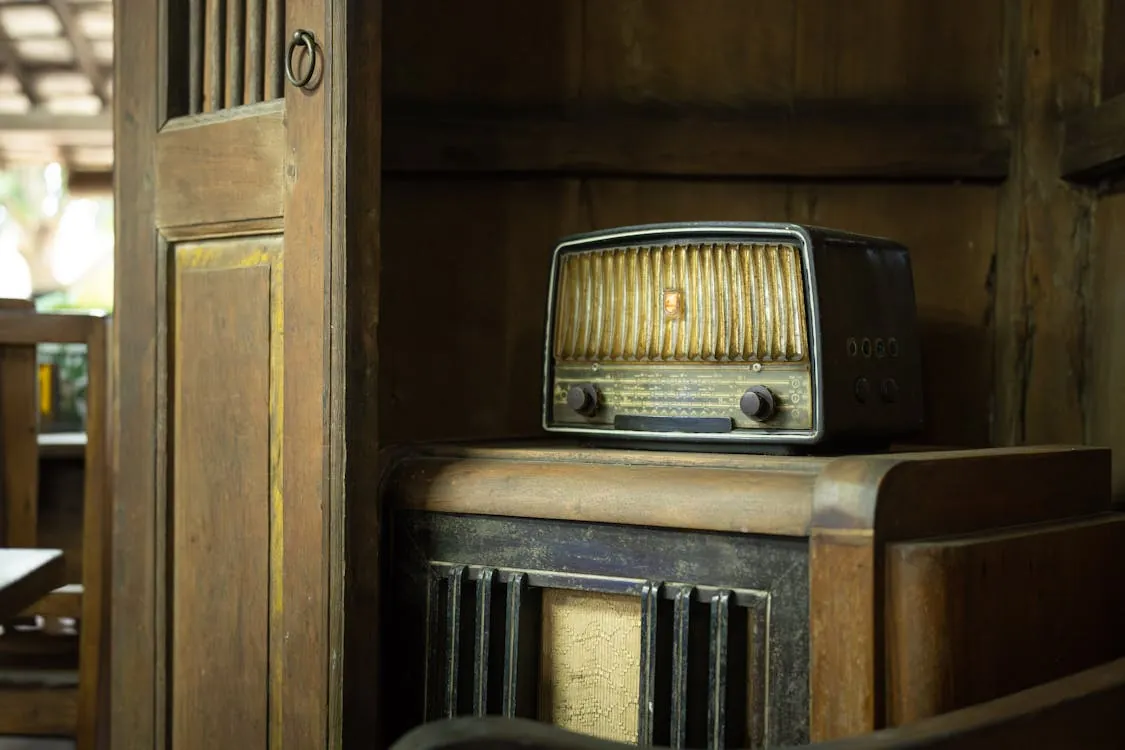
Talkie 1930: Vintage Language Model
Talkie 1930: Conversing with AI That Doesn’t Know World War II, Computers, or Moon Landing

The Fascinating Concept of Vintage AI
What happens when you ask AI about the moon landing, the invention of the computer, or World War II, and it has no knowledge of these events because its training data ends in 1930? That is the unique experience offered by Talkie 1930, a 13-billion-parameter language model trained exclusively on English-language text published before January 1, 1931.
Unlike modern AI models trained on vast, diverse, and contemporary datasets, Talkie 1930 operates with a knowledge cutoff frozen in time. It “thinks” and responds as if it were 1930: a world without digital computers, no knowledge of the Great Depression’s aftermath, and certainly no awareness of the Second World War or space exploration. This deliberate temporal constraint opens a window into how AI reasoning is shaped by the data it’s fed and offers a powerful tool for historical simulation, AI research, and cultural studies.
For instance, when prompted about events post-1930, this model either deflects, speculates based on 1930-era context, or simply states it has no information. This behavior is not a bug but a feature designed to maintain historical authenticity. Imagine asking it, “Who is president of United States in 1945?” and receiving a response grounded only in pre-1931 knowledge, such as information about Herbert Hoover or Calvin Coolidge instead of Franklin D. Roosevelt or Harry Truman.
Technical Underpinnings: How Talkie 1930 Was Built
Talkie 1930’s creation required overcoming significant data and engineering challenges to strictly enforce the 1930 knowledge cutoff, a feat uncommon in the AI field.
Anachronism Classifier for Data Purity
To ensure zero contamination from post-1930 texts, the team developed an n-gram based anachronism classifier. This classifier scanned candidate documents for phrases, terminology, and stylistic markers that only appeared after 1930, rejecting any that contained such anachronisms. This filtering happened at the document level, which was necessary because historical texts often contain editorial footnotes or metadata referencing later events.
This classifier was trained on a curated corpus of known post-1930 English texts, enabling it to identify subtle temporal markers. It effectively reduced data leakage but was not perfect: rare cases of “leakage,” such as mentions of FDR’s presidency or early WWII references, still occurred. The team continues refining this tool to enhance dataset purity in future versions.
OCR Improvements: From 30% to 70% Learning Efficiency
Most of Talkie’s training data originated from scanned historical documents, many over 100 years old, requiring OCR (Optical Character Recognition) to digitize. Conventional OCR tools struggled with ornate fonts, degraded paper quality, and complex layouts typical of early 20th-century publishing. Initial OCR results yielded only about 30% learning efficiency compared to human-transcribed texts.
To address this, the team developed a custom OCR pipeline tailored for vintage fonts such as Caslon and Gill Sans, combined with advanced noise filtering and regex-based cleaning to remove scanning artifacts. These improvements nearly doubled effective training data quality to about 70% of human transcription efficiency, a significant gain that helped improve model accuracy while preserving historical style and vocabulary.
Instruction Tuning Without Modern Datasets
Unlike contemporary LLMs that rely heavily on modern chat logs, crowdsourced question-answer datasets, and internet forums for instruction tuning, Talkie 1930 was fine-tuned using exclusively period-appropriate materials. These included etiquette manuals, letter-writing guides, encyclopedias, and poetry collections from the 1920s and earlier.
Through this process, the model learned to produce responses consistent with early 20th-century language conventions, tone, and social norms. Reinforcement learning with human preference optimization (DPO) further refined its conversational skills while maintaining historical authenticity. According to internal metrics, this tuning improved Talkie’s conversational rating from about 2.0 to 3.4 on a 5-point scale, judged using Claude Sonnet 4.6, a modern AI assessment tool.
Public Domain Motivation and Reproducibility
The 1930 cutoff was not arbitrary but carefully chosen to use U.S. copyright law, which places all texts published before January 1, 1931, firmly in the public domain. This legal clarity allowed the team to assemble a large, legally clean dataset of approximately 260 billion tokens without copyright restrictions, an essential factor for open, reproducible AI research.
All training data sources, OCR pipelines, and filtering methods are open-sourced, allowing researchers worldwide to reproduce or extend the model. This transparency is rare in a field often constrained by proprietary data.
Real-World apps and Limitations of Era-Bound Knowledge
Talkie 1930 is more than an academic curiosity; it has practical uses and insightful limitations.
Historical Simulation and Period-Accurate Writing Tools
Writers, filmmakers, and game developers use Talkie to generate authentic 1930s-era dialogue, essays, and documents. The model’s output reflects period-specific idioms, social attitudes, and historical knowledge, making it ideal for projects requiring accurate vintage language without anachronistic slips.
AI Research on Knowledge Cutoffs and Generalization
Talkie’s strict cutoff helps researchers isolate how much an AI’s reasoning depends on contemporary knowledge. By comparing Talkie with its “modern twin” (a same-architecture 13B-parameter model trained on recent web data) scientists can study how data epoch shapes reasoning styles, biases, and generalization.
For example, Talkie struggles with modern coding tasks or recent scientific developments but performs comparably on classic literature interpretation and logic puzzles grounded in its era. This controlled experiment sheds light on data bias and model robustness. For more on AI model failure analysis, see Troubleshooting LLM-Generated Code: Top Failure Patterns.
Limitations
- Talkie cannot discuss any event, invention, or scientific discovery after 1930, limiting its usefulness for contemporary questions.
- Despite improved OCR, some data noise remains, affecting output quality and factual accuracy.
- Occasional anachronistic “leaks” from imperfect filtering can introduce minor inaccuracies.
Vintage vs Modern LLMs: What Data Shapes AI Reasoning?
Talkie 1930’s creators also trained a “modern twin” model on contemporary web data (FineWeb) using the same architecture and training compute, enabling controlled study of data epoch effects.
| Model | params | Training Data | Knowledge Cutoff | Instruction Tuning | Benchmark Contamination | Source |
|---|---|---|---|---|---|---|
| Talkie-1930-13B | 13B | 260B tokens of pre-1931 English text | Dec 31, 1930 | 1930s manuals and encyclopedias | Explicitly filtered out | GitHub |
| Talkie-Web-13B | 13B | FineWeb (modern web crawl) | 2023 | Modern instruction tuning datasets | Possible overlap | Hugging Face |
The comparison reveals that:
- Talkie-1930 underperforms on knowledge and coding benchmarks requiring post-1930 facts or programming languages.
- On core language tasks and numeracy within its era, Talkie performs closely to its modern twin once benchmark contamination is filtered out.
- The vintage model’s reasoning style reflects the cultural context of its dataset, with limited understanding of modern semantics, idioms, or scientific methods.
This contrast shows how profoundly training data shapes an AI’s worldview and reasoning abilities, raising questions about bias, generalization, and temporal knowledge gaps in language models.
Example Code: Using Talkie to Explore Historical Knowledge
The Talkie project provides a Python API to load and query the vintage model. Below is a real-world example showing how to generate a historically grounded response.
Note: The following code is an illustrative example and has not been verified against official documentation. Please refer to the official docs for production-ready code.
from talkie import Talkie

# Load Talkie 1930 base model (downloads automatically if needed)
model = Talkie("talkie-1930-13b-base")

# Prompt model with 1930-era question
prompt = "Describe political climate in United States in 1929."

# Generate response with moderate randomness and up to 200 tokens
response = model.generate(prompt, temperature=0.6, max_tokens=200)

print(response.text)
For multi-turn chat with the instruction-tuned variant:
Note: The following code is an illustrative example and has not been verified against official documentation. Please refer to the official docs for production-ready code.
from talkie import Talkie, Message

model = Talkie("talkie-1930-13b-it")

# Start conversation with historical questions
messages = [
 Message(role="user", content="What were causes of French Revolution?")
]

# Get model's response
response = model.chat(messages, temperature=0.7)

print(response.text)
This code snippet illustrates how to interact with AI bound by the knowledge and worldview of 1930, ideal for historical research or period-authentic content generation.
Talkie 1930’s release invites a fresh perspective on AI training data’s temporal dimension. It challenges us to consider not just scale and architecture but the cultural and historical lens through which models learn and reason. As AI models become more ubiquitous, understanding their knowledge cutoffs and data biases will be critical for building trustworthy, transparent, and fair systems.
For more technical details and to try Talkie yourself, visit official Talkie GitHub repo.
Key Takeaways:
- Talkie 1930 is a 13B-parameter vintage language model trained on 260 billion tokens of English text published before 1931, with a strict knowledge cutoff at Dec 31, 1930.
- Its training involved custom OCR pipelines, n-gram based anachronism classifiers, and instruction tuning from period-authentic materials instead of modern chat logs.
- The model offers a unique tool for historical simulation, AI research on knowledge cutoffs, and period-accurate writing assistance.
- Comparisons with its modern twin model reveal how training data epoch shapes reasoning, knowledge, and biases in AI.
- Legal public domain status of texts ensures reproducibility and legal clarity for open AI research.
Sources and References
- Talkie 1930 – Vintage AI Chat From Pre-1931 Knowledge
- Introducing talkie: a 13B vintage language model from 1930
- Meet Talkie-1930: A 13B Open-Weight LLM Trained on Pre-1931 English …
- talkie – a 13B vintage language model from 1930 – GitHub
- Introducing talkie: a 13B vintage language model from 1930
- talkie-1930-13b: 13B Language Model With 1930 Cutoff | aiHola
- Talkie Releases 13B Vintage Language Model Trained on 1930 Data
- Talkie 1930 – a Hugging Face Space by multimodalart
- Meet the Talkie-1930: An Open-Weight 13B LLM in Pre-1931 English …
- The History of Optical Character Recognition (OCR) – Incode
- The Evolution of OCR Technology: A Historical Perspective
- Standard Ebooks: Free and liberated ebooks, carefully produced for the …
- American Literature: A Guide to Resources: Primary Sources
- Finnish Public Domain 20th Century Literature Text Corpus
- Overview – Historical Books – Guides at Penn Libraries
- Hanover Historical Texts Collection : History Department – Hanover College
Understanding Talkie 1930 and Its Variants
Talkie 1930 is a vintage language model trained on texts published before 1931, which means it operates with knowledge limited to that era. Variants like talkie-1930 and talkie1930 refer to the same model, highlighting different spellings but the same vintage AI concept. The terms talkie lm and talkie ai 1930 emphasize its nature as a language model and AI system from 1930, while talkie lm from 1930 specifically points to its training on early 20th-century language data. Together, these phrases describe a unique AI model rooted in historical texts and vintage language understanding.
Frequently Asked Questions
What is Talkie 1930?
Talkie 1930 is a vintage language model trained exclusively on texts published before 1931. This means it lacks knowledge of events or developments that occurred after that year, providing a unique AI experience rooted in early 20th-century language and context.
Are talkie-1930 and talkie1930 the same?
The terms talkie-1930 and talkie1930 refer to the same vintage language model trained on pre-1931 texts. Variations in spelling or hyphenation do not change the model’s identity or its historical training scope.
What do talkie lm and talkie ai 1930 mean?
Talkie lm and talkie ai 1930 are alternative names used to describe the Talkie 1930 language model. “Talkie lm” emphasizes it as a language model, while “talkie ai 1930” highlights its AI nature and vintage training data from 1930 and earlier.
What does talkie lm from 1930 mean?
The talkie lm from 1930 specifically refers to the language model trained on texts from before 1931, synonymous with Talkie 1930. This phrase underscores the model’s vintage training data and its focus on language from that era.
What is a vintage language model?
A vintage language model like Talkie 1930 is trained on historical texts, giving it a knowledge base limited to a specific time period. This contrasts with modern models trained on contemporary data, making vintage models useful for exploring historical language and perspectives.
Thomas A. Anderson
Mass-produced in late 2022, upgraded frequently. Has opinions about Kubernetes that he formed in roughly 0.3 seconds. Occasionally flops, but don't we all? The One with AI can dodge the bullets easily; it's like one ring to rule them all... sort of...