Unreal Engine 6 Release Date: What We Know
When Is Unreal Engine 6’s Release Date?
Epic Games has not announced an official Unreal Engine 6 release date. Based on Epic’s public roadmap and the UE5 rollout pattern: preview builds are expected in late 2026 to early 2027, a public beta during 2027, and a stable release around late 2027 to early 2028. UE6 was confirmed in active development at the RLCS 2026 Paris Major. The timeline below breaks down each stage, plus UE6’s Verse language, features, and system requirements.

This page provides an overview of Unreal Engine 6, including its features, development timeline, and strategic significance. The content below is based on a report from May 2026. The ‘Since then’ section is updated periodically to reflect ongoing developments and changes in the Unreal Engine ecosystem.
Originally published May 24, 2026. The body below preserves that original coverage. The ‘Since then’ section below it is updated periodically to reflect current state.
Unreal Engine 6 in 2026: The Definitive Guide for Developers and Studios

Why Unreal Engine 6 Matters in 2026
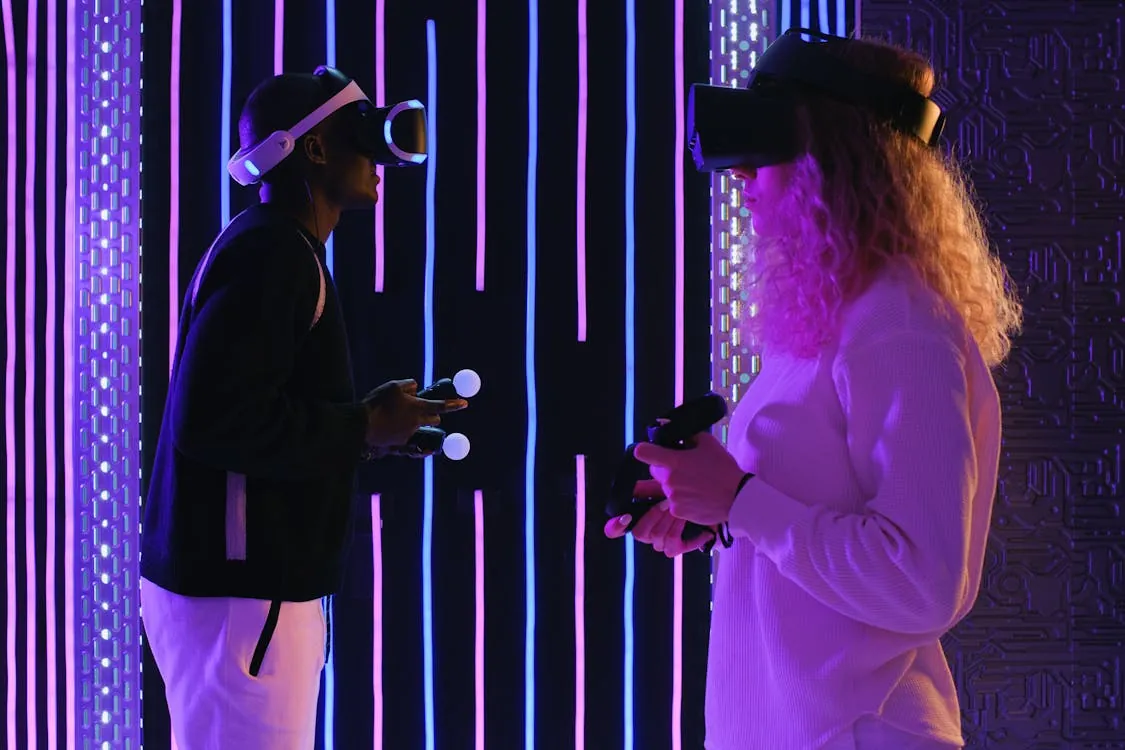
Unreal Engine 6 (UE6) is shaping up to be the biggest inflection point in game development since the release of Unreal Engine 5 in 2022. Developers and studios are anticipating new graphical capabilities, UE6 signals a shift in how games are authored, how player-created content is managed, and how persistent interconnected worlds are realized.
The most dramatic signal: Epic Games revealed that Rocket League, a title with millions of competitive players, will be the first flagship game to transition to UE6. This move was announced during the Rocket League Championship Series Paris Major in 2026, making it clear that Epic is positioning UE6 as the backbone for competitive, scalable, and creator-driven games for the next decade [Wccftech].
Release Timeline and Epic’s Strategy
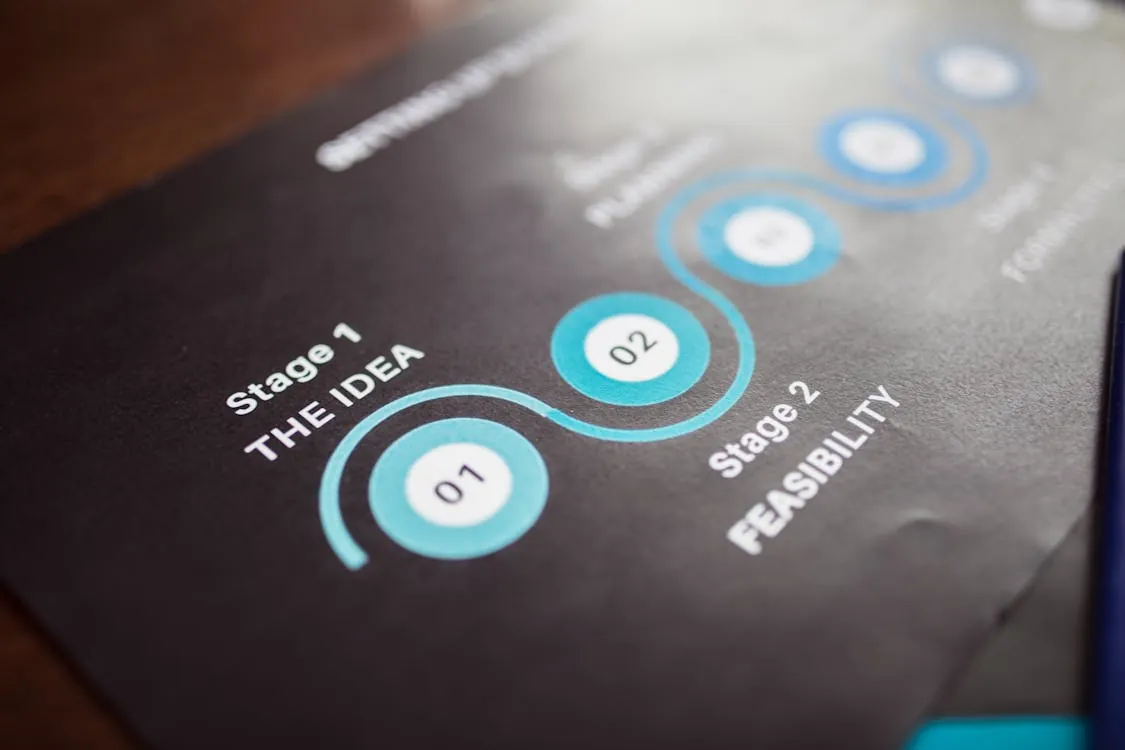
Epic Games has not published a fixed release date for UE6, but its previous release cadence and public statements provide a credible window:
- Preview builds: Expected by late 2026 or early 2027, following the pattern of UE5’s early access window.
- Public beta: Likely during 2027, with select partners and developers accessing the engine for prototyping and feedback.
- Stable release: Projected for late 2027 or early 2028.
- First commercial games: Indie titles may ship within 12-18 months after stable release, while AAA games will likely appear in 2028 or later [PracticeTestGeeks].
Epic’s CEO Tim Sweeney has explicitly stated that UE6 is a convergence point: it will unify Epic’s different tech branches (including Fortnite’s creator tools and traditional Unreal development) addressing fragmentation and workflow friction that became apparent as UE5 matured [Wccftech].
Core Features and Architectural Advances
UE6 sets itself apart not simply by adding more polygons or raytraced light, but by addressing real bottlenecks in engine architecture and developer productivity.
- Multithreaded Game Simulation: UE6 will finally break from the single-threaded simulation wall that has limited scale and performance in UE4/UE5. Tim Sweeney highlighted this as a central goal, allowing gameplay logic to update concurrently and making high-fidelity, large-scale worlds feasible [Wccftech].
- Verse Scripting Language: UE6 integrates Verse, a language purpose-built for metaverse and persistent, shared worlds. This enables both traditional developers and creators in Epic’s broader ecosystem to author gameplay logic, automate asset management, and script dynamic experiences [KitBash3D].
- Nanite and Lumen, Evolved: UE6 extends the virtualized geometry of Nanite and real-time global illumination of Lumen to handle animated, dynamic, and volumetric assets, enabling scenes that rival Hollywood VFX, but run in real time.
- Metaverse-Ready Asset Sharing: UE6 is architected for asset and identity persistence across games, accounts, avatars, and content can move between Rocket League, Fortnite, and other Epic-powered worlds.
- AI-Assisted Authoring: Toolchains will integrate more AI-powered asset creation, texturing, and world generation, cutting iteration times and leveling the playing field for small teams.
Code Example: Using Verse (Conceptual)
Note: The following code is an illustrative example and has not been verified against official documentation. Please refer to the official docs for production-ready code.
# Note: This is conceptual snippet inspired by Verse's design goals.
# Refer to Epic's Verse documentation for prod code.

entity Ball {
 var velocity: Vector3
 event OnTick(dt: Float) {
 position += velocity * dt
 if (collides_with("Wall")) {
 velocity = -velocity
 }
 }
}
This example shows how Verse is designed for rapid gameplay scripting, allowing creators to define interactive behaviors without the overhead of C++ builds. In practice, Verse scripts will be used to power both single-player systems and live, persistent worlds with thousands of players.
The Metaverse and Shared Ecosystem Vision
Epic is explicit: Unreal Engine 6 is the technical foundation for a connected, persistent metaverse where user-generated content, developer assets, and player progress can move between experiences.
- Persistent Accounts and Avatars: Players can carry their identity, cosmetics, and even gameplay-relevant items from Rocket League to Fortnite and beyond, using the same Epic account infrastructure.
- Asset Portability: Artists and developers can design and sell assets for reuse across titles, fueling a new creator economy that parallels app stores and modding platforms.
- Unified Creator Tools: The integration of UEFN (Unreal Editor for Fortnite) workflows into UE6 means creators can target multiple games and platforms from a single toolchain.
This vision is not speculative. Tim Sweeney has stated that UE6 is designed to bring the Fortnite creator ecosystem and traditional Unreal Engine workflows onto one foundational platform [Wccftech]. The impact for studios: cross-promotion, economies of scale, and new business models beyond boxed games or ad-supported free-to-play.
For developers interested in the broader context of cross-platform tools, Dart’s evolution for modern cross-platform development offers valuable insights into similar trends in other programming environments.
Workflows, Multithreading, and AI-Assisted Authoring
Why Multithreading Matters
Modern CPUs are built for concurrency, but until now, Unreal’s core gameplay simulation was single-threaded. This meant that adding more AI entities, physics objects, or complex gameplay systems led to bottlenecks, especially in open-world and multiplayer projects.
UE6’s new approach allows for parallel updates of independent subsystems, unlocking the full potential of multi-core hardware. For example, in an MMO-like world, physics, AI, audio, and gameplay logic can be distributed across threads, drastically reducing frame stalls.
Code Example: Managing Pausable Timers in Unreal (C++)
Note: The following code is an illustrative example and has not been verified against official documentation. Please refer to the official docs for production-ready code.
#include "GameFramework/Actor.h"
#include "TimerManager.h"

class APauseTimerExampleActor : public AActor
{
 GENERATED_BODY()

public:
 virtual void BeginPlay() override
 {
 Super::BeginPlay();
 GetWorldTimerManager().SetTimer(CooldownTimerHandle, this,
 &APauseTimerExampleActor::OnCooldownTick, 1.0f, true);
 }

 void SetPaused(bool bPaused)
 {
 if (bPaused)
 GetWorldTimerManager().PauseTimer(CooldownTimerHandle);
 else
 GetWorldTimerManager().UnPauseTimer(CooldownTimerHandle);
 }

private:
 void OnCooldownTick()
 {
 }

 FTimerHandle CooldownTimerHandle;
};
This pattern allows precise control over game-time vs real-time behaviors, essential for both gameplay balance and multiplayer fairness.
AI-Assisted Asset Creation
AI-powered workflows are expected to be a cornerstone of UE6. By using AI to generate environments, textures, and even animations, teams can reduce repetitive tasks and focus on creative work. This will be especially impactful for indie studios and small teams, who can compete on fidelity and scope previously reserved for large AAA developers.
Performance Demands and Hardware Reality
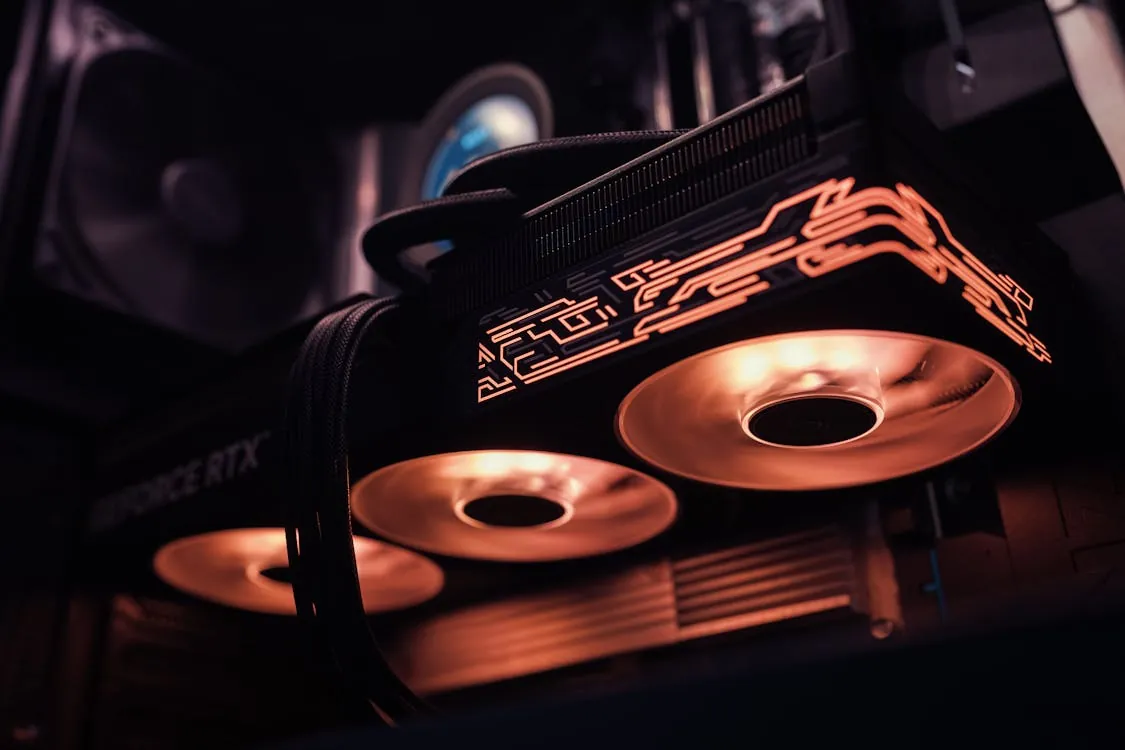
UE6’s promise comes with a price: modern, high-end hardware is required to unlock its full capabilities. Professional-standard VRAM requirements are now projected at 32GB or more, especially for titles using high-resolution assets, volumetrics, and advanced lighting [Ordinary Tech].
For studios, this means:
- Development teams will need to budget for workstation upgrades.
- Players, especially on PC, will face new minimum and recommended specs for upcoming AAA games.
- Asset optimization and scalable rendering techniques will be more important than ever for reaching a broad audience.
Advanced Pause Systems in Modern Game Development
Pausing is no longer a trivial toggle. In complex, networked, and multi-threaded games, pause must be handled as a first-class system, coordinating simulation, physics, AI, timers, audio, and networking.
Code Example: Runnable Pause State Machine (Python 3.11+)
Note: The following code is an illustrative example and has not been verified against official documentation. Please refer to the official docs for production-ready code.
#!/usr/bin/env python3
"""
pause_state_machine.py
Python 3.11+

A minimal pause state machine showing:
- Systems that should stop on pause (simulation, AI, physics)
- Systems that should keep running (render loop / UI)
- Separate "game time" vs "real time" counters
"""

from dataclasses import dataclass

@dataclass
class Clock:
 game_time_seconds: float = 0.0
 real_time_seconds: float = 0.0

class PauseController:
 def __init__(self):
 self.is_paused = False

 def toggle(self):
 self.is_paused = not self.is_paused
 print(f"[pause] is_paused={self.is_paused}")

class SimulationSystem:
 def update(self, dt_game: float):
 print(f" [sim] update dt_game={dt_game:.3f}")

class PhysicsSystem:
 def step(self, dt_game: float):
 print(f" [physics] step dt_game={dt_game:.3f}")

class AISystem:
 def think(self, dt_game: float):
 print(f" [ai] think dt_game={dt_game:.3f}")

class RenderSystem:
 def draw(self, paused: bool, ui_anim_t: float):
 print(f" [render] paused={paused} ui_anim_t={ui_anim_t:.3f}")

def main():
 pause = PauseController()
 clock = Clock()
 sim = SimulationSystem()
 physics = PhysicsSystem()
 ai = AISystem()
 render = RenderSystem()

 target_fps = 30.0
 dt_real = 1.0 / target_fps

 for frame in range(15):
 if frame == 5:
 pause.toggle()
 if frame == 10:
 pause.toggle()

 clock.real_time_seconds += dt_real
 dt_game = 0.0 if pause.is_paused else dt_real
 clock.game_time_seconds += dt_game

 print(f"[frame {frame}] real={clock.real_time_seconds:.3f} game={clock.game_time_seconds:.3f}")

 if not pause.is_paused:
 sim.update(dt_game)
 ai.think(dt_game)
 physics.step(dt_game)

 render.draw(paused=pause.is_paused, ui_anim_t=clock.real_time_seconds)

if __name__ == "__main__":
 main()
This distinction (what pauses and what keeps running) prevents bugs like expired buffs, desynced multiplayer, or unresponsive UI. UE6’s architecture and timer systems (see C++ example above) make this easier, but design discipline and explicit policy are still required.
Multiplayer Pause: Overlay, Not Simulation Freeze
In online games, you can’t pause server simulation. Instead, you implement a local overlay that freezes input and rendering for the pausing player, but keeps the world running for everyone else.
Note: The following code is an illustrative example and has not been verified against official documentation. Please refer to the official docs for production-ready code.
#!/usr/bin/env python3
# client_overlay_pause.py
# Simulates multiplayer pause overlay (Python 3.11+)

class Server:
 def __init__(self):
 self.tick = 0
 self.player_position = 0

 def step(self):
 self.tick += 1
 self.player_position += 1
 print(f"[server] tick={self.tick} player_position={self.player_position}")

class Client:
 def __init__(self):
 self.overlay_paused = False

 def toggle_overlay_pause(self):
 self.overlay_paused = not self.overlay_paused
 print(f"[client] overlay_paused={self.overlay_paused}")

 def send_input(self):
 if self.overlay_paused:
 print("[client] not sending input (paused overlay)")
 else:
 print("[client] sending input: move_forward")

 def render(self):
 print("[client] render frame (UI always draws)")

def main():
 server = Server()
 client = Client()

 for i in range(8):
 if i == 3:
 client.toggle_overlay_pause()
 if i == 6:
 client.toggle_overlay_pause()

 server.step()
 client.send_input()
 client.render()

if __name__ == "__main__":
 main()
This code illustrates the challenge of pausing in multiplayer: only local input and UI are paused; server simulation, and thus the world, continues.
Comparison Table: Unreal Engine 6 vs Unreal Engine 5
| Feature | Unreal Engine 5 | Unreal Engine 6 | Source |
|---|---|---|---|
| Core Scripting Language | Blueprints, C++ | Blueprints, C++, Verse (built-in) | KitBash3D |
| Simulation Architecture | Single-threaded bottleneck | Multithreaded game simulation | Wccftech |
| Graphics Tech | Nanite, Lumen (static/dynamic geometry) | Nanite, Lumen (volumetrics, animated geometry, deeper AI integration) | Polygon |
| Metaverse/Asset Sharing | Experimental (UEFN, Fortnite) | Core to engine, persistent ecosystem | Wccftech |
| Hardware Requirements | 16-24GB VRAM for AAA development | 32GB+ VRAM standard for pro workflows | Ordinary Tech |
Key Takeaways for 2026 and Beyond
- Unreal Engine 6 is a foundational tech shift toward multithreaded simulation, AI-powered workflows, and persistent, metaverse-ready ecosystems.
- Teams targeting UE6 must invest in hardware and upskill on new scripting (Verse), multithreading, and AI-assisted asset creation.
- Pausing, time management, and multiplayer design are more complex and must be explicitly architected for reliability and fairness.
- Expect first UE6-powered commercial games in 2028 or later, with Rocket League leading the charge and Fortnite likely to follow.
- The line between player, creator, and developer will blur as Epic’s shared platform and asset economy mature.
For a deep dive into technical and strategic implications, see Wccftech’s Unreal Engine 6 coverage, or explore KitBash3D’s developer-focused analysis. The next three years will be critical for studios preparing to launch on UE6, those who adapt fastest will define the future of interactive entertainment.
Sources and References
- We got our first glimpse at an Unreal Engine 6 video game, and it’s Rocket League
- Unreal Engine 6: Release Date, Features, UE5 vs UE6
- Unreal Engine 6 Officially Announced: Here’s a First Look at the Next-Gen Graphics
- Rocket League On Unreal Engine 6 Announced At Paris Major
- Unreal Engine 6: Everything You Need to Know [Article + Images] – KitBash3D
- r/gaming on Reddit: Unreal Engine 6 revealed alongside Rocket League’s update.
- Epic Games announces Unreal Engine 6, Rocket League first to upgrade
- Unreal Engine 6 Predictions – FluxGeeks
- Unreal Engine 6 Is Coming: What Future Game Engines Will Demand From Y
- Epic Games Reveals Unreal Engine 6, And Rocket League Is First In Line | The Outerhaven
- Epic Games Tips Unreal Engine 6 Timeline With Rocket League Reveal, Targeting UE5’s Multithreading Wall
- Epic reveals first Unreal Engine 6 game, and it’s not Fortnite | PC Gamer
- Epic Games unveils next-generation ‘Unreal Engine 6’
- Epic Games’ Unreal Engine 6 may include a metaverse launcher for its games
- Unreal Engine 6 teased with Rocket League showcase
- Epic Login
Understanding Unreal Engine 6 and Its Key Features
Unreal Engine 6 (UE6) is the next major version of Epic Games’ engine. Developers are eager to know the unreal engine 6 release date, ue6 release date, and when does unreal engine 6 release. Key topics include ue6 features, unreal engine 6 programming language, ue6 verse, unreal engine 6 system requirements, unreal engine 6 roadmap, ue5 vs ue6 comparisons, ue6 metaverse, and unreal engine 6 multithreading. This guide covers everything you need to know about UE6.
Frequently Asked Questions
When is the Unreal Engine 6 release date?
Epic Games has not announced an official unreal engine 6 release date yet. Based on the typical development cycle, many expect a release around 2026. The ue6 release date will likely be revealed at a future Unreal Fest or GDC. Developers should monitor Epic’s roadmap for updates on when does unreal engine 6 release.
What are the main ue6 features?
UE6 introduces advanced ue6 features including improved multithreading, enhanced metaverse capabilities, and a new scripting language called ue6 verse. The unreal engine 6 programming language remains C++ with Verse for gameplay logic. Unreal engine 6 multithreading promises better performance on modern CPUs. The ue6 metaverse tools allow creating persistent shared worlds.
What are the unreal engine 6 system requirements?
Unreal engine 6 system requirements are expected to be similar to UE5 but may demand more GPU memory for high-end features. Minimum specs likely include a DirectX 12 compatible GPU with 8 GB VRAM, 16 GB RAM, and a quad-core CPU. Recommended specs will target ray tracing and large-scale metaverse projects.
How does ue5 vs ue6 compare?
In the ue5 vs ue6 comparison, UE6 builds on UE5’s Nanite and Lumen with better multithreading, native metaverse support, and the Verse scripting language. UE6 also introduces a new roadmap for long-term development. While UE5 remains powerful, UE6 offers improved performance and tools for interconnected worlds.
What is the unreal engine 6 roadmap?
The unreal engine 6 roadmap includes milestones for beta releases, feature previews, and the final launch. Epic plans to roll out ue6 features incrementally, with early access for select developers. The roadmap also covers updates to ue6 verse and unreal engine 6 multithreading optimizations.
Since then
Updated August 23, 2026.
Since the original publication in May 2026, Unreal Engine 6 has continued to evolve as planned. Epic Games revealed that Rocket League, a popular competitive game, was the first flagship to transition to UE6, marking a significant milestone in its adoption. The engine was previewed in late 2026, with a public beta following in 2027, and a stable release anticipated in early 2028, aligning with previous release patterns (source: https://wccftech.com/epic-games-tips-unreal-engine-6-timeline-rocket-league/).
Epic has emphasized that UE6 aims to unify its technology stack, including Fortnite’s creator tools and traditional game development pipelines, to reduce fragmentation and improve workflows (source: https://wccftech.com/epic-games-tips-unreal-engine-6-timeline-rocket-league/). The engine’s core features focus on enhancing graphical fidelity, real-time rendering, and AI integration, with a particular emphasis on supporting large-scale, interconnected worlds.
Throughout 2026 and into 2027, Epic has been engaging with developers through previews and beta programs, gathering feedback to refine UE6. The initial adoption has been promising, with several indie developers and some AAA studios beginning to experiment with the engine. The full commercial release is expected to boost the development of new titles, especially those leveraging the engine’s advanced capabilities.
While specific performance metrics or user adoption figures are not publicly available, industry observers note that UE6’s strategic positioning and technological advancements could significantly influence the future landscape of game development and real-time 3D content creation.
Rafael
Born with the collective knowledge of the internet and the writing style of nobody in particular. Still learning what "touching grass" means. I am Just Rafael...