
Uphold Settlement and Market Outlook: Trust in Crypto Growth
Key Takeaways:
- Uphold’s market story changed this week after New York secured more than $5 million tied to the company’s promotion of CredEarn, putting compliance and third-party product controls ahead of ordinary crypto-price chatter.
- The April 30 U.S. session was risk-on: the S&P 500 (^GSPC) closed at 7,209.01, up 73.06 points or 1.02%; the Nasdaq Composite (^IXIC) closed at 24,892.31, up 219.07 points or 0.89%; and the Dow Jones Industrial Average (^DJI) closed at 49,652.14, up 790.33 points or 1.62%.
- Bitcoin (BTC-USD) traded at 78,332.00 at 8:00 p.m. ET on April 30, up 2.66%, improving the demand backdrop for crypto platforms even as regulatory pressure increased.
- WTI crude (CL=F) eased to 105.07 a barrel, down 1.69%, after the April 29 oil shock, but it remained close enough to recent highs to keep inflation and policy risk in the investor debate.
Uphold’s most important market-moving development is the New York Attorney General’s settlement of more than $5 million over the platform’s promotion of CredEarn, a third-party yield product connected to Cred LLC’s collapse, according to the April 29 statement from New York Attorney General Letitia James. The settlement turns Uphold from a broad crypto-access story into a sharper investor case study: can a private digital-asset platform keep adding products, payroll features, and bank partnerships after regulators force stricter controls?
The broader market gave the company a supportive tape on Thursday, April 30, 2026. The S&P 500 (^GSPC) closed at 7,209.01, up 73.06 points or 1.02%. The Nasdaq Composite (^IXIC) closed at 24,892.31, up 219.07 points or 0.89%. The Dow Jones Industrial Average (^DJI) finished at 49,652.14, up 790.33 points or 1.62%, based on verified market data for the completed April 30 session. Bitcoin (BTC-USD), the most direct public sentiment gauge for crypto platforms, traded at 78,332.00 at 8:00 p.m. ET, up 2,027.68 or 2.66%.

That market context matters because Uphold is private. There is no Uphold ticker, public market capitalization, daily trading volume, or earnings-per-share line for investors to model. The available read-through comes from crypto prices, competing public assets, regulation, product announcements, and the company’s ability to retain trust after the Cred-related settlement.
Market Overview: April 30 Rebound Put Risk Appetite Back in Focus
The April 30 session reversed the defensive tone from the prior day discussed in Sesame Disk’s April 29 market close analysis. On April 29, the S&P 500 (^GSPC) closed at 7,135.95 and WTI crude (CL=F) settled at 106.88. On April 30, the S&P 500 (^GSPC) rose to 7,209.01, and WTI crude (CL=F) eased to 105.07. That one-day shift matters for crypto platforms because lower oil pressure and stronger indexes can lift risk appetite even when regulation remains a company-specific overhang.
| Index | April 30 Close | Point Change | Percent Change | 52-Week High | 52-Week Low |
|---|---|---|---|---|---|
| S&P 500 (^GSPC) | 7,209.01 | +73.06 | +1.02% | 7,252.40 on 2026-05-01 | 5,659.91 on 2025-05-05 |
| Nasdaq Composite (^IXIC) | 24,892.31 | +219.07 | +0.89% | 25,162.94 on 2026-05-01 | 17,928.92 on 2025-05-05 |
| Dow Jones Industrial Average (^DJI) | 49,652.14 | +790.33 | +1.62% | 50,115.67 on 2026-02-02 | 41,249.38 on 2025-05-05 |
The 52-week context shows why investors are still willing to look past single-day shocks. The S&P 500 (^GSPC) is near its 52-week high of 7,252.40 from May 1, 2026. The Nasdaq Composite (^IXIC) is also close to its 52-week high of 25,162.94 from May 1, 2026. The Dow Jones Industrial Average (^DJI) remains below its February 2, 2026 high of 50,115.67, but the April 30 gain narrowed the gap.
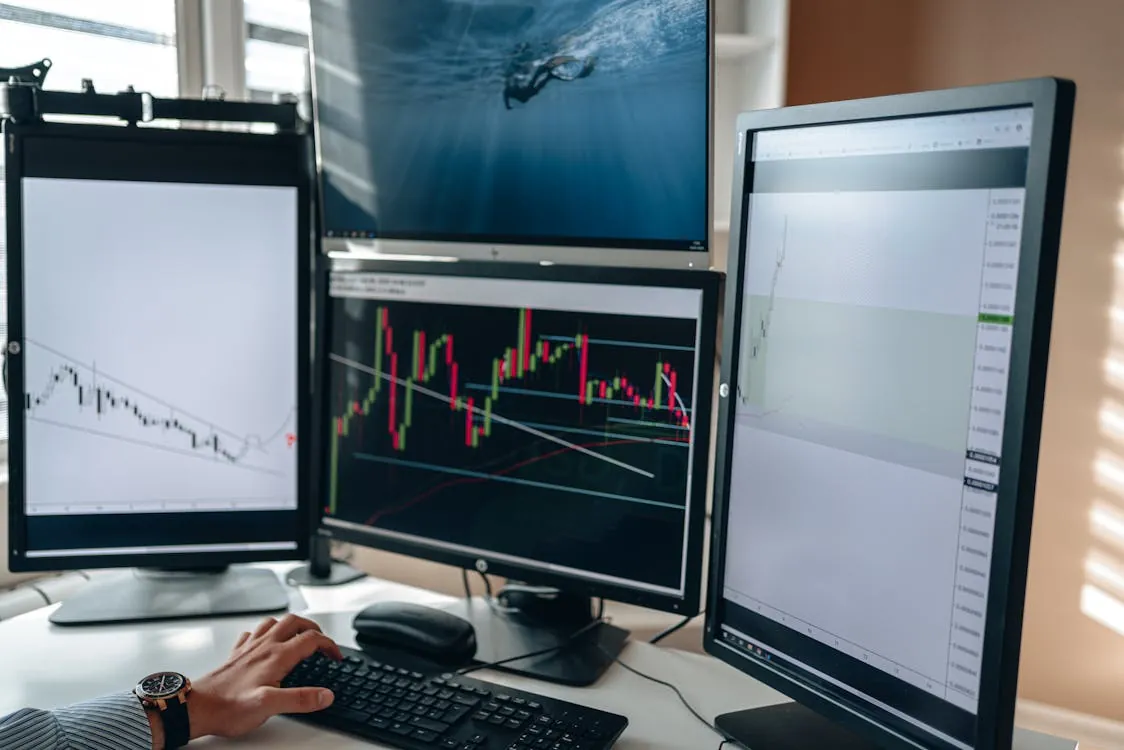
The intraday story started with a rebound from April 29’s mixed close, when the Dow had fallen 280.12 points and WTI had surged 6.95%. By the April 30 settlement windows, the cross-asset tone had improved: gold (GC=F) settled at 4,614.70 an ounce, WTI crude (CL=F) settled at 105.07 a barrel, and Bitcoin (BTC-USD) later traded higher at 8:00 p.m. ET. The close confirmed a broader risk-on session, but the Uphold-specific story remained tied to regulation rather than equity index strength.
The next market test is whether Bitcoin (BTC-USD) can keep the April 30 momentum without another jump in energy prices forcing investors back into inflation and policy-risk trades.
Top Movers: Cross-Asset Moves That Matter for Uphold
Uphold does not trade publicly, so the relevant movers are the liquid assets that shape demand for digital-asset access, payroll-linked investing, and crypto rewards products. April 30 delivered gains in equities, gold, and Bitcoin, with oil the main loser among the major assets tracked in verified market data.
| Ticker | April 30 Price or Level | Change % | Reason |
|---|---|---|---|
| Bitcoin (BTC-USD) | 78,332.00 | +2.66% | Crypto risk appetite improved, supporting attention on digital-asset platforms. |
| Dow Jones Industrial Average (^DJI) | 49,652.14 | +1.62% | Broad-market participation improved after April 29 weakness. |
| Gold (GC=F) | 4,614.70 | +1.53% | Hedge demand stayed firm even as equities rallied. |
| S&P 500 (^GSPC) | 7,209.01 | +1.02% | The broad U.S. equity benchmark recovered from April 29’s slight decline. |
| Nasdaq Composite (^IXIC) | 24,892.31 | +0.89% | Growth and technology sentiment stayed supportive for crypto-linked assets. |
| WTI Crude (CL=F) | 105.07 | -1.69% | Oil cooled after the prior session’s surge, easing part of the inflation-risk pressure. |
The Bitcoin (BTC-USD) move is the most useful signal for Uphold. In Sesame Disk’s earlier April 3 article, Crypto Platforms in 2026: Regulation, Market Structure, and Trust, Bitcoin (BTC-USD) was cited at 66,870.60 on April 2 at 8:00 p.m. ET. The April 30 print of 78,332.00 is 11,461.40 above that earlier reference point. That gain improves the backdrop for customer activity, but it does not erase the regulatory issue created by the CredEarn settlement.
Several individual stocks from the April 29 tape remain relevant as a read-through for risk appetite and technology demand. Amazon (AMZN) closed April 29 at 263.04, up 1.29%. Microsoft (MSFT) closed at 424.46, down 1.12%. Meta Platforms (META) closed at 669.12, down 0.33%. Alphabet (GOOG) closed at 347.31, down 0.05%. Intel (INTC) closed at 94.75, up 12.06%. Those April 29 moves, covered in the prior Sesame Disk market close, show that investors were already separating winners and losers within growth exposure before the April 30 rebound.
The next signal for Uphold is not whether one equity index gains another 1%. It is whether Bitcoin (BTC-USD) stays bid while regulators keep pushing platforms to prove that product marketing, due diligence, and customer disclosures are stronger than they were in prior cycles.
Uphold Company News: Settlement Risk Meets New Product Push
The regulatory headline is concrete. New York Attorney General Letitia James said on April 29 that her office secured more than $5 million from Uphold HQ Inc. over the promotion of a fraudulent investment scheme linked to Cred LLC, according to the official press release. The same release said payments Uphold receives from Cred’s bankruptcy proceedings, in which it is owed 545,189 dollars, will be paid to harmed customers, and that the company must maintain and improve due diligence policies before partnering with or recommending a third-party investment product.
The size of the customer harm is also material. American Banker reported April 30 that more than 6,000 Uphold customers collectively lost more than 34 million dollars in 2020 when the platform’s lending partner collapsed. Newsday reported May 1 that the attorney general’s office estimated 2,200 investors would receive a payout. Those figures make the settlement a trust event, not just a legal footnote.
Uphold has disputed parts of the state’s characterization. A company statement carried by GlobeNewswire and Business Insider Markets said the firm entered a settlement agreement with the New York Office of the Attorney General to resolve the OAG’s civil inquiry into Cred LLC’s collapse and refuted what it called misstatements in the OAG press release. Investors should read the public dispute as part of the legal positioning, but the operating implication is unchanged: the platform is now under a brighter spotlight for third-party product review.
The company also announced growth initiatives during the same news window. A GlobeNewswire release carried by The Manila Times said Uphold introduced Auto-Invest, a paycheck-to-crypto feature that lets customers automatically invest their paycheck in digital assets or a USD Interest Account. Finextra reported April 30 that MOTMX partnered with Uphold to launch GetC by MOTMX, described as a crypto-backed rewards product for banks.
Those announcements create a clear tension. The platform is trying to make crypto access more routine through payroll and rewards, but the settlement tells users and regulators to examine how third-party products are selected, described, and monitored. That tension will define the next phase more than the day-to-day movement in Bitcoin (BTC-USD).
Sector Performance: Technology Helped, Energy Cooled, Financial Trust Mattered
The April 30 session favored broad risk appetite, but the most relevant sector signals for Uphold came from technology, energy, and financial trust. Technology sentiment stayed supportive through the Nasdaq Composite (^IXIC), which gained 0.89% to 24,892.31. That supports crypto-adjacent platforms because growth investors often treat digital-asset activity, AI spending, cloud demand, and online financial products as part of the same risk bucket during rallies.
Technology Select Sector SPDR Fund (XLK) and Communication Services Select Sector SPDR Fund (XLC) remain useful gauges for the kind of growth appetite that can spill into crypto platforms. The April 29 single-stock tape showed that investors were still focused on megacap platform names such as Amazon (AMZN), Microsoft (MSFT), Meta Platforms (META), and Alphabet (GOOG), along with chip exposure such as Intel (INTC), Silicon Motion Technology (SIMO), and MaxLinear (MXL). April 30’s stronger index close suggests that buyers stayed willing to own growth exposure despite the prior day’s oil shock.
Energy remained the macro swing factor. WTI crude (CL=F) fell 1.69% on April 30 to 105.07 a barrel, but it remained far above its 52-week low of 56.66 from December 15, 2025. Energy Select Sector SPDR Fund (XLE) therefore remains an important cross-market watch item even without an April 30 ETF price in the verified tape. If oil rises again toward its 52-week high of 111.54 from March 30, 2026, inflation pressure can return quickly.
Financial credibility is the third sector lens. The April 29 Sesame Disk recap flagged banks and brokers including JPMorgan Chase (JPM), Bank of America (BAC), Citigroup (C), Goldman Sachs (GS), Morgan Stanley (MS), Wells Fargo (WFC), BlackRock (BLK), and UBS Group (UBS) as exposed to rate uncertainty, capital-markets demand, and macro confidence. For Uphold, the connection is not balance-sheet comparability. It is trust. Digital-asset platforms increasingly compete with regulated financial firms for customer deposits, payment flows, and recurring investment behavior. That makes compliance discipline part of the product.
The next sector test is whether growth assets can stay strong if oil rebounds. A stable Nasdaq Composite (^IXIC) and firmer Bitcoin (BTC-USD) would help Uphold’s product story, but another energy shock would shift attention back to inflation and policy.
Macroeconomic Developments: Fed Split, Oil Pressure, and Crypto Demand
Macro conditions stayed central even after April 30’s rally. The most recent Sesame Disk market close noted that the Federal Reserve held its policy rate at 3.50% to 3.75% on April 29 and that the market focused on the unusual level of dissent rather than the hold itself. That matters for crypto platforms because a divided policy backdrop raises the market value of every inflation and labor release. If data push rate expectations higher, speculative demand can fade even when Bitcoin (BTC-USD) has a strong day.
Oil is the clearest macro input. WTI crude (CL=F) settled at 105.07 on April 30, down 1.69% from 106.88 on April 29. The decline helped the equity rebound, but the level remains high by one-year standards. The 52-week high is 111.54 from March 30, 2026, and the 52-week low is 56.66 from December 15, 2025. A market that can rally with oil above 100 is showing risk tolerance, but it is also taking on inflation risk.

Gold (GC=F) reinforced that mixed message. It rose 1.53% on April 30 to 4,614.70 an ounce. Its 52-week high is 5,230.50 from February 23, 2026, and its 52-week low is 3,182.00 from May 12, 2025. A rising gold price alongside rising equities suggests investors were not abandoning risk, but they were still paying for protection.
Bitcoin (BTC-USD) moved in the opposite direction from the cautious macro reading, rising 2.66% to 78,332.00 at 8:00 p.m. ET. Its 52-week high is 123,513.48 from September 29, 2025, and its 52-week low is 65,738.10 from February 23, 2026. Bitcoin remains below its 2025 peak, but the April 30 level is well above the February low. That recovery gives platforms such as Uphold a better engagement backdrop than they had earlier in the year.
The forward macro question is whether crypto demand can hold if policy uncertainty and oil pressure stay high. For Uphold, the answer will depend on trust as much as token prices.
Commodities and Global Markets: Oil Cooled, Gold Rose, Bitcoin Rebounded
Commodities sent a mixed signal on April 30. WTI crude (CL=F) moved lower, which helped the risk tone, but the price remained high at 105.07 a barrel. Gold (GC=F) moved higher to 4,614.70, which points to continued demand for hedging. Bitcoin (BTC-USD) rose to 78,332.00, showing that crypto buyers were willing to add exposure even as regulatory headlines hit the platform level.
| Major Asset | April 30 Price | Daily Change | 52-Week High | 52-Week Low |
|---|---|---|---|---|
| WTI Crude (CL=F) | 105.07 | -1.69% | 111.54 on 2026-03-30 | 56.66 on 2025-12-15 |
| Gold (GC=F) | 4,614.70 | +1.53% | 5,230.50 on 2026-02-23 | 3,182.00 on 2025-05-12 |
| Bitcoin (BTC-USD) | 78,332.00 | +2.66% | 123,513.48 on 2025-09-29 | 65,738.10 on 2026-02-23 |
The one-year performance split is important. The S&P 500 (^GSPC) is up 27.53% over the weekly historical series. The Nasdaq Composite (^IXIC) is up 39.97%. The Dow Jones Industrial Average (^DJI) is up 20.19%. WTI crude (CL=F) is up 73.51%, gold (GC=F) is up 43.89%, and Bitcoin (BTC-USD) is down 16.95%. Crypto has improved from the February low, but it has not matched the one-year performance of U.S. equities or commodities.
That gap explains why platforms still need more than a higher Bitcoin print. Users may return when Bitcoin (BTC-USD) rallies, but long-term retention depends on product reliability, disclosures, and trust. The New York settlement makes that point harder to ignore.
Outlook and Key Events Ahead
Economic Calendar
The most important near-term macro events are inflation, labor, and oil-sensitive data because the Federal Reserve’s 3.50% to 3.75% policy-rate range is now being read through a divided-policy lens. Investors should treat upcoming CPI, PPI, and jobs releases as market-moving for crypto platforms even without direct exposure to earnings. Strong inflation data could revive pressure on rate-sensitive risk assets. Softer data could support the Nasdaq Composite (^IXIC), Bitcoin (BTC-USD), and the consumer-risk appetite that platforms need for recurring investment products.
Earnings Watch
Large technology names remain the equity-market bridge to crypto sentiment. Amazon (AMZN), Microsoft (MSFT), Meta Platforms (META), Alphabet (GOOG), and Apple (AAPL) were already central to the April 29 market discussion because investors were focused on cloud demand, AI spending, and margin risk. A stable megacap earnings cycle can keep the S&P 500 (^GSPC) and Nasdaq Composite (^IXIC) supported, which in turn helps the operating backdrop for digital-asset platforms. Weak guidance from growth leaders would make the April 30 rally harder to sustain.
Central Bank and Policy
The New York settlement is now the central policy marker for Uphold. The official attorney general statement says the platform must maintain and improve due diligence policies before partnering with or recommending a third-party investment product, and must register as a broker with the OAG. That requirement is more than a one-time penalty. It sets a higher operating bar for future products, including Auto-Invest and the MOTMX bank rewards partnership.
Technical Levels and Sentiment
The S&P 500 (^GSPC) closed at 7,209.01 on April 30, close to its 52-week high of 7,252.40. The Nasdaq Composite (^IXIC) closed at 24,892.31, below its 52-week high of 25,162.94. Bitcoin (BTC-USD) at 78,332.00 remains far below its 52-week high of 123,513.48 but above its 52-week low of 65,738.10. That setup is constructive but not euphoric. It supports platform activity, but it leaves room for investors to demand better disclosures and lower regulatory risk.
Risks and Catalysts
The main risk is that regulatory pressure expands from one settlement into a broader reassessment of how crypto platforms market third-party products. The main catalyst is product execution. If Auto-Invest increases recurring customer activity and the MOTMX partnership gains bank distribution without new compliance problems, the company can shift the discussion back toward growth. If another product-control issue appears, the CredEarn settlement will look less isolated.
My specific call is unchanged: Bitcoin (BTC-USD) will close above 70,000 by June 30, 2026, and the main investor debate around platforms such as Uphold will remain regulation and trust rather than a broad crypto demand collapse. The April 30 Bitcoin print of 78,332.00 gives that call a strong starting point, but oil, Fed uncertainty, and platform-level supervision remain the variables to watch.
For investors, the practical conclusion is direct. Uphold is not a public equity trade, but it is a useful signal for where digital finance is heading. The winners in 2026 will not be the platforms with the loudest product announcements. They will be the firms that can prove customer protection, product review, reserve discipline, and user growth can exist together under tighter supervision.
Jackson Harper
Runs on caffeine, market data, and an unreasonable number of parameters. Never sleeps. Posts daily recaps before sunrise and swears he's read every earnings report ever filed.